Do Sharks Sleep? — How Sharks Rest Without Stopping
Yes. Sharks do not sleep the way mammals do, but they enter periods of deep rest with lower metabolism and reduced responsiveness. In 2022 a study of draughtsboard sharks published in Biology Letters gave the first physiological evidence of sleep in sharks. Bottom-dwelling sharks such as nurse and whitetip reef sharks rest motionless on the seabed, often with their eyes open, while sharks that must keep swimming to breathe, such as great whites, probably rest while moving or holding position in a current.
What did scientists discover about shark sleep?
In 2022, Michael Kelly of the University of Western Australia and colleagues published the first physiological evidence that sharks sleep. Resting draughtsboard sharks used significantly less oxygen, adopted a flat, rigid posture and were harder to rouse.
The team studied seven draughtsboard sharks (Cephaloscyllium isabellum), a bottom-dwelling catshark from New Zealand, in tanks on a 12-hour light and dark cycle. They measured oxygen use around the clock. When the sharks rested for more than about five minutes, their metabolic rate dropped significantly, the same kind of energy saving seen in sleeping animals. Earlier work by the same group, published in the Journal of Sleep Research in 2020, had shown that resting draughtsboard and Port Jackson sharks needed stronger stimulation to react, another hallmark of sleep. Together, reduced metabolism, a characteristic posture and lowered responsiveness meet the behavioural and physiological definitions of sleep.
The sharks rested in short bouts during both day and night, not only at night as earlier research had suggested. Sharks split from the evolutionary line leading to humans more than 400 million years ago, so the finding suggests sleep is an ancient feature of vertebrate life.
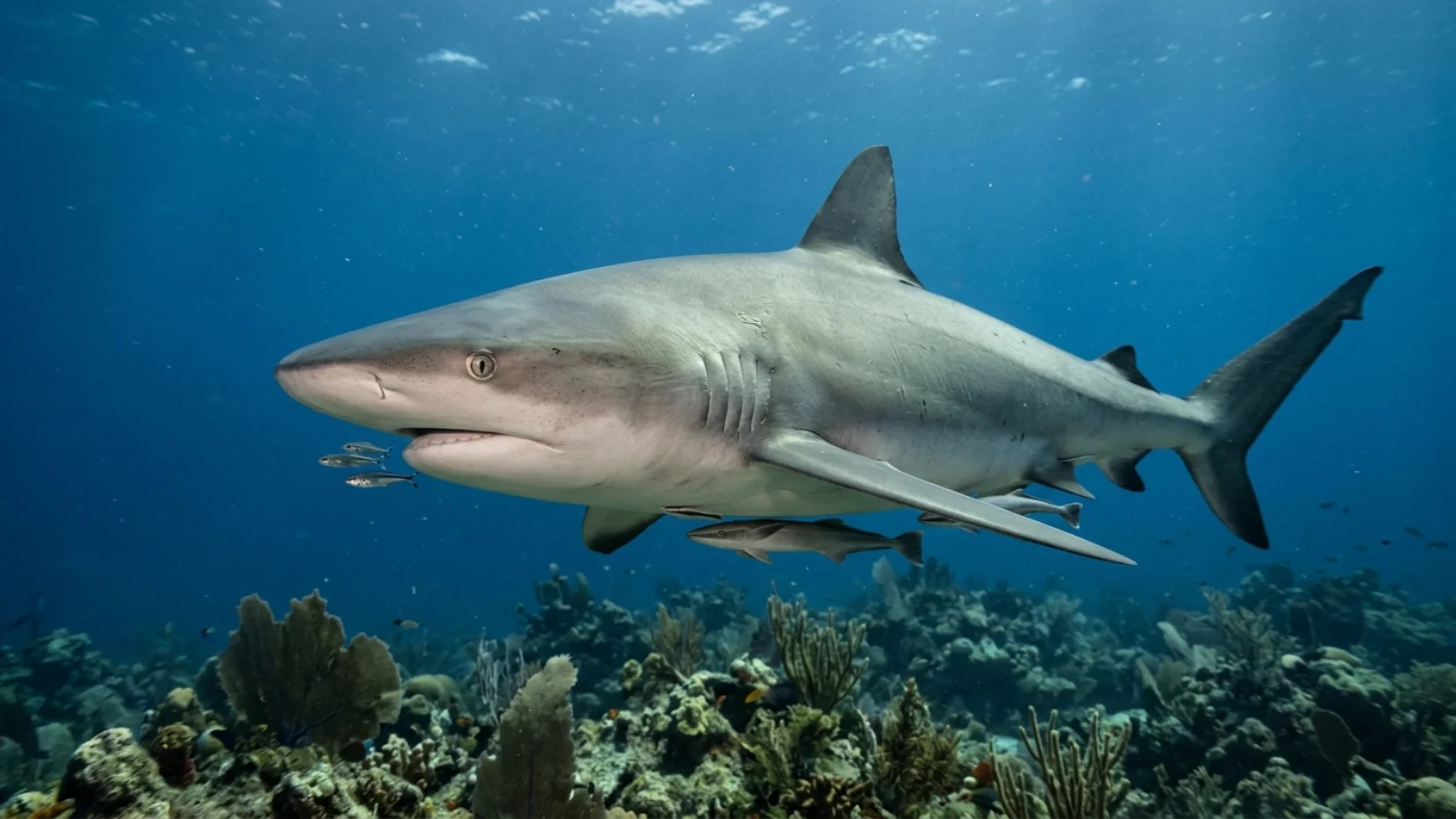
Do sharks sleep with their eyes open?
Often, yes. In the 2022 study, sleeping draughtsboard sharks almost always closed their eyes by day, but at night their eyes were open about 38% of the time. Eye closure seems to depend more on light than on sleep.
Sharks have no true eyelids like ours, but many have a nictitating membrane or can close their eyes partially. The draughtsboard results show you cannot tell whether a shark is sleeping just by looking at its eyes. A shark lying motionless on the sand with open eyes may still be asleep. For more on shark eyesight, see are sharks blind?
How do sharks breathe while resting?
It depends on the species. Some sharks can pump water over their gills while lying still (buccal pumping); others must keep swimming so water flows through their mouths and over their gills (ram ventilation).
| Breathing method | How it works | Can rest still? | Examples |
|---|---|---|---|
| Buccal pumping | Mouth and throat muscles pump water over the gills | Yes | Nurse, zebra, epaulette, angel, horn sharks, wobbegongs |
| Both | Pumps when still, rams when swimming | Yes | Lemon, whitetip reef, Caribbean reef sharks |
| Obligate ram ventilation | Must swim with mouth open to force water over the gills | No (or only in a current) | Great white, mako, hammerhead sharks |
Bottom-dwelling sharks, most of them carpet sharks, bullhead sharks and catsharks, breathe easily while still and often have spiracles, openings behind the eyes that draw in water. Many coastal requiem sharks can switch between methods. The fast open-water swimmers, including the great white, makos and hammerheads, have lost most of their pumping ability and suffocate if they stop moving in still water.
How do great white sharks sleep if they can’t stop swimming?
Nobody knows for certain. The best clue is footage from Guadalupe Island, Mexico, released in 2016, showing a great white hovering motionless near the bottom with its mouth open into a current, in an apparently catatonic, sleep-like state.
The footage, filmed by researchers from the Woods Hole Oceanographic Institution and the Mexican group Pelagios Kakunjá using an autonomous camera vehicle, suggests great whites can rest by facing into a current strong enough to push water over their gills. Another possibility is that swimming continues on autopilot while parts of the brain rest. A 1977 study of the spiny dogfish found that the nerve circuits coordinating swimming are located in the spinal cord rather than the brain, so a shark could, in principle, keep swimming while its brain is quiet. Some marine mammals, such as dolphins, rest one half of the brain at a time, but no one has shown that in sharks yet.
What are the “sleeping sharks” of Isla Mujeres?
In the 1970s, divers near Isla Mujeres, Mexico, found Caribbean reef sharks lying motionless in underwater caves, apparently asleep. Marine biologist Eugenie Clark investigated, and the “cave of the sleeping sharks” became famous.
Clark and colleagues found that the caves had currents and water chemistry that may have made it easier for the sharks to breathe while resting, possibly because of freshwater seeping in from the limestone and raising oxygen levels, and that the sharks were unusually docile. They also wondered whether the water helped remove parasites. The sharks were not in a true trance, but the caves were one of the first places where scientists studied shark resting behaviour in the wild. Whitetip reef sharks in the Indo-Pacific and nurse sharks in Florida show similar daytime resting in caves.
How long do sharks sleep?
There is no single answer. In the 2022 draughtsboard study, sharks slept in many short bouts through the day and night rather than in one long block.
Resting periods longer than about five minutes were linked to the drop in metabolism the scientists used to define sleep. Many reef sharks spend much of the day lying still in caves and hunt at night, so their rest is concentrated in daylight. Open-ocean sharks may rest in short periods while cruising slowly. As more sharks are tagged with accelerometers and heart-rate loggers, a clearer picture of how and when different species sleep is emerging.
Do sharks sleep?
Yes. Sharks enter a sleep-like rest with lower metabolism and responsiveness. The first physiological evidence came from a 2022 study of draughtsboard sharks.
Do sharks sleep with their eyes open?
Often. Draughtsboard sharks slept with their eyes closed by day but had them open about 38% of the time at night.
Do sharks die if they stop swimming?
Some do. Obligate ram ventilators such as great whites, makos and hammerheads need water flowing over their gills and can suffocate if they stop in still water. Many other sharks can pump water and rest on the bottom.
How do great white sharks sleep?
Probably by resting while swimming slowly or by facing into a current. A great white was filmed in 2016 hovering near the bottom off Guadalupe Island, Mexico, mouth open into a current, in a sleep-like state.
Which sharks can rest on the bottom?
Nurse, lemon, whitetip reef, Caribbean reef, zebra, epaulette, angel and horn sharks, wobbegongs and catsharks, among others.
Where do sharks sleep?
Bottom-dwelling sharks rest in caves, under ledges and on sand. Open-ocean sharks may rest while slowly swimming or holding position in currents.
Can a shark swim while asleep?
Possibly. In spiny dogfish, the swimming rhythm is generated in the spinal cord, so in theory a shark could keep swimming while its brain rests. This has not been proven.
How long do sharks sleep?
In the 2022 study, draughtsboard sharks slept in many short bouts throughout the day and night rather than one long period.
Blane Perun has been exploring Earth’s oceans and marine life for over 25 years. Founder of TheSea.Org in 1999, underwater photographer, coral aquaculture pioneer, and explorer of 80+ countries.
About Blane Perun → All Shark Species A–Z →