Do Marine Mammals Drink Salt Water? — Mostly Not — They Eat and Burn Their Water Instead
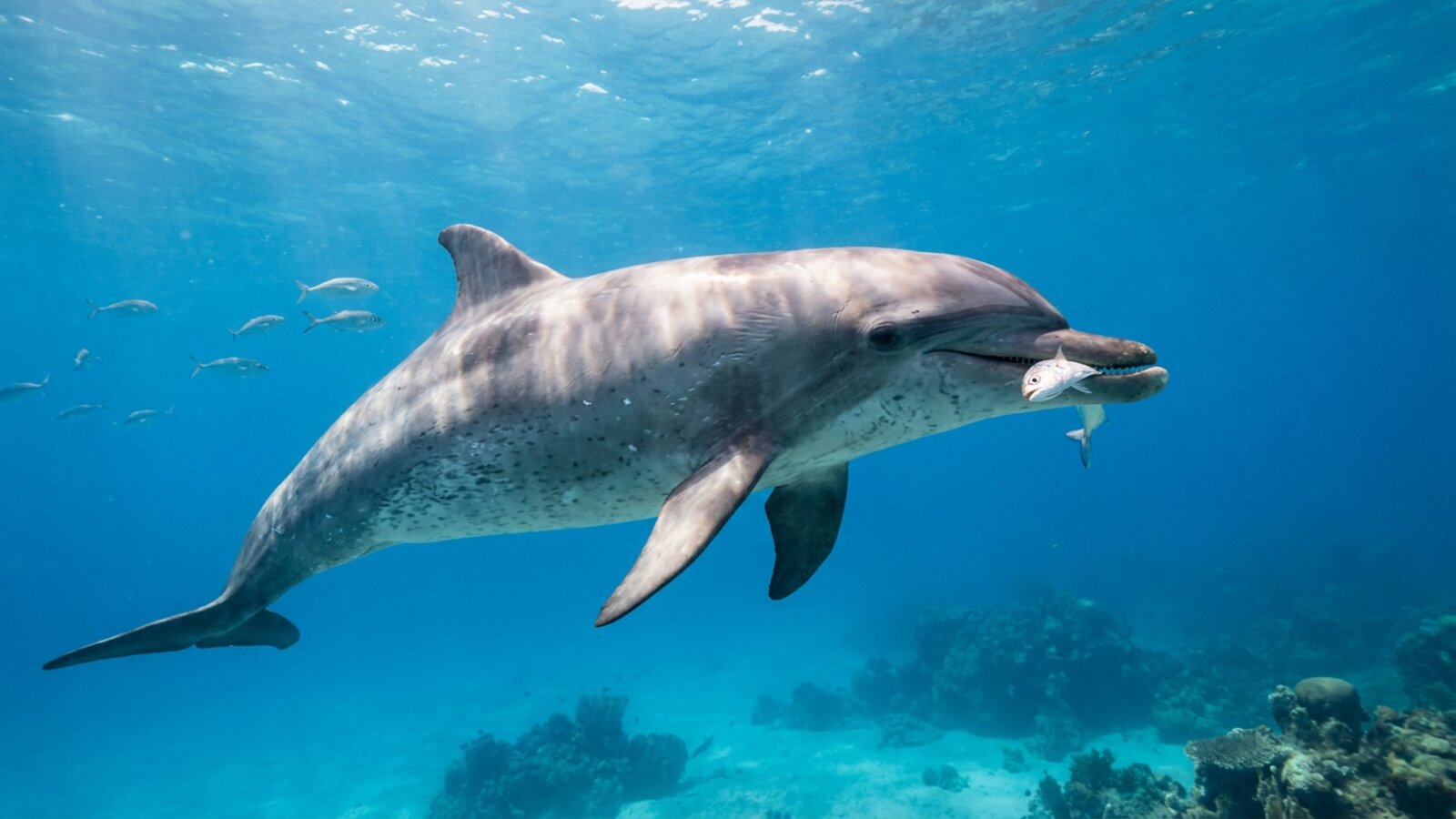
Mostly no. Whales, dolphins and seals get almost all the water they need from their food and from metabolic water released when they burn fat. Their kidneys are built to concentrate urine and dump extra salt. A few species do drink seawater: sea otters are known to, and some seals and dolphins swallow it in small amounts. Manatees are the odd ones out: they seek fresh water to drink whenever they can.
Seawater is about 3.5% salt, saltier than mammal blood. To get rid of that salt, kidneys must make urine even saltier than the water swallowed. Human kidneys cannot, so drinking seawater leaves a person more dehydrated than before. Many marine mammals can make more concentrated urine than people, but even for them seawater is a poor source of water. Food is better.
Where do whales and dolphins get their water?
From their prey and from their own fat. A fish or squid is roughly two-thirds to three-quarters water, and burning fat releases more water as a by-product.
Every meal a dolphin swallows is mostly water, and the salt content of a fish’s body fluids is far lower than seawater, because fish regulate their own salt. So a dolphin eating fish is effectively drinking low-salt water packaged in food. Baleen whales are harder cases, because krill and other invertebrates have body fluids close to seawater in saltiness, and a whale gulps a lot of seawater along with each mouthful. Whales press most of that water back out through their baleen, but some salt still gets in, and the kidneys deal with it.
The second source is metabolic water. When fat is broken down for energy it releases water, and marine mammals carry a lot of fat. A fasting elephant seal on a breeding beach, or a migrating whale that hardly eats for months, survives in part on water made from its own blubber (see do dolphins drink water?).
How do marine mammal kidneys handle salt?
Their kidneys are split into many small lobes, called reniculi, each working like a mini-kidney. The lobes add filtering surface, but physiologists have found they do not by themselves give whales and seals a greater ability to concentrate urine.
Cetaceans and pinnipeds have reniculate kidneys, made of hundreds of these lobes bundled together. Bears and otters have them too, so it is not a purely marine invention, but it suits life in salt water. Many marine mammals can make urine somewhat more concentrated than seawater, but only sea otters and sirenians reliably reach sodium and chloride levels at or above those of seawater, the point at which drinking it yields free water. Whales, dolphins, seals and sea lions mostly balance their water through food and metabolism and drink seawater only occasionally, probably to help balance salts. Saving water matters just as much, and seals in particular recover much of the moisture in their breath.
Which marine mammals do drink seawater?
Sea otters are the clearest example. They drink seawater regularly, helped by large kidneys and a huge food intake.
A sea otter eats an estimated 25–38 percent of its body weight a day in crabs, clams and sea urchins, prey whose body fluids are about as salty as the sea. Its kidneys are large for its size, and it can produce very concentrated urine, so drinking seawater works for it. Some seals and sea lions have been seen drinking seawater too, a behaviour called mariposia, though how much it matters to their water balance varies by species (see can seals drink sea water?).
The otter’s water budget is tied to its furnace-like metabolism. With no blubber, it relies on dense fur and a metabolic rate two to three times that of a land mammal of similar size, which is why it must eat so much. Its gut digests food with an estimated 80–85 percent efficiency and can pass a meal in as little as three hours. That constant throughput delivers a steady stream of water from prey, but also a steady load of salt, and the otter’s big kidneys and occasional drinking keep the two in balance. Few other marine mammals process food and salt at such a pace.
Do manatees drink salt water?
Manatees can live in salt water for long periods, but they seek out fresh water to drink and are often seen drinking from hoses, rivers, springs and outflows.
West Indian manatees move freely between fresh, brackish and salt water. They are herbivores, and seagrass does not supply water as low in salt as a fish does. Studies suggest they can get by in salt water but do better with periodic access to fresh water, which is why Florida manatees congregate at river mouths, springs and freshwater discharges. People feeding manatees from garden hoses is illegal under federal and Florida law, because it trains animals to approach docks and boats.
Could a human survive like a marine mammal?
No. Human kidneys can’t make urine saltier than about 2% salt, so every litre of seawater costs more than a litre of fresh water to flush out.
This is why castaways who drink seawater dehydrate faster. Survival manuals advise getting water from fish flesh (not their fluids alone) and rain, which is close to what dolphins do: get water from the food, not the sea.
How salty can marine mammal urine get?
Physiologists measure urine strength as osmolality, the concentration of dissolved particles. The highest value ever recorded in a marine mammal is about 2,658 milliosmoles per litre, reported by the U.S. Navy veterinarian Sam Ridgway in 1972. A 2001 review by Rudy Ortiz in the Journal of Experimental Biology compiled values ranging from about 1,158 in the West Indian manatee to 2,420 in the ringed seal. Seawater, for comparison, carries about 470 millimoles of sodium and 548 millimoles of chloride per litre.
A better yardstick is the ratio of urine to blood plasma concentration. In marine mammals it runs from about 3.7 in the West Indian manatee to 7.0 in the Cape fur seal. Humans manage about 4.6, while desert rodents reach 14 to 25. In other words, most whales and seals are not super-concentrators at all; desert mice and gerbils have far more extreme kidneys. Marine mammals cope mainly by avoiding the need to drink rather than by out-performing land mammals at removing salt.
Sea otters are the main exception. Their urine carries more sodium and chloride than seawater, so every sip of the sea leaves them with a little free water. Their kidneys are also unusually large for their body size, a feature that matches their reliance on salty invertebrate prey.
How much seawater do seals and dolphins really drink?
Measurements show small but real amounts, varying by species. In captive harbor seals, swallowed seawater made up about 9.2 percent of total water turnover in fed animals and 7.25 percent in unfed ones. Galápagos fur seals drink about 18 ml per kilogram of body weight a day, while Antarctic and northern fur seals appear not to drink at all. Dolphins kept without food drank 4.5 to 13 ml per kilogram a day in studies by Telfer and colleagues in 1970 and by Clifford Hui in 1981, so a 150 kg bottlenose dolphin would take in roughly 0.7 to 2 litres.
Scientists call deliberate seawater drinking mariposia. Because the amounts are small and the animals cannot usually gain free water from them, one leading idea is that occasional drinking helps them top up salts, particularly when they are fasting or eating low-salt prey.
Why does diet change how much salt a marine mammal takes in?
Not all seafood is equally salty inside. Most marine invertebrates, including squid, crabs, clams and krill, are osmoconformers: the overall concentration of their body fluids matches the surrounding sea, even if the exact mix of ions differs. Seawater sits at roughly 1,000 milliosmoles per litre, so an animal that eats invertebrates swallows fluids about as concentrated as the ocean itself.
Bony fish are different. They are osmoregulators that keep their blood well below seawater strength, so a fish-eating dolphin or seal takes in comparatively dilute water with every meal. Sharks and rays take a third route, holding their body fluids slightly above about 1,000 milliosmoles by retaining urea and a protective compound called trimethylamine oxide, so their tissues are concentrated mostly with waste urea rather than salt.
That helps explain the pattern across species. Sea otters, which live on urchins, crabs and clams, face a heavy salt load and have the largest kidneys and saltiest urine. Fish specialists such as many dolphins and seals get by with little drinking at all. Baleen whales that filter krill sit in between: their prey is ocean-strength inside, but they press most of the engulfed water out through their baleen before swallowing.
How much water does burning fat produce?
A surprising amount. Breaking down 100 grams of fat yields about 107–110 grams of water, more than the mass of the fat itself, compared with about 41–42 grams from protein and 60 grams from carbohydrate. Humans get only about 8–10 percent of their water this way, but for blubber-rich marine mammals metabolic water can be a major share, especially during long fasts.
Elephant seals show how efficient this can be. Weaned northern elephant seal pups fast on the beach for weeks, and their total water turnover drops to about 6 ml per kilogram a day, a third of the rate in fasting harbor seals. Their water turnover half-time is about 2.5 times longer. Grey seal pups at the end of a 52-day fast had blood about 35 percent more concentrated than before, yet their total body water had actually risen by 7 percent, because burning fat and protein kept producing water.
How do marine mammals save water?
Breathing is a hidden drain. Every exhaled breath carries moisture, and seals reclaim much of it with a countercurrent heat exchanger in the nose: cool nasal passages condense water vapour from the outgoing air. Without it, researchers estimated that 10 to 33 percent of a seal’s total water turnover would be lost through breathing. Dolphins, which breathe less often and hold each breath longer, lose only about 30 to 77 percent as much respiratory water as a land mammal of the same size.
Diving also changes kidney work. During simulated dives, blood flow to a dolphin’s kidneys fell by 91 percent, and in Weddell seals the kidneys’ filtering rate dropped by more than 90 percent on dives longer than about nine minutes. The kidneys effectively pause underwater and catch up at the surface. In fasting dolphins, water passing through the skin may account for as much as 70 percent of total water exchange, a reminder that a dolphin is not a sealed container.
Can manatees live without fresh water?
Manatees blur the rules. Measurements on West Indian manatees found water turnover of about 145 ml per kilogram a day for fed animals in fresh water, against about 45 in seawater and 17 when fasting in seawater. Manatees living in fresh water still had blood chemistry similar to seawater animals, suggesting they visit salt water often enough to keep their salts balanced. Reviews note that sirenians, like otters, can produce urine with sodium and chloride near seawater levels, so a manatee could in principle drink the sea without losing water; in practice they often drink fresh water when it is available. Their fondness for springs, river mouths and freshwater outflows is a big part of why those spots are such dependable places to watch them in Florida.
What happens when people drink seawater?
The outcome is grim. Drinking seawater to stay hydrated is counterproductive, because more water must be passed as urine to clear the salt than the seawater provides. A review of 163 life-raft voyages estimated the risk of death at 39 percent for survivors who drank seawater, compared with 3 percent for those who did not. Survival manuals consistently advise against it. Samuel Taylor Coleridge captured the sailor’s torment in The Rime of the Ancient Mariner: “Water, water, every where, / Nor any drop to drink.”
Swallowing a small amount of clean seawater by accident is not harmful, especially alongside plenty of fresh water. The danger lies in relying on it. The French physician Alain Bombard famously crossed the Atlantic in a small inflatable boat in 1952, living largely on raw fish and their juices plus small amounts of seawater, to argue that castaways could survive. His conclusions were disputed, and modern survival advice remains firm: collect rain, ration fresh water and never treat the sea as a drink.
Do whales drink salt water?
Not deliberately in any large amount. Whales get water from prey and from burning fat. Baleen whales swallow some seawater while feeding, and their kidneys excrete the extra salt.
Do dolphins drink water?
Rarely. Dolphins get most of their water from the fish and squid they eat, plus metabolic water from fat. Their kidneys concentrate urine to conserve water.
Can seals drink salt water?
Some seals and sea lions have been seen drinking seawater, but most of their water comes from food. Their kidneys can concentrate salt more than human kidneys can.
Do sea otters drink salt water?
Yes. Sea otters drink seawater regularly. Large kidneys and very concentrated urine let them excrete the salt, and their high food intake supplies more water.
Do manatees need fresh water?
Manatees can survive in salt water but seek fresh water to drink when it is available, gathering at springs, river mouths and freshwater outflows.
How do marine mammals get rid of salt?
Through their kidneys, which are divided into many small lobes (reniculi) but the lobes do not by themselves boost concentrating power. Most avoid needing to drink by getting water from food and fat and by recycling moisture from their breath.
Why can’t humans drink seawater?
Human kidneys cannot make urine as salty as seawater, so drinking it adds salt faster than the body can remove it, causing dehydration.
What is metabolic water?
Water released when the body breaks down fat, protein or sugar for energy. Marine mammals, which carry thick blubber, rely on it heavily during fasting or migration.
- Ortiz, R.M. (2001), “Osmoregulation in marine mammals,” Journal of Experimental Biology 204(11)
- Ridgway (1972); Telfer et al. (1970); Hui (1981); Depocas et al. (1971), as cited by Ortiz (2001)
- Reviews of reniculate kidney structure in cetaceans and pinnipeds
- Sea otter energetics and water balance (25–38% daily food intake)
- Metabolic water yields from fat, protein and carbohydrate
- Life-raft survival studies on seawater drinking (163 voyages)
Blane Perun has been exploring Earth’s oceans and marine life for over 25 years. Founder of TheSea.Org in 1999, underwater photographer, coral aquaculture pioneer, and explorer of 80+ countries.
About Blane Perun →