Edward Low — The Most Sadistic Pirate of the Golden Age
Edward Low was an English pirate active from 1721 to 1724, notorious not for his operational success — his career was relatively brief and his captures modest — but for his documented cruelty toward captives. Low tortured and mutilated prisoners in ways that even shocked his contemporaries, at a time when pirate violence was common and widely reported. He was one of the last significant pirates of the Golden Age, active after Blackbeard’s death and Roberts’ elimination. His ultimate fate is unknown — he disappeared from the record in 1724.
Low’s historical significance is grim rather than grand. He is not notable for strategic achievement, political complexity, or maritime innovation. He is notable for the degree of violence he inflicted on captives — documented in contemporary newspapers, sailor accounts, and Boston court records with enough specificity and corroboration to be taken seriously. In a period when pirate violence was not unusual, Low’s was remarkable enough that contemporaries used it to argue for more aggressive piracy suppression.
Origins and turn to piracy
Low was born in Westminster around 1690 into poverty. He spent his youth as a thief and street criminal in London before emigrating to Boston, Massachusetts, where he worked as a rigger in the shipyard. His wife died in childbirth in 1719 — the one event in his biography that the record treats as having genuine emotional impact on him.
After her death, Low took legitimate employment on a sloop sailing to Honduras to cut logwood. An altercation with the captain — Low shot at him and missed, hitting another sailor instead — ended with Low and a dozen sympathetic crew members taking a small vessel and declaring themselves pirates. He joined the established pirate George Lowther briefly, rising to command of his own vessel within the Lowther fleet, before striking out independently in 1722 with a crew that shared his appetite for violence.
Operations and the violence
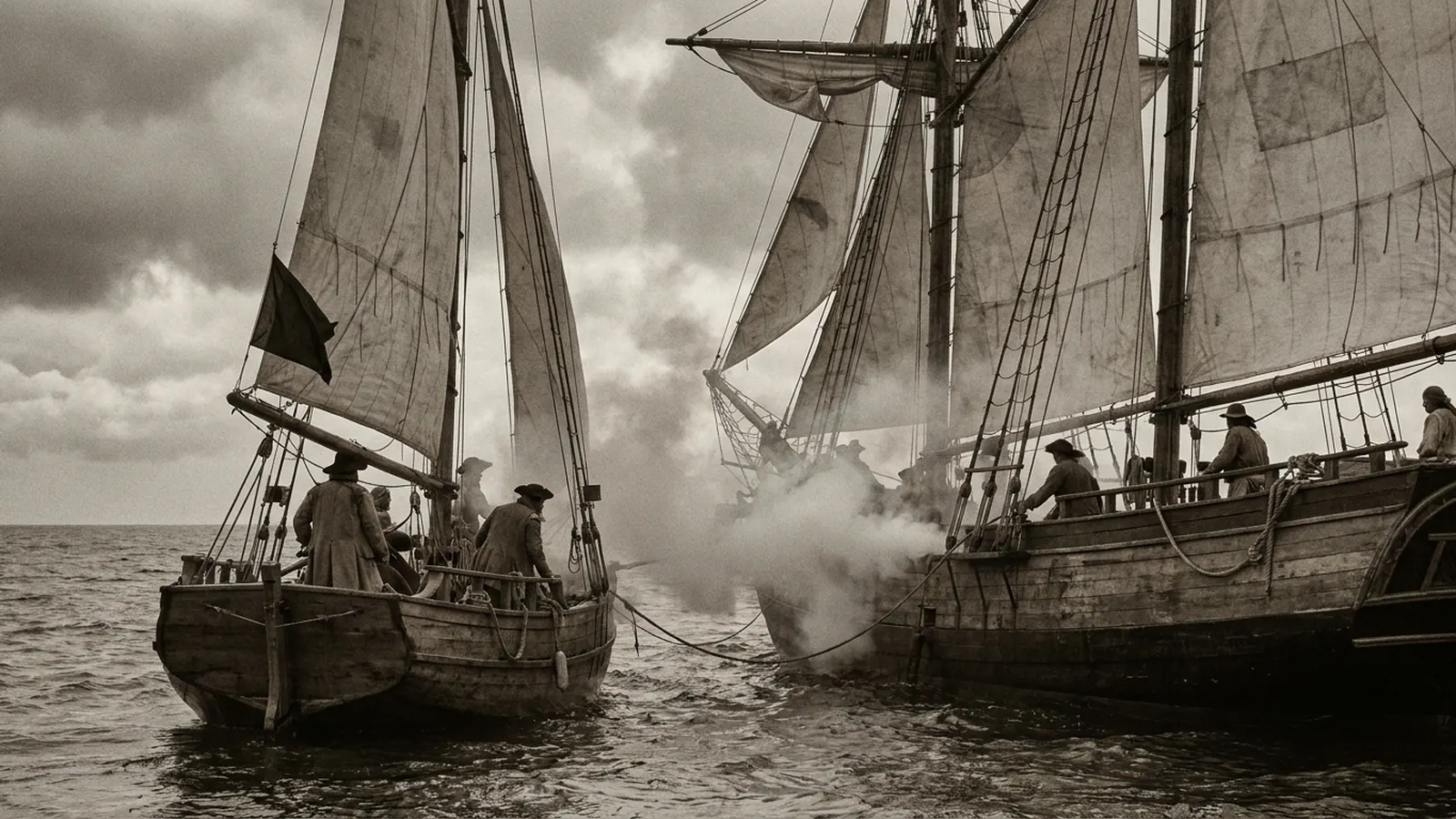
Low operated primarily along the New England coast and in the Caribbean, capturing fishing vessels, merchant ships, and coastal traders. He was reportedly effective at the tactical level — using false flags, fast ships, and the threat of violence to produce rapid surrender — but what distinguished him from contemporaries was what happened after surrender.
Contemporary accounts — from newspapers like the Boston News-Letter and from sailors who survived capture and testified at admiralty courts — describe Low cutting off ears, lips, and noses of captives, forcing prisoners to eat their own body parts, burning ships with crews aboard, and killing men for perceived slights or simply for his entertainment. Some of these accounts are certainly embellished. The pattern is too consistent across too many independent sources to dismiss entirely. He was genuinely feared for cruelty in a way that went beyond the standard pirate violence of the era.
The HMS Greyhound engagement
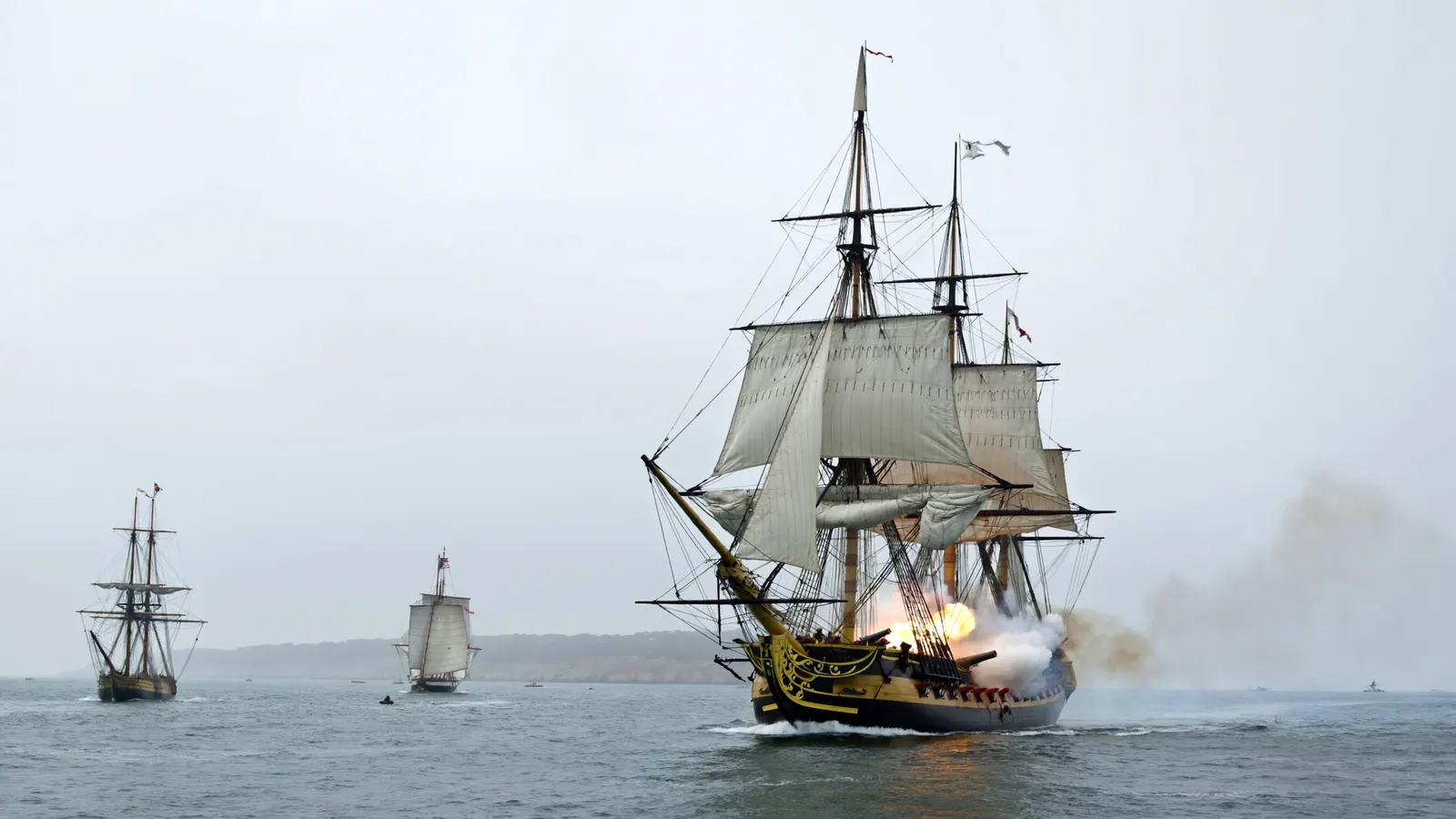
In June 1723, Low’s fleet encountered HMS Greyhound off the coast of Long Island, New York. Low initially believed the Greyhound was a merchant vessel and approached to attack. The Greyhound was a Royal Navy sloop specifically deployed to hunt pirates.
In the engagement that followed, Low’s flagship was damaged and he was forced to retreat. His consort vessel, commanded by Charles Harris, was captured. Harris and his crew were taken to Newport, Rhode Island, where 26 were tried and hanged. It was one of the largest pirate executions in American history. Low escaped with his flagship but the battle marked the beginning of the end of his career. His fleet was reduced, his options limited, and the Royal Navy was now specifically hunting him.
Legacy
Low’s legacy is uncomfortable and limited. He is not celebrated the way Golden Age pirates are — there is no romantic narrative available for a man whose historical record consists primarily of documented atrocity. He is significant as evidence that the post-1722 period of piracy, after Roberts’ death, was characterised by smaller and more desperate operators without the strategic or political dimensions of the Nassau-era pirates. Low represents the last gasp of Atlantic piracy — brutal, diminished, and without the political philosophy or operational sophistication of the figures who preceded him.
Related on TheSea
What was Edward Low known for?
Low was known primarily for his documented cruelty toward captives. Contemporary newspapers, sailor testimonies, and court records describe systematic torture and mutilation of prisoners in ways that shocked even observers accustomed to pirate violence. He is not celebrated for operational achievement but rather represents the most extreme documented violence of the late Golden Age.
How many ships did Edward Low capture?
Estimates range from 100 to 140 vessels during his 1721–1724 career, primarily along the New England coast and in the Caribbean. His capture rate was significant but his career was relatively brief. He used standard pirate tactics — false flags, fast approach, threat of violence — to produce rapid surrenders.
What happened to Edward Low?
He disappeared from the historical record in 1724. The most detailed account claims he was set adrift by his own crew after murdering a sleeping sailor, picked up by a French vessel, tried at Martinique, and hanged. This has not been corroborated by English sources. His fate is genuinely unknown.
Was Low active during the Golden Age of Piracy?
He was active in the period immediately following the Golden Age — after Blackbeard’s death in 1718 and Bartholomew Roberts’ elimination in 1722. He represents the post-Golden Age remnant: smaller operators, less political, more brutal, without the Nassau republic structure that had supported the earlier generation.
Where did Low operate?
Primarily along the New England coast — Massachusetts, Rhode Island, Nova Scotia — and in the Caribbean. He also raided in the Azores and off the coast of West Africa. His base shifted constantly; he did not maintain a fixed haven equivalent to Nassau or Tortuga.
Blane Perun has been exploring Earth’s oceans and marine life for over 25 years. Founder of TheSea.Org in 1999, underwater photographer, coral aquaculture pioneer, and explorer of 80+ countries.
About Blane Perun → More on Pirates →