NSU Oceanographic Center — Marine Science at the Mouth of Port Everglades
The NSU Oceanographic Campus of Nova Southeastern University is a 10-acre site at 8000 North Ocean Drive, Dania Beach, Florida, on the Port Everglades entrance channel, within about 100 yards of the Atlantic. Its centrepiece is the Guy Harvey Oceanographic Research Center, completed in 2012, with roughly 86,000–87,000 sq ft of labs on five floors. NSU offers a BS in marine biology, MS degrees in marine and environmental science and a PhD in marine biology/oceanography, and hosts the Guy Harvey Research Institute and the National Coral Reef Institute, established by Congressional mandate in 1998.
What is the NSU Oceanographic Center?
Nova Southeastern University’s marine science campus, a working lab on the Port Everglades inlet with the Gulf Stream and Florida’s reef tract on its doorstep.
NSU’s marine science programmes are based at its Oceanographic Campus beside Port Everglades, on the south side of the inlet next to Von D. Mizell–Eula Johnson State Park (the former John U. Lloyd Beach State Park). The location is the point. The Gulf Stream runs close to this stretch of coast, the Florida Straits and the Bahama Banks are a short boat ride away, and the northern end of Florida’s coral reef tract lies just offshore. The campus has a boat basin of roughly an acre, so research boats can leave directly from the labs and be on a reef or in deep water the same morning. The marine programmes sit within NSU’s Halmos College of Arts and Sciences, formerly the Halmos College of Natural Sciences and Oceanography.
The centre accounts for a large share of the university’s research income. In 2012 NSU’s own newsletter reported that the Oceanographic Center brought in more than three-quarters of the university’s extramural grants and contracts. That weight reflects the long-running coral, fish and coastal monitoring programmes based here, many of them funded by federal, state and county agencies.
Why is Port Everglades such a good place for ocean science?
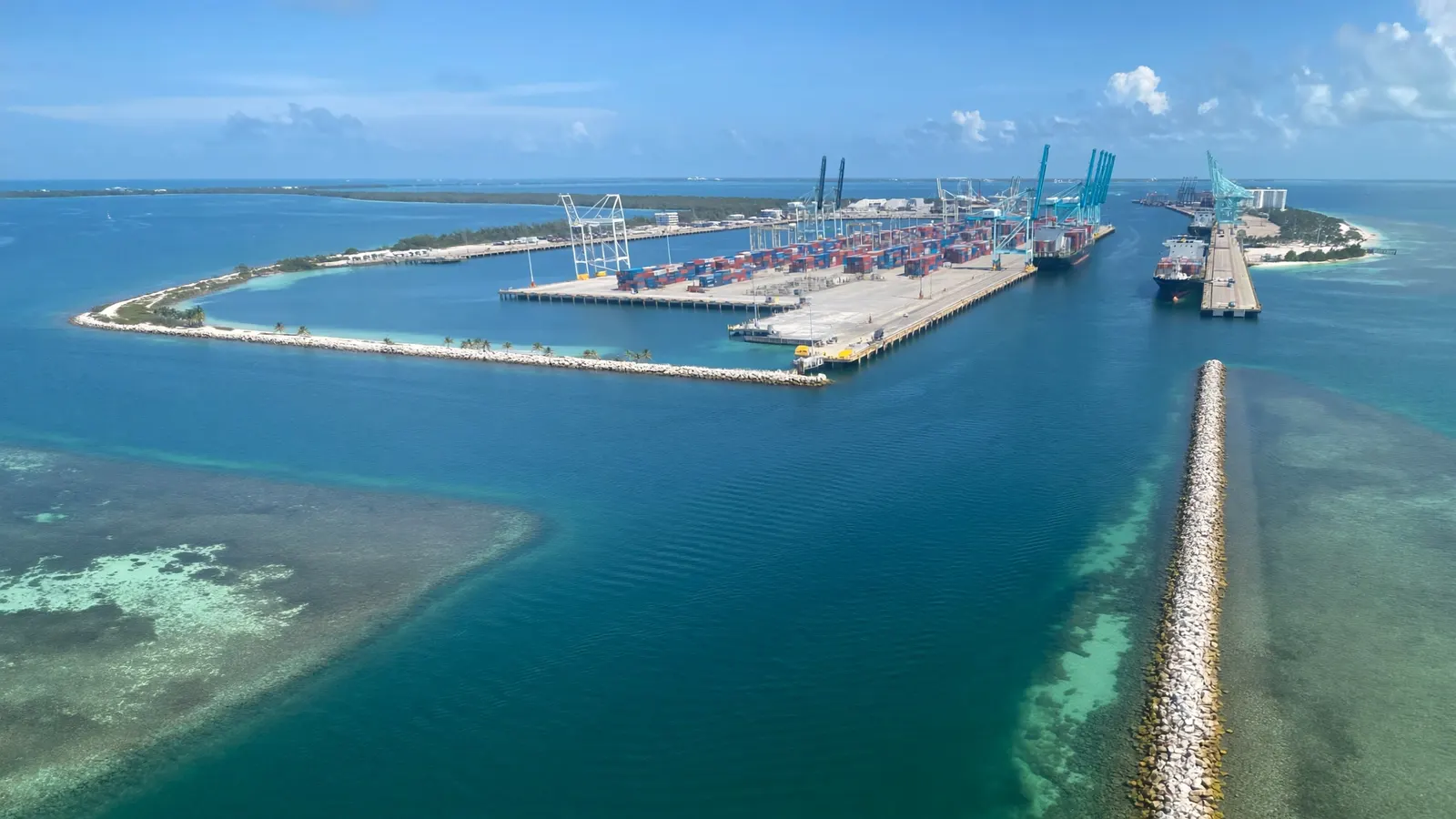
Few places in the continental United States put deep, fast-moving ocean water, coral reefs and a major port this close together. Off southeast Florida the Florida Current, the start of the Gulf Stream, squeezes through the Florida Straits between the peninsula and the Bahamas. It is one of the best-measured currents on Earth: a submarine telephone cable crossing the straits at about 27°N, north of Fort Lauderdale, has been used to estimate its volume transport almost continuously since 1982, the longest such record for any boundary current. In 2020 the oceanographer Christopher Piecuch combined that record with coastal sea-level data going back to 1909 and concluded that the current has likely weakened over the past century, a result relevant to the wider Atlantic overturning circulation.
For a marine lab, that means students can study a major western boundary current, the deep-water life that comes close to shore with it, and a shallow reef system within a short boat ride. The inlet itself brings tidal exchange between the Atlantic and the estuaries of the Intracoastal Waterway, with mangroves and seagrass a little way inland. Few campuses can offer coral transects, open-ocean tagging trips and estuary sampling all from the same dock, and that range of habitats is one reason the centre has been able to run such varied programmes from a site of only about ten acres.
How did the Oceanographic Center begin?
Nova Southeastern University began as Nova University of Advanced Technology, chartered by the State of Florida in December 1964 as a graduate institution in the physical and social sciences. The Oceanographic Center was established in 1966, one of the first schools of the young university. Its first home was not a laboratory building at all but a large houseboat moored on 15th Street in Fort Lauderdale. William Springer Richardson served as director in those early years.
Between 1969 and 1970 the centre moved to its present site on Port Everglades, next to what was then a Navy base at the harbour entrance. For decades it worked out of a cluster of modest buildings: a two-storey main building with laboratories and offices, a second building with a warehouse and staging area, workshops, an electron microscopy lab and the library, a one-storey wet lab and coral workshop with an X-ray facility used to read growth bands in coral skeletons, and modular units used for aquaculture studies. Photographs in the university’s archive show Richard Dodge, later dean of the college, working on corals near the boat basin around 1979, and Pat Blackwelder using electron microscopy to study coccoliths around 1980.
The coral work begun in those years shaped the centre’s reputation. Dodge’s research used the annual density bands in coral skeletons, revealed by X-rays much like tree rings, to reconstruct how reefs grew and responded to their environment. That interest in long-term change in reefs led directly to the National Coral Reef Institute two decades later.
The university around the centre changed a great deal in the meantime. Under its second president, Abraham Fischler, who led Nova University from 1970 to 1992, it grew into a broad institution with many professional programmes. In 1994 Nova University merged with the Southeastern University of the Health Sciences, adding colleges of osteopathic medicine, pharmacy, optometry and allied health, and took its present name, Nova Southeastern University. Through all of these changes the Oceanographic Center kept its site at the harbour mouth and its identity as the university’s marine science base, and the college that houses it has been renamed several times, most recently as the Halmos College of Arts and Sciences.
What facilities does the NSU Oceanographic Campus have?
The Guy Harvey Oceanographic Research Center, completed in 2012, replaced much of the older cluster with a single modern building of five storeys and roughly 86,000–87,000 sq ft (NSU and press reports give slightly different figures). It holds LEED Silver certification for its energy and environmental design. In April 2015 NSU unveiled the Guy Harvey name on the building, honouring the marine wildlife artist and conservationist who had partnered with the university since 1999. Because the building sits under the approach path to Fort Lauderdale–Hollywood International Airport, the name on its roof is seen by a great many air travellers.
Inside, NSU lists laboratories for mapping and geospatial analysis, microbiology, genetics and genomics, histology and geology. Wet labs are supplied with running seawater so that corals, fish and invertebrates can be kept alive for experiments, backed by a seawater purification and delivery system and an outdoor experimental facility. The building also houses a research library, an auditorium and seminar rooms, as well as scuba gear storage and a fill station for air and nitrox, since diving is a routine part of fieldwork for many students and staff.
What degrees does NSU offer in marine science?
| Level | Programme |
|---|---|
| Bachelor’s | BS Marine Biology; BS Environmental Science |
| Master’s | MS Marine Science; MS Environmental Science |
| Doctorate | PhD Marine Biology/Oceanography |
The college works across two sites: the Parker Building on NSU’s main Fort Lauderdale/Davie campus and the Oceanographic Campus at Port Everglades, where graduate students and many undergraduate research projects are based. Thesis topics range widely. NSU’s newsletters have featured, for example, a doctoral project using genetic tools to study the stock structure of billfish, groupers and sharks, and a master’s study that examined more than 3,000 snapping shrimp living inside loggerhead sponges along the Florida reef tract.
Students choosing a direction may find oceanographer vs marine biologist useful, along with chemical oceanographer.
What coral reef research happens at NSU?
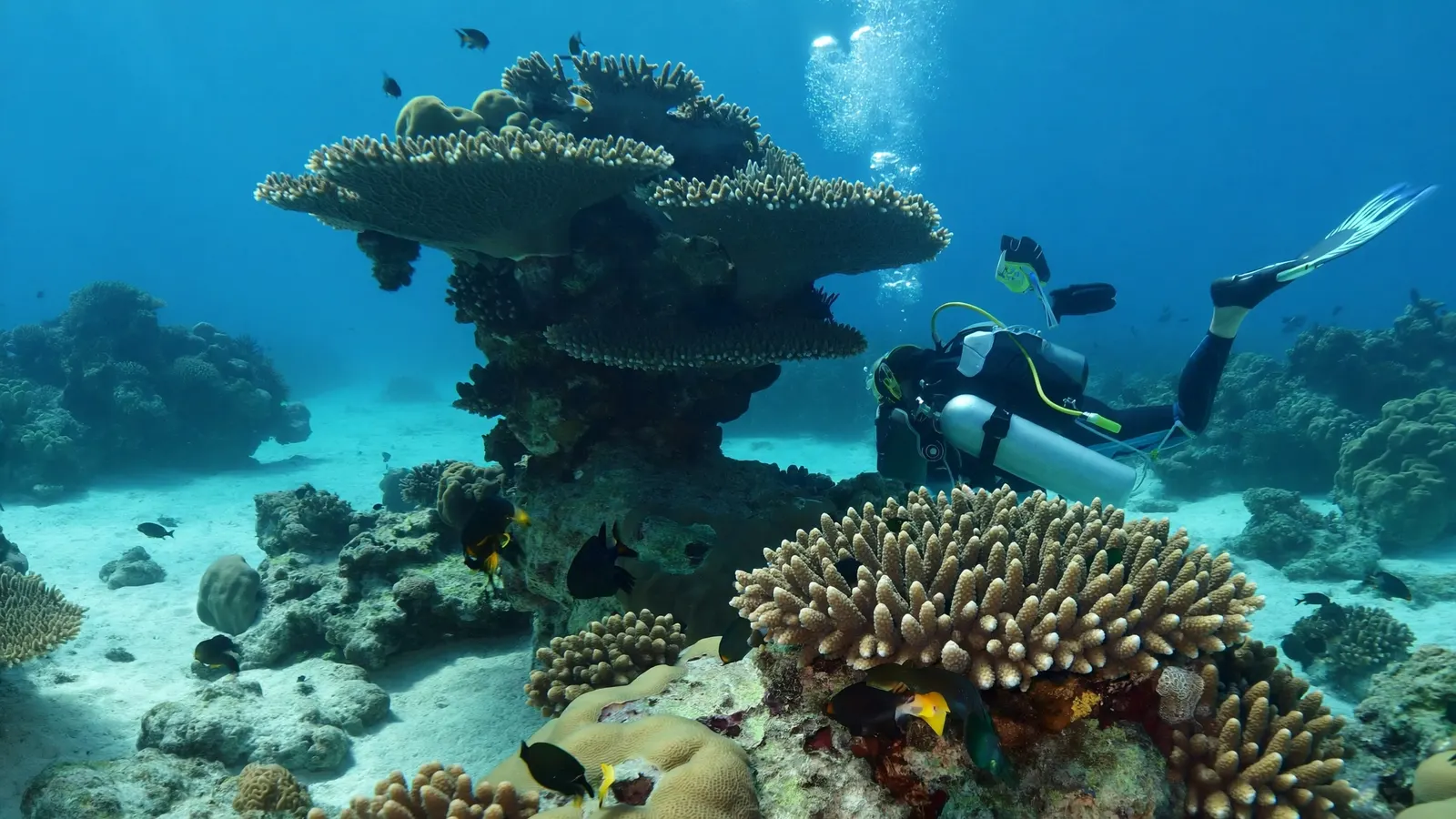
The National Coral Reef Institute (NCRI) was established at NSU by Congressional mandate in 1998, with the aim of assessing, monitoring and restoring coral reefs through research, training and education. Its home waters are the reefs off Broward County, the northern part of Florida’s coral reef tract, which runs in a series of ridges parallel to the shore close to one of the most heavily developed coastlines in the United States. That makes the area a natural laboratory for studying how reefs cope with dredging, beach renourishment, ship groundings, wastewater, warming and disease.
One of the most surprising findings to come out of this work concerned staghorn coral, Acropora cervicornis, a once-dominant Caribbean species that collapsed across much of its range from the 1980s onwards and is now listed as threatened under the US Endangered Species Act. In 2003 researchers from NSU, including Bernardo Vargas-Ángel and James Thomas, described dense thickets of staghorn coral in shallow water off Fort Lauderdale, close to the northern limit of the species’ range, and a companion study documented the corals spawning there. Large stands this far north were unexpected and became an important focus for monitoring and protection.
Since 2014, when stony coral tissue loss disease was first reported off Miami, NSU scientists have been part of the effort to track its spread along Florida’s reef and to find ways to help affected species recover. Recent collaborative work has used corals raised from captive spawning, such as the grooved brain coral Diploria labyrinthiformis, to test how conditioning, feeding and size at outplanting affect survival and predation once corals are returned to the reef. NSU also runs coral nurseries and outplanting projects as part of the wider restoration effort along the Florida reef tract. See coral reef bleaching for the heat stress that compounds these problems.
What does the Guy Harvey Research Institute study?
The Guy Harvey Research Institute (GHRI) was founded in 1999 as a collaboration between Guy Harvey and NSU’s Oceanographic Center. Harvey, best known for his paintings of marlin and other sportfish, also holds a PhD in fisheries biology from the University of the West Indies. The institute’s mission is to provide the science needed to understand, conserve and manage the world’s marine fishes and their ecosystems, and it is funded through the Guy Harvey Ocean Foundation, industry partners, research grants, donations and NSU. Its work covers shark and billfish ecology, fisheries science, coral reef biology, deep-sea biology, genomics and ocean circulation modelling.
Much of the institute’s best-known science uses DNA. In the mid-2000s, GHRI researchers led by Mahmood Shivji collaborated with Shelley Clarke and colleagues on studies of the Hong Kong shark fin market, then the largest in the world. By genetically identifying fins sold under traders’ Chinese market categories, they worked out which species were most heavily traded. A companion analysis combining genetics and trade records produced the first fishery-independent estimate of global shark catches and suggested that the biomass of sharks in the fin trade was three to four times higher than the catches reported in the main global database.
The same genetic toolkit has been turned on individual species. In 2019 a team including NSU and Cornell scientists published the genome of the white shark, about 4.6 billion base pairs with some 24,500 predicted genes, and found signs of evolutionary selection on genes linked to genome stability and wound healing. More recently GHRI researchers have used genome-scale data to study the population structure of the endangered shortfin mako across the Atlantic. Alongside the genetics, the institute tags sharks and billfish with satellite transmitters and publishes the tracks online, which has become one of its most popular public outreach tools.
What else is studied on the campus?
NSU supplies contract staff and research facilities to the Broward County Sea Turtle Conservation Program, which monitors nesting by loggerhead, green and leatherback turtles on the county’s beaches. The work involves dawn surveys, marking and protecting nests and managing hatchling disorientation caused by beachfront lighting, a significant problem on an urban coast. The campus has also grown red mangroves for coastal restoration projects, reflecting long-standing interest in the mangrove and seagrass habitats that line the Intracoastal Waterway and estuaries of southeast Florida.
Other groups work on deep-sea organisms, ocean circulation and remote sensing, fisheries genetics and the ecology of reef invertebrates. Because the campus sits on a busy commercial and cruise port, students also see at first hand the tension between economic use of the coast and its protection, from channel dredging near reefs to vessel traffic and water quality.
Can you visit the NSU Oceanographic Campus?
NSU hosts admissions visits and periodic public events at the campus; check the university’s visit page before going, because it is a working research site rather than a public aquarium. The neighbouring state park is open to the public and has a beach, picnic areas and views of ships entering Port Everglades. The reefs off Broward County, including the shallow staghorn areas and artificial reefs and wrecks placed offshore, are popular with divers, and local operators run trips from Fort Lauderdale and nearby ports.

Where is the NSU Oceanographic Center?
At 8000 North Ocean Drive, Dania Beach, Florida, on the Port Everglades entrance channel.
What is the Guy Harvey Oceanographic Research Center?
NSU’s main marine research building, a five-storey centre completed in 2012 with roughly 86,000–87,000 sq ft of labs and LEED Silver certification. It took Guy Harvey’s name in 2015.
Does NSU have a marine biology degree?
Yes. NSU offers a BS in marine biology, an MS in marine science and a PhD in marine biology/oceanography.
What is the National Coral Reef Institute?
A research institute at NSU established by Congressional mandate in 1998 to assess, monitor and restore coral reefs.
What does the Guy Harvey Research Institute study?
The conservation and biodiversity of wild fishes, especially sharks and billfish, using satellite tracking, population genetics and genomics. It was founded in 1999.
When was the NSU Oceanographic Center founded?
In 1966, as one of the first schools of the then Nova University. It began on a houseboat in Fort Lauderdale and moved to Port Everglades in 1969–70.
How big is the NSU Oceanographic Campus?
About 10 acres, with a boat basin of roughly an acre opening onto the Port Everglades channel.
- Nova Southeastern University, Oceanographic Campus page. Location, size, building and facilities.
- NSU Currents newsletter, Fall 2012. History of the Oceanographic Center (1966 founding, houseboat, 1969–70 move, share of extramural grants).
- Bell, J. (2015). Guy Harvey Oceanographic Center unveiled. Fishing World, 21 April 2015 (building size, GHRI founding 1999).
- Clarke, S.C. et al. (2006). Global estimates of shark catches using trade records from commercial markets. Ecology Letters. doi:10.1111/j.1461-0248.2006.00968.x
- Clarke, S.C., Magnussen, J.E., Abercrombie, D.L., McAllister, M.K. & Shivji, M.S. (2006). Identification of shark species composition and proportion in the Hong Kong shark fin market. Conservation Biology. doi:10.1111/j.1523-1739.2005.00247.x
- Marra, N.J. et al. (2019). White shark genome reveals ancient elasmobranch adaptations associated with wound healing and the maintenance of genome stability. PNAS. doi:10.1073/pnas.1819778116
- Piecuch, C.G. (2020). Likely weakening of the Florida Current during the past century revealed by sea-level observations. Nature Communications. doi:10.1038/s41467-020-17761-w
- Vargas-Ángel, B., Thomas, J.D. & Hoke, S.M. (2003). High-latitude Acropora cervicornis thickets off Fort Lauderdale, Florida, USA. Coral Reefs. doi:10.1007/s00338-003-0336-z
- Ladd, M.C. et al. (2024). Acclimation and size influence predation, growth, and survival of sexually produced Diploria labyrinthiformis used in restoration. Scientific Reports. doi:10.1038/s41598-024-73727-8
Blane Perun has been exploring Earth’s oceans and marine life for over 25 years. Founder of TheSea.Org in 1999, underwater photographer, coral aquaculture pioneer, and explorer of 80+ countries.
About Blane Perun →