The Biggest Sharks in the World — Ranked by Verified Size
The whale shark (Rhincodon typus) is the biggest shark and the biggest fish in the world, with the largest reliably measured individual at 18.8 m (62 ft). Second is the basking shark, recorded at about 12.3 m. Both are harmless plankton feeders. The biggest predatory shark is the great white, with individuals measured at 6.1–6.4 m, closely followed by the Greenland shark and great hammerhead.
What are the 10 biggest sharks in the world?
Ranked by the largest reliably measured length, the ten biggest living sharks are the whale, basking, great white, Greenland, great hammerhead, common thresher, tiger, megamouth, bluntnose sixgill and Pacific sleeper sharks.
| # | Species | Max length | Max weight | Notes | IUCN |
|---|---|---|---|---|---|
| 1 | Whale shark Rhincodon typus | 18.8 m | ~21 t (est.) | Plankton filter feeder | EN |
| 2 | Basking shark Cetorhinus maximus | 12.3 m | several tonnes | Plankton filter feeder | EN |
| 3 | Great white shark Carcharodon carcharias | 6.1–6.4 m measured | ~2–3 t | Largest predatory fish | VU |
| 4 | Greenland shark Somniosus microcephalus | 6.4 m confirmed | ~1.4 t | Slow Arctic giant | VU |
| 5 | Great hammerhead Sphyrna mokarran | 6.1 m | 500+ kg | Largest hammerhead | CR |
| 6 | Common thresher Alopias vulpinus | 5.7 m confirmed | 510 kg | Half its length is tail | VU |
| 7 | Tiger shark Galeocerdo cuvier | 5.5 m verified | ~1.5 t at 5.5 m | Largest requiem shark | NT |
| 8 | Megamouth shark Megachasma pelagios | ~5.5 m | ~1.2 t | Rare deep filter feeder | LC |
| 9 | Bluntnose sixgill Hexanchus griseus | ~4.8–5.5 m | 590–760 kg | Ancient deep-water shark | NT |
| 10 | Pacific sleeper shark Somniosus pacificus | 4.65 m confirmed (~7 m filmed) | 888 kg | Deep North Pacific scavenger | NT |
Lengths are the largest reliably measured or confirmed individuals, not unverified reports. Sources: species accounts in Compagno (FAO); IUCN Red List; peer-reviewed records compiled for each species. IUCN: LC Least Concern, NT Near Threatened, VU Vulnerable, EN Endangered, CR Critically Endangered.
Shark sizes are notoriously exaggerated. Fishermen’s tales, estimates from boats and photos taken without scale have produced plenty of 8 m great whites and 9 m sleeper sharks that no scientist ever measured. This ranking uses the largest individuals that were actually measured or confirmed, and notes where larger animals have been reported or filmed but not verified.
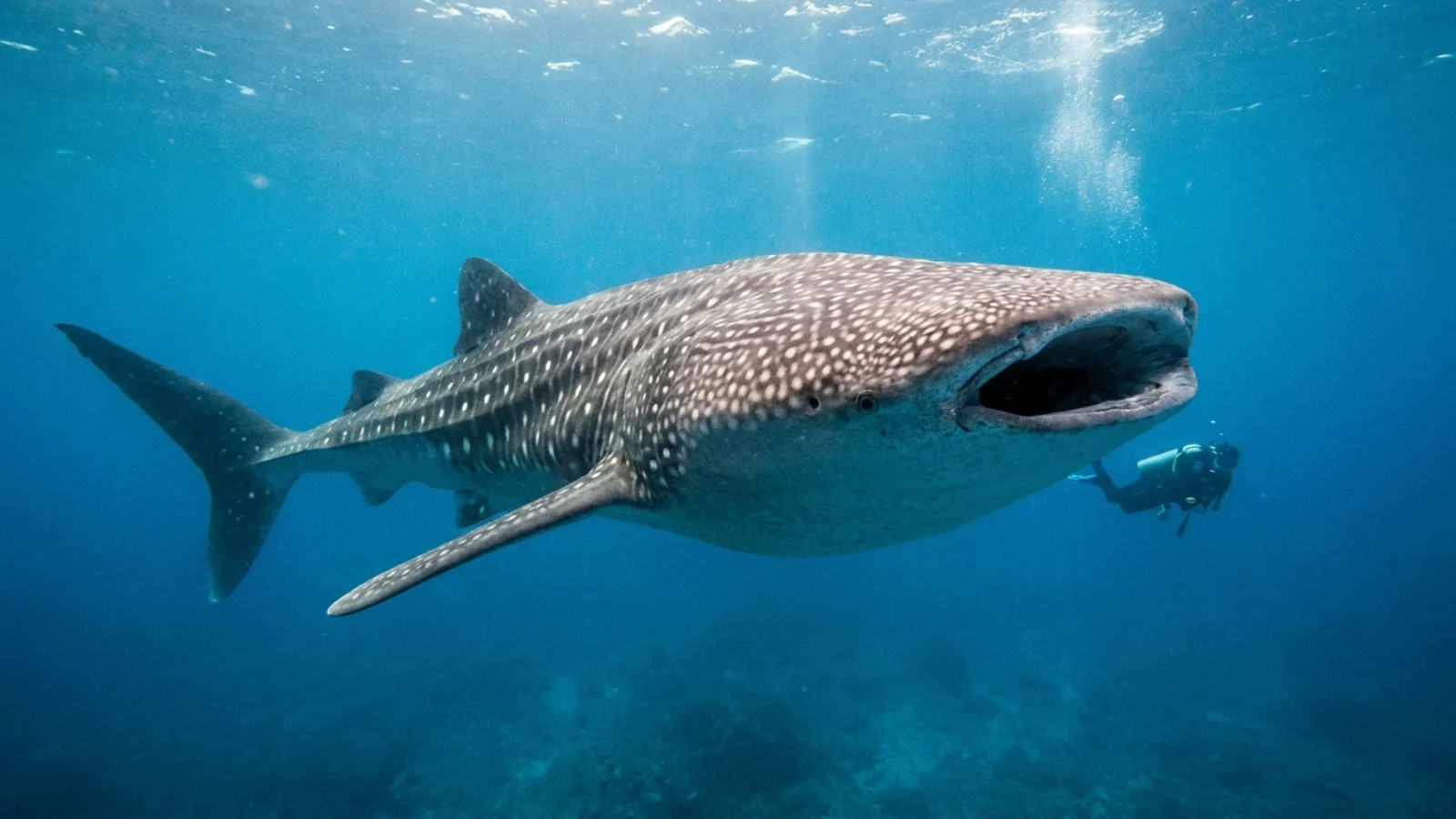
1. Whale shark: 18.8 m
The whale shark is the largest fish on Earth. The biggest reliably measured individual, a female from the Arabian Sea, was 18.8 m (62 ft) long. Most adults are 8–12 m.
Despite its size, the whale shark eats some of the smallest food in the sea: plankton, fish eggs and small schooling fish, which it filters through sieve-like pads on its gills. It is a carpet shark, related to the nurse and zebra sharks, and it is completely harmless to the snorkellers who swim with it off Mexico, the Philippines, Western Australia and the Maldives. Weight estimates for the largest whale sharks run to around 20 tonnes. See our page on the largest whale shark ever recorded and how it compares with a blue whale.
2. Basking shark: about 12.3 m
The basking shark is the second-largest fish. The biggest accurately measured, caught in the Bay of Fundy in 1851, was about 12.3 m (40 ft), though most adults today are 6–8 m.
Like the whale shark, the basking shark is a filter feeder, swimming slowly at the surface with its enormous mouth wide open to strain zooplankton. It is a mackerel shark, related to the great white, and is found in cool temperate waters, including off the UK, Ireland, New England and New Zealand. Heavy harpoon fishing for its liver oil in the 20th century removed most of the largest animals, which is one reason giants like the 1851 shark are no longer seen.
3. Great white shark: 6.1–6.4 m
The great white is the biggest predatory shark and the largest predatory fish. Specimens have been measured at 6.1–6.4 m, and lengths of about 7 m are often accepted, though not tied to a single verified measurement.
Females are larger than males, and the biggest great whites can weigh well over two tonnes. Famous large females such as “Deep Blue,” filmed off Guadalupe Island, have been estimated at around 6 m. For more, see how much great white sharks weigh.
4. Greenland shark: 6.4 m confirmed
The Greenland shark rivals the great white in length. The largest confirmed was 6.4 m, with a weight of about 1,400 kg, and reports of 7.3 m exist.
The Greenland shark is also the longest-lived vertebrate known, estimated to live 272–512 years. It grows about 1 cm a year, so the biggest individuals are likely centuries old.
5. Great hammerhead: 6.1 m
The great hammerhead is the largest of the nine or so hammerhead species, reaching 6.1 m and at least 500 kg.
Its tall, sickle-shaped dorsal fin and nearly straight-edged hammer make the great hammerhead unmistakable. It specialises in stingrays and is Critically Endangered. Its smaller relatives include the scalloped hammerhead and the bonnethead.
6. Common thresher: 5.7 m confirmed
The common thresher has been confirmed at 5.7 m, with estimates of over 6 m, but about half of that length is its whip-like upper tail lobe.
By body mass the thresher is well behind the sharks above it; a 4.8 m female weighed 510 kg. Its tail is a hunting weapon, used to slap and stun schooling fish.
7. Tiger shark: 5.5 m verified
The tiger shark is the largest requiem shark. The largest verified individual was 5.5 m and about 1,500 kg; a 7.4 m shark reported in 1957 has never been confirmed.
The tiger shark is famous for eating almost anything, from sea turtles to licence plates, and is one of the three species responsible for most fatal bites, with the great white and the bull shark.
8. Megamouth shark: about 5.5 m
The megamouth is a rare deep-water filter feeder first discovered in 1976. The largest reach about 5.5 m and over a tonne.
Fewer than 300 megamouth sharks have ever been recorded. It is the third filter-feeding shark, after the whale and basking sharks, and follows deep-sea plankton up toward the surface at night.
9. Bluntnose sixgill: about 4.8–5.5 m
The bluntnose sixgill is an ancient deep-water shark with six gill slits. Large females have been reported at 4.8 m to at least 5.5 m and up to about 760 kg.
The sixgill shark lives from about 100 m to 2,500 m, rising toward the surface at night, and has litters of up to 108 pups.
10. Pacific sleeper shark: 4.65 m confirmed, ~7 m filmed
The largest confirmed Pacific sleeper shark measured 4.65 m, and a 4.4 m female weighed 888 kg. Individuals of about 7 m have been filmed in deep water off Japan.
If the filmed giants are confirmed, the Pacific sleeper shark could rank as high as third. Like the Greenland shark, it is a slow scavenger of cold, deep water.
What was the biggest shark that ever lived?
Megalodon (Otodus megalodon), an extinct shark that lived from about 23 to 3.6 million years ago, is estimated to have reached roughly 14–20 m or more, far larger than any living predatory shark.
Megalodon is known almost entirely from teeth and a few vertebrae, so its size is estimated by comparing tooth size with living sharks. Different methods give different results, and estimates above 20 m remain debated. Either way, it was the largest predatory shark known, and it hunted whales. See megalodon vs blue whale for how it compares with the largest animal ever.
Which big sharks are dangerous?
The two biggest sharks, the whale and basking sharks, are harmless plankton eaters. Of the large predatory species, the great white and tiger shark are responsible for the most fatal unprovoked bites.
The Florida Museum’s International Shark Attack File attributes 351 unprovoked bites (59 fatal) to the great white and 142 (39 fatal) to the tiger shark. Great hammerheads, Greenland sharks, sixgills, sleeper sharks and megamouths have no recorded fatal bites, and the deep-sea giants rarely meet people at all. For the other end of the scale, the smallest shark is the 21 cm dwarf lanternshark.
What is the biggest shark in the world?
The whale shark, with the largest reliably measured individual at 18.8 m (62 ft). It is also the largest fish.
What is the second biggest shark?
The basking shark, with a maximum accurately measured length of about 12.3 m.
What is the biggest predatory shark?
The great white shark, with specimens measured at 6.1–6.4 m and weights over two tonnes.
How big was megalodon?
Estimates range from about 14 m to 20 m or more, based on teeth and vertebrae. It was the largest predatory shark ever.
Is the Greenland shark bigger than a great white?
They are similar. The largest confirmed Greenland shark was 6.4 m, about the same as the largest measured great whites.
What is the biggest hammerhead shark?
The great hammerhead, which reaches 6.1 m.
Are the biggest sharks dangerous?
The biggest two, whale and basking sharks, eat plankton and are harmless. Great whites and tiger sharks are dangerous and account for many fatal bites.
What is the smallest shark?
The dwarf lanternshark, which reaches only about 21 cm.
Blane Perun has been exploring Earth’s oceans and marine life for over 25 years. Founder of TheSea.Org in 1999, underwater photographer, coral aquaculture pioneer, and explorer of 80+ countries.
About Blane Perun → All Shark Species A–Z →