Benjamin Hornigold — The Pirate Who Built Nassau and Trained Blackbeard
Benjamin Hornigold was one of the founding figures of the Golden Age of Piracy — the man most responsible for turning Nassau into the pirate republic that defined an era, the mentor who gave Blackbeard his first independent command, and one of the very few senior pirates who accepted the King’s pardon and meant it. He then spent his final years hunting down the men he had trained, dying in a shipwreck in the Gulf of Mexico around 1719.
Hornigold is the pirate most people have never heard of who made possible the pirates everyone has. Without Hornigold, Nassau doesn’t become the pirate republic. Without the pirate republic, Blackbeard doesn’t have the base, the connections, or the command structure to become Blackbeard. Hornigold is the architect — the man who looked at a poorly governed island in the Bahamas and saw the nerve centre of Atlantic piracy.
Nassau and the Pirate Republic
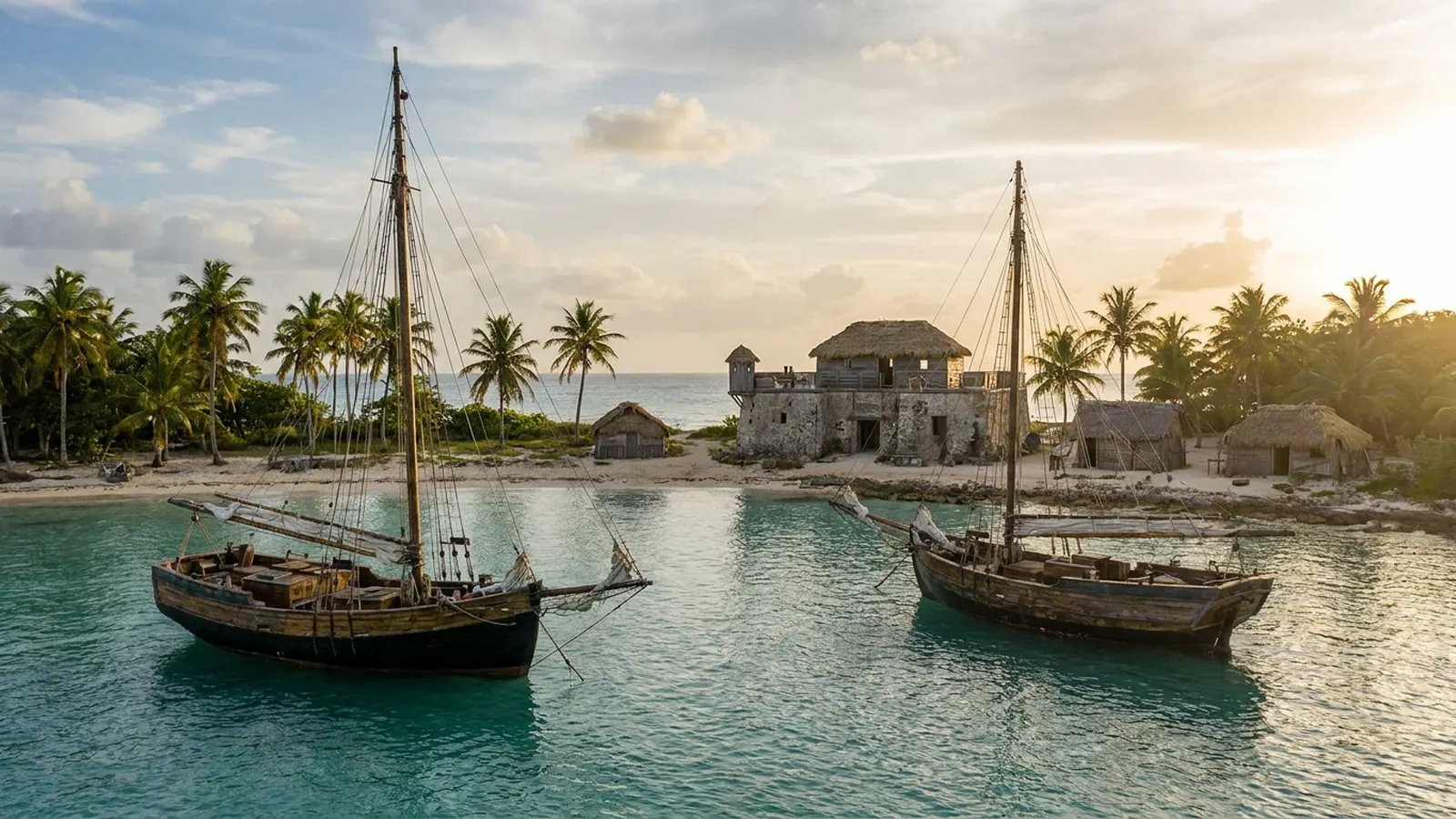
When the War of Spanish Succession ended in 1714, thousands of privateers found themselves unemployed overnight. Hornigold was among the first to see what Nassau could become.
Nassau in the early 18th century was poorly governed, strategically positioned between the Atlantic and Caribbean trade routes, and effectively ungoverned. Hornigold recognized it before almost anyone else. By 1715–1716 he was the dominant figure operating from Nassau, commanding multiple vessels, accumulating loyal crew, and establishing the informal governance structure that would define the republic. At its peak, Nassau harboured over a thousand pirates and functioned as a self-governing port where no flag flew and no authority reached.
Hornigold’s unusual personal code became famous throughout the Caribbean. He refused, for a significant period, to attack English ships — targeting only Spanish and French vessels. This was not universal pirate policy. Most of his contemporaries attacked any nation’s ships without distinction. His insistence on this code eventually eroded crew loyalty — men who had signed up for equal-opportunity plunder grew frustrated with a captain who drew national lines. It was a crack that would eventually cost him his command.
Hornigold and Blackbeard
Edward Teach served as crew and then officer under Hornigold before being given command of his own captured vessel — the decision that made Blackbeard possible.
Blackbeard did not arrive fully formed. He learned his trade under Hornigold — navigation, tactics, crew management, the psychology of intimidation, the geography of the Caribbean. Hornigold recognised his capabilities and eventually gave him independent command of a captured sloop. That command was the launch point. Everything Blackbeard became — the blockade of Charleston, the Queen Anne’s Revenge, the terror campaign that defined a generation — traces back to the moment Hornigold handed him a ship.
The pardon — and turning pirate hunter
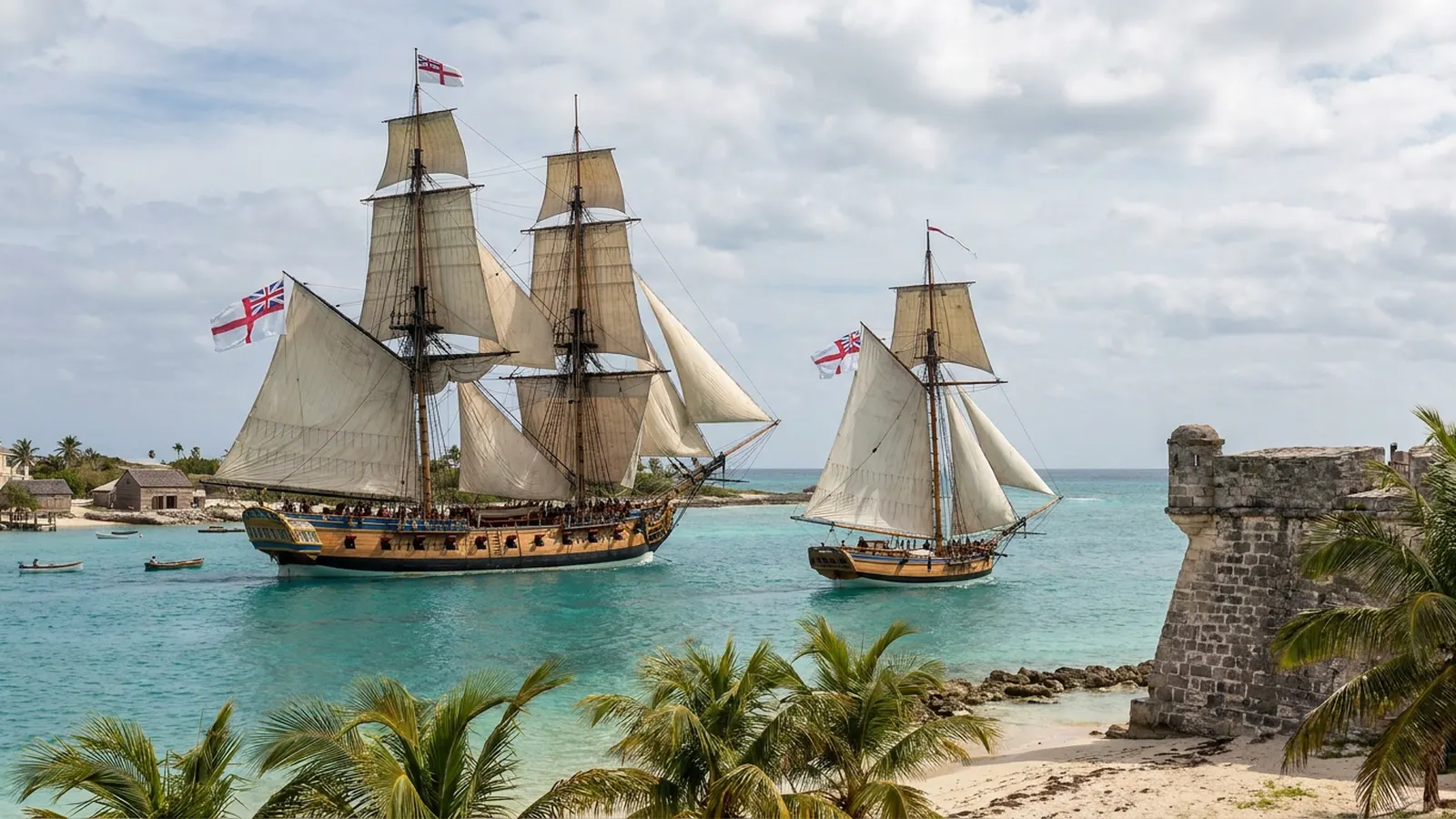
When Governor Woodes Rogers arrived in Nassau in July 1718, Hornigold was one of the first senior pirates to accept the King’s pardon — and one of the very few who accepted it genuinely.
Rogers immediately employed him. Hornigold became one of Rogers’ most effective pirate hunters, pursuing former associates with apparent conviction. Whether this represented genuine reform, pragmatic self-preservation, or a combination of both has been debated by historians for three centuries. What is clear is that he was effective — he captured several former colleagues and delivered them to Rogers for trial. The men he had trained and sailed with were hanged in part because of his testimony and action.
Death and legacy
Hornigold died around 1719 in a shipwreck in the Gulf of Mexico while on a pirate-hunting expedition for Rogers. The circumstances were undramatic — a storm, a reef, no last stand. He was not hanged, not shot in battle, not betrayed. He simply ran out of sea. His legacy is more complicated than almost any other Golden Age pirate’s: he built the republic that enabled the most famous era of piracy in history, trained its most famous practitioner, and then dismantled it from the inside. History rarely produces characters with that kind of arc.
Related on TheSea
Who was Benjamin Hornigold?
Benjamin Hornigold was a Golden Age pirate active from around 1715 to 1718, best known for co-founding Nassau’s pirate republic, mentoring Blackbeard and giving him his first independent command, and then accepting the King’s pardon and becoming a pirate hunter for Governor Woodes Rogers. He died in a shipwreck around 1719.
Did Benjamin Hornigold train Blackbeard?
Yes. Edward Teach served as crew and then officer under Hornigold before Hornigold gave him command of a captured sloop. That command was the foundation of Blackbeard’s subsequent career. Historical records clearly document the relationship.
Why did Hornigold refuse to attack English ships?
His exact reasoning was never recorded, but his behaviour was consistent and well-documented. The most common historical interpretation is that he retained some loyalty to England despite his piracy — a remnant of his privateer background. It eventually cost him his crew’s support and led to his democratic removal from command in 1717.
Why did Hornigold accept the King’s pardon?
Hornigold accepted the pardon offered by Governor Woodes Rogers in 1718 and was one of the few senior pirates to do so early and apparently genuinely. Whether from real reform or pragmatism is debated. He immediately went to work for Rogers as a pirate hunter, pursuing former associates.
How did Benjamin Hornigold die?
He died around 1719 in a shipwreck in the Gulf of Mexico while on a pirate-hunting expedition for Governor Woodes Rogers. He was not captured or executed — his death was accidental, in a storm.
What was Nassau’s pirate republic?
Nassau in the Bahamas became a self-governing pirate haven from around 1715, harboring over a thousand pirates at its peak. It functioned as a criminal port with no Crown authority, its own informal governance, and democratic crew structures. Hornigold was one of the primary figures who established and ran it before Woodes Rogers arrived and dismantled it in 1718.
Blane Perun has been exploring Earth’s oceans and marine life for over 25 years. Founder of TheSea.Org in 1999, underwater photographer, coral aquaculture pioneer, and explorer of 80+ countries.
About Blane Perun → More on Pirates →