Woodes Rogers — The Man Who Ended the Nassau Pirate Republic
Woodes Rogers was an English privateer and navigator who became the first Royal Governor of the Bahamas in 1718 and, in that role, dismantled the Nassau pirate republic that had been the operational hub of the Golden Age of Piracy. He arrived with a Royal Navy escort, a royal pardon for all pirates willing to surrender, and a hanging for those who were not. He was also the man who rescued Alexander Selkirk — the real castaway who inspired Robinson Crusoe — from the island of Juan Fernández in 1709. He is the most consequential anti-piracy figure of the Golden Age.
Woodes Rogers is unusual in the history of the Golden Age because his significance is defined entirely by what he stopped rather than what he did. He was a privateer and navigator of real distinction — his circumnavigation of 1708–1711 was a major achievement — but his place in history rests on the 1718 Nassau governorship and the strategic dismantling of the pirate republic that had been operating there for four years. He ended something. That ending changed everything.
The circumnavigation and Alexander Selkirk
Before Nassau, Rogers was already notable. His 1708–1711 privateering circumnavigation was the third successful circumnavigation of the globe and produced a detailed account — A Cruising Voyage Round the World — that became a bestseller.
The voyage’s most famous incident occurred in February 1709 at the island of Juan Fernández in the Pacific, where Rogers’ ships encountered a castaway who had been living alone on the island for four years and four months. His name was Alexander Selkirk, a Scottish sailor who had been marooned at his own request after a dispute with his captain. Rogers rescued him, took him back to England, and published his story. It reached the ears of Daniel Defoe, who used it as the basis for Robinson Crusoe in 1719. Rogers’ circumnavigation was thus both a genuine privateering success and the origin point of one of the most influential novels in English literature.
The Nassau strategy
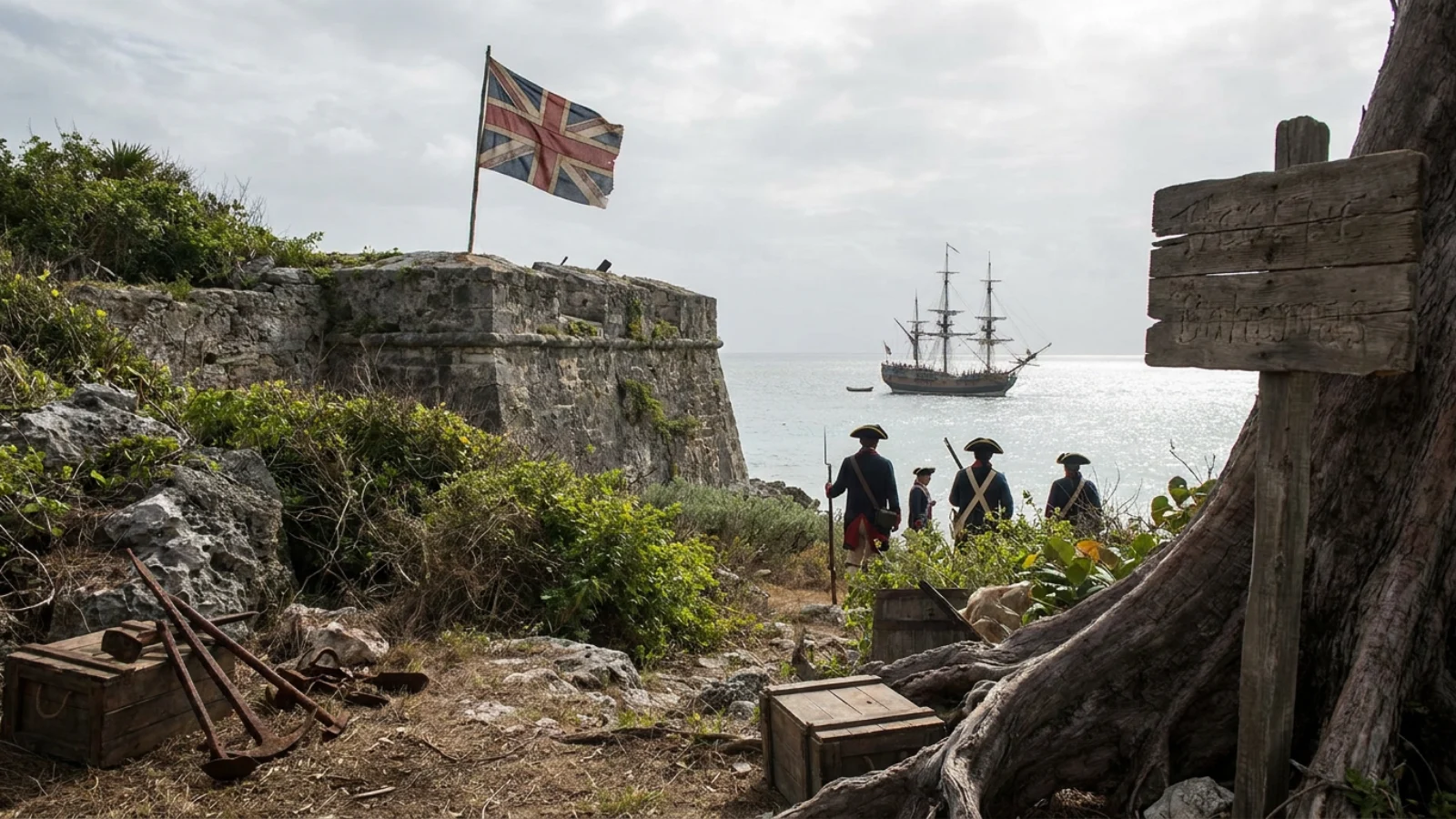
When Rogers was appointed Governor of the Bahamas in 1718, Nassau was the most significant pirate haven in the Atlantic world — home to hundreds of pirates, effectively ungoverned since the Franco-Spanish raids of 1703, and the base from which Blackbeard, Charles Vane, Benjamin Hornigold, and dozens of others operated.
His mandate was simple but the execution required political intelligence: offer a general pardon to all pirates willing to surrender, backed by the threat of force for those who refused. The Act of Grace — the royal pardon — had been issued before his arrival. Rogers arrived in Nassau harbour on July 27, 1718, with a Royal Navy escort of sufficient size to make the threat credible. The majority of Nassau’s pirates accepted the pardon. Benjamin Hornigold — one of the republic’s founders — accepted and was immediately employed as a pirate hunter. Charles Vane was the only major captain who refused outright, firing a cannon at Rogers’ flagship as he escaped.
The executions and their message
Some pirates who accepted the pardon subsequently returned to piracy. Rogers dealt with them without hesitation. In December 1718, he hanged eight men who had taken the pardon and broken it — including former associates of Blackbeard and Hornigold. The executions were public, deliberate, and designed to communicate a specific message.
The message was not simply that piracy was illegal — everyone knew that. The message was that the pardon had been real, its violation would be treated as the worst possible breach of good faith, and Nassau was no longer a place where pirates could operate safely regardless of their previous status. The eight executions, combined with the continued presence of naval force and the employment of former pirates as hunters, produced the political and social transformation Rogers had been sent to achieve. Nassau did not return to piracy as a mass enterprise after 1718.
Legacy
Rogers’ achievement was strategic rather than spectacular. He did not fight Blackbeard — that was Lieutenant Robert Maynard in November 1718. He did not hunt down Charles Vane — Vane was eventually captured and hanged elsewhere. What Rogers did was create the conditions that made those outcomes possible: a Nassau that would no longer shelter pirates, a pardon that divided the pirate community from within, and a governance structure that persisted. His motto became the Bahamas’ motto. His strategy became the template for piracy suppression. The Golden Age ended in 1718 largely because Woodes Rogers arrived.
Related on TheSea
What did Woodes Rogers do?
Rogers was the first Royal Governor of the Bahamas (1718), where he dismantled the Nassau pirate republic by offering a general pardon to pirates who surrendered and hanging those who refused. He also completed a privateering circumnavigation of the globe (1708–1711) and rescued Alexander Selkirk — the real castaway behind Robinson Crusoe — from the island of Juan Fernández.
How did Rogers end the Nassau pirate republic?
He arrived with a Royal Navy escort and the King’s Act of Grace — a general pardon for all pirates willing to surrender. The majority of Nassau’s pirates accepted. He immediately employed some former pirates, including Benjamin Hornigold, as pirate hunters. Pirates who took the pardon and broke it were hanged. Eight were publicly executed in December 1718. Nassau did not return to mass piracy after his arrival.
Did Rogers rescue the man behind Robinson Crusoe?
Yes. During his 1708–1711 circumnavigation, Rogers rescued Alexander Selkirk from Juan Fernández island in the Pacific in February 1709. Selkirk had been living alone there for over four years after being marooned at his own request. Rogers published his story. It reached Daniel Defoe, who used it as the basis for Robinson Crusoe (1719).
What is Rogers’ motto?
Expulsis Piratis — Restituta Commercia: Pirates Expelled, Commerce Restored. Rogers adopted it as Governor of the Bahamas. It remains the official motto of the Bahamas and appears on the Bahamas coat of arms to this day.
Was Woodes Rogers a pirate?
No — he was a privateer, which is legally different. He held Letters of Marque authorising his attacks on enemy ships during wartime. His circumnavigation (1708–1711) was a privateering voyage against Spanish shipping. He then became a royal governor and the most effective anti-piracy administrator of the Golden Age.
Blane Perun has been exploring Earth’s oceans and marine life for over 25 years. Founder of TheSea.Org in 1999, underwater photographer, coral aquaculture pioneer, and explorer of 80+ countries.
About Blane Perun → More on Pirates →