Bahrain Coral Reef Maps — Fasht Reefs and Pearl Banks of the Gulf
Bahrain’s coral reefs are mostly offshore patch reefs and shoals, known locally as fasht, scattered across the shallow Persian Gulf around the archipelago. The largest reef complexes are Fasht al-Adhm to the east of the main island, Fasht al-Jarim to the north, and the northern Bulthama reef area, with more fringing-type reefs around the Hawar Islands in the south near Qatar. These reefs sit among the historic oyster beds that made Bahrain a world centre of natural pearling. They live in one of the hottest and saltiest seas where corals grow, and many have been heavily affected by bleaching and coastal development.
Bahrain is a small island nation in the middle of the southern Persian Gulf, surrounded by shallow, warm water. For thousands of years its people lived from the sea, diving for pearls on the oyster beds and fishing on the reefs and shoals around the islands. Those same shoals hold Bahrain’s coral reefs. They are not the vivid fringing reefs of the Red Sea, but tough patch reefs that survive conditions few corals can tolerate. This page maps where they are, explains why they matter and looks at what has happened to them in recent decades.
Bahrain coral reef map
The coral shading shows a constellation of offshore reef patches around the islands rather than a continuous coastal reef.
The reef outlines come from the UNEP-WCMC global coral reef dataset, compiled from satellite imagery and surveys. Bahrain sits on a broad, shallow shelf where much of the sea is less than 10–15 m deep, so reefs can grow wherever the bottom is hard and the water clear enough. The result is a scatter of patch reefs and shoals across the shelf. Fasht al-Adhm, the great shoal complex to the east between Bahrain and Qatar, is the largest. Fasht al-Jarim lies to the north-west, and the Bulthama reef area further north is one of the better-surviving coral sites. Around the Hawar Islands in the south, coral grows closer to shore in a more fringing pattern.
Reaching most of Bahrain’s coral therefore means taking a boat out to the shoals rather than snorkelling off a beach, and water clarity varies with wind and season.
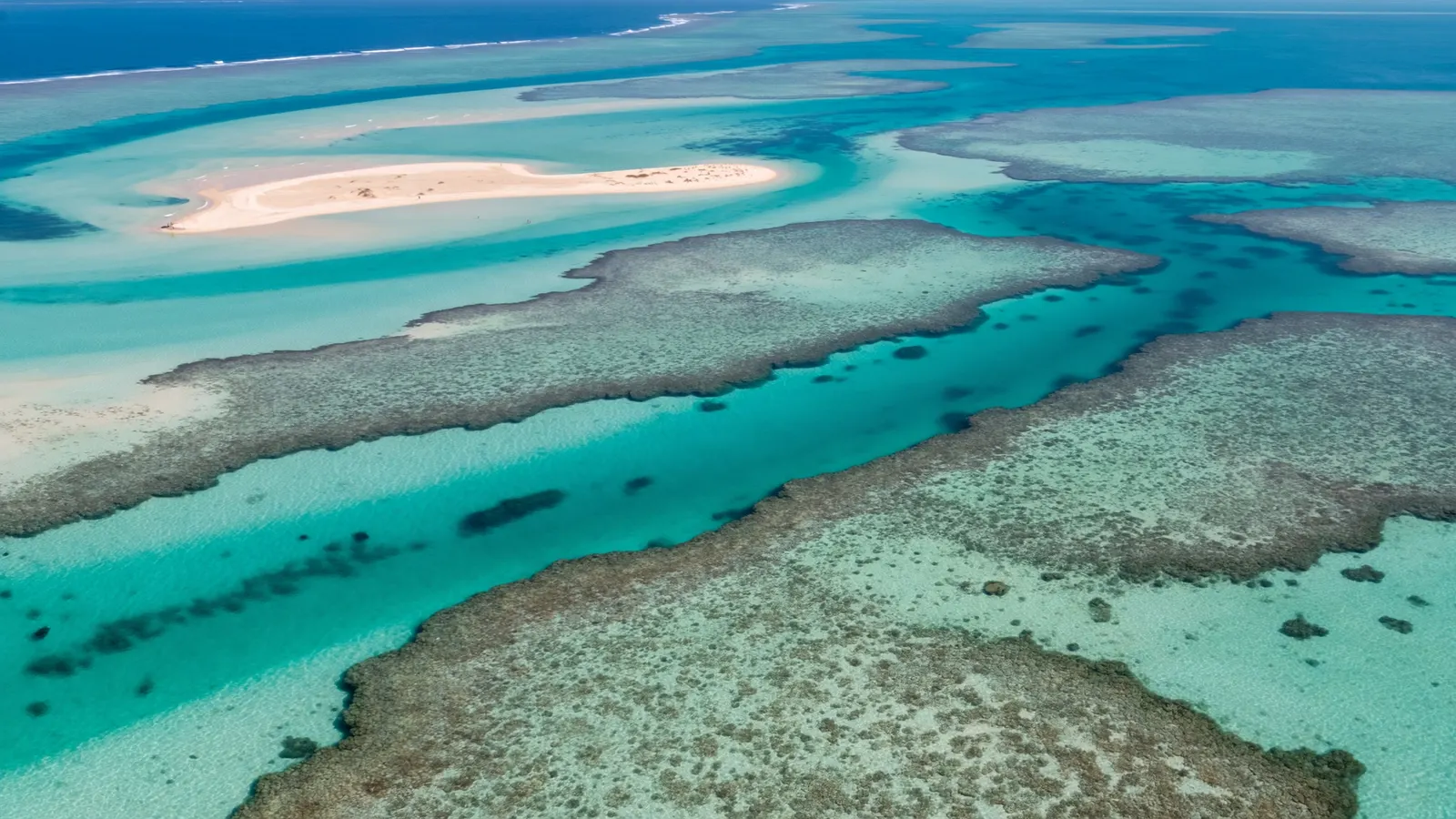
Bahrain’s main reef areas
A handful of large shoal complexes hold most of the country’s coral.
| Reef area | Where | What to know |
|---|---|---|
| Fasht al-Adhm | East of Bahrain, towards Qatar | Largest reef and shoal complex; heavy bleaching losses |
| Fasht al-Jarim | North-west offshore | Large shoal with patch reefs |
| Bulthama (Bu Thama) | Far north offshore | One of the better-surviving coral areas |
| Hawar Islands | South, near Qatar | Protected islands; fringing reefs, seagrass, dugongs |
| Pearl oyster beds (hayrat) | Across the shelf | Historic pearling banks, part of a World Heritage site |
Reefs at the edge of what coral can survive
Bahrain’s corals face summer water above 33°C, winter lows in the teens and salinity well above the open ocean.
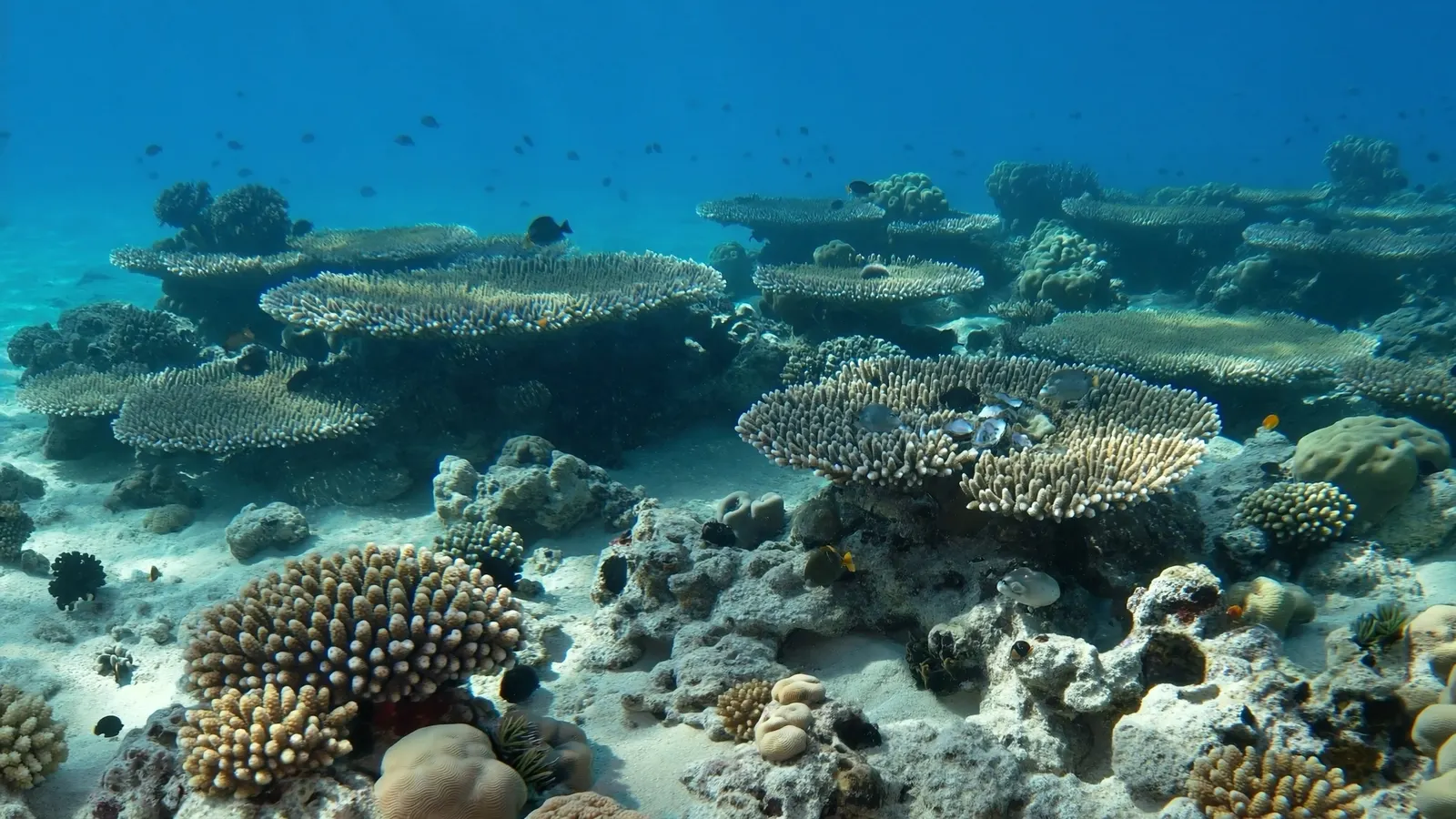
The Persian Gulf is shallow and nearly enclosed, so it heats up quickly in summer and cools in winter far more than the open ocean. Evaporation is intense and little fresh water flows in, so salinity is much higher than normal seawater. Only a small, specialised set of corals copes with this combination, dominated by massive corals such as Porites and brain corals. Before the late 1990s, branching table corals (Acropora) were also common on Bahrain’s reefs.
Because Gulf corals already tolerate temperatures that most reefs may only face later this century, scientists study them to understand how corals might adapt to warming. But they have limits, and repeated marine heatwaves have shown how vulnerable even these tough corals are. The neighbouring reefs of Qatar and Saudi Arabia share the same extreme conditions.
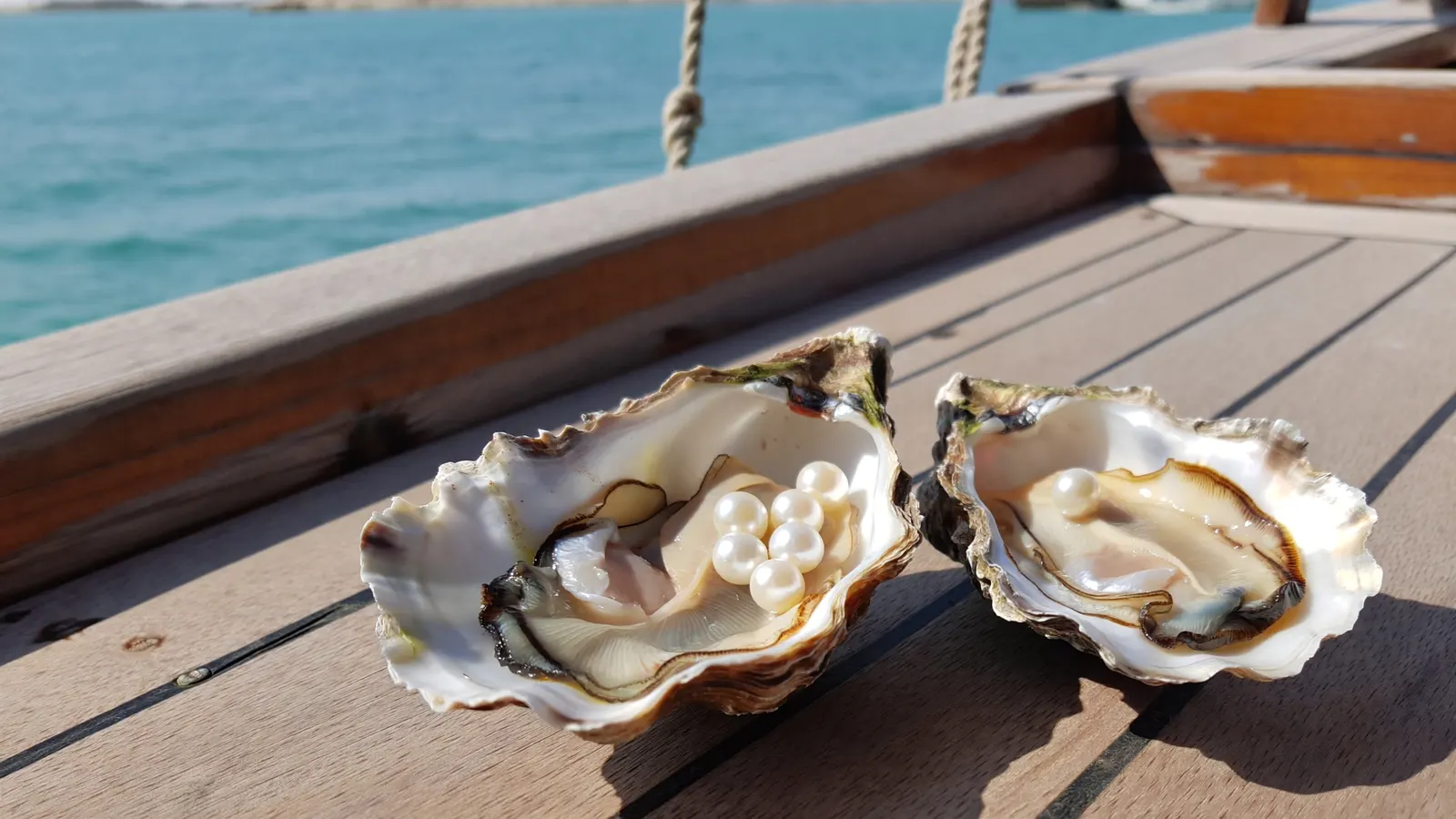
Pearling heritage on Bahrain’s reefs
For centuries the oyster beds around Bahrain’s reefs produced some of the most prized natural pearls in the world.
Bahrain’s shallow banks were home to vast beds of pearl oysters. Every summer, fleets of dhows sailed out to the banks, and divers descended on a single breath, weighted with stones, to collect oysters by hand. The pearl trade shaped Bahrain’s towns, society and economy until the 1930s, when Japanese cultured pearls and the Great Depression caused the industry to collapse, shortly before oil was discovered. In 2012 UNESCO inscribed “Pearling, Testimony of an Island Economy” as a World Heritage Site. It includes buildings in Muharraq and three offshore oyster beds, as well as part of the seashore, making Bahrain’s seabed itself part of its cultural heritage.
Marine life around the reefs
The reefs support fisheries and sit next to seagrass beds that feed dugongs and turtles.
Reef fish around Bahrain include groupers (hamour), snappers, emperors, rabbitfish, sweetlips and butterflyfish, many of them important to local fisheries. The seagrass meadows between the islands and reefs, especially around the Hawar Islands and in the Gulf of Bahrain, support one of the largest dugong populations outside Australia, as well as green and hawksbill turtles. The Hawar Islands are a protected area and Ramsar wetland, home to large seabird colonies including the Socotra cormorant. Dolphins are also regularly seen in Bahraini waters.
Threats to Bahrain’s coral reefs
Bleaching and land reclamation have caused major losses, and the reefs are among the most stressed in the Gulf.
Severe bleaching events in 1996 and 1998 killed most of the branching Acropora corals on Bahrain’s reefs, and later heatwaves, including in 2010 and 2017, caused further losses. Surveys have documented large declines in live coral cover at major reefs such as Fasht al-Adhm. At the same time, Bahrain has expanded its land area substantially through reclamation for housing, industry and artificial islands, and the dredging needed to supply fill has buried or disturbed large areas of seabed, seagrass and reef. Sewage and industrial discharges, desalination brine, and overfishing add further stress.
Bahrain has taken steps to protect what remains, including protected areas such as the Hawar Islands and Mashtan reef area, fishing regulations and artificial reef projects. In 2019 it sank a decommissioned airliner as the centrepiece of an artificial reef and dive park. Regional cooperation across the Gulf is important, because larvae and fish move between the reefs of neighbouring countries. For wider solutions, see the coral reef conservation page.
Does Bahrain have coral reefs?
Yes. Bahrain has offshore patch reefs and shoals called fasht, including Fasht al-Adhm, Fasht al-Jarim and Bulthama, plus fringing reefs around the Hawar Islands. Many have lost much of their live coral to bleaching and development.
What is a fasht?
Fasht is the local Gulf Arabic word for an offshore shoal or reef flat. In Bahrain, the large fasht areas are where most of the country’s coral reefs and many historic pearl oyster beds are found.
Can you dive or snorkel on coral reefs in Bahrain?
Yes, mostly by boat to the offshore reefs and shoals. Visibility in the Gulf varies and is often limited. Bahrain also has artificial reef sites, including a dive park created around a sunken airliner.
Why are Bahrain’s corals important to science?
They live in some of the hottest and saltiest water where reef corals survive, so they help scientists understand the limits of coral heat tolerance and how corals might cope with ocean warming.
What happened to Bahrain’s coral reefs?
Mass bleaching in 1996, 1998 and later heatwaves killed many corals, especially branching species. Land reclamation and dredging have also destroyed or degraded large areas of reef and seagrass.
How are Bahrain’s reefs linked to pearling?
The shallow banks around the reefs held rich pearl oyster beds that supported Bahrain’s economy for centuries. Three of these offshore beds are part of the UNESCO World Heritage Site “Pearling, Testimony of an Island Economy”.
- UNEP-WCMC, WorldFish, WRI & TNC (2021), Global distribution of warm-water coral reefs, v4.1
- UNESCO World Heritage Centre: Pearling, Testimony of an Island Economy (2012)
- Riegl & Purkis (eds.), Coral Reefs of the Gulf: Adaptation to Climatic Extremes (Springer)
- Burt et al., assessments of coral decline on Bahrain’s reefs, Marine Pollution Bulletin
Blane Perun has been exploring Earth’s oceans and marine life for over 25 years. Founder of TheSea.Org in 1999, underwater photographer, coral aquaculture pioneer, and explorer of 80+ countries.
About Blane Perun → More Coral Reef Maps →