Scuba Diving Top Sites — Where to Dive Next
This is the index of our scuba diving destination guides. Each guide covers the best sites, seasons, water temperatures and who each dive suits. Short version: go to Costa Rica for hammerheads and bull sharks, Bali for a shore wreck and mola mola, Cancun for easy reefs and cenotes, the Philippines and Thailand for Coral Triangle and Andaman diving, Puerto Rico and Miami for Caribbean and Florida walls and wrecks, San Diego for kelp forests, Dubai for Gulf wrecks, and the UK for Scapa Flow and grey seals. Below the guides is a reference table of the world’s classic dives.
How do you choose a scuba diving destination?
Start with three questions: what do you want to see, how warm do you want the water, and what is your experience level? Big-animal sites such as Cocos Island and Nusa Penida usually mean currents, depth and cooler upwelling water. Reef and macro destinations like Anilao or Bali’s Tulamben are gentler. Wreck trips range from shallow beginner wrecks to deep technical dives. Then check the season: Thailand’s Andaman side, Tubbataha and the Similans close for months each year, and whale shark, manta and mola mola encounters are all seasonal.
| Guide | Best for | Season highlight | Water | Level |
|---|---|---|---|---|
| Costa Rica | Sharks, mantas | Bull sharks ~May–Nov; mantas ~Dec–Apr | 16–30°C | Intermediate–advanced |
| Bali | Wreck, mantas, mola mola | Mola ~Jul–Oct | 18–29°C | All levels |
| Cancun | Easy reefs, cenotes | Whale sharks ~May–Sep (snorkel) | 25–28°C | Beginner |
| Philippines | Biodiversity, wrecks, threshers | Tubbataha mid-Mar–mid-Jun | 25–30°C | All levels |
| Thailand | Liveaboards, learning | Andaman ~Nov–Apr | 26–31°C | All levels |
| Puerto Rico | Walls, clear water | Humpbacks ~Dec–May | Warm | All levels |
| Miami | Wrecks, reef | Year-round | Warm | All levels |
| San Diego | Kelp, sea lions | Jul–Oct; leopard sharks Aug–Sep | 15–20°C | Intermediate |
| Dubai | Wrecks, dive pool | Nov–Apr | 22–30°C | All levels |
| UK | WWI wrecks, seals | Summer | ~4–14°C (Scotland) | Intermediate–advanced |
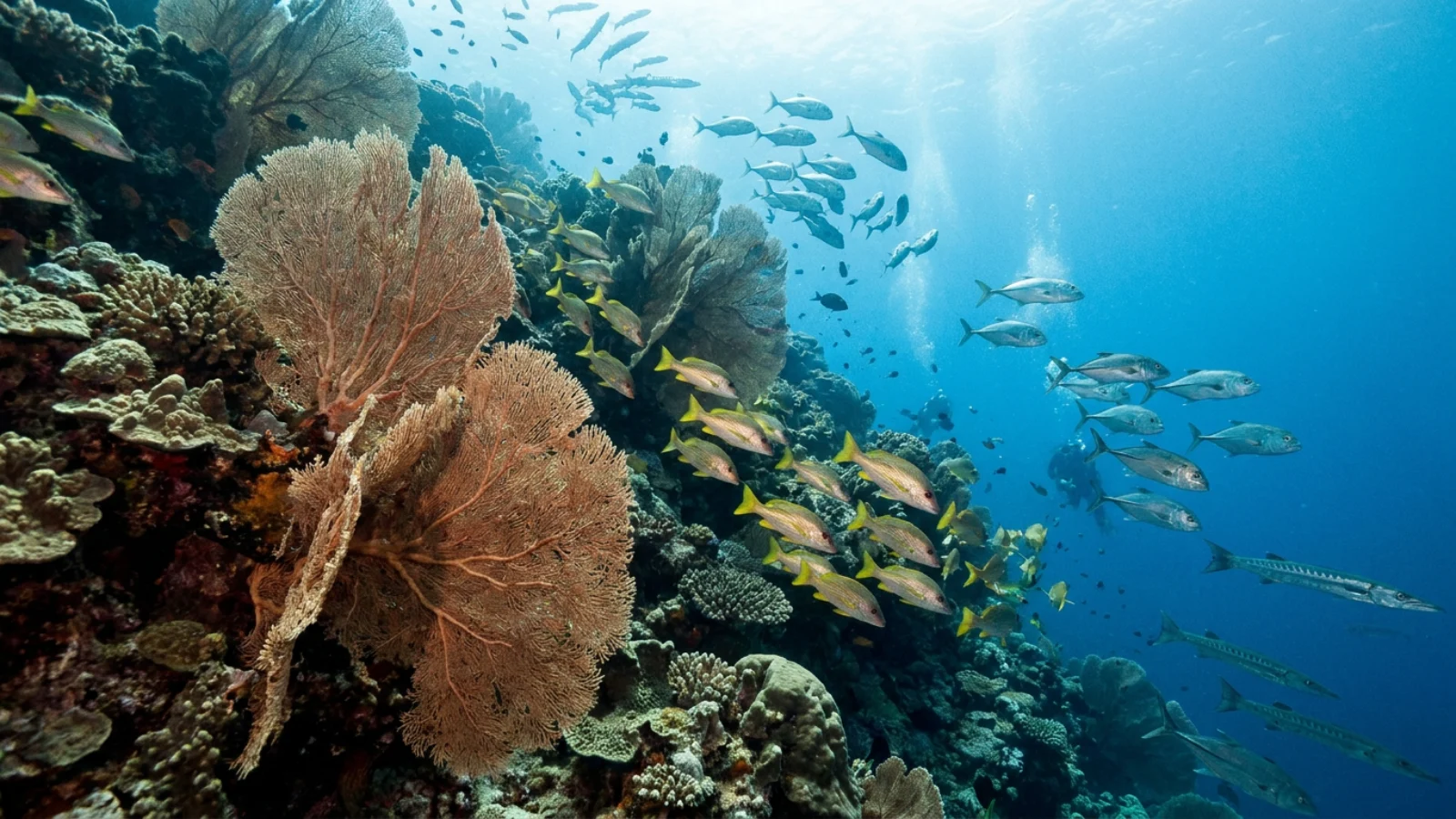
What are the world’s most famous dive sites?
Beyond our destination guides, a handful of sites appear on almost every diver’s list. Here are the classics, with the key facts:
| Site | Where | Why it’s famous |
|---|---|---|
| Great Barrier Reef | Australia | World’s largest reef system: 2,900+ reefs over 2,300 km; UNESCO 1981 |
| SS Thistlegorm | Red Sea, Egypt | British cargo ship sunk by German aircraft on 6 October 1941; trucks, motorcycles and locomotives at ~30 m |
| Great Blue Hole | Lighthouse Reef, Belize | Circular sinkhole 318 m across and about 124 m deep |
| Coron Bay | Palawan, Philippines | Japanese WWII ships sunk in 1944, mostly at 14–46 m |
| Galapagos (Darwin & Wolf) | Ecuador | Hammerhead schools; islands 900 km off South America |
| Raja Ampat | West Papua, Indonesia | Among the richest reefs on Earth |
| Cocos Island | Costa Rica | Largest reported hammerhead schools |
| Scapa Flow | Orkney, UK | Scuttled WWI German battleships |
What is the SS Thistlegorm?
A 126.5 m British cargo steamship built in Sunderland in 1940 and sunk by German bombers near Ras Muhammad in the Red Sea on 6 October 1941 while carrying war supplies for Alexandria. Her cargo of Bedford trucks, Norton and BSA motorcycles, rifles, ammunition and even Wellington boots is still in the holds, and steam locomotives from her deck cargo lie on the seabed beside her. Jacques Cousteau found her in the early 1950s using information from local fishermen. At about 30 m at her deepest, she is diveable without technical training. Find more in our Red Sea diving page and Jacques Cousteau’s top ten dive sites.
What is the Great Blue Hole?
A near-perfectly circular marine sinkhole near the center of Lighthouse Reef, an atoll about 70 km off Belize City. It measures 318 m (1,043 ft) across and about 124 m (407 ft) deep and is part of the Belize Barrier Reef Reserve System, a UNESCO World Heritage Site. The standard recreational dive descends to around 40 m to see stalactites under the overhang. See Jacques Cousteau and the Blue Hole and Lighthouse Reef.
How did the Great Blue Hole form?
The Great Blue Hole began as a cave system in limestone on dry land during the ice ages of the Quaternary period, when sea levels were far lower than today. As the ice sheets melted and the sea rose, the cave roof collapsed and the ocean flooded the shaft. Jacques Cousteau brought his ship Calypso to the hole in 1971 to chart its depths, and his team confirmed it was a typical karst limestone formation that flooded in at least four stages, leaving ledges at about 21, 49 and 91 meters.
In December 2018, two small submarines descended into the hole to map its interior with sonar. They found a layer of hydrogen sulfide at about 91 meters (300 feet), below which the water is dark, low in oxygen and almost lifeless. That is one reason recreational dives stay much shallower, usually turning around near 40 meters at the stalactite overhang. The sinkhole’s surface covers about 70,650 square meters, and the rim of shallow reef around it is often a highlight of the day.
What else is there to see at Cocos Island besides sharks?
Cocos is more than its hammerheads. The island is the only oceanic island in the eastern Pacific covered with tropical moist forest, including cloud forest on its upper slopes. Because it was never joined to a continent, its plants and animals arrived by long-distance dispersal, and many are found nowhere else. Botanists have recorded 235 species of flowering plants there, 70 of them endemic, and the island’s two lizards, the Cocos Island anole and the Pacific least gecko, are both endemic.
Underwater, named sites include Bajo Alcyone, a seamount known for hammerhead sharks; Manuelina Garden, a coral garden; and Dos Amigos Grande, which has a natural underwater arch. The island’s long history of treasure stories, from the so-called Treasure of Lima to the hoard of the pirate Benito Bonito, has drawn hundreds of expeditions, but treasure hunting is now prohibited by the Costa Rican government.
Do you need special certification for the top dive sites?
Open Water certification covers many famous sites, including MUSA, Tulamben and the Scapa Flow cruisers. Deeper wrecks, strong-current sites and remote liveaboards usually call for Advanced Open Water and logged experience. Our guides to certification levels, how deep you can dive and scuba diving dangers help you plan. For reef rankings, see our Top Ten Coral Reefs series, starting with Bonaire.
What is the best scuba diving site in the world?
There’s no single answer, but the Great Barrier Reef, Raja Ampat, Cocos Island, the SS Thistlegorm and the Great Blue Hole appear on most lists.
Where is the best scuba diving for beginners?
Cancun, Koh Tao in Thailand, Moalboal in the Philippines and Culebra in Puerto Rico have warm, shallow, easy sites.
Where can you dive with sharks?
Cocos Island (hammerheads), Costa Rica’s Bat Islands (bull sharks) and Malapascua in the Philippines (threshers).
What is the best wreck dive in the world?
The SS Thistlegorm, Scapa Flow’s German fleet and the Coron wrecks are the usual top three.
How deep is the Great Blue Hole?
About 124 m (407 ft), and 318 m across.
When is the best time to go scuba diving?
It depends on the destination; each of our guides lists the season. Many Asian sites are best from about November to May.
Do you need advanced certification for famous dive sites?
Not always. Many classics are within Open Water limits, but deep wrecks and current sites need advanced training.
Where is the coldest top dive site?
Of our guides, the UK, where Scottish water runs about 4–14°C.
- Wikipedia. Great Barrier Reef, SS Thistlegorm, Great Blue Hole, Galapagos Islands: dimensions, dates, depths.
- TheSea.Org destination guides. Individual guides list their own sources for each site.
- Australian Institute of Marine Science (6 August 2025). Annual Summary Report of Coral Reef Condition 2024/25: Great Barrier Reef.
- Wikipedia. Scuttling of the German fleet at Scapa Flow: numbers sunk, 2001 scheduling, 2025 marine protected area.
- Wikipedia. Raja Ampat Islands: coral and fish species counts, 2009 Marine Recreation Park, zebra shark program.
- Wikipedia. Coron Bay: 24 September 1944 sinkings and wreck depths.
- Wikipedia. Cocos Island: distance, national park (1978) and UNESCO (1997) status, crossing time.
- Wikipedia. Darwin’s Arch: collapse on 17 May 2021. Galápagos Marine Reserve: area and Hermandad Marine Reserve.
- Wikipedia. Coral bleaching: Great Barrier Reef bleaching years and 2016 losses; fourth global bleaching event.
Blane Perun has been exploring Earth’s oceans and marine life for over 25 years. Founder of TheSea.Org in 1999, underwater photographer, coral aquaculture pioneer, and explorer of 80+ countries.
About Blane Perun →