Best Time to See Manatees in Florida — A Month-by-Month Guide to Manatee Season
The best time to see manatees in Florida is from December to February, on cold mornings after a front. Manatee season runs roughly from mid-November to the end of March, when cold water drives manatees into warm springs and power-plant outflows such as Crystal River, Blue Spring, Apollo Beach and Fort Myers. In summer they spread out and sightings are less predictable.
People ask me when to come to Florida to see manatees more than almost any other wildlife question, and the answer is simpler than you might expect: come in winter, and watch the thermometer. Manatees live in Florida all year, but where they are, and how easy they are to see, changes completely with the seasons. In the coldest months they gather by the dozens or hundreds in a handful of warm-water refuges, many with free boardwalks. In summer they spread out over thousands of miles of coast and river. This guide walks through the year month by month and explains how to time a visit for the best chance of seeing manatees.
Why winter is manatee season
It all comes down to water temperature.
Manatees are tropical animals living at the northern edge of their range in Florida. Despite their size, they have little insulating blubber and a low metabolic rate, and when the water falls below about 68°F (20°C) for long, they risk cold stress, which damages the skin and immune system and can kill them. Our page on manatee habitat explains why that temperature is so important.
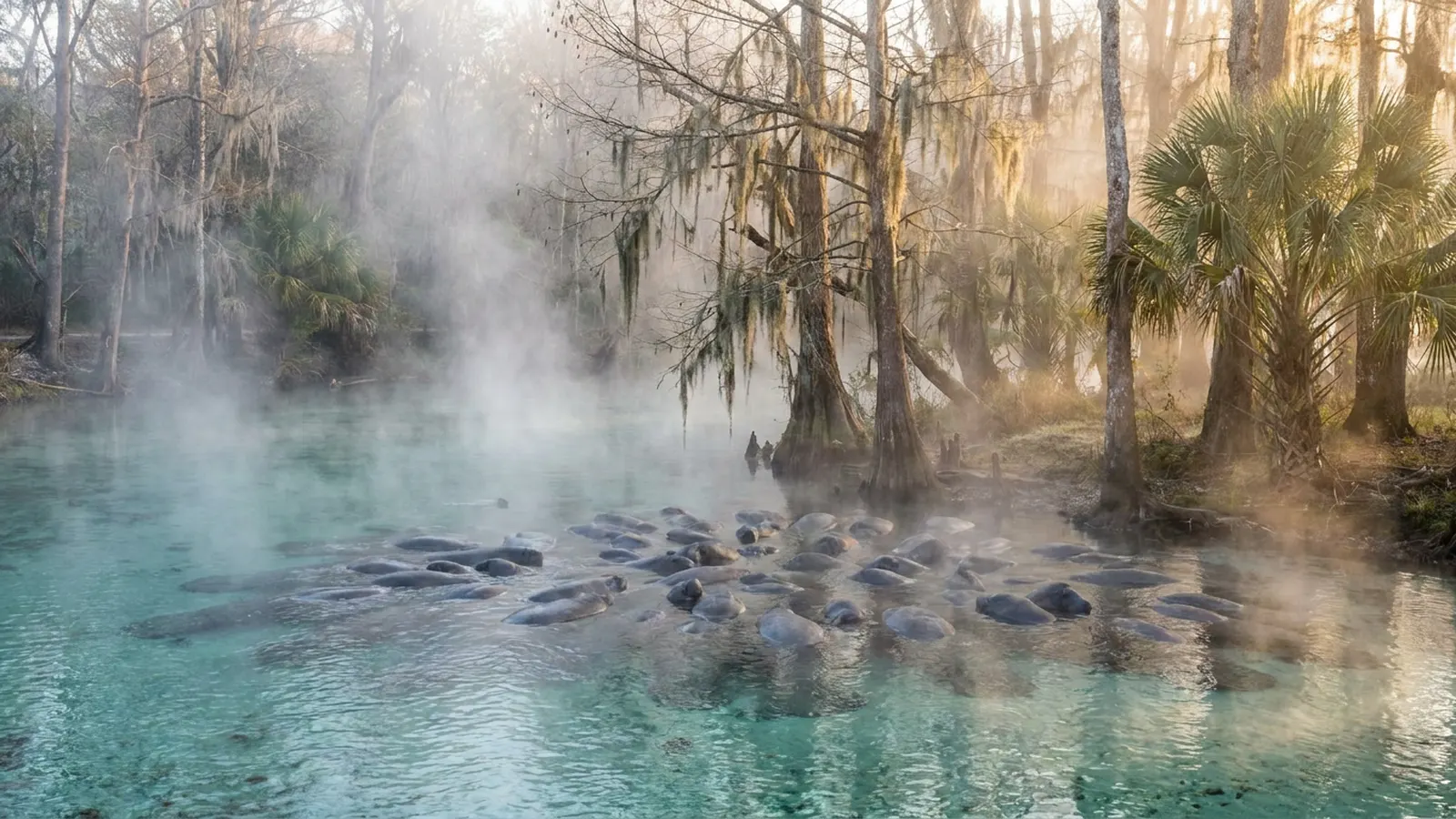
So when cold fronts sweep down the peninsula in late fall and winter, manatees head for warm water. There are two main types of refuge. Natural springs, where water from the aquifer flows out at a steady 72–74°F year-round, are the most important; Crystal River, Homosassa, Blue Spring and Manatee Springs are classic examples. The second type is the warm-water discharge from coastal power plants, explained in our page on manatees and power plants. Both concentrate manatees in predictable places, which makes winter the best time by far to see them.
Month by month: what to expect
A year in the life of a Florida manatee watcher.
November. The season starts. The first cold fronts arrive, and manatees begin moving toward warm-water sites. Many seasonal manatee protection rules and sanctuaries take effect in mid-November, and winter viewing centers open. Numbers at refuges are building but usually not yet at their peak.
December. A strong month. As fronts become more frequent and colder, manatees settle into their winter refuges. On cold mornings, counts at major sites can climb into the hundreds. Holiday crowds can be heavy, so plan an early start.
January. Often the best month of the year. January usually brings Florida’s coldest weather, and many record counts at warm-water sites have been set in January. Our page on the Blue Spring manatee count covers one famous example, when hundreds of manatees packed into a single spring run.
February. Still excellent. Cold snaps continue, and manatees remain close to warm water. On warmer days they venture out to feed, so numbers fluctuate more than in January, but a cold February morning can be just as good.
March. The season winds down. As the water warms, manatees spend more time away from the refuges and start dispersing. Early March can still be good after a late front; by the end of the month many have moved out.
April and May. Manatees spread along the coasts and up rivers, feeding heavily after winter. Viewing centers that are only open in winter close for the season. You can still see manatees in canals, bays and lagoons, but you need more luck.
June to September. Summer is the season of mating herds and calves. Manatees are widely scattered, and on the Atlantic coast some travel north into Georgia and the Carolinas. Sightings happen in marinas, canals, grass flats and estuaries, often by surprise. Our page on manatee mating explains the noisy summer herds.
October. A quiet transition. Water is still warm, manatees are dispersed, and the first cool nights hint at the coming season.
| Month | Where manatees are | Viewing chances |
|---|---|---|
| Nov | Moving toward warm-water refuges | Good, improving |
| Dec | Settling into springs and power-plant canals | Very good |
| Jan | Concentrated at refuges on cold days | Excellent |
| Feb | At refuges, venturing out on warm days | Excellent |
| Mar | Starting to disperse | Good early, fading late |
| Apr–May | Spreading along coasts and rivers | Fair, unpredictable |
| Jun–Sep | Widely scattered; mating herds and calves | Fair; luck-based |
| Oct | Dispersed in warm water | Fair |
The best day and time within the season
Cold, calm, early.
Within the season, the weather on the day matters more than the date. The best mornings are those just after a strong cold front, when overnight lows drop and the shallow coastal water chills quickly. Manatees crowd into warm water and stay put. Two or three warm days later, many will have drifted out to feed on seagrass beds, as described on our manatee diet page, and counts drop.
Early morning is best for three reasons: manatees are most concentrated after a cold night, the water is usually calm before the wind picks up, and the crowds haven’t arrived. Calm water makes a huge difference. On a breezy day, ripples on the surface hide everything, while on a still morning you can see manatees resting on the bottom of a clear spring. Weekdays are quieter than weekends, which matters at popular sites where parking can fill up.
Where to go in winter
Reliable sites on both coasts.
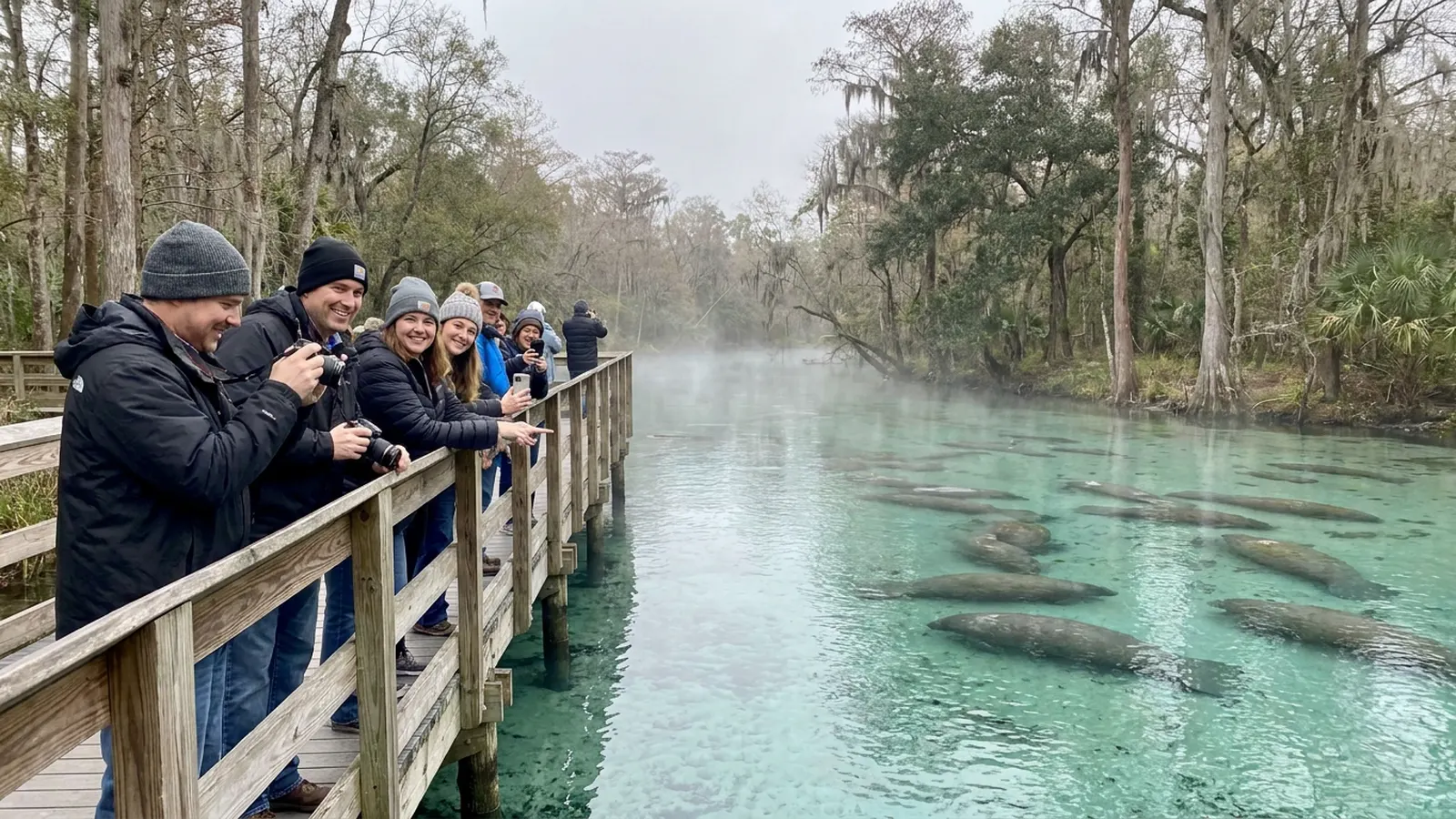
On the Gulf coast, Crystal River and nearby Homosassa are the headline destinations, with the option of guided snorkel tours under strict rules; see our Crystal River snorkeling guide. The Weeki Wachee River is a great place to paddle among winter manatees. Around Tampa Bay, the free Manatee Viewing Center at Apollo Beach can host hundreds on cold days, and our page on Clearwater manatees covers other local spots. Further south, closer to home for me, Manatee Park in Fort Myers is the classic Southwest Florida winter site. Inland, Manatee Springs State Park on the Suwannee River lives up to its name in winter.
On the Atlantic side and the St. Johns River, Blue Spring State Park near Orange City is one of the most spectacular winter sites in the state. Further south, the Manatee Observation and Education Center in Fort Pierce and the power-plant site at Riviera Beach in Palm Beach County are popular, and Manatee Island Park in Daytona Beach is worth a look. In Broward County, our guide to Fort Lauderdale manatees covers the canals and the New River. If you prefer to see manatees from the water, our guide to kayaking with manatees lists the best rivers to paddle.
Seeing manatees in summer
Less predictable, but still very possible.
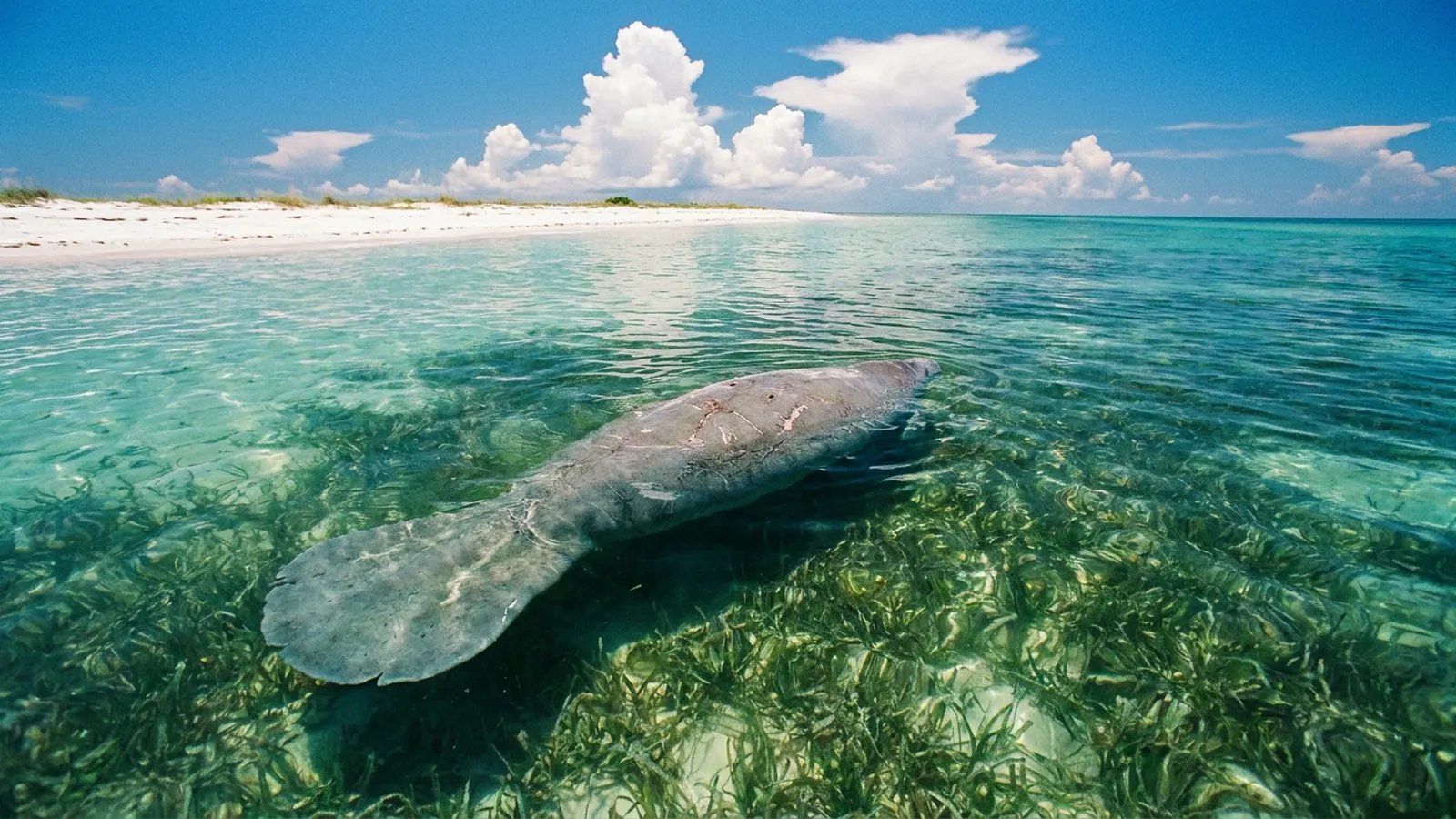
If your trip falls in summer, don’t give up. Manatees are still in Florida, just spread out. Your best bets are calm, shallow waters with seagrass and some fresh water nearby: the Indian River and Banana River lagoons on the Atlantic coast, quiet canals and marinas in Southwest Florida, river mouths, and the bays behind the barrier islands. Look for the round, smooth “footprints” on calm water left by a manatee’s tail, snouts breaking the surface to breathe every few minutes, and the swirl of a manatee diving.
Summer is also when you are most likely to see mothers with young calves. Calves stay with their mothers for one to two years, as our page on baby manatees explains. Give them plenty of space.
How I would plan a manatee trip
Pick the season, then let the forecast pick the day.
If I were planning a trip around manatees, I would aim for the middle of January and keep a couple of days flexible. A few days out, I’d check the forecast for the next cold front and plan to be at a warm-water site at opening time the morning after it passes. I’d pack polarized sunglasses, because glare hides most of what is under the surface, and dress in layers, because Florida winter mornings can be surprisingly cold, especially on the water.
I would also choose the experience carefully. For a sure sighting with no effort, a free boardwalk at a power-plant site or spring is hard to beat. For a more personal encounter, a kayak on a spring river is wonderful. Wherever you go, remember the rules: look, but don’t touch, chase, feed or give water to manatees. They are protected by federal and Florida law, and in winter they are conserving energy they need to survive the cold.
Why winter crowds of manatees are good and bad news
Easy to see, but vulnerable.
Winter gatherings are wonderful for viewing, but they also reveal how dependent manatees are on a small number of places. When hundreds of animals rely on a single spring or power-plant canal, anything that affects that site, from a plant shutdown to falling spring flow, affects a big share of the population. Cold winters still kill manatees that fail to reach warm water in time, and in the early 2020s seagrass loss on the Atlantic coast led to a record die-off, mostly in winter, when hungry manatees sheltering in warm water had little to eat nearby. Protecting springs, restoring seagrass and slowing boats down are what keep these winter spectacles going year after year.
What month is best to see manatees in Florida?
January is usually best, with December and February close behind.
When is manatee season in Florida?
Roughly mid-November to the end of March, when manatees gather at warm-water refuges.
What time of day is best to see manatees?
Early morning, especially after a cold night, when manatees are concentrated and the water is calm.
Can you see manatees in Florida in summer?
Yes, but they are spread out along coasts, rivers and canals, so sightings are less predictable.
Where is the best place to see manatees in Florida?
Crystal River, Blue Spring State Park, Apollo Beach and Manatee Park in Fort Myers are among the most reliable winter sites.
Why do manatees gather in winter?
They can suffer cold stress in water below about 68°F, so they crowd into warm springs and power-plant outflows.
Do I need a tour to see manatees?
No. Many winter sites have free boardwalks, though tours are needed for in-water encounters in Crystal River.
- Florida Fish and Wildlife Conservation Commission: where to see manatees and manatee protection zones.
- U.S. Fish and Wildlife Service: Crystal River National Wildlife Refuge.
- Florida State Parks: Blue Spring, Manatee Springs, Homosassa Springs and Weeki Wachee Springs.
- Save the Manatee Club: where to see manatees in Florida.
- Tampa Electric: Manatee Viewing Center.
Blane Perun has been exploring Earth’s oceans and marine life for over 25 years. Founder of TheSea.Org in 1999, underwater photographer, coral aquaculture pioneer, and explorer of 80+ countries.
About Blane Perun → More on Manatees →