Kayaking With Manatees in Florida — Where to Paddle, When to Go and the Rules
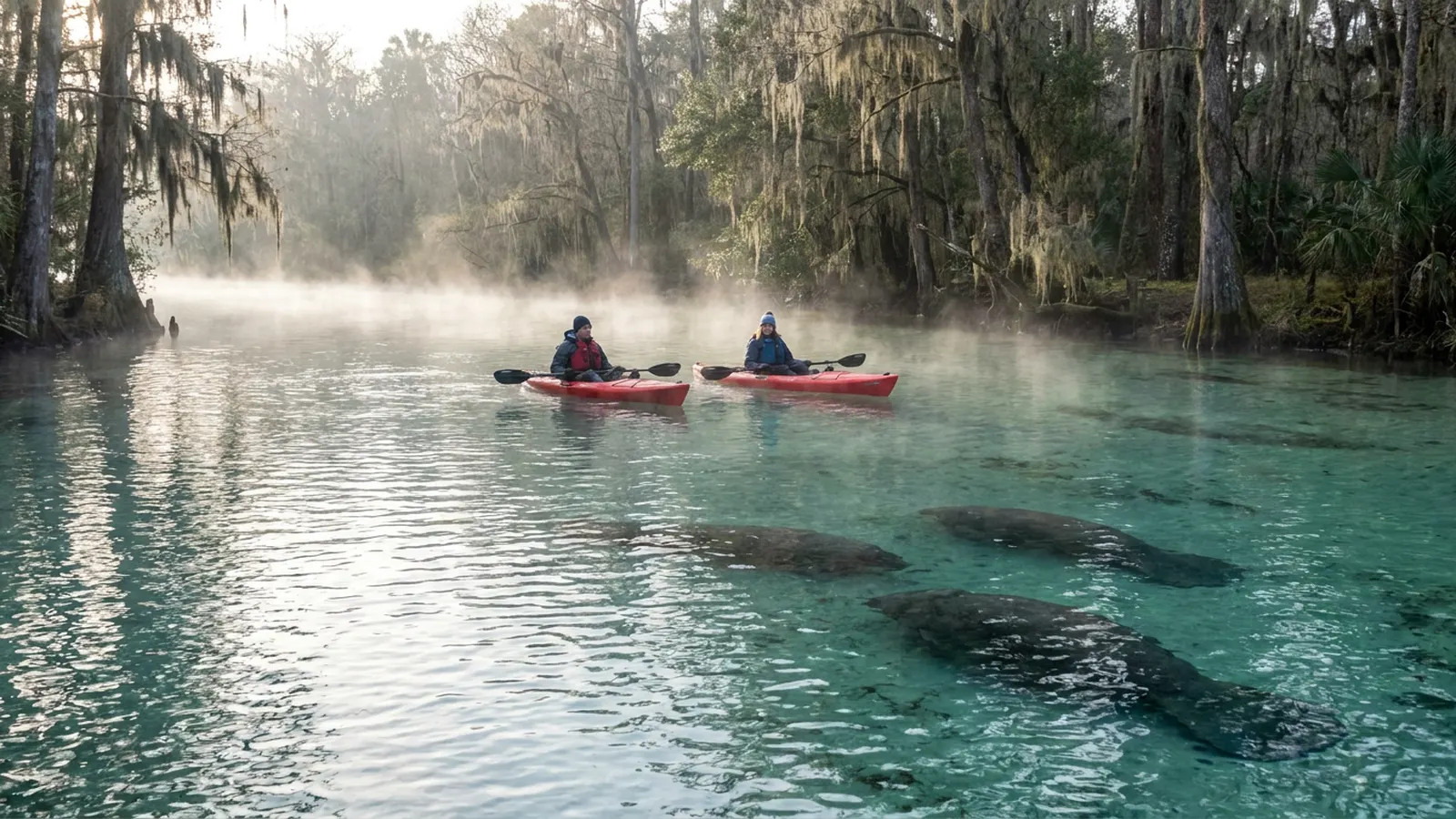
Yes. Kayaking is one of the best ways to see wild manatees in Florida, especially from November to March on spring-fed rivers such as Crystal River, the Homosassa, Weeki Wachee and the Orange River in Fort Myers. You must stay out of posted sanctuaries, keep your distance and never touch, chase, feed or separate manatees, which are protected by federal and state law.
If you ask me what the best way is for most people to see a wild manatee in Florida, I would say a kayak. A kayak is quiet, it can float over water too shallow for most boats, and it puts you at eye level with the surface where manatees come up to breathe. You don’t need a tour, a wetsuit or any special training, and on the right river on the right morning you can watch manatees for hours. But a kayak also lets you get very close to animals that are protected by law and easily disturbed, so it pays to know the rules and the right places before you launch. This guide covers both.
Why kayaking works so well for manatee watching
Quiet, slow and low to the water.
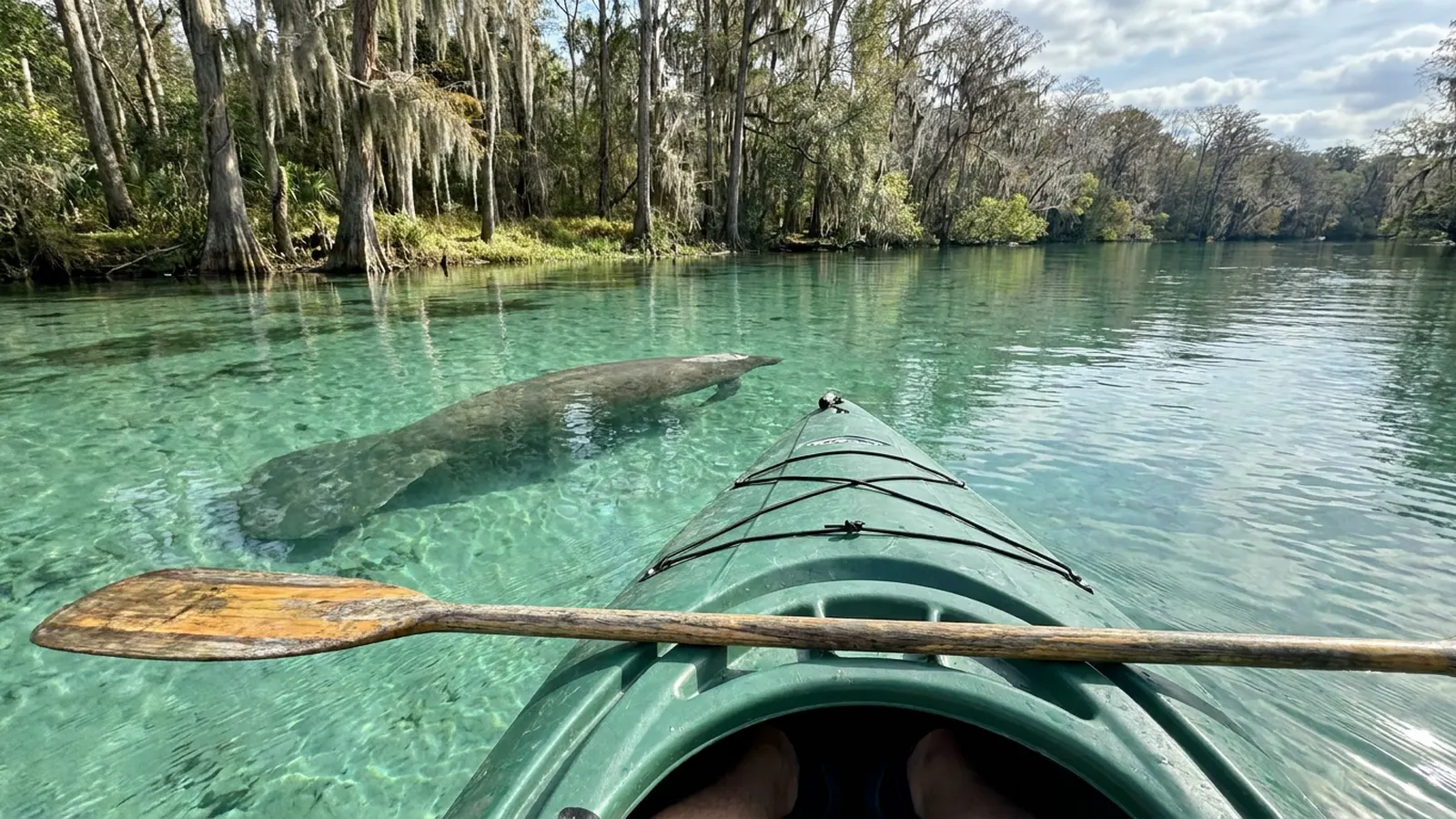
Manatees spend most of their time in shallow, calm water: spring runs, slow rivers, canals and grass flats. That is exactly the water a kayak handles best. Paddling is nearly silent, so you are far less likely to startle a resting manatee than a motorboat, and you don’t have a propeller in the water, which removes the biggest single threat to the animals. From a seat a foot or two above the surface, you can see down into clear spring water and spot the dark shapes of manatees on the bottom long before you reach them.
It is also a way to see manatees doing normal things. At viewing platforms you watch from a fixed spot. From a kayak drifting quietly on a river, you see manatees grazing, resting, nursing calves and travelling, which gives you a much better sense of how they live. Our page on what a manatee is covers their basic biology if you want to know what you are looking at.
When to go
Winter concentrates manatees; summer spreads them out.
The season makes the biggest difference. From roughly November to March, cold fronts chill Florida’s coastal waters, and manatees, which are vulnerable to cold stress below about 20°C (68°F), move into warm springs and spring-fed rivers. That puts large numbers of manatees in predictable places, many of them perfect for paddling. Our page on manatee habitat explains the warm-water pattern in more detail.
The best days are the coldest ones. On the morning after a strong front, manatees crowd into the springs and stay there. On warm afternoons, they drift out to feed and become harder to find. Early morning is also usually the calmest time of day, with little wind, smooth water and better visibility, before the rental crowds arrive.
In summer you can still kayak with manatees, but you’ll see fewer at a time and in less predictable places: a pair grazing on a grass flat, a mother and calf in a canal, or a mating herd churning the water near a river mouth.
The best places to kayak with manatees
Spring rivers on the Gulf coast lead the list.
Crystal River and Kings Bay. The most famous manatee destination in Florida. Kings Bay is fed by dozens of springs, and in winter it holds hundreds of manatees. Several areas are designated manatee sanctuaries and are closed to all entry, including kayaks, during the season, and Three Sisters Springs has its own access rules. See our guides to Crystal River manatees and snorkeling with manatees in Crystal River.
Homosassa River. Just south of Crystal River, with spring-fed headwaters near Homosassa Springs Wildlife State Park. Winter manatees gather in the upper river, and it makes a pleasant paddle with less traffic than Kings Bay.
Weeki Wachee River. A narrow, crystal-clear spring run north of Tampa. Manatees move up from the Gulf into the river in winter, and paddling down the run with manatees passing under the boat is a well-known Florida experience. It is busy at weekends, and the state has tightened rules to protect the riverbanks, so check current launch and rental arrangements. Our guide to Weeki Wachee manatees covers the river in detail.
Orange River, Fort Myers. Closer to where I live in Southwest Florida. The river runs past Manatee Park, where warm water from a power plant draws manatees in winter. Kayak rentals and guided paddles operate from the park in season.
Indian River and Banana River lagoons. On the Atlantic coast around Merritt Island and Cocoa Beach, these shallow lagoons hold manatees much of the year, especially in spring and summer. Guided paddles from local outfitters often see manatees and dolphins on the same trip.
| Location | Coast | Water type | Best months | Notes |
|---|---|---|---|---|
| Crystal River / Kings Bay | Gulf | Spring-fed bay | Nov–Mar | Seasonal sanctuaries closed to all entry |
| Homosassa River | Gulf | Spring-fed river | Nov–Mar | Quieter alternative to Kings Bay |
| Weeki Wachee River | Gulf | Clear spring run | Nov–Mar | Very popular; check current rules |
| Orange River, Fort Myers | Gulf | Power-plant warm water | Dec–Mar | Rentals at Manatee Park in season |
| Indian / Banana River lagoons | Atlantic | Shallow estuary | Spring–summer | Manatees and dolphins |
The rules: what the law says
Manatees are protected, and paddlers are not exempt.
The Florida manatee is protected by the federal Endangered Species Act and Marine Mammal Protection Act, and by the Florida Manatee Sanctuary Act. Together these laws make it illegal to harass, harm, pursue or disturb manatees. In practice, that means you can’t chase a manatee, surround it with boats, separate a mother from her calf, touch or poke it, or block its path. Feeding manatees or giving them fresh water from a hose is also prohibited, because it teaches them to approach people and docks.
Many warm-water sites have posted sanctuaries or no-entry zones that are closed to everyone, including kayakers and swimmers, during manatee season. These give the animals somewhere to rest undisturbed. Respect the buoys and signs, even if the manatees are just on the other side. Elsewhere, slow-speed and idle-speed zones protect manatees from motorboats; as a paddler you are already going slowly, but you share the water with boats that must follow those rules, so stay visible.
How to paddle around manatees
Practical etiquette that keeps you and the animals safe.
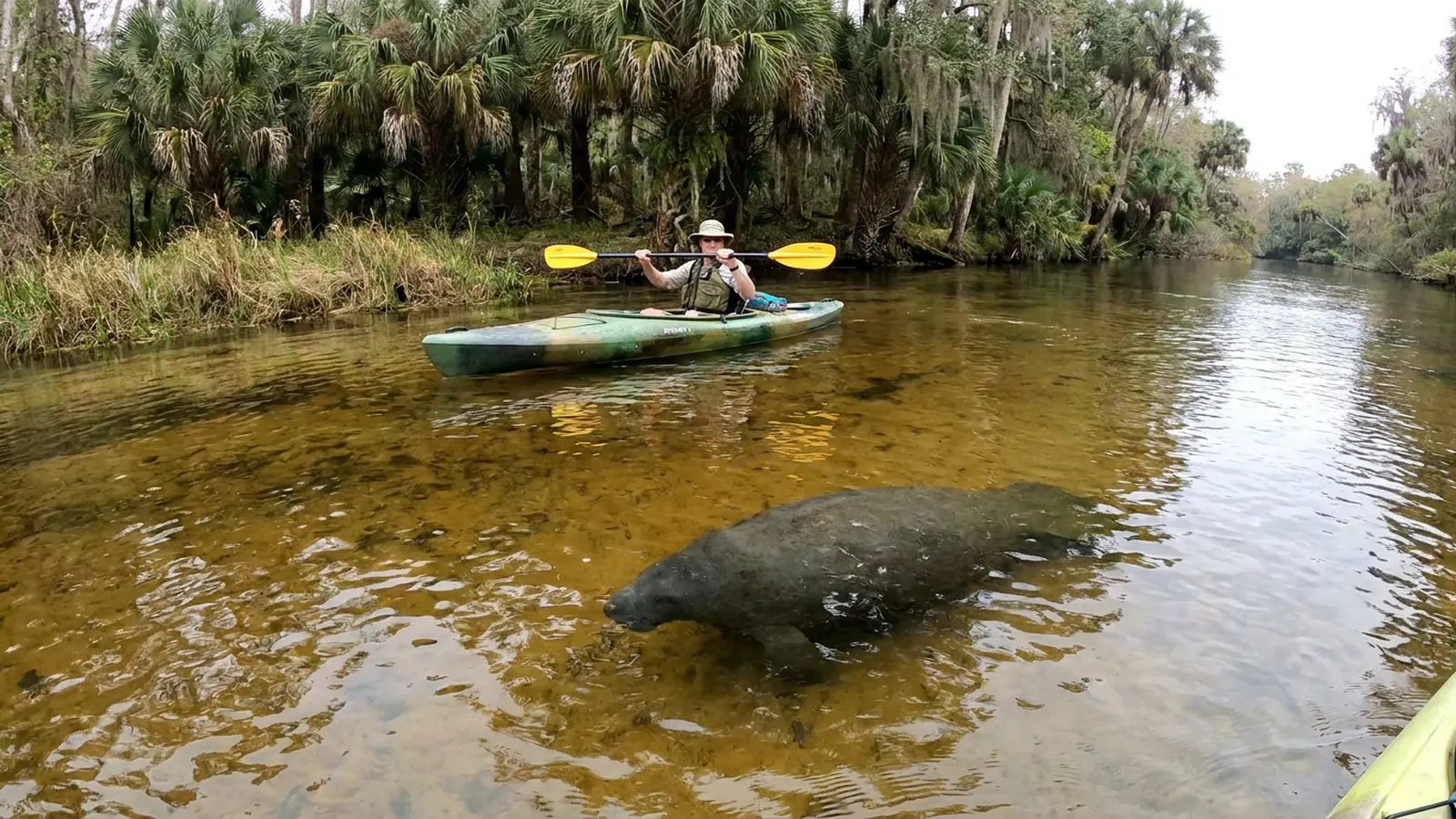
Keep your distance and let the manatee decide. If you see one ahead, stop paddling and drift, or move slowly to one side. If a manatee approaches your kayak out of curiosity, sit still, keep your paddle out of the water and let it pass or investigate. Don’t reach over to touch it. Manatees are big, solid animals, and a startled one can flick its tail hard enough to rock or tip a small boat.
Watch where you put your paddle. In shallow, clear water it is easy to forget that a resting manatee may be lying just under the surface. Short, gentle strokes are better than deep, splashy ones. Avoid paddling over resting groups, and never wedge your kayak between a mother and her calf. Calves stay close to their mothers for one to two years, as our page on baby manatees explains, and separation is dangerous for them.
Keep noise down. Talking quietly is fine, but shouting, banging paddles and splashing all disturb wildlife. If you are with a group, spread out in single file rather than forming a wall across a narrow river.
What I would pack and plan
A few things make a big difference.
The most useful piece of gear for manatee watching is a pair of polarized sunglasses. They cut through surface glare and let you see into the water, which is the difference between seeing a manatee and paddling straight past one. In winter, Florida mornings can be chilly, so I’d dress in layers that can get wet, and bring a dry bag for a phone and a light jacket. A clear-bottom kayak is a fun option on spring runs, but a regular sit-on-top works just as well.
I would also plan the trip around the weather. Check the forecast for the first cold, calm morning after a front, launch as early as the rental shop or park allows, and pick a weekday if you can. On popular rivers like Weeki Wachee or Kings Bay, weekend crowds can be heavy, and that is hard on both the river and the manatees.
Guided tour or go it alone?
Both work; a guide helps on unfamiliar water.
On a river you know, renting a kayak and going on your own is easy, and many launch sites have rental outfitters. On an unfamiliar river, especially Kings Bay with its sanctuaries, springs and boat traffic, a guided paddle is worth considering. Good guides know where the manatees are likely to be that morning, where the closed areas are and how to approach responsibly. They also tend to know other wildlife: on the same trip you may see dolphins, river otters, wading birds and, in the springs, schools of mullet and other fish.
Whichever you choose, the right attitude matters more than anything. A kayak gives you the chance to share the water with one of Florida’s most remarkable animals. Keep it a calm encounter on the manatee’s terms, and you will come away with a much better experience than if you try to get close. If you see an injured, entangled or dead manatee, note the location and call the Florida Fish and Wildlife Conservation Commission Wildlife Alert Hotline.
Where is the best place to kayak with manatees in Florida?
Crystal River’s Kings Bay is the best known, with the Homosassa and Weeki Wachee rivers and the Orange River in Fort Myers close behind.
What month is best for kayaking with manatees?
January and February are usually best, though the season runs from about November to March.
Is it safe to kayak near manatees?
Yes, if you keep your distance and stay calm. Manatees are gentle, but a startled one can rock a small kayak with its tail.
Can you touch manatees from a kayak?
No. Touching, chasing or disturbing manatees can count as harassment under federal and state law.
Can you kayak in manatee sanctuaries?
No. Posted sanctuaries are closed to all entry, including kayaks and swimmers, during manatee season.
What should I do if a manatee comes up to my kayak?
Stop paddling, keep still and let it pass or look around. Don’t reach out to touch it.
Can you kayak with manatees in summer?
Yes, but they are spread out, so sightings are less predictable than in winter.
- U.S. Fish and Wildlife Service: Crystal River National Wildlife Refuge and manatee viewing guidelines.
- Florida Fish and Wildlife Conservation Commission: manatee protection zones and viewing guidelines.
- Florida State Parks: Weeki Wachee Springs and Homosassa Springs state parks.
- Lee County Parks and Recreation: Manatee Park.
- Save the Manatee Club: guidelines for paddlers and swimmers.
Blane Perun has been exploring Earth’s oceans and marine life for over 25 years. Founder of TheSea.Org in 1999, underwater photographer, coral aquaculture pioneer, and explorer of 80+ countries.
About Blane Perun → More on Manatees →