Crystal River Manatees — Swimming in the Manatee Capital
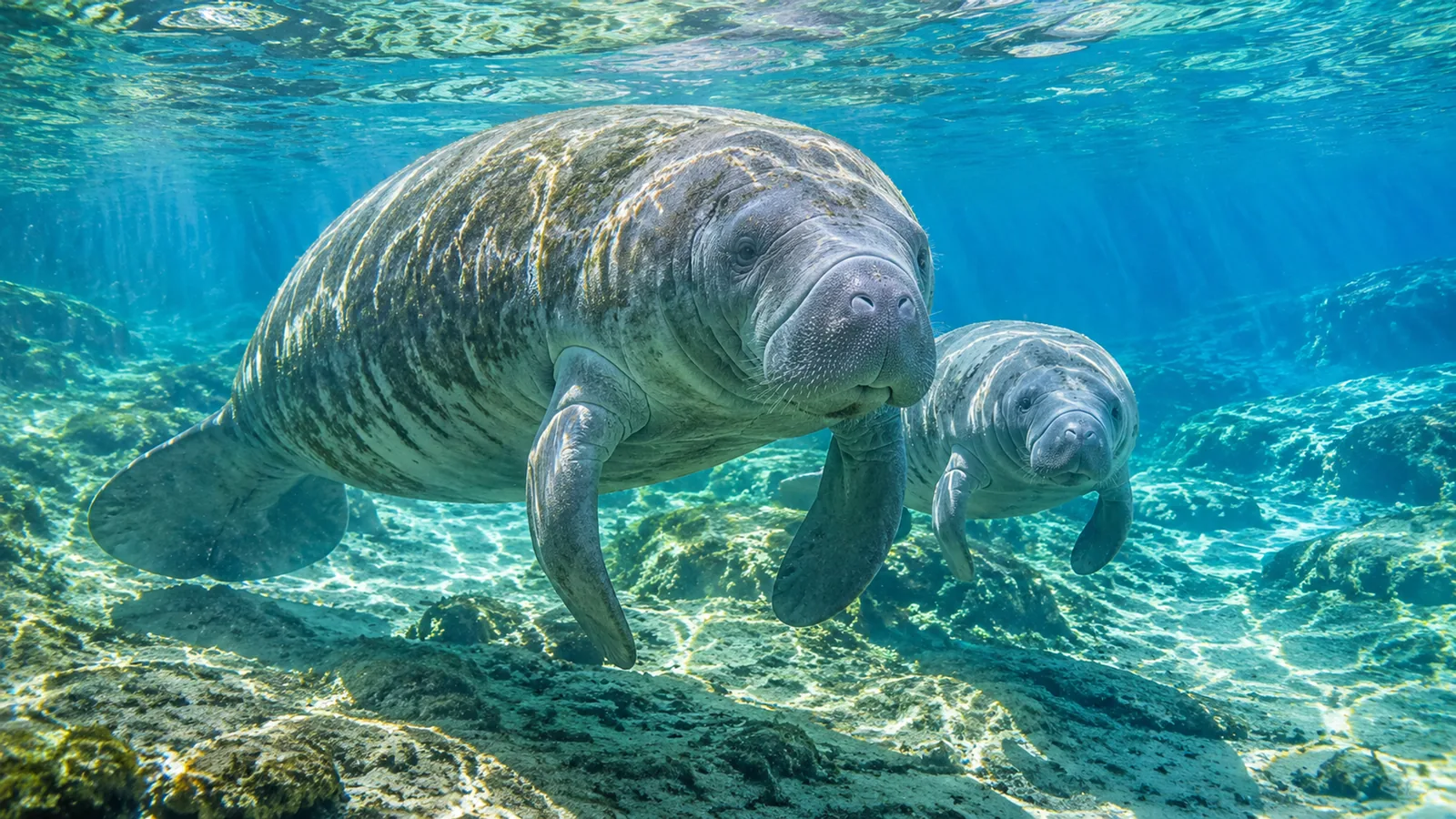
Crystal River, on Florida’s Nature Coast roughly 80–90 miles north of Tampa, is the manatee capital. Its Kings Bay is fed by springs that flow at a constant 72°F, and when the Gulf drops below 68°F, hundreds of manatees move in, with densities nearing 1,000 on extremely cold days: the largest natural winter gathering of manatees in the world. The Crystal River National Wildlife Refuge, created in 1983 specifically to protect manatees, manages the area. It is one of the very few places where people can legally swim with manatees, under “passive observation” rules. Three Sisters Springs has a 1,300-foot boardwalk for dry viewing.
Kings Bay’s springs discharge a few hundred million gallons of 72°F water a day, creating a large natural warm-water refuge rather than a power plant canal. That makes it one of the most important winter habitats for Florida manatees on the Gulf coast, and the place where most people have their first in-water manatee encounter.
Tours leave from marinas around Kings Bay in the town of Crystal River, typically early in the morning, when manatees are resting and the water is calm. Snorkelers wear wetsuits and float at the surface with a guide. For land viewing, the Three Sisters Springs boardwalk circles the springs with platforms over the clear water. If you would rather paddle, see our guide to kayaking with manatees.
Crystal River — at a glance
- Location: Kings Bay, Crystal River, Citrus County, FL
- Refuge: Crystal River NWR, est. 1983 (177 acres)
- Spring temperature: 72°F year-round
- Manatee trigger: Gulf below ~68°F
- Peak numbers: Hundreds; near 1,000 on the coldest days
- Sanctuary season: November 15–March 31
Can you swim with manatees in Crystal River?
Yes. Crystal River and neighboring Homosassa are among the very few places where in-water manatee encounters are legal, under rules set by the US Fish and Wildlife Service. You can snorkel near manatees in Kings Bay outside the posted sanctuaries, ideally with a licensed tour operator. The rule of thumb is passive observation: float quietly at the surface, don’t initiate contact and let the manatees choose how close to come. Boaters should also know the bay’s speed rules, covered in our page on manatee protection zones.
| Allowed | Prohibited |
|---|---|
| Floating quietly at the surface | Chasing or pursuing manatees |
| Watching from a distance | Touching, poking or riding them |
| Letting a manatee approach you | Diving down onto resting or feeding manatees |
| Snorkeling outside sanctuaries | Entering the seven winter sanctuaries |
| Following guide instructions | Separating a mother and calf; feeding them |
When is the best time to see manatees in Crystal River?
From about mid-November through March, with the peak usually in January and February. Cold fronts push the most manatees into Kings Bay; on the coldest days nearly 1,000 can be present. Early-morning tours offer calmer water and more resting manatees. Outside winter, a smaller number of manatees remain in the bay year-round, but encounters are less predictable.
Keep your fins still and arms close. A manatee approaching a motionless snorkeler often comes right up to inspect a mask. Kicking sends it away and stirs up the bottom for everyone.
What is Three Sisters Springs?
A set of three connected spring basins on the edge of Kings Bay, famous for brilliant blue water and resting manatees. The refuge manages it with a 1,300-foot boardwalk and viewing platforms, accessed through a city-run visitor shuttle and center. In-water access to the springs is allowed only in warmer months or when manatees are not using them; on cold days it closes so manatees can rest undisturbed.
Why do so many manatees gather in Crystal River?
Warmth and food. Manatees cannot tolerate long exposure to water below about 68°F without risking cold stress. The springs hold Kings Bay at a comfortable temperature through winter, and nearby rivers and the Gulf provide seagrass and other plants to graze. Water quality and seagrass health in Kings Bay have been a concern, and restoration projects have worked to bring back eelgrass and clear algae. About an hour south, the Weeki Wachee River is another spring-fed winter refuge on the same coast. Background in manatee habitat and manatee diet.
How does Crystal River compare with other manatee sites?
| Site | Type | In-water? |
|---|---|---|
| Crystal River | Natural springs, wildlife refuge | Yes, under rules |
| Manatee Springs | Natural spring | No manatee interaction |
| Apollo Beach | Power plant canal | No |
| Manatee Park | Power plant canal | No (kayaking on the river) |
See also our Crystal River manatee snorkeling guide for gear and tour tips.
- Refuge size: 177 acres, including 40 acres of winter sanctuaries
- Sanctuaries: 7, closed Nov 15–Mar 31
- Boardwalk: 1,300 ft at Three Sisters Springs
- Spring output: A few hundred million gallons a day
Can you swim with manatees in Crystal River?
Yes, legally, following US Fish and Wildlife Service passive-observation rules.
When is manatee season in Crystal River?
Mid-November through March, peaking in January and February.
How many manatees are in Crystal River?
Hundreds in winter, close to 1,000 on the coldest days.
Can you touch manatees in Crystal River?
No. Touching, chasing and feeding are prohibited.
What is Three Sisters Springs?
Three spring basins in Kings Bay with a 1,300-foot viewing boardwalk.
What temperature is the water in Crystal River?
The springs flow at 72°F year-round.
Do you need a tour to swim with manatees?
Not legally required, but a licensed guide is strongly recommended.
- US Fish and Wildlife Service. Crystal River National Wildlife Refuge tearsheet (est. 1983, 177 acres, 72°F, 68°F trigger, near 1,000 manatees, sanctuaries, rules, boardwalk).
- US Fish and Wildlife Service. Crystal River NWR website: Three Sisters Springs access.
- Florida Fish and Wildlife Conservation Commission. Manatee protection zones.
Blane Perun has been exploring Earth’s oceans and marine life for over 25 years. Founder of TheSea.Org in 1999, underwater photographer, coral aquaculture pioneer, and explorer of 80+ countries.
About Blane Perun →