Weeki Wachee Manatees — Kayaking the Spring River in Winter
Yes. Florida manatees swim up the Weeki Wachee River from the Gulf of Mexico in the cooler months to shelter in its spring-fed water, which stays around 22–23°C (72–74°F) all year. The best time to see them is November to March, usually from a kayak or paddleboard on the clear spring run below Weeki Wachee Springs State Park.
Weeki Wachee is one of those Florida names that everyone seems to know, mostly because of the mermaids. Since the 1940s, performers in tails have been swimming in the spring at Weeki Wachee Springs, and the park is now a state park built around that old-Florida attraction. But for wildlife lovers, the real draw in winter is downstream. The clear spring run that flows out of the park toward the Gulf of Mexico is a winter refuge for manatees, and paddling it on a cold morning with manatees gliding under your boat is one of the best manatee experiences on Florida’s Gulf coast. Here is what to know before you go.
Why manatees come to Weeki Wachee
A warm, clear spring river in a cold coastal winter.
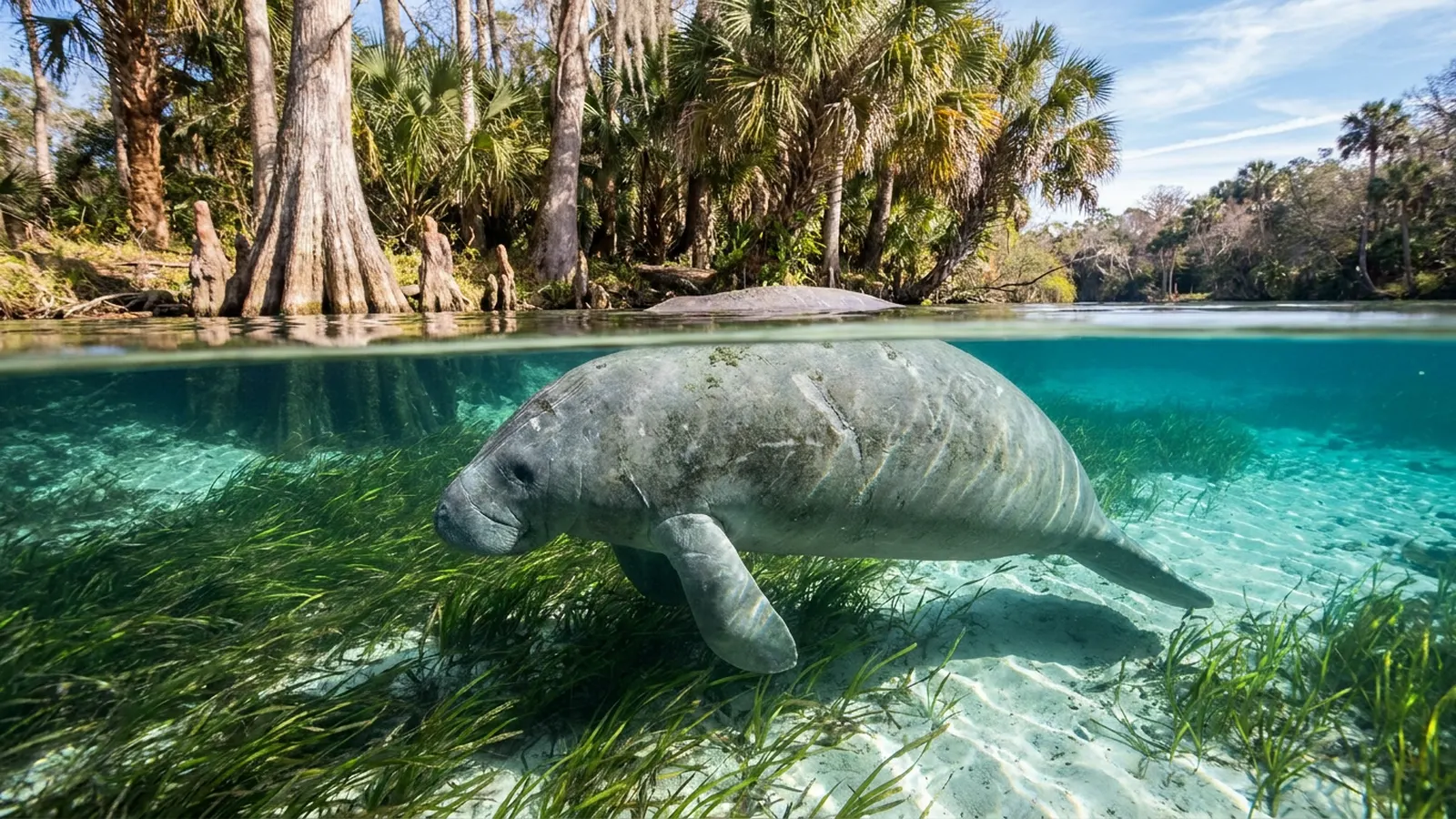
Weeki Wachee Spring is a large spring that pours water from the Floridan aquifer into a narrow river. The water leaves the ground at a steady temperature, roughly 72 to 74°F, all year round. In summer, that feels cool. In winter, when cold fronts chill the shallow Gulf waters along this stretch of coast into the 50s°F or lower, the spring run is far warmer than the sea.
Manatees need that warmth. Despite their size, they have little insulating fat and a low metabolic rate, and in water much below about 68°F (20°C) they risk cold stress, which can be fatal. Our page on manatee habitat explains why that number matters so much. Along Florida’s Nature Coast, from Weeki Wachee north through Homosassa and Crystal River, a chain of spring-fed rivers gives manatees a series of warm refuges close to the shallow seagrass flats where they feed. Weeki Wachee is the southernmost of that well-known group.
When to see manatees on the Weeki Wachee
Cold mornings in mid-winter are best.
Manatees use the river mostly from late fall through early spring, with the best chances from December to February. As with every warm-water site, the weather decides the day. On the morning after a strong cold front, manatees move into the spring-fed water and can be seen resting and travelling in the run. During a warm spell they spread out into the Gulf to feed, and you may see only a few, or none.
A handful of manatees can be seen in the river in other seasons too, especially in the lower river near the Gulf, but sightings are less predictable. If seeing manatees is the main goal of your trip, I would plan it for winter, watch the forecast and go on the first cold, calm day after a front.
Kayaking the Weeki Wachee
A downstream paddle through clear water.
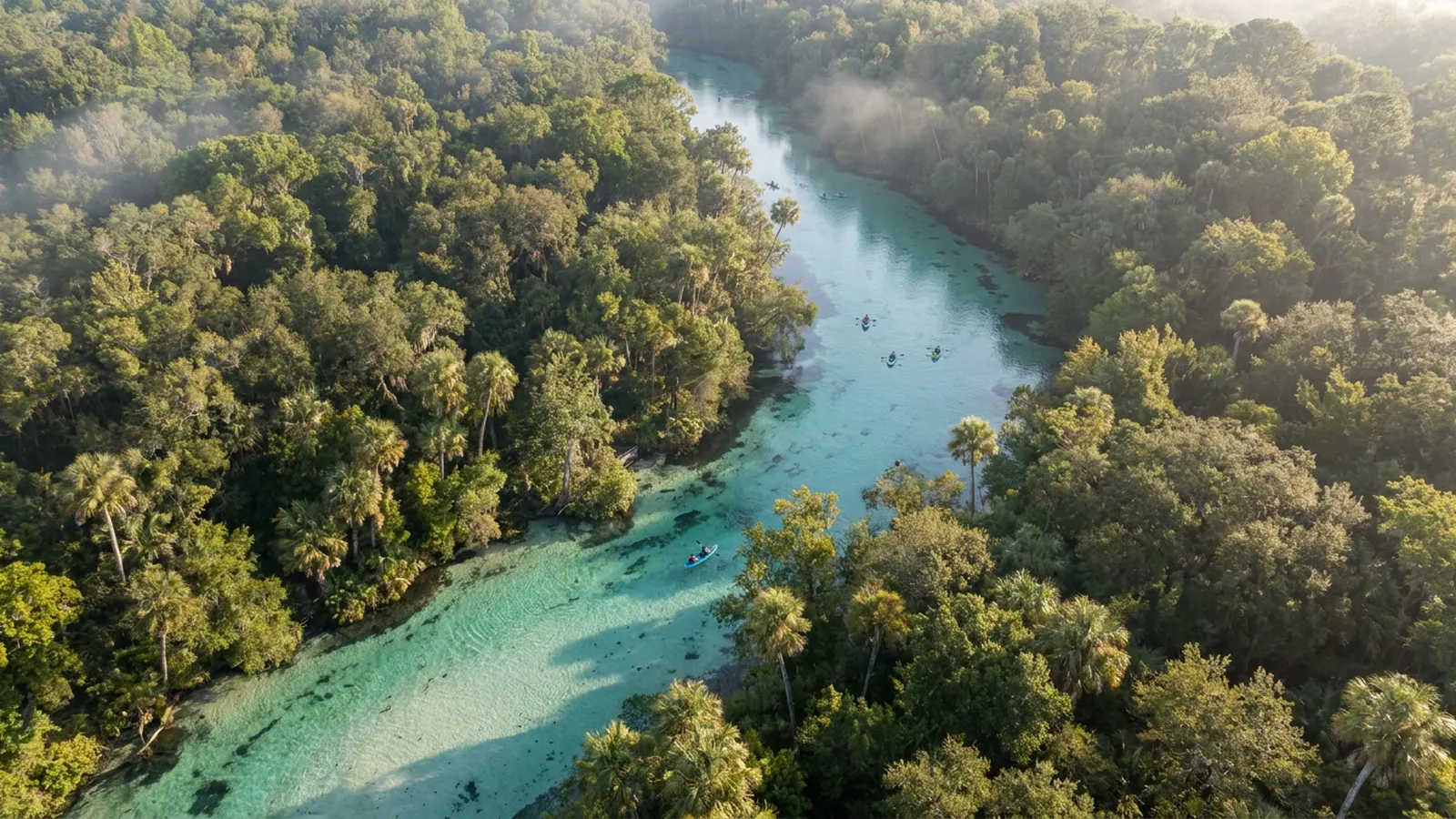
The classic way to experience the river is a downstream kayak, canoe or paddleboard trip starting at or near the state park and ending at a county park further down the river, with a shuttle back to the start. The current does much of the work, so the paddle is relaxed, though the river is narrow and twisty in places, with overhanging trees, fallen logs and shallow sandy stretches. Rental outfitters operate in the area and usually include the shuttle.
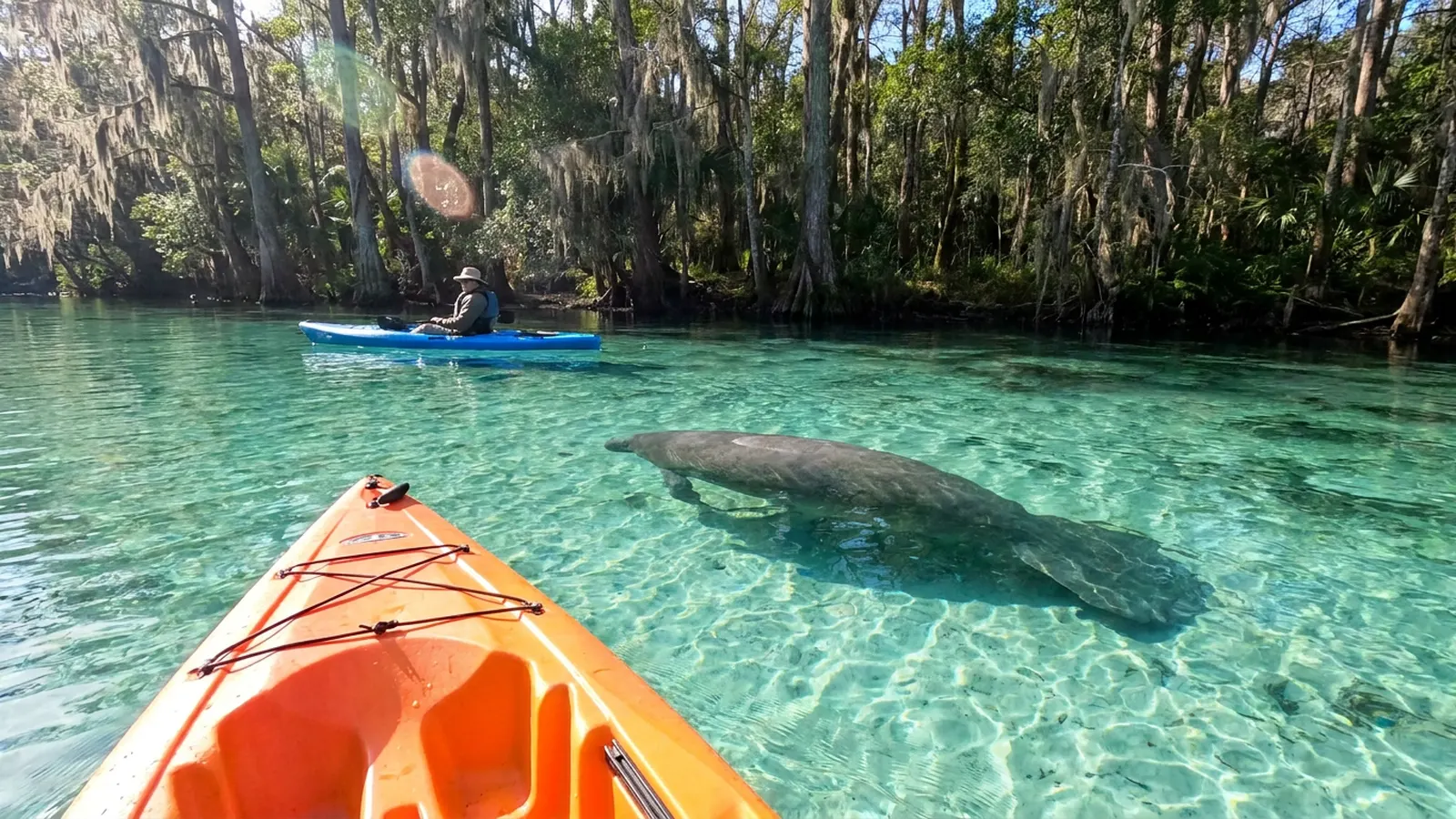
The water is the star. In good conditions it is so clear that you can see eelgrass waving on the sandy bottom, schools of mullet, the occasional turtle and, in winter, the grey shapes of manatees passing under the boat. Manatees in the river are often travelling, resting in deeper holes or grazing along the edges. River otters, wading birds and the odd alligator are part of the scenery too.
Because the river is narrow, the main thing to watch is your own movement. If a manatee is ahead of you, stop paddling and let it pass, or drift slowly to one side. Don’t paddle over resting animals, and don’t try to follow one that is moving away. Our guide to kayaking with manatees covers general paddling etiquette for every Florida river.
| Option | What it involves | Pros | Cons |
|---|---|---|---|
| Rental kayak with shuttle | Downstream paddle, outfitter collects you | Easy, relaxed, no gear needed | Busy at weekends; book ahead |
| Own kayak or paddleboard | Launch where permitted, arrange your own return | Flexible timing | Launch rules and capacity limits can apply |
| Guided paddle | Small group with a local guide | Wildlife knowledge, safe approach | Fixed schedule, extra cost |
| Lower river from the coast | Paddle in the tidal reaches | Quieter, more space | Water less clear than the upper run |
River rules and why they exist
A popular river needs protecting from its own fans.
The Weeki Wachee’s beauty has made it very popular, and heavy use has caused real damage. Thousands of paddlers stopping on sandbars and banks wore away vegetation and caused erosion along the river, and the state and county have responded with rules to limit the impact, such as restricting where you can stop or get out, and managing the number of boats launched. These rules change from time to time, so check the current regulations with the state park or your outfitter before you go.
The rules protecting manatees are the same as anywhere else in Florida. Manatees are protected by the federal Endangered Species Act and Marine Mammal Protection Act and by the Florida Manatee Sanctuary Act. It is illegal to touch, chase, corner, feed, give water to or otherwise harass them. On a narrow river, that especially means not surrounding a manatee with boats or blocking its path up or down the run. Let it move freely.
What I would do for a winter visit
Pick a weekday, go early and bring the right glasses.
If I were planning a manatee trip to Weeki Wachee, I’d do it on a weekday in January or February, ideally the first calm morning after a cold front. I’d book a kayak and shuttle in advance and get on the water as early as the outfitter allows, before the crowds and the wind. Polarized sunglasses are essential: on a bright day, surface glare hides almost everything, and with them the river turns transparent. I’d also dress in layers, because a Florida winter morning on the water can be chilly, and keep a dry bag for a phone or camera.
Once on the river, I’d take it slowly. The temptation on a downstream paddle is to cruise along with the current, but the manatees, otters and fish are easier to spot if you drift and look. Every so often, stop paddling altogether and watch the water ahead. Manatees surfacing to breathe leave a smooth swirl and you may hear the soft puff of a breath before you see anything.
Weeki Wachee Springs State Park and the mermaids
A classic Florida roadside attraction that became a state park.
No visit to Weeki Wachee feels complete without at least a look at the mermaids. The attraction opened in 1947, when performers learned to breathe from air hoses while swimming in the spring, and the underwater theatre built into the side of the spring is still used for shows today. The park became a Florida state park in 2008. It also has a swimming area, a spring-fed water park in summer and riverboat cruises. Fittingly for a place famous for mermaids, early sailors’ stories of mermaids are often linked to manatees and their relatives, as our page on whether mermaids are real explains.
The spring itself is very deep, a large vent dropping well over a hundred feet into the aquifer, and the clarity of the water comes from that steady flow of filtered groundwater. Protecting the spring’s flow and water quality is the long-term key to keeping it a refuge for manatees, as nutrient pollution and lower aquifer levels are concerns for springs throughout Florida.
Protecting the river and its manatees
Simple habits that keep Weeki Wachee healthy.
Stay in your boat except where landing is permitted. Pack out everything you bring in, including fishing line, which entangles manatees and birds. Keep your distance from manatees and let them choose how close to come. If you see an injured, entangled or orphaned manatee, note the location and call the Florida Fish and Wildlife Conservation Commission Wildlife Alert Hotline. For background on the animals you are watching, start with what a manatee is and our profile of the West Indian manatee.
It is worth remembering why all of this matters. The manatees you see in the Weeki Wachee in January spend the rest of the year spread along the Gulf coast, feeding on seagrass flats, travelling between rivers and raising calves. The spring is only one link in that chain, but in a hard winter it can be the most important one. Every manatee that reaches warm water safely, without being struck by a boat on the way or harassed once it arrives, has a better chance of surviving to breed. Manatees reproduce slowly, with a single calf every few years, so each adult that survives a winter matters to the population.
That is also why the busy-river problem deserves attention. A spring run full of paddlers at the same moment a cold front pushes manatees upstream puts a lot of pressure on animals that are trying to conserve energy. Going on a weekday, keeping groups small and quiet, and giving every manatee room to pass are small choices that add up across the thousands of people who paddle the Weeki Wachee each winter.
When can you see manatees at Weeki Wachee?
Mostly from November to March, with the best chances on cold mornings in December, January and February.
Can you swim with manatees at Weeki Wachee?
Organized manatee swims are offered in Crystal River. On the Weeki Wachee, viewing is usually from a kayak or paddleboard, at a respectful distance.
How long is the Weeki Wachee kayak trip?
The popular downstream paddle takes a few hours at a relaxed pace, with a shuttle back to the start.
How warm is the Weeki Wachee River?
The spring water stays around 72 to 74°F all year, which is why manatees use it in winter.
Are there rules for kayaking the Weeki Wachee?
Yes. There are limits on where you can stop or land and on launching, plus all the usual manatee protection laws. Check current rules before you go.
Can you touch manatees in the Weeki Wachee River?
No. Touching, chasing or feeding manatees is illegal harassment under federal and Florida law.
- Florida State Parks: Weeki Wachee Springs State Park.
- Southwest Florida Water Management District: Weeki Wachee River and springs protection.
- Florida Fish and Wildlife Conservation Commission: manatee viewing guidelines.
- U.S. Fish and Wildlife Service: West Indian manatee.
- Save the Manatee Club: viewing manatees responsibly.
Blane Perun has been exploring Earth’s oceans and marine life for over 25 years. Founder of TheSea.Org in 1999, underwater photographer, coral aquaculture pioneer, and explorer of 80+ countries.
About Blane Perun → More on Manatees →