Manatees in Fort Pierce — The Moore’s Creek Manatee Center
If you’re searching for “Manatee Island” in Fort Pierce, the place you want is the Manatee Observation and Education Center (MOEC) at 480 N. Indian River Drive, overlooking Moore’s Creek and the Indian River Lagoon. It opened on 27 October 1996 beside the former H.D. King Power Plant, whose warm runoff (6–8°F warmer than the lagoon) once drew manatees to the creek. The plant closed in 2008, but manatees still return out of habit. They’re seen year-round, with the most in winter. The center has exhibits, an observation tower and lagoon boat tours, and hosts more than 35,000 visitors a year. There’s no island called Manatee Island in Fort Pierce; for the Daytona Beach park of that name, see Manatee Island Park.
The Indian River Lagoon on Florida’s Atlantic coast is one of the most important manatee habitats in the state, and it has been at the center of the manatee starvation crisis since 2021. The Fort Pierce center is the lagoon’s best-known place to learn about that story and see manatees without getting in the water.
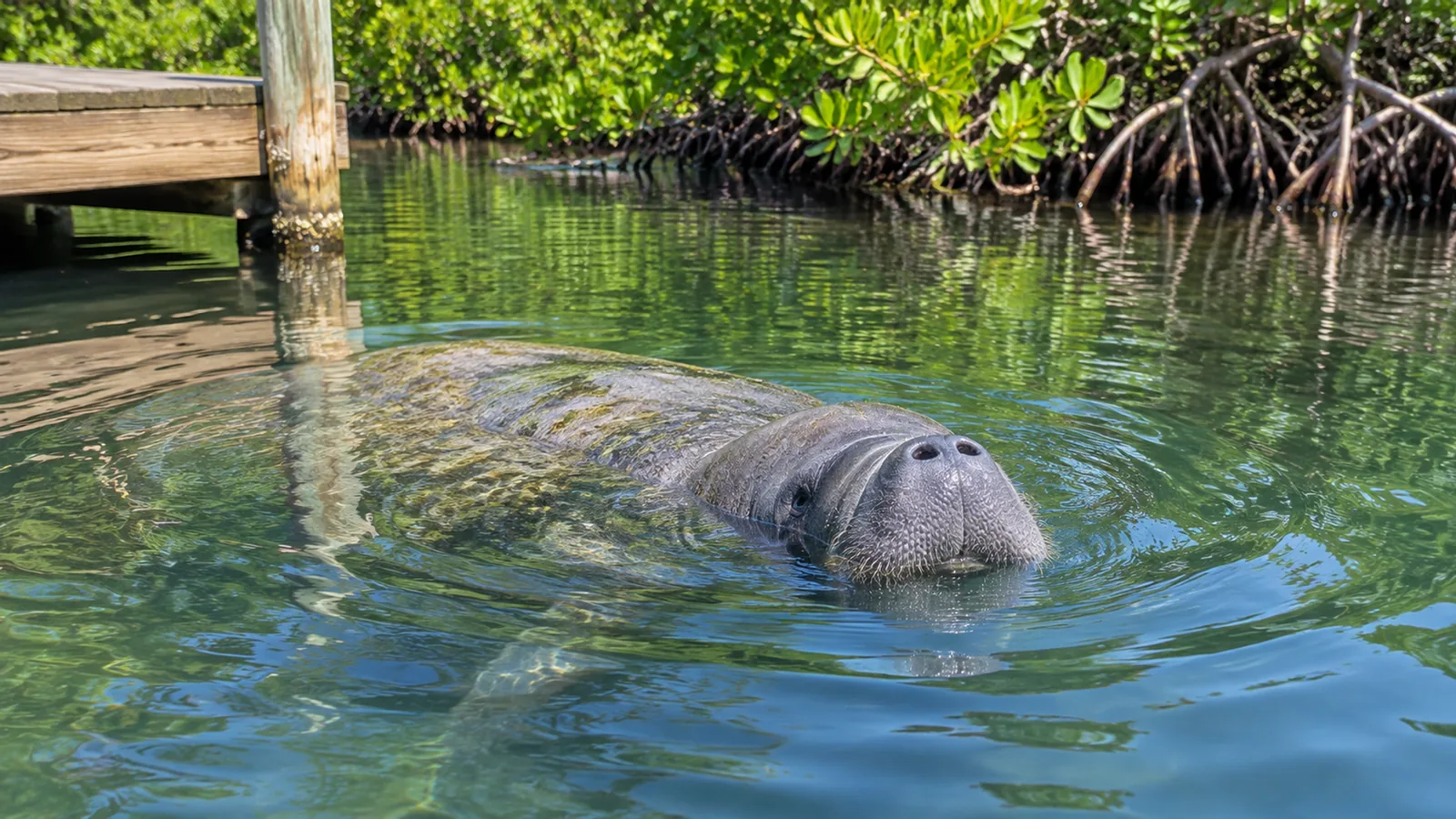
The center sits on the downtown Fort Pierce waterfront, at the mouth of Moore’s Creek where it meets the lagoon. Viewing is from the creek bank and the observation tower, so you need patience: manatees surface briefly to breathe, often showing only a snout.
Fort Pierce manatee center — at a glance
- Name: Manatee Observation and Education Center (MOEC)
- Address: 480 N. Indian River Drive, Fort Pierce, FL
- Opened: 27 October 1996
- Waters: Moore’s Creek and the Indian River Lagoon
- Best season: Winter; manatees present year-round
- Visitors: 35,000+ a year, including ~5,000 schoolchildren
Is there a Manatee Island in Fort Pierce?
Not as a named island. The search phrase usually refers to Fort Pierce’s manatee viewing area on Moore’s Creek, run by the Manatee Observation and Education Center, or gets mixed up with Manatee Island Park in Daytona Beach. The Fort Pierce waterfront does sit beside islands and spoil islands in the Indian River Lagoon, and manatees use the whole lagoon, but the dedicated viewing spot is the center on the mainland shore.
Where can you see manatees in Fort Pierce?
At the Manatee Observation and Education Center, a nonprofit that began with a Florida Inland Navigation District grant and opened in 1996. Visitors watch from along Moore’s Creek, a freshwater tributary of the lagoon, and from the center’s observation tower. Inside are exhibits, a classroom and a gift shop, run by a small staff and about 120 volunteers known as the ManaTeam. The Treasure Coast Manatee Foundation, founded in 1998, supports its education work.
| What | Details |
|---|---|
| Viewing | Creek bank and observation tower |
| Exhibits | Manatee biology, the Indian River Lagoon, conservation |
| Boat tours | ~90-minute Indian River Lagoon wildlife tours (minimum group size; book ahead) |
| Hours and fees | Seasonal hours and a small admission fee; check before you go |
| Also seen | Stingrays, pelicans, terns and occasional dolphins |
Look for the “footprint”: a smooth, round patch on the water’s surface left by the tail stroke of a manatee swimming just below. Then watch for the snout. A manatee typically surfaces every few minutes to breathe.
Why do manatees come to Moore’s Creek?
Warm water, originally. For decades, the H.D. King Power Plant next door discharged cooling water that warmed the creek by about 6–8°F, creating a winter refuge. The plant was decommissioned in 2008 and the warm water stopped, but manatees still come back each year, following learned migratory habits. Farther south, an active power-plant refuge can still be seen at Manatee Lagoon in West Palm Beach. The creek also offers fresh water, which manatees seek out to drink. Read more about manatee habitat and why manatees seek warm water.
What is happening to manatees in the Indian River Lagoon?
The lagoon has lost most of its seagrass after repeated algae blooms fueled by nutrient pollution. With little to eat, manatees starved in large numbers: Florida recorded 1,101 manatee deaths in 2021, far above the five-year average of about 625, and most were linked to starvation in the lagoon. Wildlife agencies ran an emergency feeding trial with lettuce in the following winters, and seagrass restoration is ongoing. That makes the Fort Pierce center’s education work more important than ever. See what manatees eat and West Indian manatee.
When is the best time to see manatees in Fort Pierce?
In winter, roughly November through March, when cooler weather pushes manatees into creeks and sheltered water. They’re present year-round, though, so a summer visit can still pay off. Cool, calm, sunny mornings give the best surface visibility. For timing elsewhere in the state, see the best time to see manatees in Florida.
How does Fort Pierce compare with other manatee sites?
| Site | Type | Viewing |
|---|---|---|
| Fort Pierce MOEC | Creek and lagoon, former power plant | Creek bank, tower, boat tours |
| Apollo Beach | Power plant canal | Boardwalk, large winter numbers |
| Crystal River | Natural springs | In-water swims allowed |
| Manatee Island Park, Daytona | River island park | Shoreline, Halifax River |
| Manatee Bay | Remote bay, Upper Keys | Boat or kayak |
- Opened: 27 October 1996
- Former warm-water source: H.D. King Power Plant, closed 2008
- Volunteers: About 120
- Statewide deaths in 2021: 1,101, mostly starvation
Is there a Manatee Island in Fort Pierce?
No island by that name. Fort Pierce’s manatee spot is the Manatee Observation and Education Center on Moore’s Creek.
Where can I see manatees in Fort Pierce?
At the Manatee Observation and Education Center, 480 N. Indian River Drive, from the creek bank and observation tower.
When is the best time to see manatees in Fort Pierce?
Winter, roughly November to March, though manatees are present year-round.
Why do manatees gather in Moore’s Creek?
The old power plant warmed the water; it closed in 2008, but manatees still return by habit and for fresh water.
Can you swim with manatees in Fort Pierce?
No. Viewing is from land or boat. For legal in-water encounters, see Crystal River.
Are manatees still endangered?
Florida manatees were reclassified from endangered to threatened in 2017 and remain protected.
Does the center offer boat tours?
Yes, Indian River Lagoon wildlife boat tours of about 90 minutes, booked in advance.
- City of Fort Pierce. Manatee Center: address, year-round viewing, winter numbers, facilities.
- Indian River Magazine. “Up close and personal”: 1996 opening, H.D. King plant, warm-water history, visitors, volunteers, tours.
- CBS News. Record manatee deaths in 2021 and Indian River Lagoon seagrass loss.
- US Fish and Wildlife Service. 2017 reclassification of the West Indian manatee to threatened.
Blane Perun has been exploring Earth’s oceans and marine life for over 25 years. Founder of TheSea.Org in 1999, underwater photographer, coral aquaculture pioneer, and explorer of 80+ countries.
About Blane Perun →