Fastest Fish in the Ocean — Sailfish, Marlin, Wahoo and What Science Really Says
The fish most often named the fastest in the ocean are the sailfish (claimed 68 mph / 110 km/h) and the black marlin (claimed 80 mph / 129 km/h), followed by swordfish, wahoo, tunas and mahi mahi. Those headline figures come from old estimates of line pulled off a reel, not measurements of free-swimming fish. Modern studies suggest the real top burst speeds of billfish are about 22–34 mph (10–15 m/s), and filmed sailfish attacks reach roughly 15–19 mph. The sailfish, marlin, wahoo and tunas remain the fastest fish in the sea, but not as fast as the legends suggest.
The Ocean’s Fastest Fish
How fast are the fastest fish, really?
The famous numbers, 68 mph for sailfish and 80 mph for black marlin, are almost certainly overestimates. They come from timing fishing line as a hooked fish ran, not from measuring the fish itself.
The 68-mph sailfish figure traces to fishing camp trials at Long Key in the Florida Keys in the early 20th century, where a sailfish was said to have stripped 100 yards of line in three seconds. Line stretch, spool diameter and stopwatch error make such estimates unreliable. Modern science has tested them in two ways. A 2015 study filmed wild sailfish attacking sardine schools off Mexico and measured top speeds of only about 7–8 m/s. A 2016 study in the Journal of Experimental Biology measured how fast the swimming muscles of sailfish, great barracuda, little tunny and dolphinfish can contract, which limits how fast the tail can beat, and concluded that sailfish are unlikely to exceed about 10–15 m/s (22–34 mph).
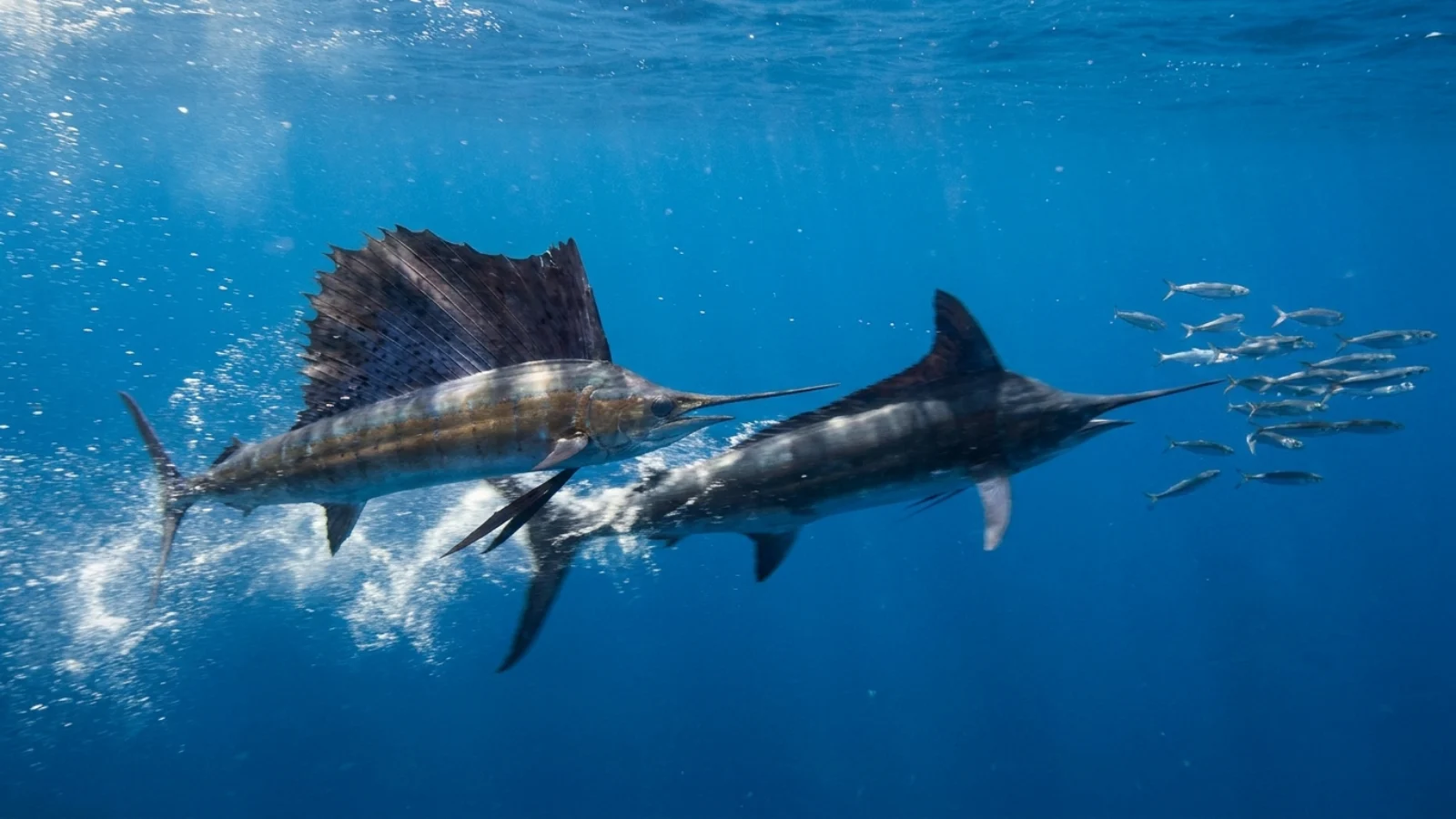
Which fish are the fastest in the ocean?
Allowing for the uncertainty, the fastest fish in the sea are the billfish, the tunas and the open-ocean mackerels. Here is the commonly cited ranking, with a reality check for each.
| Rank | Fish | Claimed top speed | What the evidence says | |
|---|---|---|---|---|
| 1 | Black marlin | 80 mph (129 km/h) | Unverified | likely far lower |
| 2 | Sailfish | 68 mph (110 km/h) | Filmed attacks ~15–19 mph | limit ~22–34 mph |
| 3 | Swordfish | ~60 mph | Unverified estimate | |
| 4 | Mahi mahi | ~50 mph | Muscle limit similar to sailfish | |
| 5 | Wahoo | ~48 mph | 1960s reel-timing estimate | |
| 6 | Yellowfin & bluefin tuna | ~40–46 mph | Bursts plausible | excellent endurance |
| 7 | Shortfin mako shark | ~45 mph | Fastest shark | estimates vary |
| 8 | Blue marlin | ~50 mph | Unverified |
The point is not that these fish are slow. A sailfish accelerating at a bait ball, a wahoo ripping 200 yards of line off a reel or a bluefin crossing an ocean are among the most impressive athletic feats in nature. It is that the precise top speeds of wild fish are genuinely hard to measure, and the round numbers in popular lists should be treated as legend.
What makes a fish fast?
Fast fish share the same engineering: a torpedo-shaped, rigid body, a narrow tail stalk with keels, a stiff, crescent-shaped tail, fins that fold flush into grooves, and powerful, often warm, swimming muscle.
Tunas and swordfish keep their muscle, eyes or brain warmer than the surrounding water with countercurrent heat exchangers, which makes muscle contract faster and more powerfully. Billfish fold their sails and pelvic fins into grooves at speed, and tunas have tiny finlets that smooth water flow toward the tail. The limiting factor, as the 2016 study showed, is how quickly muscle can contract and relax: even the best-designed body can only beat its tail so fast.
Where can you see the fastest fish near Florida?
South Florida is one of the best places in the world to see ocean speedsters: sailfish off Stuart and Palm Beach in winter, wahoo and blackfin tuna off the Keys, kingfish along both coasts, and blue marlin and swordfish in deep water.
Which fast fish should you read about next?
Our full species profiles go deeper into the anatomy, records and range of each speedster.
Start with sailfish, black marlin, wahoo and bluefin tuna, or browse the Sport & Game Fish hub.
Is the sailfish really the fastest fish?
It is the fish most often given that title, but the famous 68-mph figure comes from early 20th-century timing of line pulled from a reel at Long Key, Florida. A 2015 study filming sailfish attacks recorded speeds of about 7–8 m/s (15–19 mph), and a 2016 muscle study put their likely maximum at roughly 10–15 m/s (22–34 mph).
How fast is a black marlin?
Black marlin are often quoted at 80 mph (129 km/h) or more, but that figure has never been verified by a measurement of a free-swimming fish. Based on muscle physiology, marlin likely top out in the same range as sailfish, around 22–34 mph in short bursts.
What is the fastest fish in Florida waters?
Sailfish, wahoo, king mackerel, blackfin and yellowfin tuna, and mahi mahi are Florida’s fastest fish, along with blue marlin and swordfish offshore. All are built for short bursts of very high speed.
Why are speed claims for fish so unreliable?
Most famous figures were estimated by timing how fast line ran off a fishing reel, which is affected by line stretch, reel drag, boat movement and timing error. Measuring a wild fish’s top speed directly is very difficult, and modern tag and video studies record much lower speeds.
What is the fastest shark?
The shortfin mako shark, often credited with bursts around 45 mph (72 km/h), though like bony-fish claims these figures are estimates.
How do fast fish swim so quickly?
They combine a rigid, streamlined body; a narrow tail base with keels; a stiff, crescent-shaped tail; fins that fold into grooves; and powerful muscle, which in tunas, swordfish and mako sharks is kept warm by countercurrent heat exchangers.
Is a fish faster than a dolphin?
Common dolphins and orcas cruise and burst at speeds similar to the fastest fish, around 25–35 mph in bursts, so the true ranking at the top is close.
Blane Perun has been exploring Earth’s oceans and marine life for over 25 years. Founder of TheSea.Org in 1999, underwater photographer, coral aquaculture pioneer, and explorer of 80+ countries. Based in Southwest Florida, where tarpon, snook and redfish share the mangrove shorelines of the Gulf coast.
About Blane Perun → More on Sport & Game Fish →