Manatees in West Palm Beach — A Visitor’s Guide to FPL’s Manatee Lagoon
The best place to see manatees in West Palm Beach is Manatee Lagoon, a free eco-discovery center run by Florida Power & Light on the Lake Worth Lagoon. It overlooks the warm-water outflow of FPL’s Riviera Beach power plant, where manatees gather on cold days from roughly mid-November to the end of March. Mornings after a cold front are best.
Palm Beach County isn’t the first place most people think of for manatees, but on a cold January morning one of the best manatee-watching spots in South Florida is right on the edge of West Palm Beach. Manatee Lagoon sits beside a power plant on the Lake Worth Lagoon, and when the coastal water cools, manatees from along the Atlantic coast crowd into the warm discharge basin below its observation decks. It’s free, easy to reach and designed for families, which makes it one of the most accessible places in Florida to see wild manatees up close. This guide covers how Manatee Lagoon works, when to go, what to expect and other places to look for manatees in the area.
Why manatees gather at Manatee Lagoon
Warm water in a cold snap.
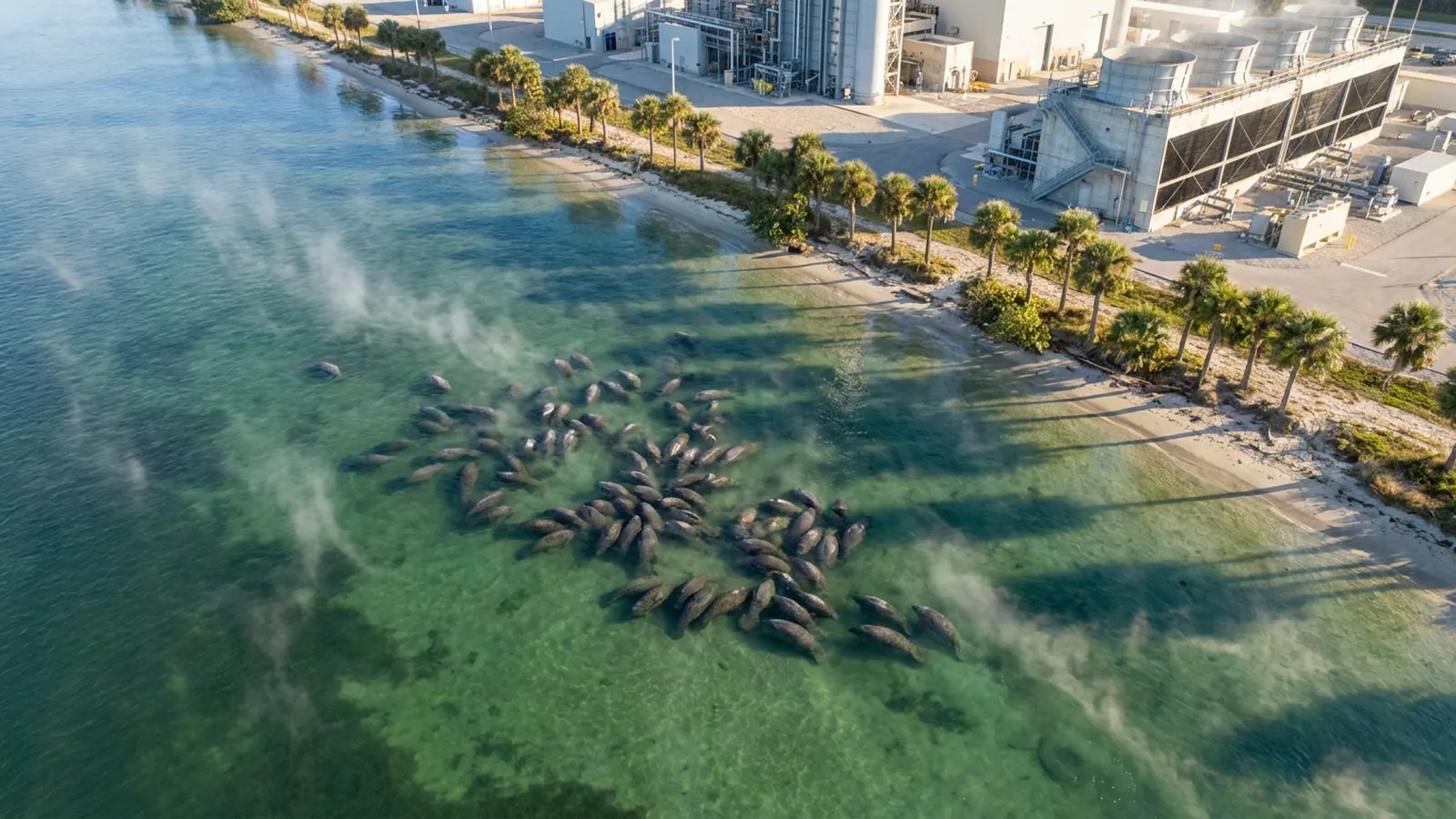
Manatees can’t stay in water colder than about 68°F (20°C) for long without risking cold stress, a dangerous condition that can damage their skin and immune systems and can kill them. When winter cold fronts push down Florida’s Atlantic coast, manatees look for warm water. Natural springs are scarce in Southeast Florida, so the warm discharge from coastal power plants has become a critical refuge.
The Riviera Beach plant uses water from the lagoon for cooling and then releases it, warmer than the surrounding water, into a discharge basin. On cold days, that basin can hold dozens, sometimes many more, manatees at once. FPL built the Manatee Lagoon education center next to the outflow to give the public a way to see this gathering and learn about manatees. Our page on manatees and power plants explains how this relationship developed over the decades and why it creates long-term challenges for manatee conservation.
When the old Riviera Beach plant was replaced with a modern natural gas facility in the 2010s, FPL provided temporary heated water so the manatees that depended on the site wouldn’t be left without a refuge during construction. That episode shows just how important these artificial warm-water sites have become.
What to expect at Manatee Lagoon
Decks, exhibits and a wide view of the lagoon.
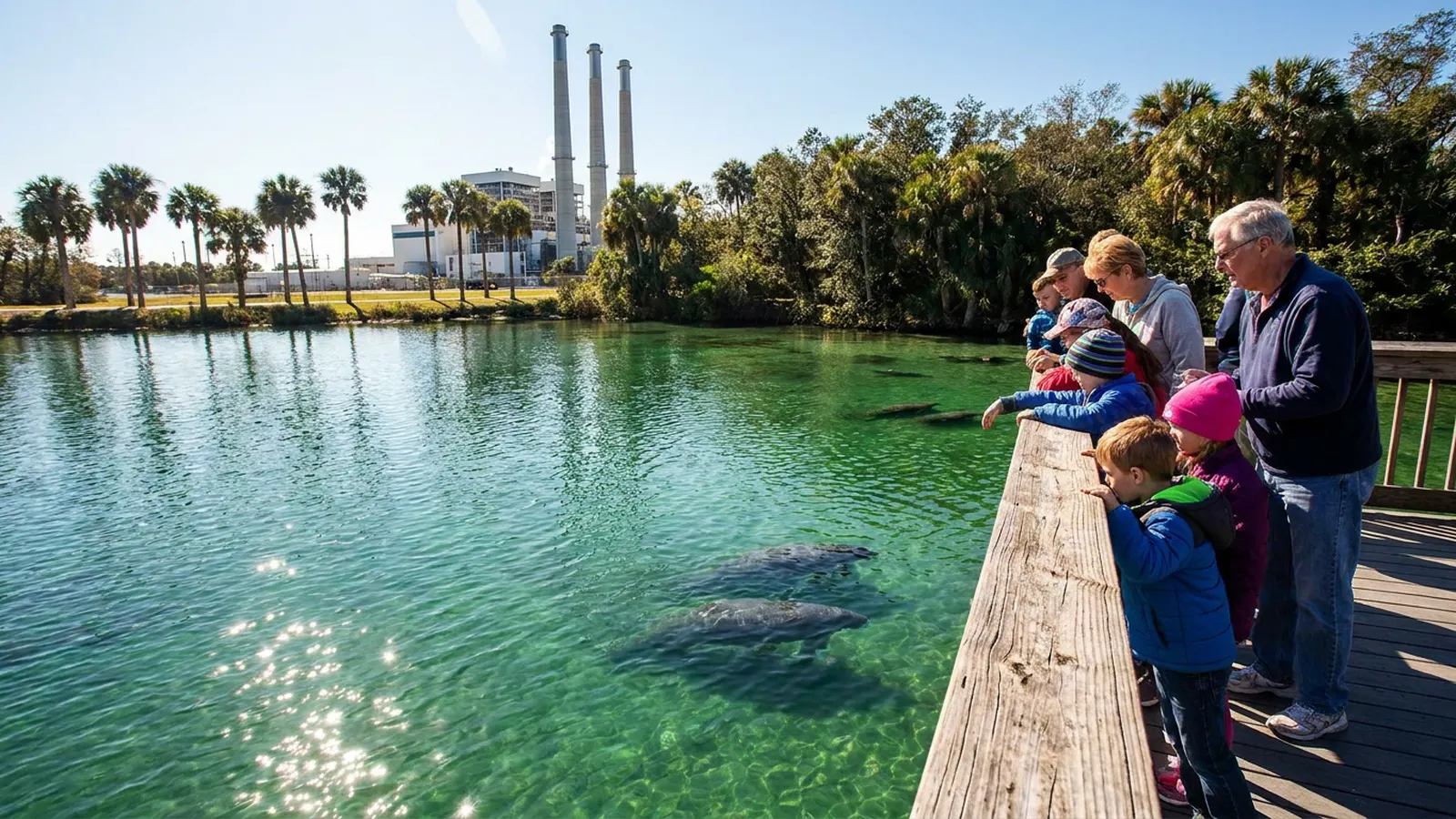
Manatee Lagoon is a two-story eco-discovery center with indoor exhibits about manatees, the Lake Worth Lagoon, Florida’s marine life and energy. Outside, waterfront observation decks and walkways look out over the discharge basin where the manatees gather. From the upper level you get a broad view of the water, which helps a lot when looking for the gray shapes of manatees under the surface; from the lower decks you can be closer to the water.
The center typically runs educational programs, talks and family events, and it has picnic areas and landscaped grounds along the water. Volunteers and staff are often on hand to answer questions and point out manatees. FPL has also operated a live manatee webcam at the site in winter, letting people check on the manatees from home. Hours, programs and parking arrangements can change, so check the official Manatee Lagoon website before you go.
Keep in mind that you are watching wild animals in open water. On a cold morning you may see dozens of manatees resting, surfacing to breathe and moving slowly around the basin. On a warm afternoon, there may be few or none, because they have left to feed.
The best time to visit
Cold mornings in the heart of winter.
Manatee season at warm-water sites runs roughly from mid-November to the end of March. Within that window, December through February is best, and the coldest mornings, especially the first or second morning after a cold front passes, bring the largest numbers. When the water outside the basin is cold, manatees stay close to the warm outflow. When it warms up for a few days, many head out into the lagoon and along the coast to feed on seagrass, and numbers drop.
Early in the day is usually best. Water is calmer before the wind picks up, the light is softer, and the center is less crowded. Weekdays are quieter than weekends. Our month-by-month guide to the best time to see manatees in Florida explains how to time a visit around the weather.
Outside manatee season, Manatee Lagoon is still worth a visit for its exhibits and lagoon views, and you may see the occasional manatee, as well as fish, rays, birds and sometimes dolphins in the lagoon. But the big gatherings are a winter event.
| Time of year | What to expect | Tip |
|---|---|---|
| Mid-Nov to early Dec | Numbers building with each cold front | Go the morning after a front |
| Mid-Dec to Feb | Peak season; best chance of large groups | Cold, calm weekday mornings |
| March | Numbers falling as water warms | Early March after a late front |
| April to October | Few manatees in the basin | Visit for exhibits; watch the lagoon |
How to spot manatees in the basin
Train your eyes before you arrive.
The first time people look out over a warm-water basin full of manatees, they often see nothing at all. Manatees spend most of their time underwater, and from above they can look like dark shadows or smooth rocks. Here’s what to look for:
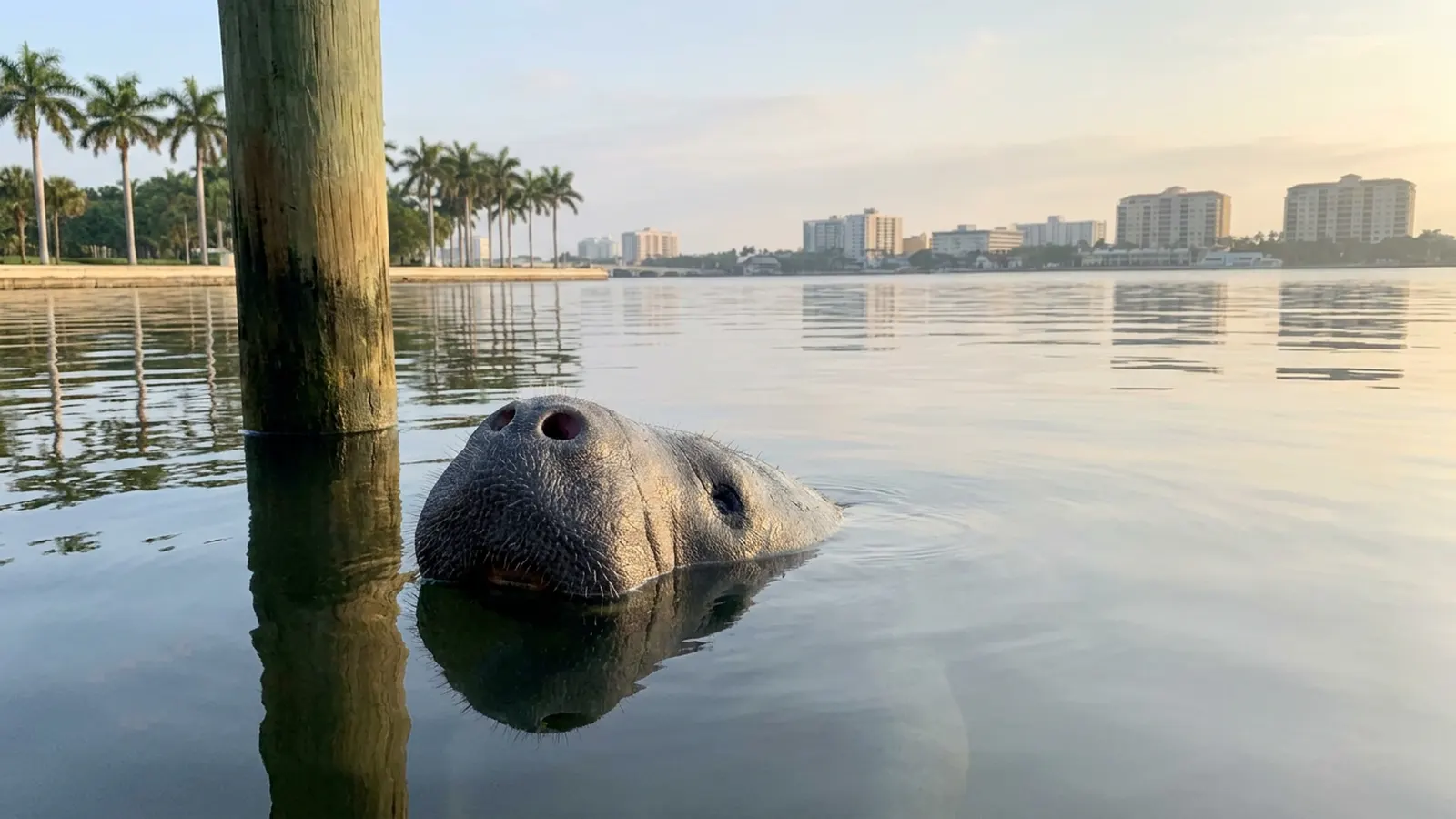
Snouts. Every few minutes a resting manatee rises and lifts just the tip of its snout to breathe, with a soft puff you can sometimes hear on a calm day.
Footprints. When a manatee moves, the up-and-down stroke of its paddle-shaped tail pushes water toward the surface, leaving a smooth, round patch called a “footprint.”
Backs and tails. In clear water you may see the broad gray back or the round tail as a manatee rolls or dives.
Polarized sunglasses make a dramatic difference by cutting glare. Binoculars help too. If you’d like to learn what you’re looking at, our page on manatee anatomy explains the tail, flippers and face.
Other places to see manatees near West Palm Beach
Lagoons, inlets and a drive up the coast.
Manatees use the whole Lake Worth Lagoon, the Intracoastal Waterway and connected canals and rivers in Palm Beach County, so you may see them in many places, especially in the cooler months. Waterfront parks along the lagoon, marinas and calm canals are all worth checking on a still morning. In summer, manatees spread out along the coast and can turn up in surprising places, including around docks and inlets.
To the south, our guide to Fort Lauderdale manatees covers the canals, the New River and the Port Everglades area. To the north, the Manatee Observation and Education Center in Fort Pierce is another good stop on the Atlantic coast. On the Gulf side, Manatee Park in Fort Myers is a similar power-plant site, and Central Florida’s springs, including Blue Spring, host some of the largest winter gatherings in the state.
Rules and etiquette
Protected animals in a refuge.
Manatees are protected by the federal Endangered Species Act and Marine Mammal Protection Act and by the Florida Manatee Sanctuary Act. In winter, the manatees at warm-water sites are conserving energy they need to survive the cold, so disturbing them can do real harm. At Manatee Lagoon you watch from shore, which is the ideal way to see them without disturbance.
If you are on the water elsewhere in the area, obey the posted manatee speed zones, which are common in Palm Beach County’s waterways; our page on manatee protection zones explains the signs. Never chase, touch, feed or give fresh water to manatees, and report any injured, entangled or dead manatee to the Florida Fish and Wildlife Conservation Commission’s Wildlife Alert hotline.
How I’d plan a Manatee Lagoon visit
Let the forecast choose the day.
If I were visiting South Florida in winter with manatees on my list, I’d keep Manatee Lagoon as a flexible stop rather than locking in a date. I’d watch the forecast for the next cold front and plan to arrive close to opening time on the first cold morning afterward. I’d bring polarized sunglasses and binoculars, start on the upper deck to get a sense of where the manatees are, and then move down closer to the water.
I’d also give it time. A quick glance at the basin can be disappointing, but after ten or fifteen minutes of patient watching you start to see the pattern: snouts rising, swirls on the surface, mothers and calves side by side. That slow reveal is part of what makes manatee watching so rewarding. Pair the visit with a walk along the lagoon or a look at the exhibits and it makes a relaxed half day.
The bigger picture
A refuge with an uncertain future.
Manatee Lagoon is a great place to see manatees, but it also highlights a problem. Many Florida manatees now depend on warm water from power plants that weren’t built for them and won’t last forever. As older plants are retired or modernized, wildlife agencies and utilities have to plan for what happens to the manatees that rely on them. At the same time, the seagrass beds that feed those manatees, in the Lake Worth Lagoon and along the Atlantic coast, need protection, as the record die-off in the Indian River Lagoon in the early 2020s showed. Our page on manatee deaths in Florida explains that event and other causes of mortality, and our manatee habitat page covers what manatees need to thrive.
Where can I see manatees in West Palm Beach?
At Manatee Lagoon, FPL’s free eco-discovery center on the Lake Worth Lagoon beside the Riviera Beach power plant.
Is Manatee Lagoon free?
Yes, admission is free. Check the official website for current hours and parking information.
When is the best time to see manatees at Manatee Lagoon?
December to February, on cold mornings after a front. The season runs roughly mid-November to the end of March.
Why do manatees go to Manatee Lagoon?
To stay warm in the heated water released by the power plant when the coastal water is too cold for them.
Can you swim with manatees at Manatee Lagoon?
No. Viewing is from the shore and decks, which protects the manatees during cold weather.
Are there manatees at Manatee Lagoon in summer?
Usually only a few, if any. Manatees spread along the coast once the water warms.
Is Manatee Lagoon in West Palm Beach or Riviera Beach?
It has a West Palm Beach address and sits beside FPL’s Riviera Beach plant, on the border between the two cities.
- Florida Power & Light: Manatee Lagoon – An FPL Eco-Discovery Center.
- Florida Fish and Wildlife Conservation Commission: where to see manatees and warm-water sites.
- U.S. Fish and Wildlife Service: Florida manatee warm-water habitat.
- Palm Beach County Environmental Resources Management: Lake Worth Lagoon.
- Save the Manatee Club: manatee viewing sites in Florida.
Blane Perun has been exploring Earth’s oceans and marine life for over 25 years. Founder of TheSea.Org in 1999, underwater photographer, coral aquaculture pioneer, and explorer of 80+ countries.
About Blane Perun → More on Manatees →