Sea Glass Beaches — Where the World’s Best Beach Glass Washes Up
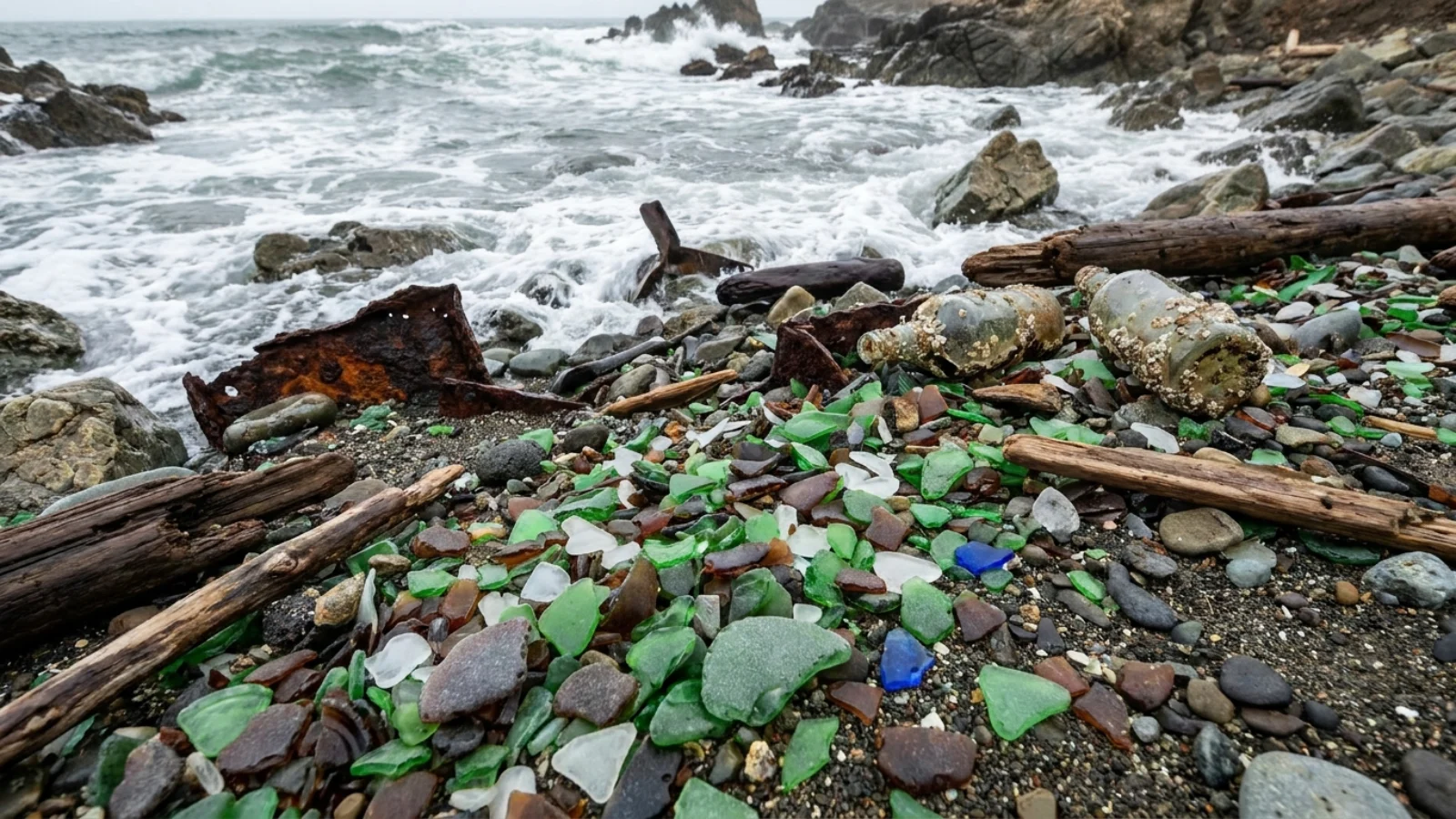
The best sea glass beaches are places where large amounts of glass entered the sea decades ago, from old coastal dumps, bottle factories or shipwrecks, and where rocky surf has tumbled it smooth. The most famous are Glass Beach in Fort Bragg, California, Seaham in County Durham, England, and the glass beaches of Kauai, Benicia and Davenport in California, Bermuda and Vladivostok, Russia. Sea glass takes decades to form, and as plastic replaced glass, it has become steadily rarer.
What makes a sea glass beach?
A sea glass beach needs a big historic source of glass, a rocky or pebbly shoreline with strong wave action to break and tumble it, and decades of time; most of the famous ones began as town dumps or industrial waste sites.
Waves and sand grind the sharp edges smooth, while the slow chemical leaching of glass in seawater creates the frosted, pitted surface that collectors call “genuine.” For the chemistry and history behind each piece, read where-does-sea-glass-come-from. Shell-sand beaches like those in Southwest Florida produce very little sea glass; the soft quartz sand and low-energy Gulf surf don’t tumble glass the way rocky Pacific and North Sea shores do.
What are the best sea glass beaches in the United States?
The top US sea glass beaches are Glass Beach in Fort Bragg, California; Glass Beach in Eleele (Port Allen), Kauai; Benicia’s Glass Beach and the beaches around Davenport, California; and the shores of the Chesapeake Bay and Lake Erie.
| Beach | Location | Why it’s known | Collecting |
|---|---|---|---|
| Glass Beach (Site 3) | Fort Bragg, CA | Town dumping 1906–1967; part of MacKerricher State Park since 2002 | Rangers ask visitors not to take glass |
| Sites 1 & 2 | Fort Bragg, CA | Older dump sites south of Glass Beach; most of the remaining glass | Outside the park |
| Glass Beach | Eleele / Port Allen, Kauai | Near old dump and industrial area; mixed glass and metal | Check local rules |
| Glass Beach | Benicia, CA | Former dump on the Carquinez Strait | Check local rules |
| Davenport beaches | Santa Cruz County, CA | Old dump material and rocky coves | Check local rules |
| Chesapeake Bay shores | Maryland | Centuries of bottles from shipping and settlement | Varies by park |
| Lake Erie shoreline | Ohio, Pennsylvania | “Beach glass” from freshwater lake shores | Varies by park |
Where are the best sea glass beaches in the world?
Outside the US, the best-known sea glass beaches are Seaham in England, Glass Beach near the Royal Naval Dockyard in Bermuda, Ussuri Bay near Vladivostok in Russia, and beaches in Puerto Rico and the Caribbean near old settlements.
Seaham, England is the sea glass capital of Europe. The Londonderry Bottle Works operated here from the 1850s to the 1920s and dumped waste glass into the North Sea, including “end of day” glass, multicolored swirls made from leftover batches. Bermuda’s Glass Beach near Dockyard owes its glass to an old dump nearby. At Ussuri Bay, Soviet-era dumping of bottles and porcelain created a beach so colorful it has become a tourist attraction in its own right. For more travel ideas, see our North America and Caribbean travel hubs.
What color of sea glass is the rarest?
Red, orange and yellow are the rarest sea glass colors, followed by turquoise, cobalt and cornflower blue, while white, kelly green and brown are the most common.
| Rarity | Colors | Typical sources |
|---|---|---|
| Common | White, kelly green, brown | Soda, beer and food bottles |
| Uncommon | Seafoam, olive, amber, jade | Old soda bottles, wine bottles |
| Rare | Cobalt, cornflower, lavender, aqua | Medicine bottles, Milk of Magnesia, old window glass |
| Very rare | Red, orange, yellow, turquoise | Car lights, art glass, specialty tableware |
More beachcombing: Seashells, Shelling, Playa Conchal and Shark Teeth.
Where is the most famous sea glass beach?
Glass Beach in Fort Bragg, California, created by town dumping from 1906 to 1967, is the most famous. Seaham in England is a close rival.
Can you take sea glass from Glass Beach in Fort Bragg?
The main Glass Beach is within MacKerricher State Park, where rangers ask visitors to leave the glass. Collecting rules differ on the older dump sites outside the park.
How long does it take for sea glass to form?
Typically 20 to 50 years or more of tumbling in surf, and the frosted surface takes decades of chemical weathering.
What is the rarest color of sea glass?
Red is generally considered the rarest, followed by orange, yellow and turquoise.
Is there sea glass in Florida?
Some, but Florida’s sandy beaches and gentle Gulf surf produce far less than rocky Pacific or North Sea shores. Shells and fossil shark teeth are Florida’s beachcombing specialties.
What is the best time to look for sea glass?
On low tides after winter storms, when waves have churned and reshaped the gravel.
How can you tell real sea glass from fake?
Real sea glass is frosted with small C-shaped pits and rounded edges. Craft or tumbled glass is uniformly smooth, often glossy or evenly matte.
Is beach glass the same as sea glass?
Beach glass usually refers to glass from freshwater lakes like Lake Erie. It is often less frosted because fresh water is less chemically aggressive than saltwater.
Blane Perun has been exploring Earth’s oceans and marine life for over 25 years. Founder of TheSea.Org in 1999, underwater photographer, coral aquaculture pioneer, and explorer of 80+ countries. Based in Southwest Florida, home to some of the best shelling beaches in North America.
About Blane Perun → More on Seashells & Shelling →