Shelling — How, When and Where to Find the Best Seashells
Shelling is searching beaches and shallow flats for seashells, and the best shelling happens on the lowest tides of the month, right after storms or strong onshore winds, in the early morning before other beachcombers arrive. Southwest Florida’s Gulf beaches, Sanibel, Captiva, Cayo Costa and Marco Island in particular, are considered the best shelling in North America because a wide, shallow shelf and winter cold fronts deliver huge volumes of shells. Most good shelling comes down to timing, knowing where shells collect, and leaving the live ones in the water.
When is the best time to go shelling?
The best time to go shelling is at low tide, ideally a very low “minus” tide around a new or full moon, in the first day or two after a storm, cold front or strong onshore wind, and as early in the morning as you can manage.
Storms and fronts churn the seafloor and push shells from deeper water onto the beach, and low tides expose sandbars and flats that are normally underwater. In Southwest Florida, the magic combination is a winter cold front with strong northwest winds followed by a morning minus tide. Summer storms and passing tropical systems can also deliver huge shell lines, though they bring dangerous surf and red tide risk. Check a tide app before you go; the hour around low tide is prime time.
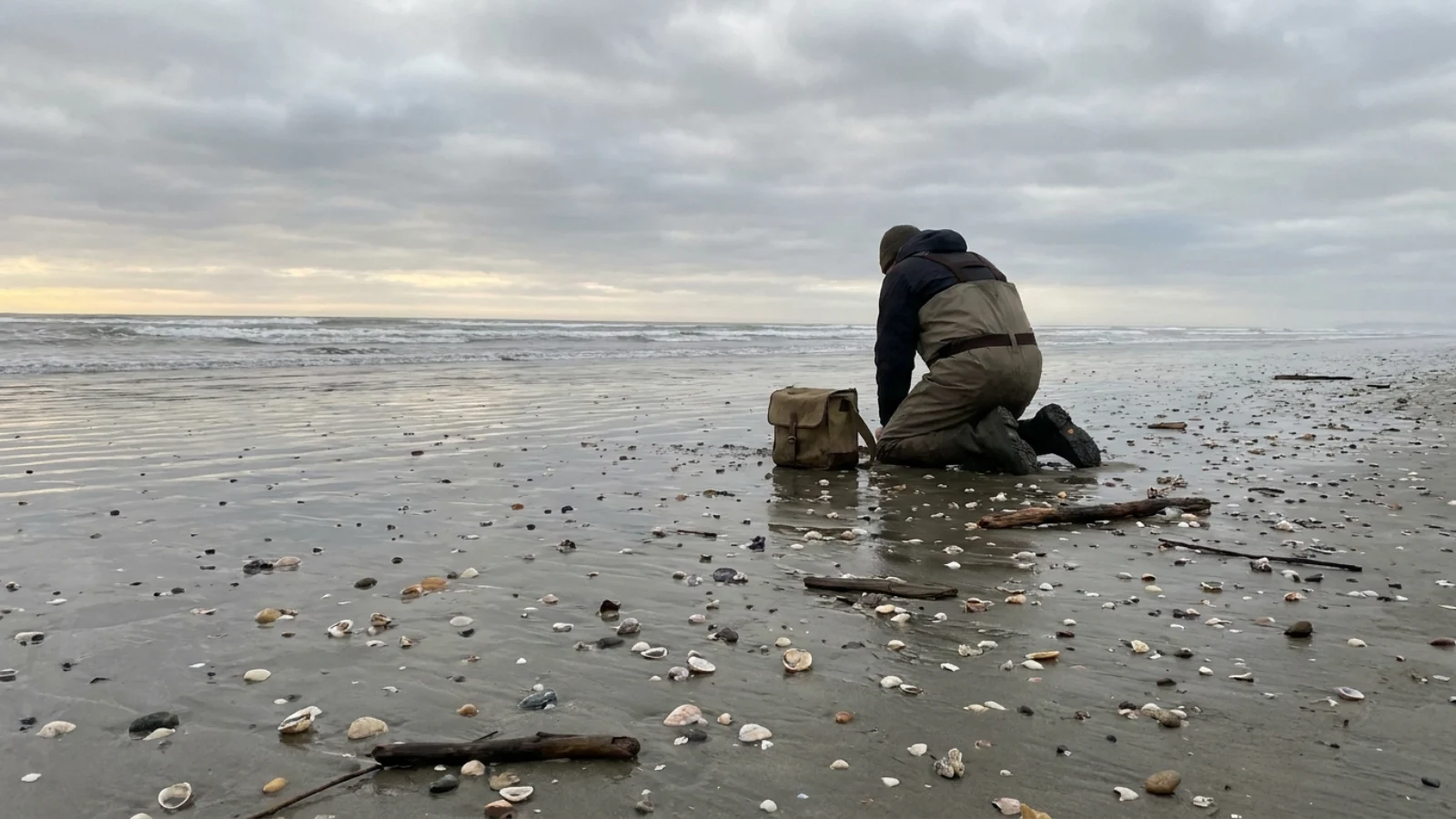
Where on the beach should you look for shells?
Look first at the wrack line and the freshest shell line at the water’s edge, then in the troughs and on the sandbars exposed at low tide, and at inlets and points where currents concentrate shells.
- Wrack line: the line of seaweed and debris left by the last high tide; light shells like scallops and jingles collect here.
- Waterline: heavier shells like whelks, tulips and junonias roll in the swash at low tide.
- Troughs and sandbars: walk the shallow trough just offshore with a shell scoop; many of the best shells never reach dry sand.
- Inlets and passes: Blind Pass on Sanibel and similar passes concentrate shells.
- Shell piles: sift slowly; small treasures like coffee bean trivias and wentletraps hide in the hash.
Locals call it the “Sanibel stoop,” the bent-over shuffle of shellers working a shell line. I’d add one thing: walk slowly into the light. Glossy shells like olives and the spotted pattern of a junonia show up best with low sun behind them.
What gear do you need for shelling?
You only need a mesh bag, water shoes and a tide chart; a long-handled shell scoop, a small container for fragile shells and polarized sunglasses make it easier.
- Mesh bag, so sand and water drain out (and live animals are easy to spot).
- Long-handled scoop or sieve for troughs and shallow water.
- Water shoes; shell beds are sharp and stingrays are common in shallows (shuffle your feet).
- Polarized sunglasses and sunscreen.
- A small, padded container for delicate finds like sand dollars and angel wings.
What are the rules for shelling in Florida?
In Florida you can collect empty shells on most beaches, but taking any shell with a living animal requires a recreational saltwater fishing license, and in Lee County it is banned outright except for a few edible clams.
To check if a shell is alive, look into the opening for a foot or an operculum, and check whether a bivalve is clamped shut. If in doubt, put it back gently in the water, not on dry sand.
Where is the best shelling in Florida?
The best shelling in Florida is on the Gulf Coast between Charlotte Harbor and Marco Island: Sanibel, Captiva, Cayo Costa, North Captiva, Barefoot Beach, Keewaydin Island and Marco Island’s Tigertail Beach.
See our beach-by-beach guide to the Best Shelling Beaches in Florida, our destination guides to Sanibel, Naples and Marco Island, and Shark Teeth for fossil hunting in Venice.
How do you clean seashells?
Soak empty shells in fresh water to remove salt, scrub with an old toothbrush, then soak in a weak bleach solution only until the outer skin lifts, rinse, and rub with mineral oil to restore color.
Skip bleach on glossy shells such as olives and cowries, and never boil, freeze or bury shells to remove a living animal.
Learn what you find with the Types of Seashells guide, or browse the Seashells hub.
What is the best time of day to go shelling?
Early morning on a falling tide, ideally reaching low tide around sunrise. You get the freshest shell lines before other shellers arrive.
What is the best month for shelling in Florida?
In Southwest Florida, January through April usually brings the best shelling, thanks to frequent cold fronts and very low winter tides.
Is shelling better after a storm?
Yes. Storms and fronts churn the seafloor and push shells from deeper water onto beaches. Go once seas have calmed, and stay off the beach during dangerous surf.
Is it legal to take shells from the beach in Florida?
Empty shells, yes, on most beaches. Live shells require a Florida saltwater fishing license, and Lee County bans taking them at all with a few clam exceptions. Parks and refuges may ban collecting.
Where is the best shelling beach in the US?
Sanibel Island in Southwest Florida is widely considered the best, along with Captiva and Cayo Costa.
What is the Sanibel stoop?
The bent-over posture of shellers searching the beach on Sanibel. A long-handled scoop saves your back.
How do you know if a shell is alive?
Look for a foot, tentacles or an operculum in the opening. A bivalve clamped tightly shut is usually alive. Live sand dollars are fuzzy and colored, not white.
What should I bring shelling?
A mesh bag, water shoes, a shell scoop, a tide chart, sunscreen, polarized sunglasses and a padded container for fragile shells.
Blane Perun has been exploring Earth’s oceans and marine life for over 25 years. Founder of TheSea.Org in 1999, underwater photographer, coral aquaculture pioneer, and explorer of 80+ countries. Based in Southwest Florida, home to some of the best shelling beaches in North America.
About Blane Perun → More on Seashells & Shelling →