Marine Mammals — Whales, Dolphins, Seals, Otters and Sea Cows
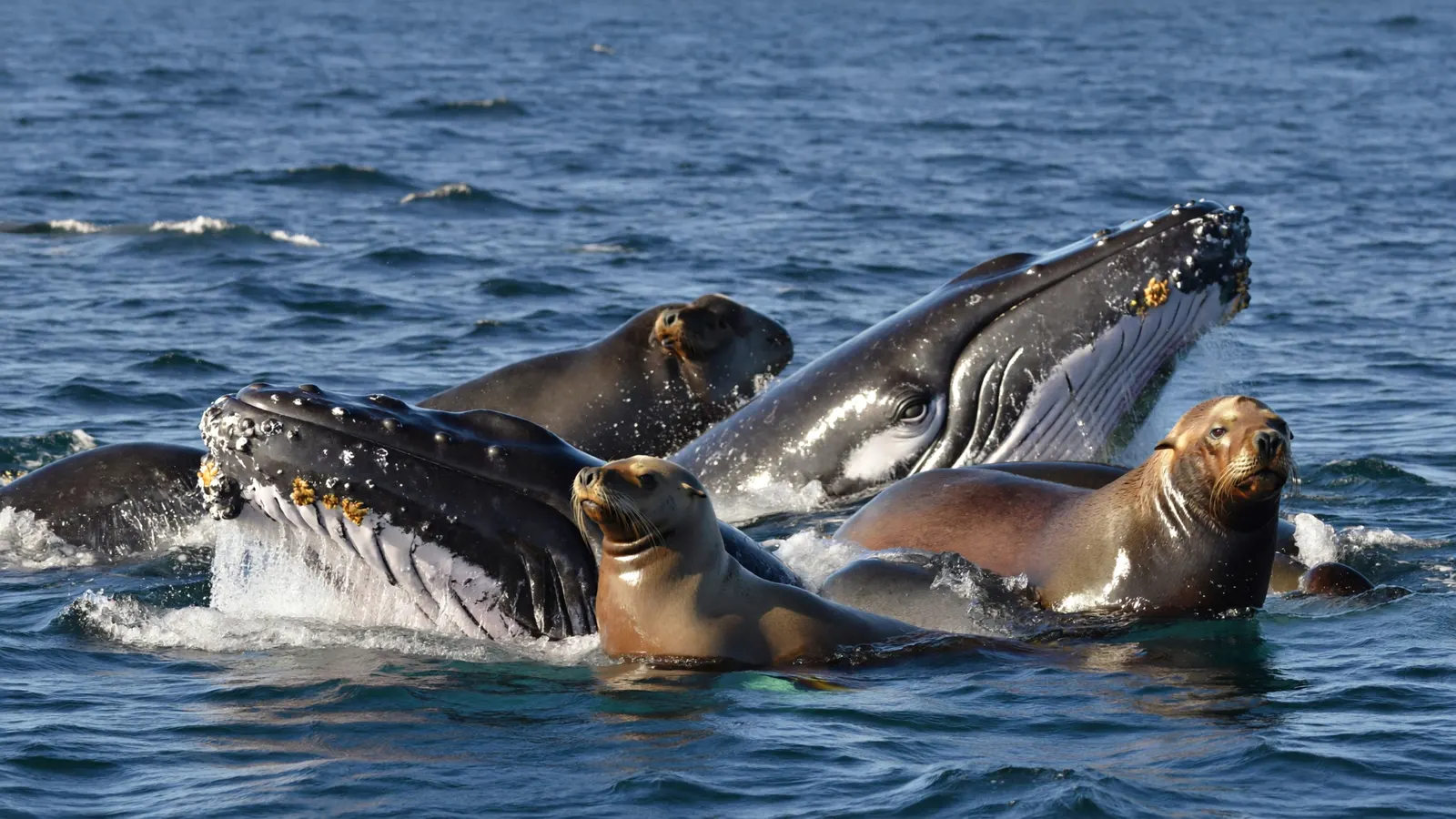
Marine mammals are mammals that depend on the ocean for most or all of their food and life. There are about 130 living species in five groups: cetaceans (whales, dolphins and porpoises), pinnipeds (seals, sea lions and the walrus), sirenians (manatees and dugongs), marine otters (the sea otter and the South American marine otter), and the polar bear. Like all mammals they breathe air, are warm-blooded, have hair at some stage of life and feed their young milk.
What are the main types of marine mammals?
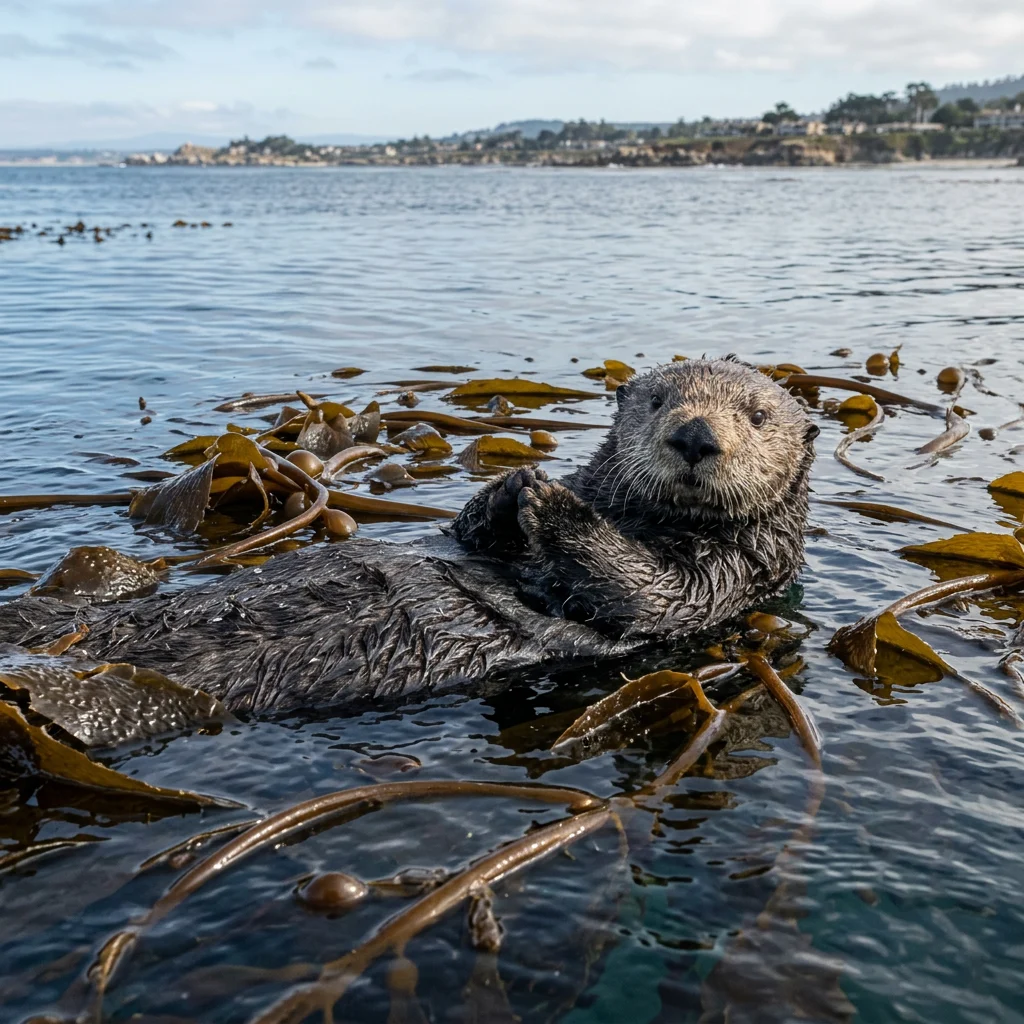
| Group | Examples | Approx. species | Key traits |
|---|---|---|---|
| Cetaceans | Blue whale, humpback, bottlenose dolphin, orca | ~90 | Fully aquatic; blowholes; baleen or teeth |
| Pinnipeds | Harbor seal, California sea lion, walrus | ~34 | Flippers; breed and rest on land or ice |
| Sirenians | West Indian manatee, dugong | 4 | Herbivores; warm coastal waters |
| Marine otters | Sea otter, marine otter | 2 | Fur instead of blubber |
| Polar bear | Polar bear | 1 | Hunts seals from sea ice |
Where did marine mammals come from?
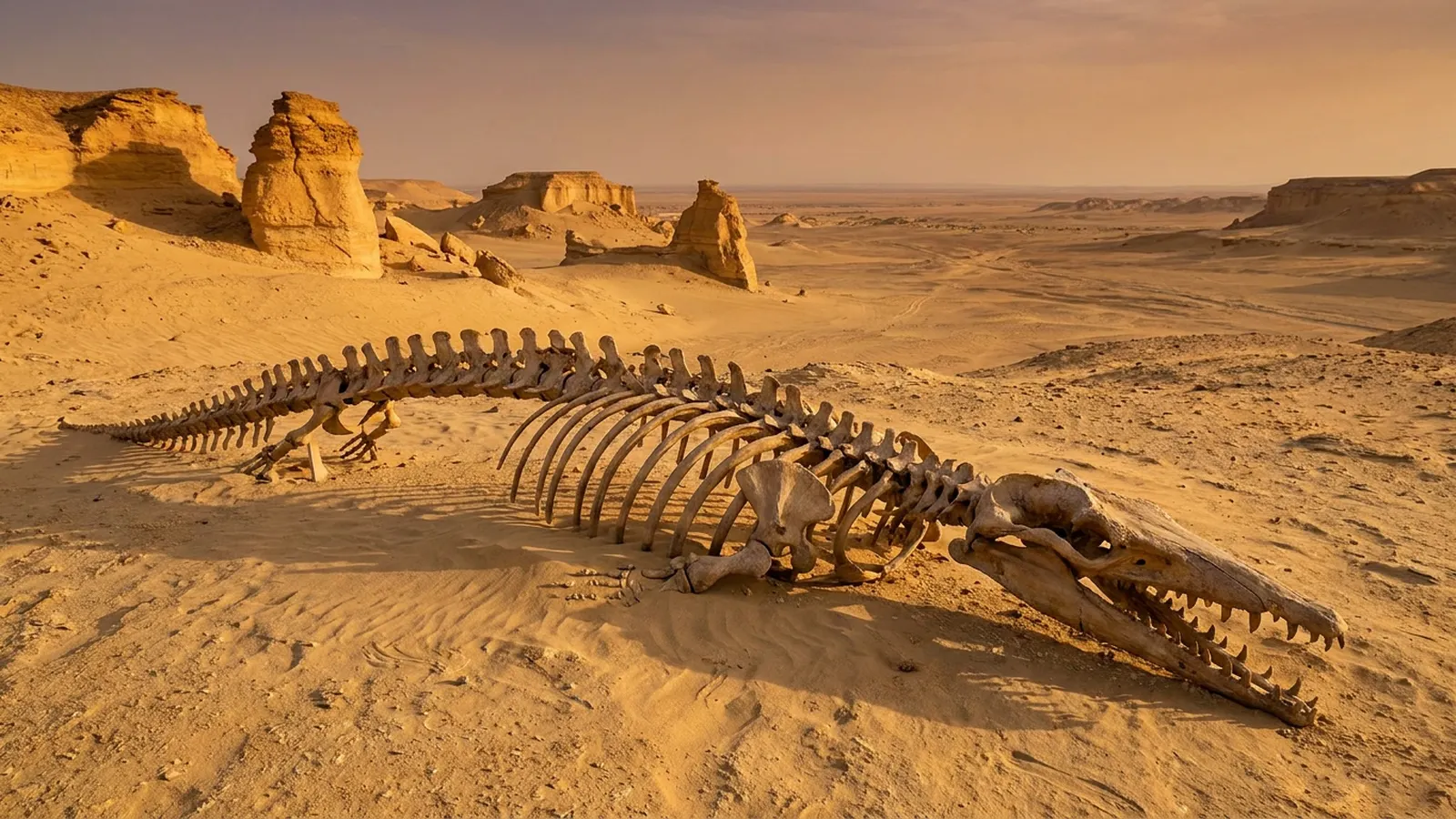
Marine mammals are not one family. They are at least five separate groups of land mammals that returned to the sea at different times.
The ancestors of every marine mammal lived on land, breathed air and walked on four legs. What unites whales, seals, manatees, sea otters and polar bears is a way of life, not a single family tree. Each group made the move into the ocean independently, and each solved the same problems of breathing, staying warm, moving through water and finding food in its own way. Biologists use them as a textbook example of convergent evolution: unrelated animals arriving at similar body shapes because they face similar physical demands.
The oldest transition belongs to the cetaceans. Fossils from Pakistan and India, such as Pakicetus, show that whales descend from hoofed mammals about 50 million years ago, and their closest living relatives are hippos. Over roughly 10 million years, a series of transitional fossils shows the hind legs shrinking, the nostrils moving back on the skull and the tail becoming the main swimming organ. The sirenians, the manatees and dugong, began their move at about the same time but from a very different starting point: their relatives are elephants and hyraxes, and Pezosiren, a four-legged sea cow from Jamaica about 50 million years old, could still walk on land.
Pinnipeds came later. They belong to the carnivore branch that also includes bears, weasels and raccoons. Puijila darwini, described in 2009 by Natalia Rybczynski and colleagues from an ancient lake bed on Devon Island in the Canadian Arctic, is more than 20 million years old and looks like an otter with webbed feet, suggesting that early pinnipeds may have passed through freshwater on their way to the sea. The sea otter and the marine otter took the plunge far more recently, within the last few million years, and the polar bear split from brown bears more recently still. Those latecomers show the least change: they still have four usable legs and fur, and spend some time on land or ice.
The five groups in more detail
Cetaceans are the most fully aquatic. Whales, dolphins and porpoises are born, feed, mate and die in water and cannot survive stranded on land for long. They split into two groups. Baleen whales, such as the blue, humpback and bowhead, have no teeth as adults and instead filter krill and small fish through plates of keratin hanging from the upper jaw. Toothed whales, which include sperm whales, beaked whales, dolphins and porpoises, hunt individual prey and find it with echolocation. With roughly 90 or more recognised species, cetaceans make up about two-thirds of all marine mammals, and the list keeps growing as genetic studies split species; Rice’s whale in the Gulf of Mexico was only named in 2021.
Pinnipeds, the “fin-footed” mammals, hunt at sea but must haul out on land or ice to give birth, nurse, moult and rest. There are three families. True seals (phocids) have no external ear flaps and swim with side-to-side sweeps of their hind flippers; on land they shuffle on their bellies. Eared seals (otariids), the sea lions and fur seals, have small ear flaps, swim with their long front flippers and can turn their hind flippers forward to walk. The walrus is the only living member of its own family, with tusks in both sexes and a diet based on clams it sucks out of the seabed.
Sirenians are the only plant-eating marine mammals. Three species of manatee live in the Atlantic region and its rivers, and the dugong ranges through the coastal Indo-Pacific from East Africa to Australia. They graze on seagrass and other aquatic plants, have dense, heavy bones that work like a diver’s weight belt, and have such low metabolic rates that they are restricted to warm water. A fifth sirenian, Steller’s sea cow, lived in the cold North Pacific and reached perhaps 8 to 9 m long. It was described by naturalist Georg Steller in 1741 and hunted to extinction by 1768, only 27 years later.
Marine otters are the sea otter of the North Pacific and the much smaller marine otter, or chungungo, of the rocky coasts of Peru and Chile. Unlike the other groups they have no blubber at all and depend on fur for insulation; the sea otter has the densest fur of any mammal. The marine otter, at around 5 kg or less, is the smallest marine mammal, while sea otters weigh roughly 14 to 45 kg. The polar bear is classed as a marine mammal because it depends on sea ice and hunts mainly seals. It can swim for days, and long-distance swims by females have been tracked by satellite, but it is closer to a land animal than any other marine mammal and is losing habitat as Arctic ice shrinks.
How do marine mammals breathe and dive?
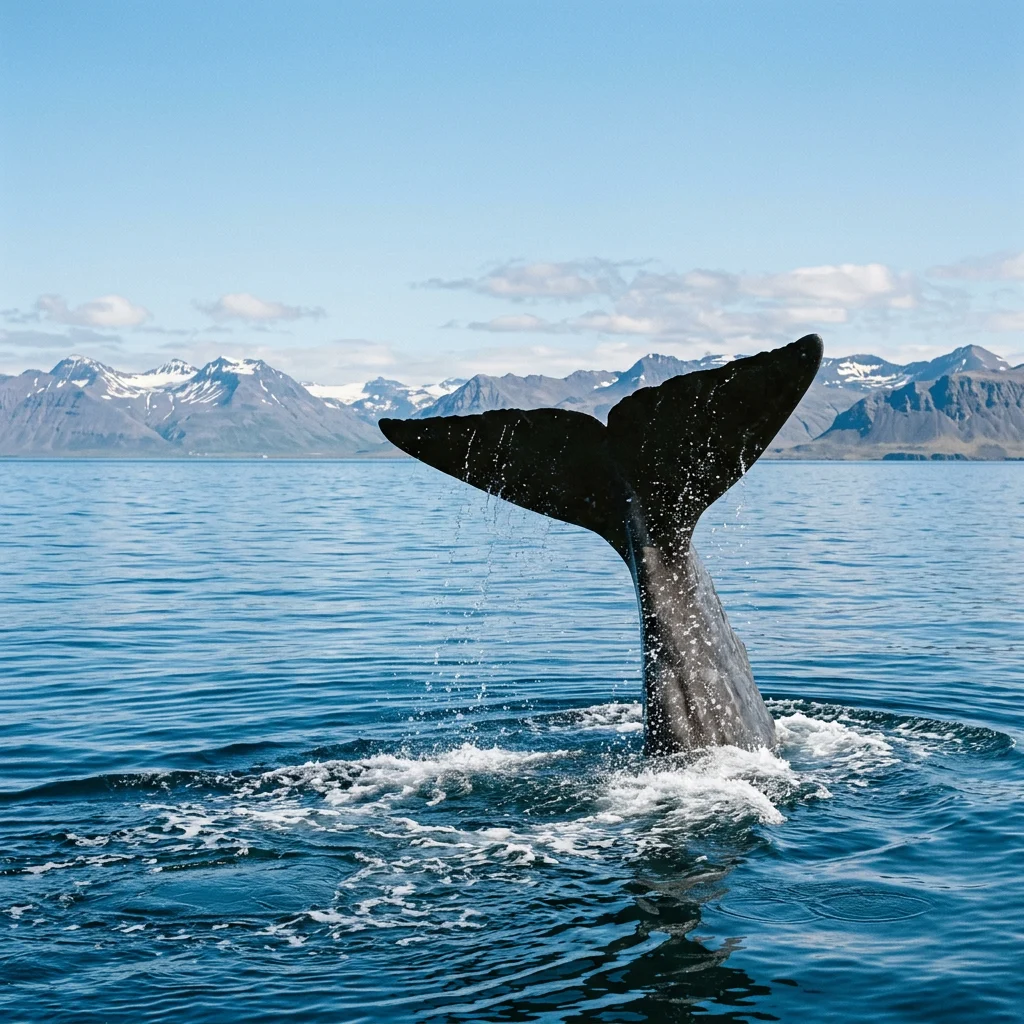
They breathe air at the surface and survive long dives by storing oxygen in blood and muscle rather than in the lungs.
Deep divers have high concentrations of myoglobin, slow their heart rates dramatically, divert blood to the brain and heart, and let their lungs collapse at depth to avoid decompression problems. Cuvier’s beaked whales have been recorded below 2,900 m and underwater for over two hours, and elephant seals below 2,000 m. See how marine mammals use their lungs.
The record holders are remarkable. Gregory Schorr and colleagues, tagging Cuvier’s beaked whales off southern California, recorded one dive to 2,992 m and another lasting 137.5 minutes, both records at the time. In 2020 Nicola Quick’s team at Duke University reported a Cuvier’s beaked whale dive lasting 222 minutes, more than three and a half hours. Southern elephant seals have been recorded to about 2,388 m, and sperm whales to more than 2,000 m. For comparison, a trained human freediver on a single breath reaches little more than 200 m.
The trick is to store oxygen in the right places. Marine mammals have more blood than land mammals of the same size, more red blood cells in that blood and, crucially, very high concentrations of myoglobin, the oxygen-binding protein that makes their muscle almost black. On a dive the heart slows sharply, blood vessels to the gut, skin and many muscles constrict, and the oxygen supply is reserved for the brain and heart. Many deep divers exhale before diving or let the lungs collapse under pressure, which keeps nitrogen out of the blood and reduces the risk of decompression sickness.
How do marine mammals stay warm?
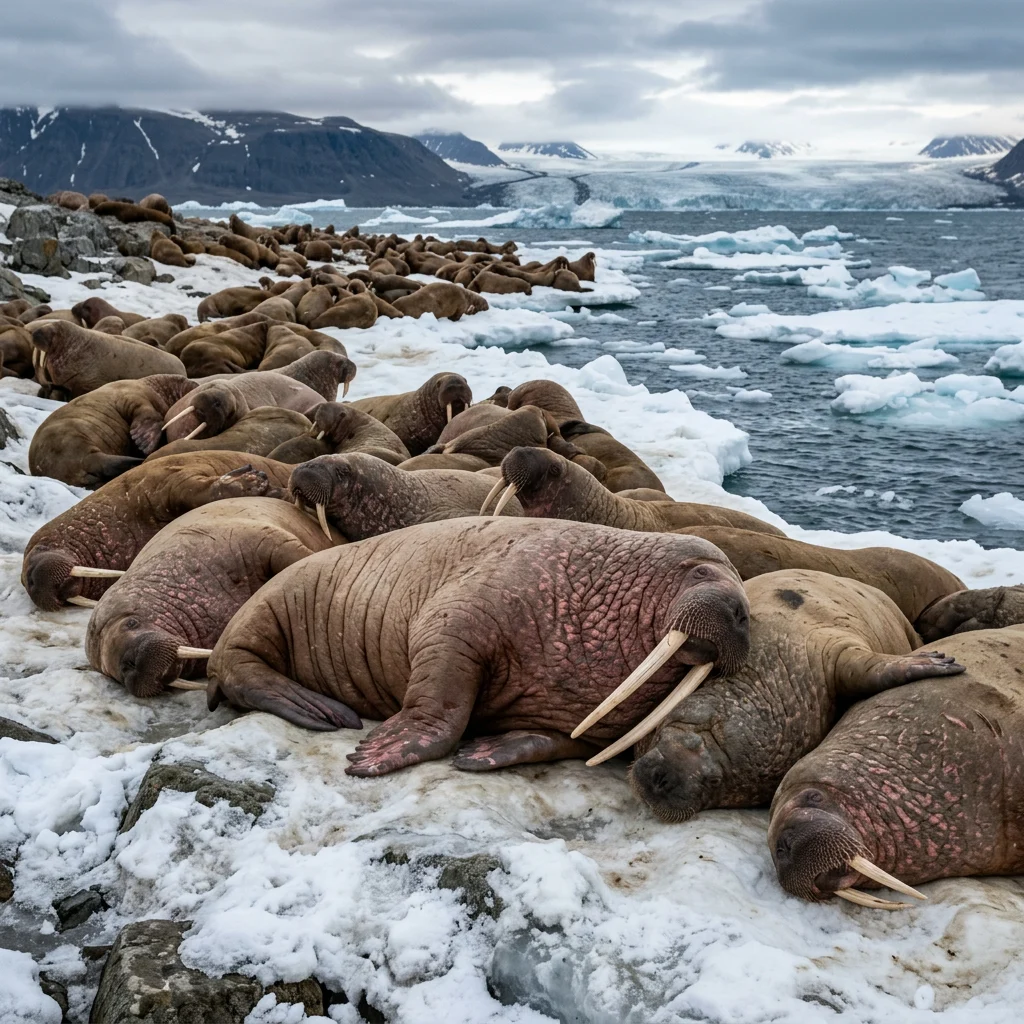
Most use blubber, a thick fat layer that also stores energy and aids buoyancy. Sea otters and fur seals rely on very dense fur instead. Many have counter-current heat exchangers in their flippers and flukes that keep heat in the body core. See do marine mammals have hair.
Water draws heat from a body roughly 25 times faster than air at the same temperature, so keeping warm is one of the biggest costs of life in the sea. Large size helps, because a big body has less surface area relative to its volume, which is one reason so many marine mammals are large. Blubber does the rest for whales, seals and sirenians. It is not just fat but a tissue reinforced with collagen fibres, and in polar species it is very thick: bowhead whales, which live year-round in Arctic waters, carry the thickest blubber of any animal, around half a metre in places. Blubber also stores energy for long fasts, such as the months-long breeding season of elephant seals or the migrations of baleen whales between feeding and breeding grounds.
Sea otters take the opposite approach. With no blubber, they rely on fur with roughly a million hairs per square inch, which traps a layer of air against the skin, and on a very high metabolic rate fuelled by eating roughly a quarter of their body weight in food each day. That is why oil spills are so deadly to otters: oiled fur loses its trapped air, and the animal quickly becomes chilled. Fins, flippers and flukes are potential heat leaks, so many marine mammals have counter-current heat exchangers in them, where arteries carrying warm blood out are surrounded by veins carrying cool blood back, transferring heat back into the body before it is lost.

Do marine mammals drink sea water?
Mostly no. They get water from their food and from metabolising fat, and have efficient kidneys that produce very concentrated urine. Some, like sea otters, do drink some seawater. See do marine mammals drink salt water.
How do marine mammals find food and communicate?
Light fades quickly with depth and sound travels about four times faster in water than in air, so many marine mammals rely more on hearing than on sight. Toothed whales echolocate: they produce clicks in the nasal passages, focus them through the fatty “melon” in the forehead and listen for echoes through fat channels in the lower jaw. A bottlenose dolphin can distinguish objects by size, shape and material this way, and sperm whales use powerful clicks to hunt squid in total darkness. Baleen whales do not echolocate, but they produce low-frequency calls, and humpback whale males sing long, structured songs that change from year to year and spread between populations.
Pinnipeds hunt with eyes adapted to dim light and with long whiskers that pick up water movements. Experiments with harbour seals showed that blindfolded seals could follow the invisible wake of a model fish many seconds after it had passed, using their whiskers alone. Walruses use their sensitive whiskers to find clams in mud, sea otters find sea urchins, crabs and clams by touch with their forepaws and crack them open with stones, and manatees use stiff bristles around the mouth to grip and handle plants.
How do marine mammals sleep?
An animal that must surface to breathe cannot simply fall unconscious in the water. Dolphins and many other toothed whales solve this with unihemispheric sleep: one half of the brain sleeps while the other stays alert enough to keep the animal swimming, breathing and watching for danger, and the halves swap over. Sperm whales have been seen resting in short bouts while hanging vertically just below the surface. Fur seals can sleep with one half of the brain at a time while in water and switch to normal two-sided sleep on land. Sea otters often wrap themselves in kelp so they do not drift while they rest.
Which marine mammals are endangered?
The vaquita porpoise of Mexico’s upper Gulf of California is the most endangered marine mammal, with fewer than about 10 left. The North Atlantic right whale, the Hawaiian monk seal, the southern sea otter and several river dolphins are also endangered, and Steller’s sea cow (gone by 1768), the Caribbean monk seal, the Japanese sea lion and the sea mink have been driven extinct. In the US, the Marine Mammal Protection Act of 1972 prohibits killing or harassing marine mammals.
For centuries the main threat was hunting. Commercial whaling in the 19th and 20th centuries reduced many great whale populations to a small fraction of their original size, and fur seals and sea otters were hunted to the edge of extinction for their pelts. The International Whaling Commission agreed a moratorium on commercial whaling in 1982 that took effect in 1986, and many populations, including humpbacks in several oceans, have since recovered strongly. Others, such as the North Atlantic right whale, have not.
Today the leading causes of death are accidental. Entanglement in fishing gear is thought to kill hundreds of thousands of whales, dolphins and porpoises worldwide each year, and it is the reason for the vaquita’s collapse: the porpoise drowns in illegal gillnets set for totoaba, a fish whose swim bladder is smuggled to Asian markets. Vaquita surveys counted 6 to 8 animals in 2024 and an estimated 7 to 10 in 2025, including at least one calf. Ship strikes and entanglement are the main threats to the North Atlantic right whale, estimated at 384 animals in 2024, slightly up from a low of 358 in 2020. River dolphins face dams, pollution and fishing; the baiji of China’s Yangtze River was declared probably extinct after a 2006 survey failed to find any.
Climate change is a growing pressure. The polar bear, walrus and ice seals depend on sea ice that is shrinking, warm-water events have caused mass die-offs of sea lions and fur seals, and changing prey distributions push whales into busy shipping lanes and fishing grounds. On the positive side, the US Marine Mammal Protection Act of 1972, the Endangered Species Act and similar laws elsewhere have helped species such as northern elephant seals, grey whales and some humpback populations rebound from very low numbers, showing that marine mammals can recover when the main threats are removed.
Are sharks, hippos and penguins marine mammals?
No. Sharks are fish, penguins are birds, and hippos are freshwater mammals, though they are the closest living relatives of whales. See are sharks marine mammals and are hippos marine mammals.
More marine mammal guides: all 7 porpoise species and dugong facts; and is a porpoise a whale?; where porpoises live; harbor porpoise; what porpoises eat; Dall’s porpoise; Burmeister’s porpoise; spectacled porpoise; finless porpoises; vaquita captivity; where dugongs live; why dugongs are endangered; marine mammals in Florida.
What are marine mammals?
Mammals that depend on the ocean: whales, dolphins, porpoises, seals, sea lions, walrus, manatees, dugongs, sea otters and polar bears.
How many marine mammals are there?
About 130 living species.
What is the largest marine mammal?
The blue whale, up to about 30 m and 150+ tonnes, the largest animal ever known.
What is the smallest marine mammal?
The marine otter of Peru and Chile, at about 5 kg or less. The sea otter is the smallest in North America.
Are polar bears marine mammals?
Yes. They are classed as marine mammals because they depend on sea ice and hunt seals.
Do marine mammals have hair?
Yes, at some stage of life; even whales have a few hairs or whiskers, mostly as calves.
Which marine mammal is most endangered?
The vaquita, a small porpoise of Mexico’s Gulf of California; surveys in 2024 and 2025 found fewer than about 10.
- Jefferson, T.A., Webber, M.A. & Pitman, R.L. (2015). Marine Mammals of the World, 2nd ed. Academic Press.
- Society for Marine Mammalogy. List of marine mammal species and subspecies.
- NOAA Fisheries. Marine Mammal Protection Act overview.
- Schorr, G.S. et al. (2014). First long-term behavioral records from Cuvier’s beaked whales. PLoS ONE 9(3): e92633.
- Quick, N.J. et al. (2020). Extreme diving in mammals: first estimates of behavioural aerobic dive limits in Cuvier’s beaked whales. Journal of Experimental Biology 223.
- Rybczynski, N., Dawson, M.R. & Tedford, R.H. (2009). A semi-aquatic Arctic mammalian carnivore from the Miocene epoch and origin of Pinnipedia. Nature 458: 1021–1024.
- Society for Marine Mammalogy Committee on Taxonomy (2024). List of Marine Mammal Species and Subspecies.
- New England Aquarium / North Atlantic Right Whale Consortium (2025). Right whale population estimate for 2024: 384 animals.
- IUCN SSC Cetacean Specialist Group (2025). Report of the vaquita acoustic and visual survey 2025.
Blane Perun has been exploring Earth’s oceans and marine life for over 25 years. Founder of TheSea.Org in 1999, underwater photographer, coral aquaculture pioneer, and explorer of 80+ countries.
About Blane Perun →Which marine mammal dives deepest?
Cuvier’s beaked whale, recorded to 2,992 m and for as long as 222 minutes on a single breath.
