Blubber in Marine Mammals — Insulation, Fuel Tank and Life Jacket in One
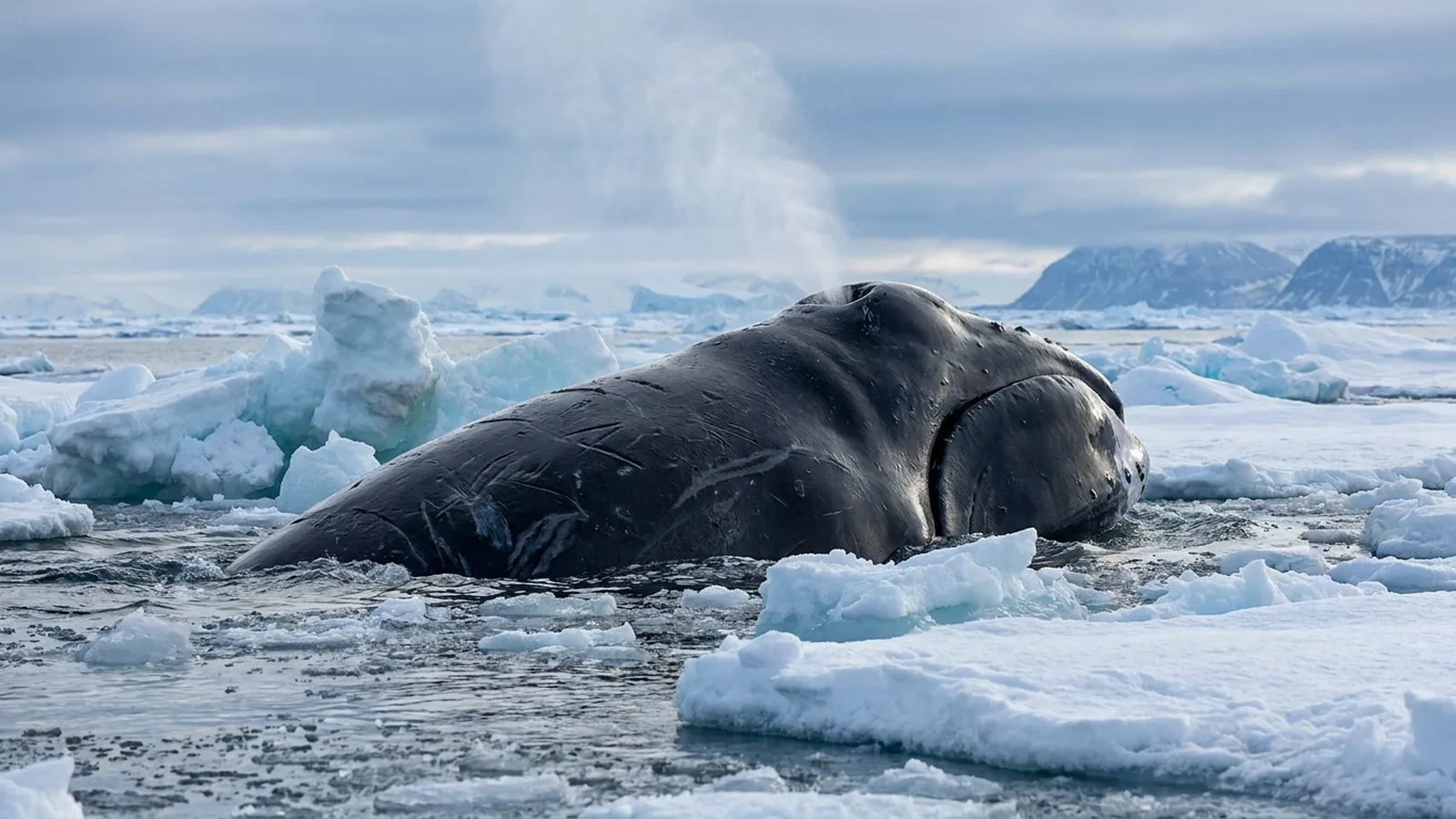
Blubber is a thick layer of fat cells woven through a mesh of collagen fibres, lying just under the skin of whales, dolphins, seals, sea lions, walruses and other marine mammals. It does several jobs at once: it insulates warm-blooded animals in cold water, stores energy for migration, fasting and nursing, adds buoyancy, and streamlines the body for swimming. Blubber is only a few centimetres thick in small dolphins but can reach about 50 cm in the bowhead whale, the thickest of any animal.
Water steals heat from a body about 25 times faster than air at the same temperature. For a warm-blooded mammal living in the sea, often in water close to freezing, that is a serious problem. A human in 0°C water can lose consciousness within about 15 minutes. A bowhead whale spends its whole life in Arctic water and can live for more than 200 years. The difference is largely blubber. This page explains what blubber is made of, how it works, how it differs between species, and why scientists, whalers and Arctic peoples have all paid so much attention to it. For the animals that carry it, see our marine mammals hub.
What blubber is made of
Blubber is not just a layer of lard. It is a living, structured tissue with blood vessels and nerves.
Blubber is a specialised form of the hypodermis, the deepest layer of skin, which in land mammals usually holds a thin layer of fat. In marine mammals this layer is greatly expanded and filled with fat cells packed inside a strong network of collagen and elastic fibres. Blood vessels run through it, which lets the animal control how much heat reaches the skin. In many whales and dolphins, the blubber also has distinct inner and outer layers. The outer layer tends to be more structural and more stable in composition, while the inner layer is more active, swelling and shrinking as the animal stores or burns fat.
The fat itself is unusual too. Marine mammal blubber is rich in long-chain polyunsaturated fatty acids, including omega-3s, largely taken in from fish and krill. Toothed whales such as sperm whales and beaked whales also store waxy compounds called wax esters, which they appear to digest differently from ordinary fat.
Job one: keeping warm
Fat conducts heat poorly, so a thick layer of it between the body core and the water slows heat loss dramatically.
Blubber works like a wetsuit that cannot be compressed much by depth. The core of a whale or seal stays at about 36 to 38°C, similar to a human, while the outer surface of the skin can be close to the temperature of the water. The blubber holds the temperature gradient between them. Animals can fine-tune this insulation. When a seal is too cold, blood vessels in the blubber constrict and keep warm blood deep in the body; when it is overheating, perhaps after hauling out in the sun, vessels open up and send warm blood toward the skin to shed heat.
The flippers, flukes and dorsal fins have little or no blubber, so they rely on a different trick: countercurrent heat exchange. Arteries carrying warm blood out to the fins are wrapped in veins carrying cold blood back, so heat passes from one to the other and returns to the body before it can be lost. The same system works in reverse when an animal needs to dump heat.
| Animal | Typical blubber thickness | Notes |
|---|---|---|
| Bowhead whale | Up to about 50 cm | Thickest of any animal; lives in Arctic water year-round |
| Right whales | Often 20–40 cm | So fatty they float when killed, part of their whaling history |
| Blue and fin whales | Commonly 10–20 cm or more | Varies greatly with season and feeding |
| Walrus | Up to about 15 cm | Supplemented by thick skin |
| Harp and ringed seals | Several centimetres to about 10 cm | Thickest before breeding and moulting fasts |
| Small dolphins and porpoises | About 1–3 cm | Harbor porpoises are relatively well insulated for their size |
Job two: a fuel tank for hard times
Blubber stores the energy that lets whales migrate and seals fast for weeks while nursing or breeding.
Many marine mammals go long periods without eating. Humpback and gray whales feed heavily in polar and sub-polar waters in summer, then migrate thousands of kilometres to tropical breeding grounds where they eat little or nothing for months, living off their blubber. A pregnant female must store enough to build a calf and then feed it rich milk for months. Male elephant seals stay ashore for up to three months during the breeding season without eating, defending their harems, and can lose around a third of their body weight. Female phocid seals, such as harp and hooded seals, fast while nursing; the hooded seal weans its pup after only about four days, the shortest nursing period of any mammal, transferring a huge amount of energy from her blubber into the pup’s.
That stored fat becomes milk. Seal and whale milk can be 30 to 60 percent fat, compared with about 4 percent for cow’s milk, so pups and calves build their own blubber layer quickly. A harp seal pup can roughly triple its birth weight in under two weeks.
Jobs three and four: buoyancy and streamlining
Fat is less dense than water, so blubber helps marine mammals float. That is useful at the surface, where animals rest and breathe, and costly during deep dives, when it makes them work harder to descend. Seals and whales manage this partly by adjusting their blubber over the year. Elephant seals that have lost fat during their breeding fast actually sink more easily on dives and can glide down without swimming, and researchers have used changes in their drift rate during dives to track how much fat they are regaining at sea.
Blubber also smooths the body into a streamlined shape, filling the gaps around bones and muscles. In dolphins and some whales, the collagen fibres in the blubber are arranged in a way that appears to store and release elastic energy as the tail beats, acting a little like a spring and making swimming more efficient.
Marine mammals that do not rely on blubber
Not every marine mammal uses blubber as its main defence against the cold.
The sea otter has almost no blubber. Instead it has the densest fur of any animal, which traps a layer of air against the skin, and a very high metabolism fuelled by eating about a quarter of its body weight a day; see sea otter adaptations. Fur seals also rely more on dense fur than blubber, which is why oil spills are so dangerous to both: oil mats the fur and destroys its insulation. Polar bears combine thick fur with a fat layer of up to about 11 cm.
Manatees are the other exception. They have only a thin layer of fat and a slow metabolism, which is why they are so sensitive to cold. Florida manatees suffer cold stress in water colder than about 20°C (68°F) and crowd into warm springs and power plant outflows in winter; see do marine mammals have hair? for how fur and fat trade off across the group.
What blubber tells scientists
Because blubber is easy to reach from the outside, it has become a window into a marine mammal’s life. Researchers use small biopsy darts, fired from a boat, to collect a pencil-sized plug of skin and blubber from free-swimming whales and dolphins without harming them. From that sample they can read the animal’s sex and genetics, measure hormones such as progesterone to tell whether a female is pregnant, and measure cortisol as a sign of stress. The mix of fatty acids reflects what the animal has been eating over the previous weeks to months, so blubber can reveal diet in animals that are impossible to watch feeding.
Blubber also records pollution. Many persistent chemicals, such as PCBs, the pesticide DDT and flame retardants, dissolve in fat and accumulate up the food chain. Top predators such as orcas carry some of the highest levels of PCBs measured in any animal, and studies have linked these pollutants to reproductive failure in some orca populations in Europe. When a starving animal burns its blubber, these stored chemicals are released into its blood, adding to the harm.
Blubber and people
For centuries, blubber was the main reason whales and seals were hunted commercially. Boiled down, or “tried out”, it produced oil used for lamps, soap, lubricants, margarine and much more. Right whales got their name because they were the “right” whale to hunt: slow, close to shore, rich in blubber and buoyant enough to float after being killed. Commercial whaling drove many species close to extinction before most of it was halted in the 20th century; see whales for the recovery story.
For Arctic peoples, blubber has long been an essential food and fuel. Muktuk, the skin and attached blubber of bowhead, beluga and narwhal whales, is a traditional Inuit and Iñupiat food and a valuable source of energy and vitamins, while seal oil fuelled traditional stone lamps through the long Arctic winter.
What is blubber made of?
Fat cells held in a mesh of collagen and elastic fibres, with blood vessels running through it.
Which animal has the thickest blubber?
The bowhead whale, with blubber up to about 50 cm thick.
Why do marine mammals have blubber?
To stay warm in cold water, store energy, float and stay streamlined.
Do all marine mammals have blubber?
No. Sea otters and fur seals rely mainly on dense fur, and manatees have only a thin fat layer.
Is blubber the same as fat?
It is a type of fat tissue, but denser and more structured, with lots of collagen and blood vessels.
How do scientists study whale blubber?
With small biopsy darts that collect a sample used to study diet, hormones, genetics and pollutants.
- Iverson, S.J. (2009). Blubber. In Encyclopedia of Marine Mammals, 2nd ed. Academic Press.
- Struntz, D.J. et al. (2004). Blubber development in bottlenose dolphins. Journal of Morphology 259: 7–20.
- Biuw, M. et al. (2003). Blubber and buoyancy: monitoring the body condition of free-ranging seals using simple dive characteristics. Journal of Experimental Biology 206: 3405–3423.
- Jepson, P.D. et al. (2016). PCB pollution continues to impact populations of orcas and other dolphins in European waters. Scientific Reports 6: 18573.
- George, J.C. et al. (1999). Age and growth estimates of bowhead whales via aspartic acid racemization. Canadian Journal of Zoology 77: 571–580.
Blane Perun has been exploring Earth’s oceans and marine life for over 25 years. Founder of TheSea.Org in 1999, underwater photographer, coral aquaculture pioneer, and explorer of 80+ countries.
About Blane Perun → More on marine mammals →