What Were Electric Eels Called Before Electricity? — Numbfish, Tremblers and the Fish That Taught Science About Shocks
Before anyone understood electricity, the electric eel was named for what it did to people: it numbed them or made them tremble. Indigenous Brazilians called it poraquê, roughly “the one that numbs”; Spanish speakers in Venezuela called it the temblador, “the trembler”; and early European writers compared it to the torpedo or numbfish, a ray known since ancient times.
It’s one of my favourite trivia questions: what did people call electric eels before electricity was discovered? The answer tells a neat story about language and science. People in South America knew this fish for thousands of years, and Europeans knew about other shocking fish since ancient Greece, but nobody had the concept of electricity to explain the sensation. So the names described the experience: numbness, trembling, cramp. Only in the 18th century did scientists realise the shock was the same force as the sparks from rubbed amber and Leyden jars, and the fish became “electric”.
Indigenous names: the one that numbs
The people who lived alongside electric eels named them for their effect.
Electric eels live in the Amazon and Orinoco basins and the rivers of the Guianas, and the Indigenous peoples of those regions knew them long before Europeans arrived. In Brazil, the common Portuguese name poraquê comes from the Tupi language and is usually translated as something like “the one that puts to sleep” or “the one that numbs”. That’s an accurate description of what happens to a person or animal hit by a strong discharge: a sudden jolt followed by numbness and weakness in the muscles. Many other Indigenous languages across the region have their own names for the fish.
Temblador: the trembler
Spanish speakers named the fish after the shaking it caused.
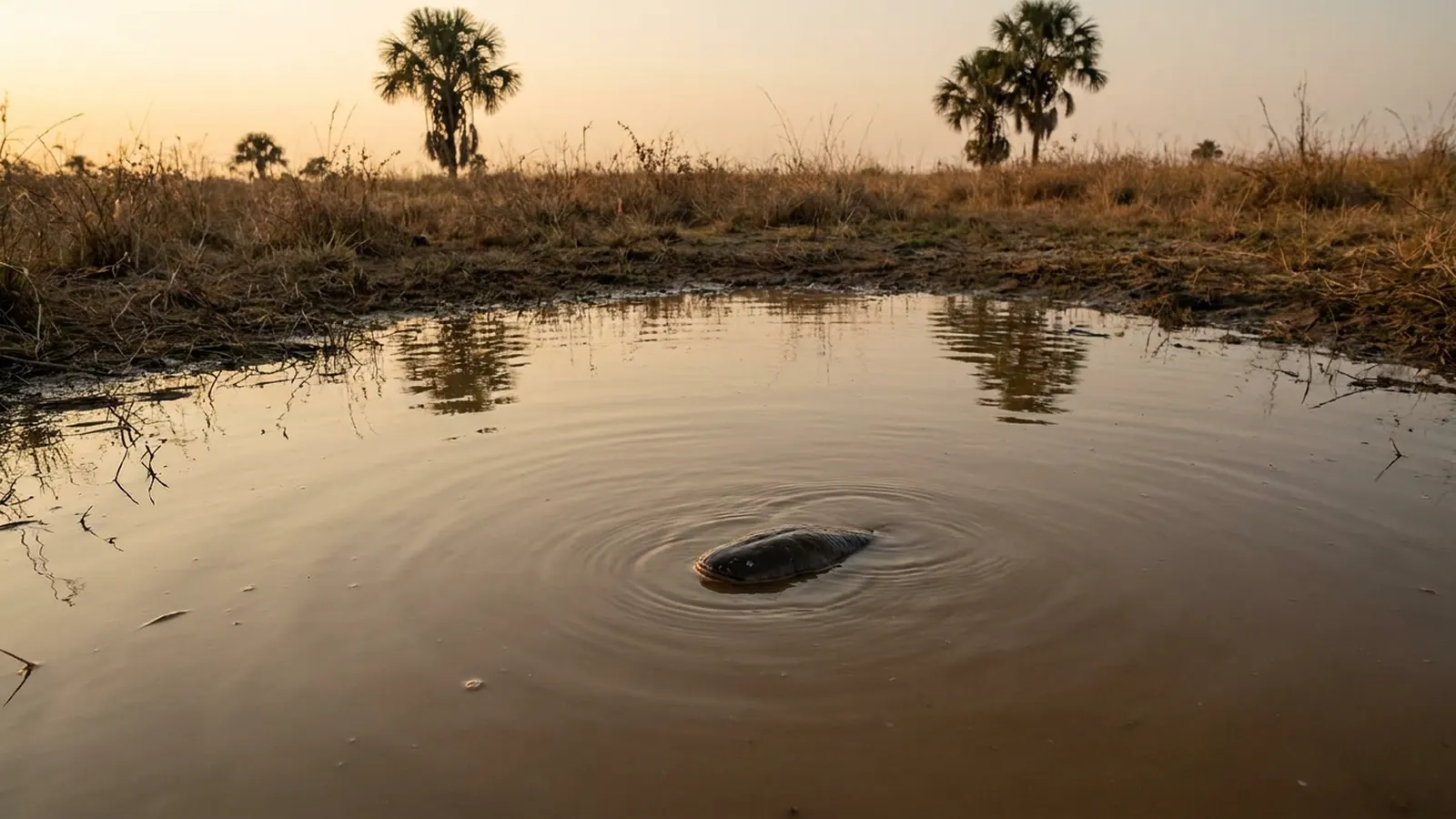
In Venezuela and other Spanish-speaking areas, the electric eel was called the temblador, “the trembler” or “the one that makes you tremble”. That’s the name used by the German naturalist Alexander von Humboldt, who travelled the Llanos of Venezuela in 1800. He described local fishermen driving horses into a pool full of tembladores to make the eels discharge their energy before the men caught them. The eels leapt against the horses and shocked them repeatedly. His dramatic account was doubted for two centuries until biologist Kenneth Catania showed in 2016 that electric eels really do leap out of the water to shock threats.
The torpedo and the numbfish
Europeans already had a word for a shocking fish.
When European explorers and colonists first encountered electric eels in the 16th and 17th centuries, they compared them to a fish they already knew: the torpedo, or electric ray, of the Mediterranean and Atlantic. The ancient Greeks called the ray narkê, from a word meaning numbness, the same root that gives us “narcotic”. The Romans called it torpedo, from torpere, “to be numb or sluggish”, which also gives us “torpor”. English writers used names such as numbfish and cramp-fish. Roman physicians even recommended applying live torpedo rays to the head to treat headaches, an early and accidental form of electrotherapy.
So to early Europeans, the electric eel was a kind of freshwater torpedo or “numbing eel”. French accounts from Cayenne in the late 17th century described a fish that numbed the arm of anyone who touched it, and Dutch colonists in Suriname wrote about a similar eel-like fish.
| Name | Language / source | Meaning |
|---|---|---|
| Poraquê | Tupi, via Brazilian Portuguese | “One that numbs” or “puts to sleep” |
| Temblador | Spanish (Venezuela) | “The trembler” |
| Torpedo | Latin (originally for electric rays) | “Numbness” |
| Narkê | Ancient Greek (electric rays) | “Numbness” |
| Numbfish, cramp-fish | Early English | Fish that causes numbness or cramp |
| Gymnotus electricus | Linnaeus, 1766 | “Naked back, electric” |
| Electrophorus | Scientific genus, 1864 | “Bearer of electricity” |
Where the word “electric” came from
From amber, not from fish.
The word electricity comes from the Greek êlektron, meaning amber. Ancient Greeks noticed that rubbed amber attracted light objects such as feathers and straw. Around 1600, the English physician William Gilbert used the New Latin word electricus, “like amber”, for materials that showed this attraction, and over the following decades “electric” and “electricity” came into English. For more than a century afterwards, electricity meant static sparks, rubbed glass and the newly invented Leyden jar, which could store a charge and deliver a painful jolt.
The key moment came when experimenters noticed that the shock from a Leyden jar felt very much like the shock from a torpedo ray. That raised a question: were the fish producing electricity?
How the eel became “electric”
18th-century experiments turned a numbing fish into an electrical one.
In the 1770s, scientists in Britain and America ran experiments on torpedo rays and electric eels to test whether their shocks were electrical. The British naturalist John Walsh worked with torpedoes and later with electric eels brought to London, and he reported producing a visible spark from an eel, strong evidence that the shock was electricity. Around the same time, physicians and naturalists in the American colonies and Suriname described eel shocks passing through chains of people holding hands and through metal, but not through materials such as wax, just as electricity from a Leyden jar would behave.
The idea that a living animal could make electricity was a big deal. It fed directly into debates about “animal electricity” between Luigi Galvani and Alessandro Volta in the 1790s. Volta designed his first battery, the voltaic pile of 1800, partly as an artificial version of the stacked electric organ of the torpedo. Later, Michael Faraday experimented with an electric eel in London in the 1830s, measuring its discharges with the instruments of the day. The newly described species Electrophorus voltai, named in 2019 after Volta, has the strongest discharge known, about 860 volts.
From Gymnotus to Electrophorus
The scientific names reflect what was understood.
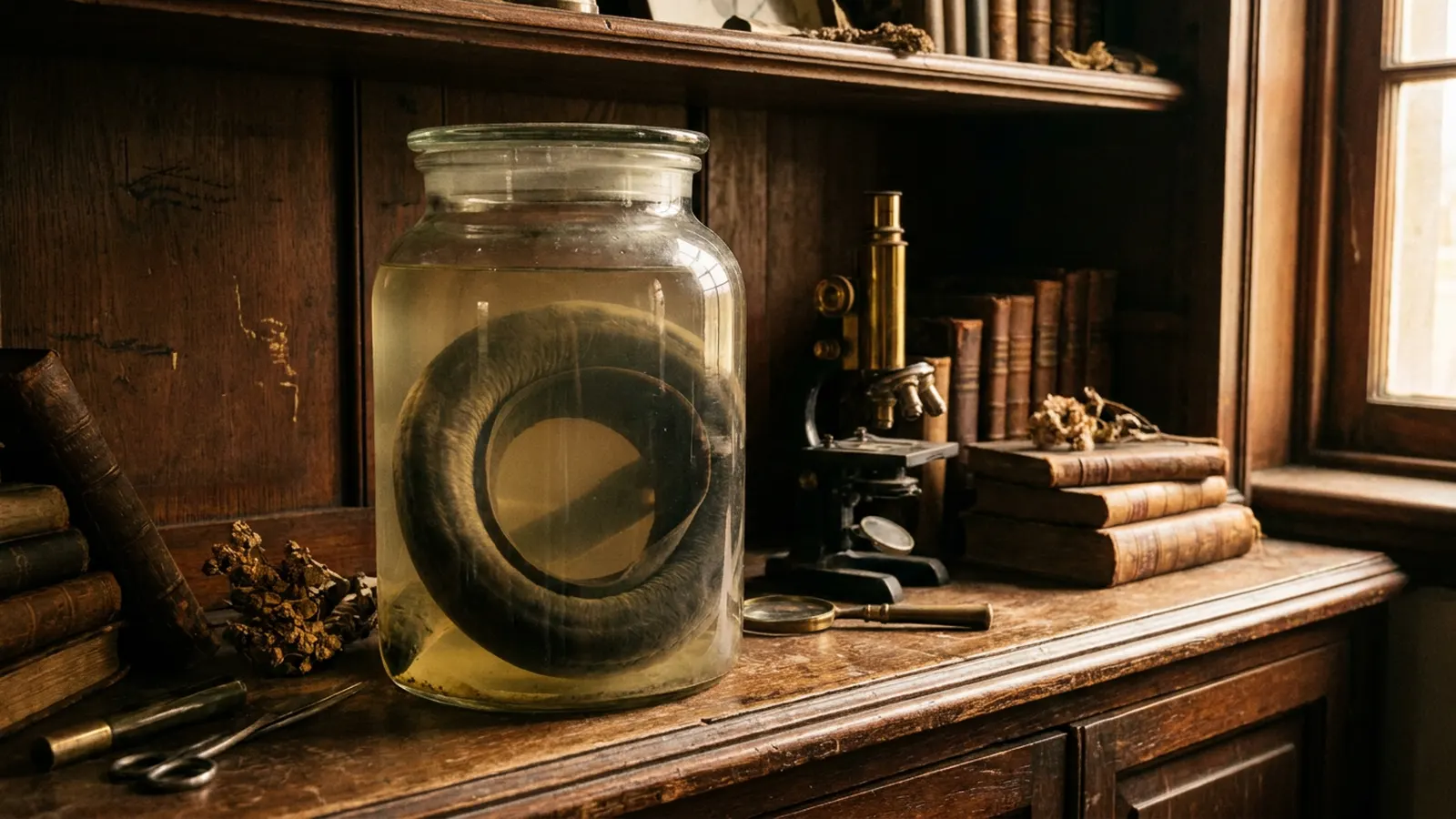
When Carl Linnaeus classified the electric eel in 1766, the electrical nature of its shock was just becoming accepted, and he named it Gymnotus electricus: “naked back” (it has no dorsal fin) and “electric”. In 1864 the American zoologist Theodore Gill moved it into its own genus, Electrophorus, “bearer of electricity”. For more than 250 years it was treated as a single species. Then, in 2019, a team led by C. David de Santana of the Smithsonian split it into three: E. electricus, E. voltai and E. varii.
Why it’s still called an “eel”
A name based on shape, not ancestry.
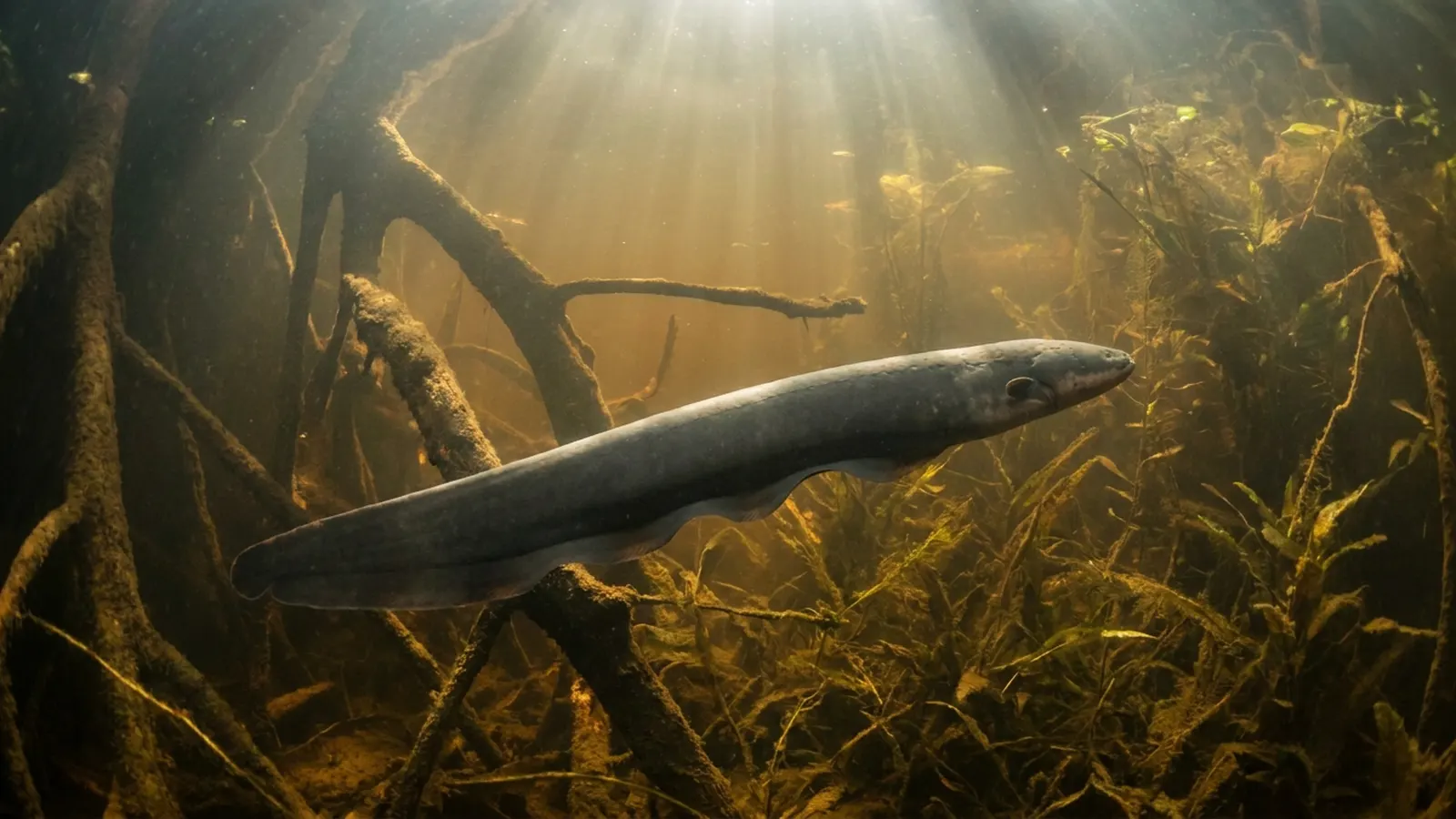
The electric eel isn’t a true eel. It’s a knifefish, more closely related to catfish and carp than to morays and freshwater eels. Early observers called it an eel because of its long, smooth body, and the name stuck long before anyone could check its anatomy or DNA. It’s in good company: the wolf eel, lamprey eel and rice field eel all carry the same misleading label. For a side-by-side comparison with the eel most divers know, see moray eel vs electric eel.
I like this story because it shows how much our names for animals reflect what we understood when we named them. “Numbing fish” was a perfectly good description for people without a theory of electricity. The fish didn’t change; our understanding did. To learn more about the animal, see our main electric eel page and how electric eels hunt.
Other shocking fish people knew about
The electric eel wasn’t the first numbing fish in history.
Long before Europeans reached South America, people in Africa and the Mediterranean knew of other fish that could deliver shocks. Ancient Egyptian tomb art shows the electric catfish of the Nile (Malapterurus electricus), which can produce discharges of a few hundred volts, and later Arab writers described its numbing power. In the Mediterranean, fishermen learned to respect the torpedo ray, which could numb a hand through a fishing spear or net, an effect noted by Greek and Roman writers including Aristotle and Pliny the Elder. In the ocean, stargazers, which bury themselves in sand, also have electric organs, modified from eye muscles.
None of these early observers could explain what was happening, and many assumed the fish released some kind of cold poison or invisible “virtue” that passed into the body. Some suggested the numbing force could pass through a line or rod, which seemed magical. Only when electricity itself was understood in the 18th century did all these fish fall into place as variations on the same phenomenon: living tissue that stores and releases electrical energy.
How the electric eel changed medicine and technology
A fish with a lasting legacy.
Electric fish have had a surprising influence on science. Studies of torpedo rays and electric eels helped establish that nerves and muscles work with electrical signals, a foundation of modern neuroscience. Proteins first purified in large amounts from the electric organs of rays and eels, including the acetylcholine receptor and the enzyme acetylcholinesterase, became key tools for understanding how nerves talk to muscles. More recently, engineers have looked to the electric eel’s stacked cells for inspiration in designing soft, flexible power sources. Not bad for a fish once known simply as “the one that numbs”.
What were electric eels called before electricity was discovered?
They were named for their numbing effect: poraquê in Brazil, temblador (“trembler”) in Spanish, and compared by Europeans to the torpedo or numbfish.
What does poraquê mean?
It comes from Tupi and is usually translated as “the one that numbs” or “puts to sleep”.
Why is the torpedo called a torpedo?
From the Latin torpere, to be numb. The electric ray numbs its victims, and the naval weapon was later named after the fish.
When did people realise electric eels used electricity?
In the 1770s, when experiments showed eel and torpedo shocks behaved like electricity, including producing a spark.
Who named the electric eel?
Linnaeus named it Gymnotus electricus in 1766. It was moved to the genus Electrophorus in 1864.
Is an electric eel actually an eel?
No. It’s a South American knifefish.
- Finger, S. & Piccolino, M. (2011). The Shocking History of Electric Fishes. Oxford University Press.
- Catania, K. C. (2016). Leaping eels electrify threats, supporting Humboldt’s account of a battle with horses. PNAS 113: 6979–6984.
- de Santana, C. D. et al. (2019). Unexpected species diversity in electric eels. Nature Communications 10: 4000.
- Oxford English Dictionary, etymologies of “electric”, “electricity” and “torpedo”.
Blane Perun has been exploring Earth’s oceans and marine life for over 25 years. Founder of TheSea.Org in 1999, underwater photographer, coral aquaculture pioneer, and explorer of 80+ countries.
About Blane Perun → More on Electric Eels →