What Do Electric Eels Eat? — Fish, Frogs and Crustaceans, Found and Stunned With Electricity
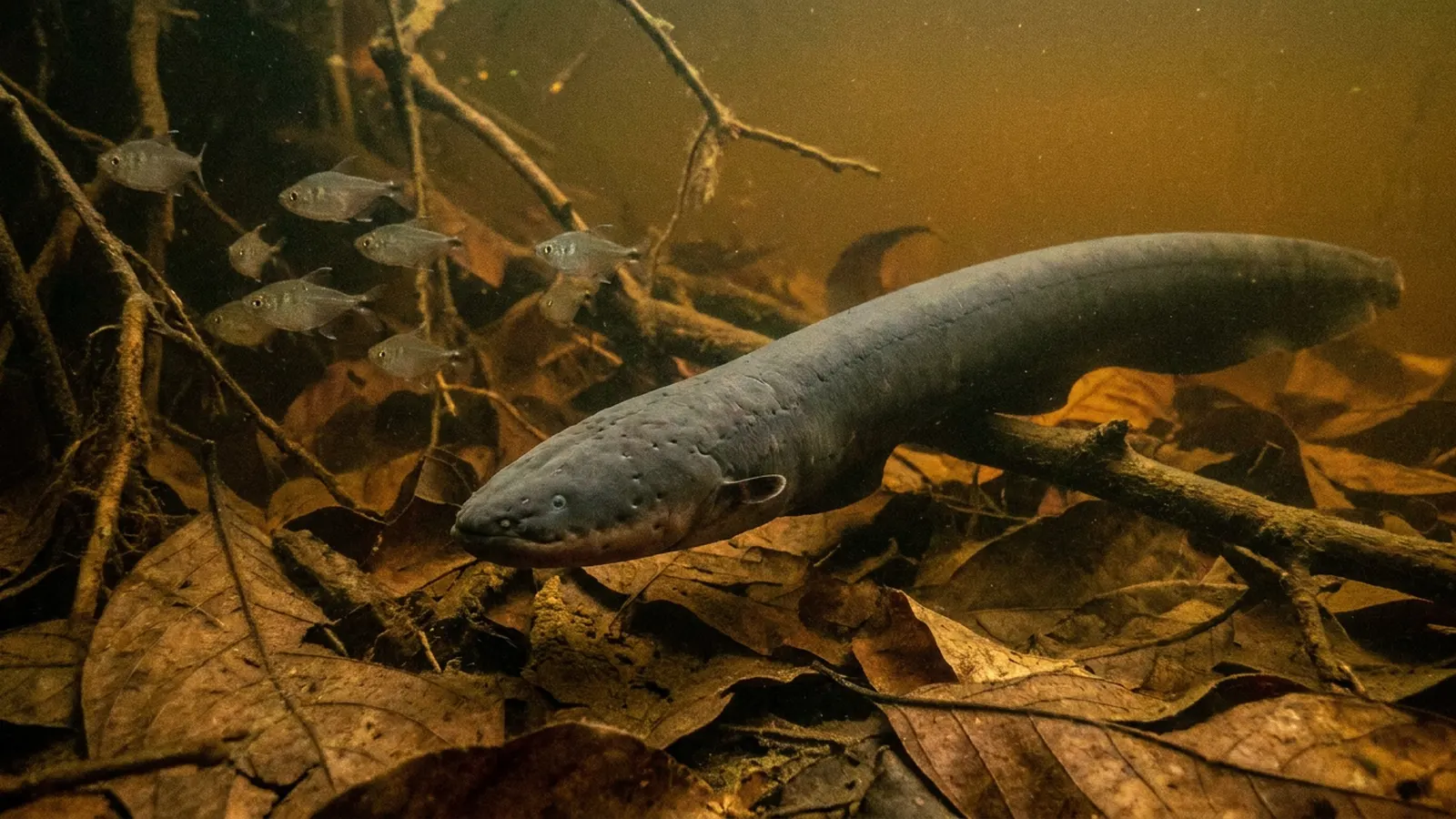
Adult electric eels eat mostly fish, along with crustaceans, frogs and occasionally small mammals or birds. Young electric eels eat insects, shrimp and other invertebrates. The eel finds prey with weak electric pulses, then fires high-voltage volleys that make hidden prey twitch and stun it before it is swallowed whole.
The electric eel has the most dramatic hunting kit of any freshwater fish. It lives in dark, muddy water where eyes are almost useless, and it has turned most of its body into a set of biological batteries that it uses both to sense its surroundings and to knock out its prey. Over the past decade, research led by Kenneth Catania at Vanderbilt University and a field study from Brazil have shown that electric eels use their electricity in far more clever ways than anyone suspected. Here’s what they eat and how they catch it.
The electric eel’s diet
Mostly fish, with a side of whatever else wanders by.
Adult electric eels are predators of fish above all. Stomach contents and observations show they eat a wide range of small to medium river fish, including characins such as tetras, catfish and cichlids. They also take freshwater crabs and shrimp, frogs and, occasionally, small mammals, birds or reptiles that end up in the water. Prey is swallowed whole, head first, since the eel has no cutting teeth for tearing.
Young electric eels have very different menus. Small juveniles feed on insects, insect larvae and small crustaceans, shifting toward fish as they grow. Newly hatched young are known to feed on eggs and even on later-hatching siblings in the nest, a gruesome but effective head start. We cover nesting in how electric eels reproduce.
| Life stage | Typical prey | How it’s caught |
|---|---|---|
| Hatchlings | Unhatched eggs, small siblings, tiny invertebrates | In the nest, guarded by the male |
| Juveniles | Insects, larvae, shrimp, small crabs | Low-voltage sensing, small shocks |
| Adults | Fish (main prey), crabs, frogs | High-voltage volleys |
| Occasional | Small mammals, birds, reptiles | Opportunistic |
Finding prey in the dark: electrolocation
A weak electric field works like radar.
Electric eels have three electric organs that take up most of their body. The small Sachs’ organ produces low-voltage pulses of around 10 volts. Those pulses create an electric field around the eel, and objects in the water distort that field in ways the eel can detect with electroreceptors in its skin. It’s called electrolocation, and it lets the eel sense the shape and position of rocks, plants and animals in water too murky to see through. Electric eels also have poor eyesight, so this electric sense, along with smell and the lateral line, does most of the work.
High-voltage hunting: stun and swallow
The main organ and Hunter’s organ deliver the knockout.
When it’s time to attack, the eel switches to its main organ and Hunter’s organ, which together can produce discharges of several hundred volts. Catania’s experiments, published in Science in 2014, showed that these high-voltage pulses work by activating the prey’s own motor nerves. A burst of pulses fired at high frequency, around 400 per second, causes every muscle in a nearby fish to contract at once, freezing it in place. The eel then strikes and swallows it.
The same research showed a second trick. When prey is hiding, the eel fires a short “doublet” of two high-voltage pulses. That makes the hidden animal twitch involuntarily, and the eel detects the movement and attacks. In other words, it can remotely force hidden prey to give itself away. Catania also filmed electric eels curling their bodies around large or struggling prey so that both ends of the electric organ face the victim, which concentrates the electric field and roughly doubles its strength. That’s an elegant solution for a fish without teeth to grip its prey.
Electric eels hunting in packs
A discovery from the Xingu basin overturned the idea of a solitary hunter.
Electric eels were long thought to be solitary. Then, in 2021, researchers led by Douglas Bastos reported a group of more than a hundred Volta’s electric eels (Electrophorus voltai) hunting together in a lake in the Iriri River, a tributary of the Xingu in Brazil. At dusk the eels swam in circles to herd shoals of small tetras into tight balls in shallow water. Small groups of eels then broke away and struck the ball together with coordinated high-voltage discharges, stunning the fish so the whole group could feed. It was the first record of social hunting in electric eels, and one of very few examples of pack hunting in fish.
The researchers think it may happen only where there’s plenty of prey and suitable refuges, so it may not be common everywhere. But it shows how much there still is to learn about an animal that’s been famous for centuries.
Electric eel habitat and why it shapes the diet
Murky, oxygen-poor water favours an air-breathing, electric hunter.
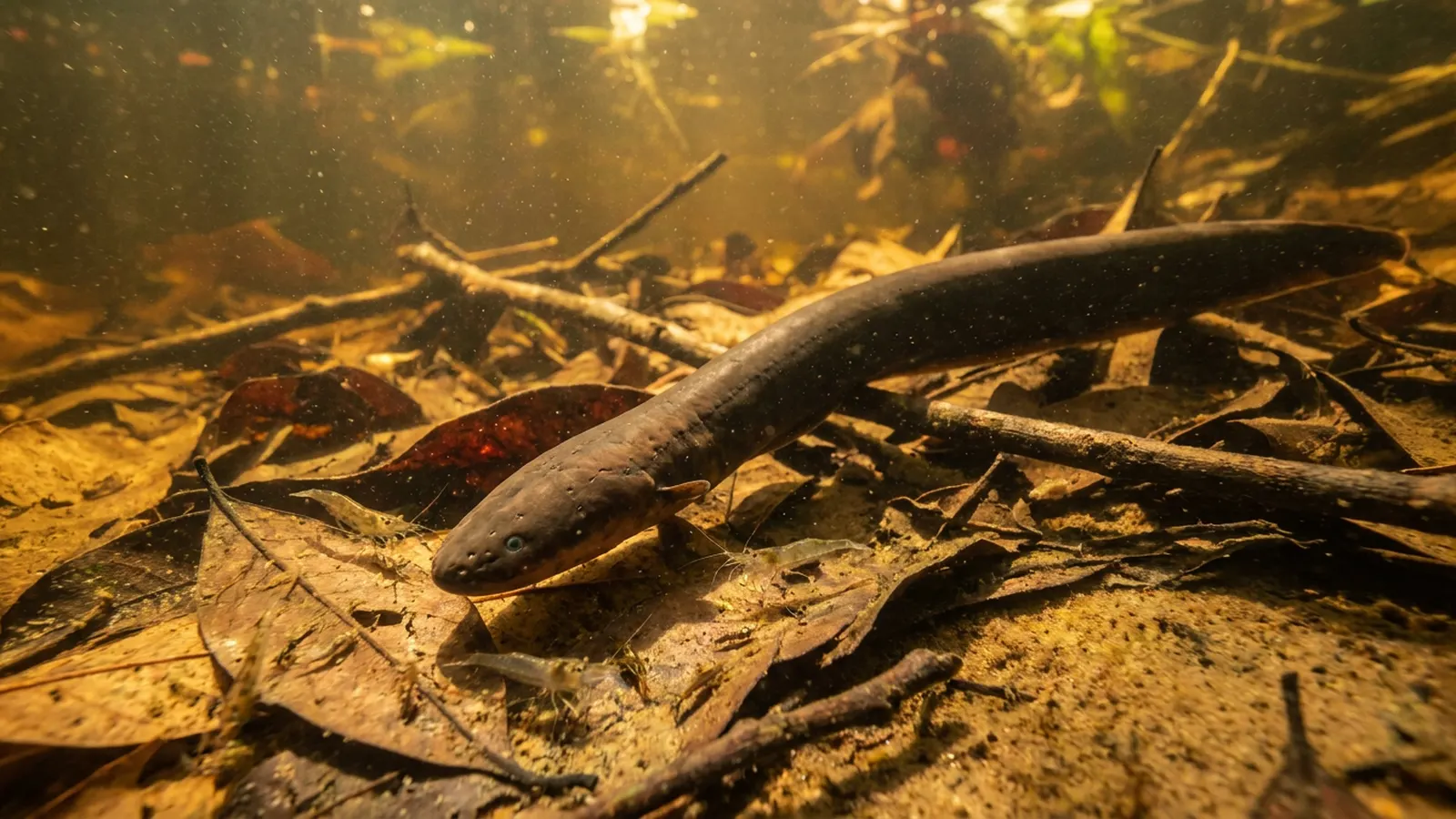
Electric eels live in the Amazon and Orinoco basins and the rivers of the Guianas in northern South America. They prefer slow-moving or still water: muddy river bottoms, creeks, swamps, oxbow lakes and seasonally flooded forest. That water is often dark with sediment and tannins, and low in oxygen. The electric eel copes by breathing air. It surfaces every few minutes to gulp air, and its mouth lining is rich in blood vessels that absorb oxygen. It gets most of its oxygen this way and will drown if it can’t reach the surface.
In such habitat, sight is of little use and many prey fish hide in leaf litter and roots. Electricity is the perfect tool for finding and catching them. During the dry season, when water levels fall and fish are crowded into pools, electric eels have an even easier time. For more about the animal itself, see our main electric eel page.

Do electric eels eat people?
No. But they will defend themselves.
An electric eel can’t swallow anything larger than a fish or small animal, and it has no interest in people as food. But it will defend itself. Catania documented electric eels leaping partly out of the water to press their chins against a threatening object, delivering shocks straight into it, a behaviour first described by the explorer Alexander von Humboldt in 1800 when he watched eels attack horses driven into a pool. The main danger to people is being stunned in water and drowning, or receiving a painful shock while wading. It’s one reason to treat electric eels with respect in the wild or in an aquarium.
Feeding electric eels in aquariums
Big appetite, big tank, big risk.
Public aquariums feed electric eels fish, shrimp and earthworms, and some trained eels take food from tongs. Home aquarists rarely keep them, and with good reason: they grow to around 2 m or more, need very large tanks with a secure lid, and can deliver shocks strong enough to hurt or seriously injure someone working in the tank. Having spent decades running aquarium systems, including my own reef tanks, I’d put an electric eel firmly in the “public aquarium only” category.
How electric eels compare with true eels
Similar shape, different tools.
True eels such as morays find prey mainly by smell and catch it with teeth, and morays have a second set of throat jaws to drag prey down. Electric eels find prey by electric sense and subdue it with shocks, swallowing it whole. True eels breathe with gills; electric eels breathe air. If you want to compare the menus, see what eels eat, and for the bigger picture of why the electric eel isn’t an eel at all, see moray eel vs electric eel.
How often do electric eels eat?
Like most large predatory fish, not every day.
Electric eels are ambush and stalking hunters that spend long periods resting near the bottom or among roots and vegetation, surfacing regularly to breathe. A large fish meal can last an adult for some time, and feeding activity rises and falls with water temperature and the season. In the wet season, when rivers spill into flooded forest, prey disperses over a huge area and eels have to search more. In the dry season, fish are concentrated in shrinking channels and pools, and eels can feed with much less effort. That seasonal cycle shapes the life of almost every predator in the Amazon floodplain.
Generating electricity also has a cost. Firing high-voltage volleys uses energy, and Catania’s experiments showed that eels use their power selectively: weak pulses for searching, short doublets to flush hidden prey, and full volleys only when attacking. Firing the electric organ continuously at full strength would be like running a car engine flat out all the time. The eel’s strategy is to spend energy only when it’s likely to pay off.
What eats electric eels?
Very little, once they’re grown.
Adult electric eels have few natural predators. Their shocks deter most animals, and caimans, large catfish and river dolphins generally leave them alone, although reports of predators taking eels exist. Young eels are more vulnerable before their electric organs reach full strength, which is one reason the male guards the nest and young. People in parts of South America catch and eat electric eels, but they are not a major fishery. The three species are not currently considered threatened, although habitat loss from dams and deforestation in the Amazon affects all of the region’s fish.
What do electric eels eat?
Mostly fish. They also eat crustaceans, frogs and occasionally small mammals and birds. Juveniles eat insects and other invertebrates.
How do electric eels catch their prey?
They locate prey with low-voltage pulses, then use high-voltage volleys that cause the prey’s muscles to lock up, and swallow it whole.
Do electric eels hunt in groups?
Volta’s electric eels have been seen hunting in groups of over 100 in Brazil, herding and shocking schools of small fish.
Where do electric eels live?
In slow, murky rivers, swamps and floodplains of the Amazon, Orinoco and Guiana regions of South America.
Do electric eels have teeth?
They have small teeth but don’t bite prey apart; they swallow it whole.
Can an electric eel kill a human?
Deaths are rare, but a shock can stun a person in water and lead to drowning, especially after repeated discharges.
- Catania, K. (2014). The shocking predatory strike of the electric eel. Science 346: 1231–1234.
- Catania, K. C. (2015). Electric eels concentrate their electric field to induce involuntary fatigue in struggling prey. Current Biology 25: 2889–2898.
- Catania, K. C. (2016). Leaping eels electrify threats, supporting Humboldt’s account of a battle with horses. PNAS 113: 6979–6984.
- Bastos, D. A. et al. (2021). Social predation in electric eels. Ecology and Evolution 11: 1088–1092.
- de Santana, C. D. et al. (2019). Unexpected species diversity in electric eels. Nature Communications 10: 4000.
Blane Perun has been exploring Earth’s oceans and marine life for over 25 years. Founder of TheSea.Org in 1999, underwater photographer, coral aquaculture pioneer, and explorer of 80+ countries.
About Blane Perun → More on Electric Eels →