El Faro — The Cargo Ship That Sailed Into Hurricane Joaquin
SS El Faro was a 790 ft US-flagged cargo ship that sank in Hurricane Joaquin near Crooked Island in the Bahamas on the morning of 1 October 2015, killing all 33 people aboard, 28 Americans and 5 Poles. She left Jacksonville, Florida, for San Juan, Puerto Rico, on 29 September while Joaquin was still a tropical storm, and sailed into the eyewall as it became a major hurricane. Flooding in a cargo hold, a loss of propulsion and a worsening list followed; the recording from her bridge ends at 7:39 a.m. The National Transportation Safety Board found that the probable cause was the captain’s insufficient action to avoid the hurricane, his failure to use the most current weather information and his late decision to muster the crew.
Modern ships carry satellite weather, satellite communications and rescue beacons. El Faro had all of them, and still sailed into a hurricane. The investigations exposed failures by the captain, the owner and the regulators, and the bridge recording gave an unusually complete picture of the final hours.
A 40-year-old ship on the Puerto Rico run
El Faro, Spanish for “the lighthouse”, began life as Puerto Rico. She was built by the Sun Shipbuilding and Drydock Company at Chester, Pennsylvania, laid down on 11 April 1974 and completed on 16 January 1975, as a roll-on/roll-off ship that could carry trailers and cars driven aboard. For fifteen years she carried cargo between the US East Coast and Puerto Rico for the Navieras de Puerto Rico Steamship Company. In 1991 she was bought by Saltchuk Resources, the parent company of TOTE Maritime, renamed Northern Lights, and sailed mostly between Tacoma, Washington, and Anchorage, Alaska.
She was modified twice. In 1992, at the Atlantic Marine shipyard in Mobile, Alabama, a 90 ft (27 m) mid-body section was added, with an extra cargo hold and a spar deck, bringing her to about 791 ft (241 m). In 2005 and 2006 she was converted again at the same yard to carry containers lifted aboard by crane. About 4,875 long tons of fixed ballast were added and her load line was raised by about two feet so that she could carry more cargo. A required damage stability assessment was not carried out. Between those refits she served the Military Sealift Command in the 2003 invasion of Iraq, carrying Marines and equipment from San Diego to Kuwait; by October 2005 she had made 25 voyages and transported 12,200 pieces of military equipment. In 2006 she was transferred to TOTE’s subsidiary Sea Star Line, renamed El Faro and put back on the run between Jacksonville and San Juan, a lifeline for the island’s supplies. She was propelled by a single steam turbine driving one shaft.
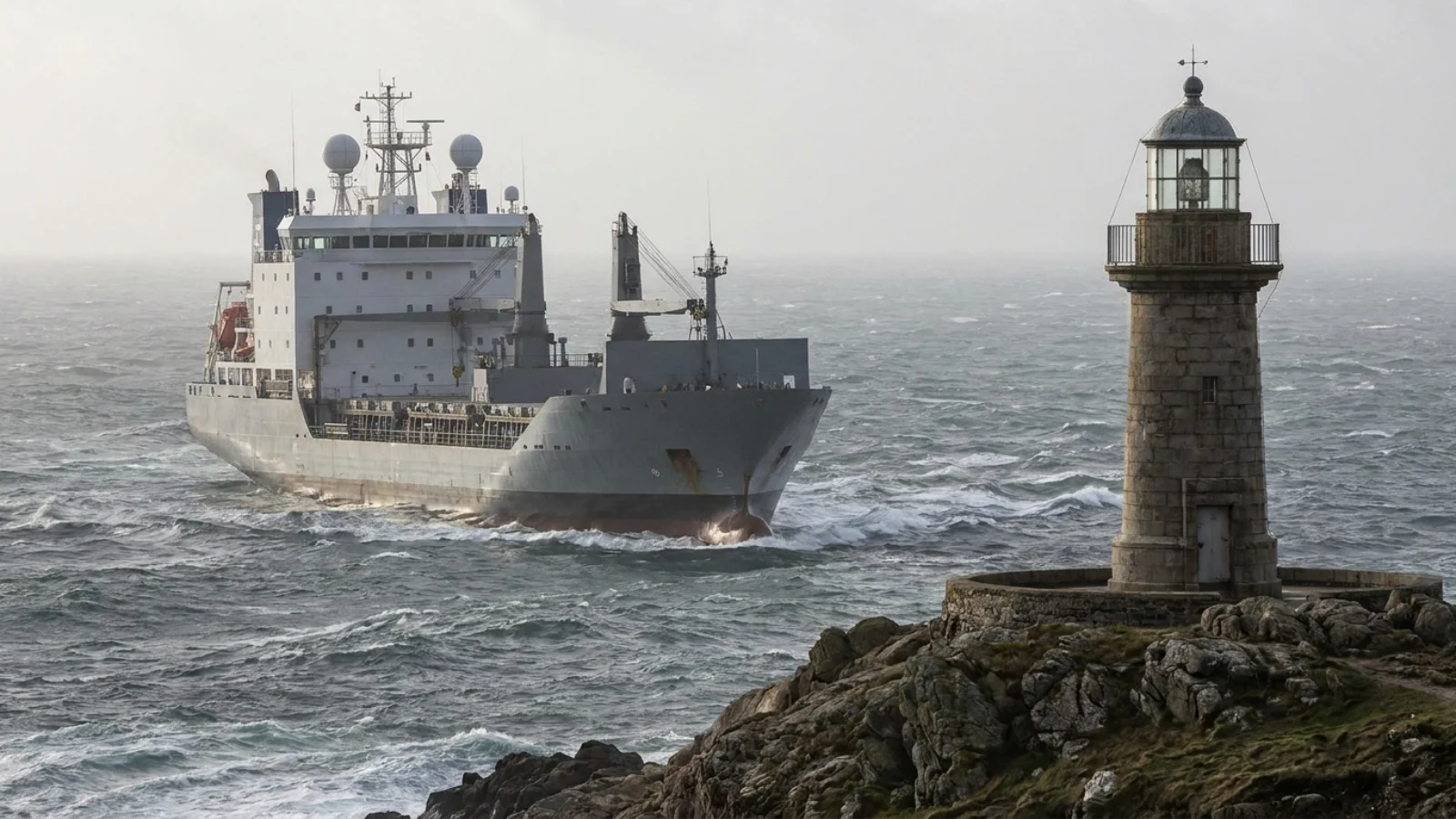
Was El Faro seaworthy?
On paper, she was. She had passed Coast Guard inspections in March and June 2014 and American Bureau of Shipping class and statutory surveys in February 2015, and the NTSB found that safety drills were held weekly and that she met stability criteria when she left Jacksonville. Former crew members told a different story after she was lost, describing a “rust bucket” with drainage problems, leaks in the galley area and holes in the decks as recently as two months before the sinking. When the Coast Guard’s Marine Safety Center examined her sister ship, El Yunque, after the disaster, it found the cargo ventilation system in poor condition, likely to let in water intermittently while the ship rolled in seas of 25 to 30 ft. Her two lifeboats were open-topped, each able to carry 43 people, a design that had been superseded on new ships by fully enclosed lifeboats.
The last voyage
El Faro left Jacksonville at 8:10 p.m. on 29 September 2015 under Captain Michael Davidson, bound for San Juan with 391 containers, about 294 trailers and cars and a crew of 33. Tropical Storm Joaquin was several hundred miles to the east. The National Hurricane Center forecast that it would probably become a hurricane by the morning of 1 October and move southwest toward the Bahamas. Davidson planned to use the normal direct route, expecting to pass south of the storm, but that route would take the ship within about 175 nautical miles of the storm, where seas over 10 ft were likely. The NTSB later judged that the decision to leave Jacksonville was reasonable given the options available, but that the captain then failed to take enough action to avoid the hurricane.
Joaquin did not behave as Davidson expected. It became a hurricane by 8:00 a.m. on 30 September, intensified rapidly and kept tracking southwest, reaching Category 3 strength, with sustained winds of 100 knots, by 11:00 that night, and later Category 4. At 6:40 a.m. on 30 September Davidson and his chief mate agreed to alter course slightly to the south. That night his junior officers grew increasingly worried. At 11:05 p.m. the third mate called the captain to report that Joaquin’s winds had reached 100 mph and that the storm was moving toward their track, and minutes later called again to suggest diverting south. At about 1:20 a.m. on 1 October the second mate, Danielle Randolph, called him to suggest a course change through the Crooked Island Passage. In an email to friends and family she wrote: “There is a hurricane out here and we are heading straight into it.” The course was not changed.
Into the eyewall
By early morning El Faro was close to the centre of the storm. A position relayed by Reuters placed her at 7:56 a.m. about 35 nautical miles north-east of Crooked Island, within the eyewall of the hurricane, where winds of more than 80 knots and waves of 20 to 30 ft were likely. Other estimates put the swells she faced at 20 to 40 ft. At 5:43 a.m. Davidson was told of suspected flooding in the No. 3 cargo hold and sent the chief mate to investigate. A scuttle, a small watertight hatch, had been left open or had burst open, and seawater piping had been damaged. About half an hour later the ship lost her steam propulsion: the sustained list starved the main engine of lubricating oil pressure, and without propulsion she lay helpless, broadside to the wind and sea.
The voice from the bridge
The final hours are known in unusual detail because the ship’s voyage data recorder (VDR), with six microphones on the bridge, captured the last 26 hours of conversation. In December 2016 the NTSB released a 500-page transcript. It shows a captain trying to stay calm and reassure his crew as the situation slipped away. At 6:54 a.m. he told someone ashore: “We are in dire straits right now”, but added that nobody was abandoning ship and the engineers were working to restore the plant. At 7:06 he called the company’s emergency contact to report a hull breach, a heavy list and the loss of the main engine, saying they were 48 miles east of San Salvador and “not gaining ground”.
At about 7:30 a.m. the Coast Guard received a satellite alert that the ship had lost propulsion, was taking on water, though the flooding had been contained, and had a 15-degree list, and a single ping from her emergency beacon. On the bridge, the chief mate reported that the water was rising, that cars were floating in No. 3 hold and that the fire main might be ruptured. At 7:24 Davidson still said the ship had “reserve buoyancy and stability”. Minutes later he ordered the general alarm sounded and gave the order to abandon ship; about a minute afterwards he could be heard calling “Bow is down, bow is down!” and ordering everyone into the rafts. The last minutes record him trying to help a panicking helmsman up the steeply tilted bridge. The recording ends at 7:39 a.m. with both men still on the bridge. Davidson’s last recorded words were “It’s time to come this way!”
The search
On 1 October Air Force Reserve “hurricane hunter” aircraft tried and failed to find the ship. The Coast Guard began a dedicated search on 2 October, and the ship was declared missing. On 3 October aircraft flew through hurricane-force winds of more than 100 knots at 1,000 ft, with waves up to 40 ft and visibility under a nautical mile, and a helicopter crew recovered a life ring. As Joaquin moved away, the Coast Guard, Navy, Air Force and Air National Guard flooded the area with ships and aircraft. On 5 October searchers found a body in a survival suit, which could not be recovered and was lost, along with empty survival suits, a deflated life raft and one of the two lifeboats, heavily damaged and empty. That day the ship was declared lost. By sunset on 7 October, when the search ended, more than 183,000 square nautical miles had been covered, and two debris fields had been found. No survivors were ever found.
Finding the wreck and the black box
The Navy salvage ship USNS Apache sailed on 19 October 2015 with a towed pinger locator, side-scan sonar and a remotely operated vehicle, and on 31 October located a ship lying upright and in one piece at a depth of about 15,000 ft (4,600 m), where the water pressure is about 6,688 psi. Images confirmed it as El Faro on 1 November, but the VDR could not be found. A second search in April 2016 by the research vessel Atlantis, operated by the Woods Hole Oceanographic Institution, found the recorder about 41 miles northeast of Acklins and Crooked Islands, but it was wedged close to the mast and other wreckage. On 10 August 2016 Apache returned and recovered it, ten months after the sinking.
What the Coast Guard found
The Coast Guard’s Marine Board of Investigation completed its 199-page report in September 2017 and published it on 1 October, two years to the day after the sinking. It placed nearly all of the blame on Captain Davidson, who had underestimated both the strength of the storm and his ship’s vulnerability in heavy weather, and who did not do enough to evade the hurricane despite his officers’ concerns. Investigators said that had he survived, his actions would have been grounds for revoking his licence. The board also found that TOTE had violated rules on crew rest and work hours, had no dedicated safety officer overseeing the ship, and was using outdated open lifeboats rather than modern enclosed survival craft.
The NTSB verdict
The NTSB met in Washington on 12 December 2017 and adopted a final report of about 400 pages. It criticised Davidson for steaming toward the storm despite repeated suggestions from his officers to change course, and noted that he had relied on outdated weather information from a commercial service, the Bon Voyage System, rather than the most current National Hurricane Center forecasts. It criticised the Coast Guard for allowing older ships to keep open lifeboats under grandfather rules, noting that El Faro‘s boats were poorly maintained, were never launched and in all probability would not have offered useful shelter. It also criticised TOTE’s oversight of an old and deteriorating ship.
The board determined that the probable cause was “the captain’s insufficient action to avoid Hurricane Joaquin, his failure to use the most current weather information, and his late decision to muster the crew”. Contributing factors included ineffective bridge resource management, including the captain’s failure to consider his officers’ suggestions; inadequate oversight and safety management by TOTE; flooding through an undetected open scuttle and damaged piping; the loss of propulsion caused by low lubricating oil pressure in a sustained list; downflooding through unsecured ventilation openings into the cargo holds; and the lack of an approved damage control plan. The lack of appropriate survival craft contributed to the loss of life.
Lawsuits and lessons
Within weeks families of the crew sued TOTE; one lawsuit sought $100 million and another described the powerless ship as “merely a cork in the sea”. By April 2016 TOTE had settled with 18 of the 33 families for more than $7 million. Senator Bill Nelson of Florida urged investigators to examine the company’s heavy-weather policies and called the lifeboats “outdated and inadequate”. The ship’s route was taken over by Isla Bella.
The NTSB’s emphasis on bridge resource management, the principle that a ship’s officers must be able to question a captain’s decisions and that the captain must weigh their advice, is the lesson most often drawn from the sinking. Ten years on, in September 2025, an Audible podcast by the journalist Maeve McGoran, Shipwreck: How a Captain, Company, and Culture Sank the SS El Faro, reconstructed the voyage from the bridge transcripts, using actors because the audio itself was not released. It describes a corporate culture of delaying repairs and a shipboard culture in which officers were afraid to challenge the captain. It also points to the Jones Act of 1920, which requires cargo between US ports, including Puerto Rico, to be carried on American ships, as one reason old vessels like El Faro stay in service.
Remembering the 33
Twin memorials stand in Jacksonville and in San Juan. The Jacksonville memorial at Dames Point Park is a 10 ft bronze lighthouse, a nod to the ship’s name, surrounded by 33 dock-cleat markers, each bearing the name and photograph of a crew member. A third memorial, by the artist Jay Sawyer, stands in Rockland, Maine, home to five of the men who died. Ceremonies in Rockland and Jacksonville marked the tenth anniversary in 2025.
El Faro among the great wrecks
Most famous wrecks belong to the age of steam liners or the world wars. El Faro is a modern loss, one that happened with satellite communications, weather data and emergency beacons on board, which is why the human decisions behind it drew so much attention. Compare the 1975 loss of the Edmund Fitzgerald, another cargo ship lost with all hands in a storm, or read about how ocean waves form. The voyage ended short of San Juan.
When did El Faro sink?
On the morning of 1 October 2015; the bridge recording ends at 7:39 a.m.
Where did El Faro sink?
In the Bahamas, near Crooked Island and about 48 miles east of San Salvador, at a depth of about 4,600 m (15,000 ft).
How many people died on El Faro?
All 33 aboard: 28 Americans and 5 Polish workers.
Why did El Faro sink?
The NTSB blamed the captain’s insufficient action to avoid Hurricane Joaquin, outdated weather information and a late muster, plus flooding, loss of propulsion and poor company oversight.
Was the El Faro wreck found?
Yes. USNS Apache found it upright and in one piece on 31 October 2015, and recovered the voyage data recorder on 10 August 2016.
Who was the captain of El Faro?
Michael Davidson, who died with his crew.
Did El Faro have lifeboats?
Two open lifeboats for 43 people each, an outdated design; one was found damaged and empty.
What did the El Faro black box reveal?
A 500-page transcript of the bridge’s last 26 hours, including officers urging course changes and the final abandon-ship order.
- Wikipedia contributors, “SS El Faro” (2023 snapshot, accessed November 2026), summarising NTSB Marine Accident Report NTSB/MAR-17/01 and the US Coast Guard Marine Board of Investigation report (2017).
- WUSF (29 September 2025), “10 years after the SS El Faro sailed into a hurricane, a podcast reconstructs what happened”.
Blane Perun has been exploring Earth’s oceans and marine life for over 25 years. Founder of TheSea.Org in 1999, underwater photographer, coral aquaculture pioneer, and explorer of 80+ countries.
About Blane Perun →