Mangrove Snapper — The Wary Gray Snapper of Docks, Mangroves and Reefs
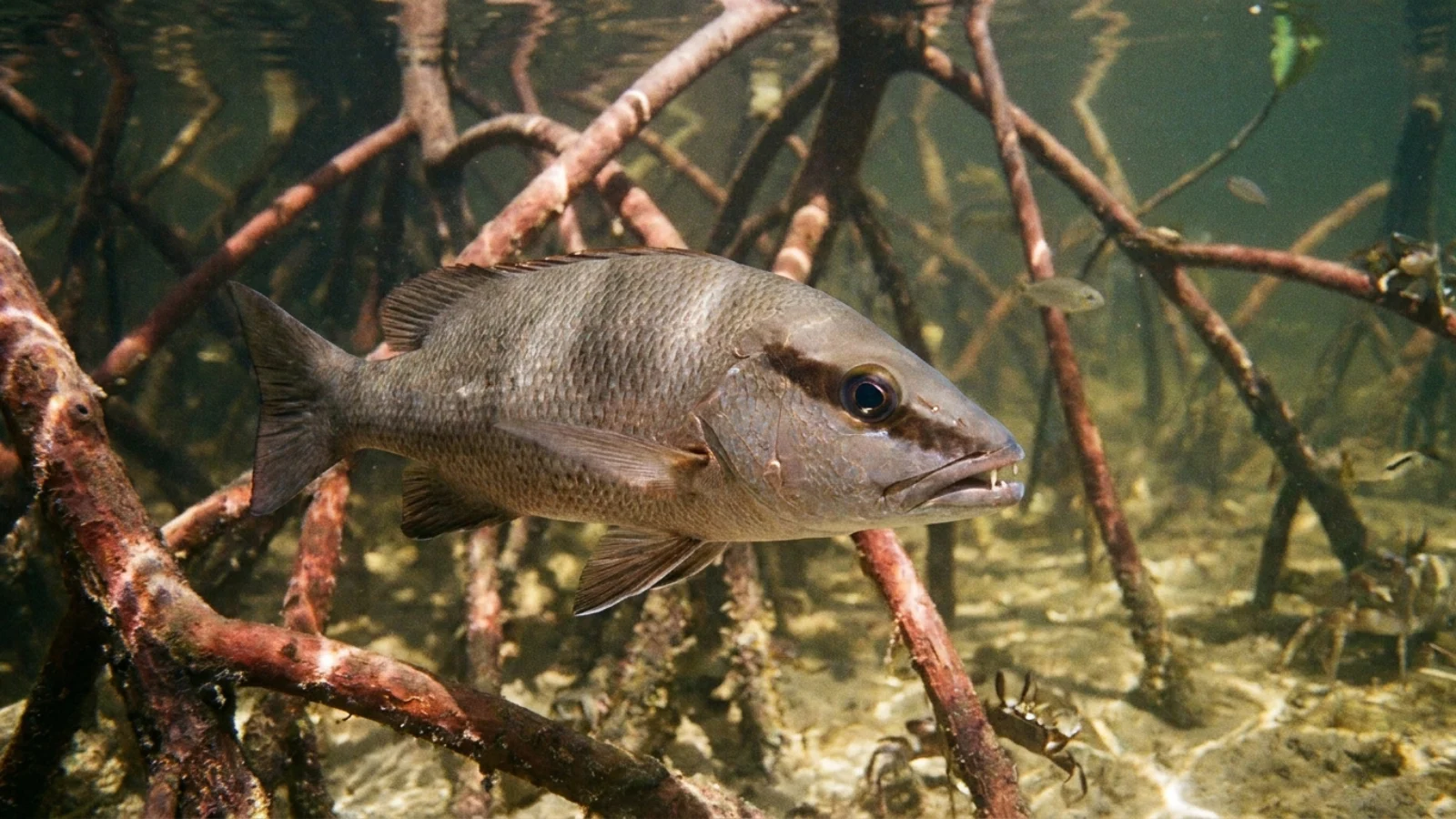
The mangrove snapper, officially the gray snapper (Lutjanus griseus), is a gray-copper snapper with a dark band through the eye and two prominent canine teeth in the upper jaw. Juveniles grow up among mangrove roots and seagrass, while adults move to docks, bridges, rock ledges and offshore reefs. Inshore fish typically weigh 1–3 lb, offshore fish 5–10 lb, and the IGFA record is 17 lb from Port Canaveral, Florida. Famous for being wary and line-shy, they are among the most popular fish in Southwest Florida.
Gray (Mangrove) Snapper
How do you identify a mangrove snapper?
A gray to coppery-red snapper with no large black side spot, two big canine teeth in the upper jaw, and, especially when young, a dark diagonal band from the snout through the eye.
The scales on the sides often show rows of small reddish-brown or dark spots that create faint lines, and the dorsal fin may have a dark border. Fish from tannic mangrove water are darker and grayer; offshore fish turn coppery red and can be mistaken for red snapper, which lack the prominent canines and have a red eye. Mutton and lane snappers carry a black spot on the side, and dog snapper have even bigger canines and a pale triangle below the eye.
| Species | Color | Black side spot | Upper canines | Record |
|---|---|---|---|---|
| Gray (mangrove) snapper | Gray to copper | No | Prominent | 17 lb |
| Red snapper | Rosy red | No (adult) | Not prominent | 50 lb 4 oz |
| Mutton snapper | Olive-red, blue face lines | Yes | Moderate | 30 lb 4 oz |
| Lane snapper | Pink with yellow stripes | Yes | Small | 8 lb 4 oz |
| Dog snapper | Copper, pale eye triangle | No | Very large | ~30 lb |
Where do mangrove snapper live?
Gray snapper live from Massachusetts to Brazil, including the Gulf of Mexico and Caribbean, but they are most abundant in Florida, where their life cycle spans the mangrove coast and the offshore reef.
Larvae settle in seagrass and mangrove nurseries, and juveniles spend their first years among the prop roots of red mangroves, in tidal creeks and around docks. As they grow, they move to bridges, jetties and nearshore ledges, and adults live on offshore reefs and wrecks down to about 180 m. This connection is one reason mangrove protection matters to fisheries: the mangrove forests of Southwest Florida and the Everglades feed the snapper populations of the reefs offshore.
What do mangrove snapper eat?
Small fish, shrimp and crabs, plus worms and other invertebrates, much of it caught at night.
Gray snapper often hang in schools around structure by day and disperse to feed over grass flats and sand at night. Divers see them stacked in the shadow of mangrove roots, docks and ledges, holding perfectly still until something edible drifts past. Their sharp eyesight makes them notoriously line-shy, which is why local anglers use light leaders and live shrimp.
Where can you catch mangrove snapper in Southwest Florida?
Docks, bridges, mangrove points, jetties and nearshore reefs all hold mangrove snapper, and summer nights on the offshore ledges produce the biggest fish.
See also red snapper, snook, sheepshead and the Sport & Game Fish hub.
Is mangrove snapper the same as gray snapper?
Yes. Gray snapper is the official common name for Lutjanus griseus; Floridians usually call it mangrove snapper or “mango” because juveniles are so common around mangrove roots.
How big do mangrove snapper get?
Inshore fish are usually 10 to 16 inches and 1 to 3 lb; offshore adults commonly reach 5 to 10 lb. The IGFA all-tackle record is 17 lb, caught at Port Canaveral, Florida, in 1992.
How do you identify a mangrove snapper?
Look for a gray to coppery body, rows of reddish or dark spots along the scales, a dark band from the snout through the eye (especially in juveniles), and two large canine teeth at the front of the upper jaw. There is no black spot on the side, unlike lane or mutton snapper.
Where do mangrove snapper live?
Juveniles live in mangroves, seagrass beds and tidal creeks; adults use docks, bridges, jetties, ledges and offshore reefs to about 180 m deep. They range from Massachusetts to Brazil, most abundantly in Florida.
When do mangrove snapper spawn?
In summer, roughly June through August, offshore on reefs, often around the full moon. Large aggregations of gray snapper form at spawning sites such as the Florida Keys reef tract.
Are mangrove snapper good to eat?
Yes, they are excellent table fare with mild, flaky white meat. Florida sets a minimum size and daily bag limit that differ between Gulf and Atlantic waters, so check FWC.
Why are mangrove snapper so hard to catch?
They are wary, sharp-eyed fish that inspect baits carefully and avoid heavy leaders. Anglers use light fluorocarbon, small hooks and live shrimp or small baitfish, often chumming to get them feeding.
Blane Perun has been exploring Earth’s oceans and marine life for over 25 years. Founder of TheSea.Org in 1999, underwater photographer, coral aquaculture pioneer, and explorer of 80+ countries. Based in Southwest Florida, where tarpon, snook and redfish share the mangrove shorelines of the Gulf coast.
About Blane Perun → More on Sport & Game Fish →