Is Eel a Shellfish? — Why Eel Is a Fish, and What That Means for Allergies and Labels
No. Eel is a fish, a bony finfish with a backbone, gills and fins. Shellfish are invertebrates: crustaceans such as shrimp, crab and lobster, and molluscs such as clams, oysters, squid and octopus. For allergy and labelling purposes, eel counts as fish, so a fish allergy matters for eel and a shellfish allergy usually doesn’t.
“Is eel a shellfish?” is a surprisingly common question, and it usually comes from someone standing at a sushi counter with an allergy, or trying to work out a dietary rule. The confusion is understandable. Eel is slippery, odd-looking and often served alongside shrimp and crab, and “seafood” and “shellfish” get used loosely. But biologically and legally the answer is clear. Here’s why eel is a fish, how that affects allergies and food labels, and what to watch for when eating out.
Why eel is a fish
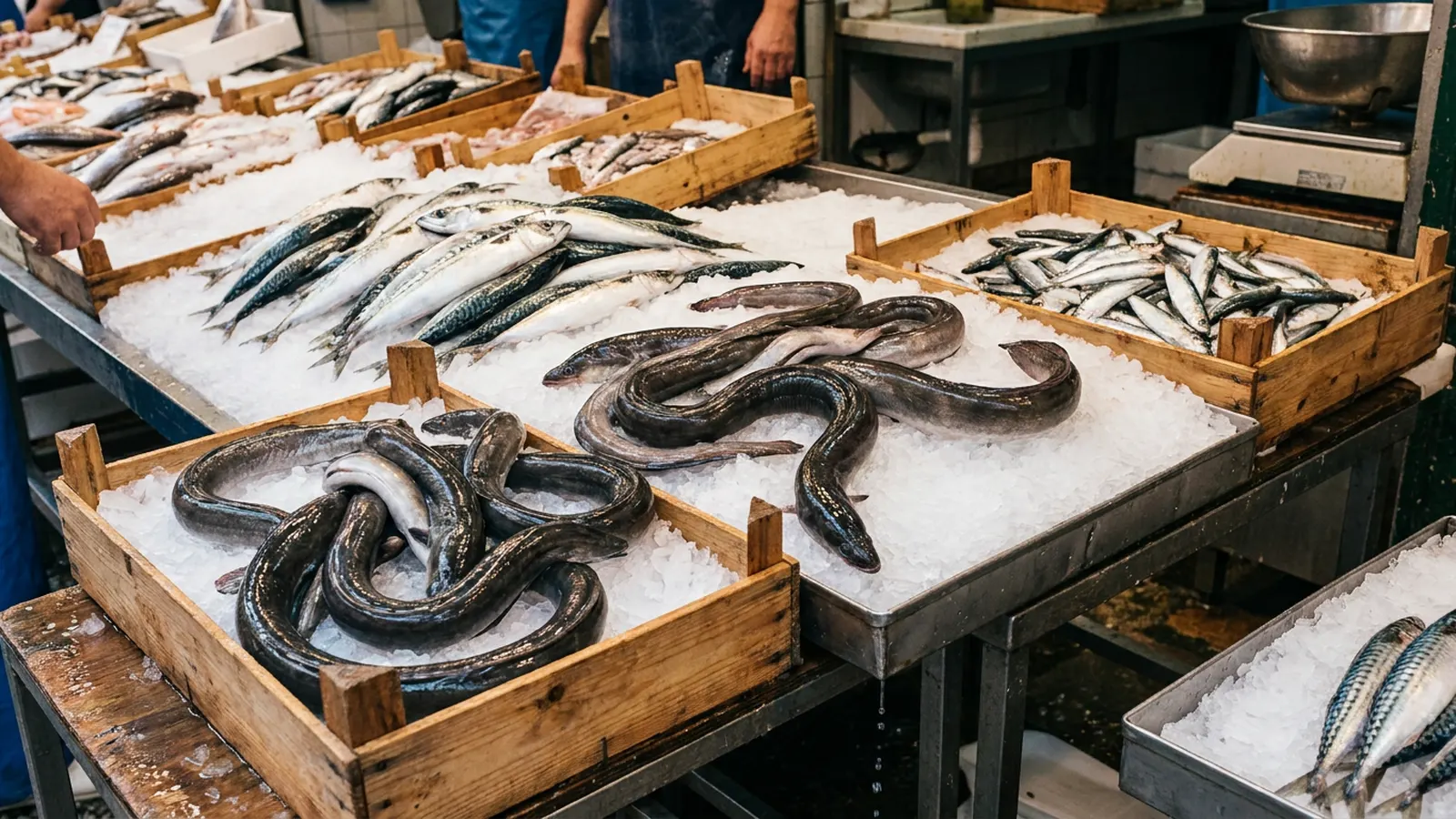
Backbone, gills and fins put eels firmly among the finfish.
True eels belong to the order Anguilliformes, a group of ray-finned bony fish that includes morays, congers, garden eels and the freshwater eels used for unagi. Like other fish, they have a bony skeleton with a backbone, they breathe with gills, and they have fins, though the fins are reduced and merged into a ribbon around the back half of the body. They even have scales, in the case of freshwater eels, though the scales are tiny and buried in the skin. Our pages on eel anatomy and whether eels have scales go into the details.
Shellfish, in contrast, are invertebrates. They have no backbone. The term covers two very different groups: crustaceans (shrimp, prawns, crabs, lobsters, crayfish) and molluscs (clams, mussels, oysters, scallops, snails, and the cephalopods such as squid and octopus). We explain those two groups in crustaceans vs shellfish, and the octopus question in is octopus a shellfish.

Fish allergy vs shellfish allergy
They’re different allergies caused by different proteins.
Fish allergy and shellfish allergy are separate conditions. In fish, the main allergen is usually parvalbumin, a small, heat-stable protein found in fish muscle. In crustaceans and many molluscs, the main allergen is tropomyosin, a muscle protein that differs from the version in fish. Because the proteins are different, most people allergic to shellfish can eat fish, and most people allergic to fish can eat shellfish, although some people have both allergies.
Eel contains parvalbumin, so people with a fish allergy should treat eel as a fish and avoid it unless an allergist has advised otherwise. Some research suggests eel parvalbumin differs from that of common fish such as cod, and a few fish-allergic people tolerate certain species. But reactions vary greatly between individuals, and testing tolerance should only ever be done under medical supervision. Nothing on this page is medical advice.
| Eel | Crustaceans | Molluscs | |
|---|---|---|---|
| Examples | Unagi, anago, moray, conger | Shrimp, crab, lobster, crayfish | Clams, oysters, mussels, squid, octopus |
| Backbone | Yes | No | No |
| Allergy category | Fish | Crustacean shellfish | Mollusc shellfish |
| Main allergen | Parvalbumin | Tropomyosin | Tropomyosin (and others) |
| US major allergen | Yes, as fish | Yes | No (not one of the nine) |
| EU listed allergen | Yes, as fish | Yes | Yes |
How eel is labelled
On food labels, eel appears under fish.
In the United States, the Food Allergen Labeling and Consumer Protection Act requires packaged foods to declare the major allergens, and fish and crustacean shellfish are listed separately. When a product contains fish, the label must name the species, so an eel product will say “eel” (and sometimes the type, such as freshwater eel). Molluscs such as clams and squid aren’t on the US list of major allergens, which surprises many people. In the European Union, fish, crustaceans and molluscs are all on the list of 14 allergens that must be highlighted, each as its own category, and eel falls under fish.
That means if you’re scanning a package for shellfish, eel won’t show up under that heading. If you’re allergic to fish, look for the fish declaration and the word “eel”.
Eating eel at a sushi restaurant
The eel isn’t a shellfish, but what touches it might be.
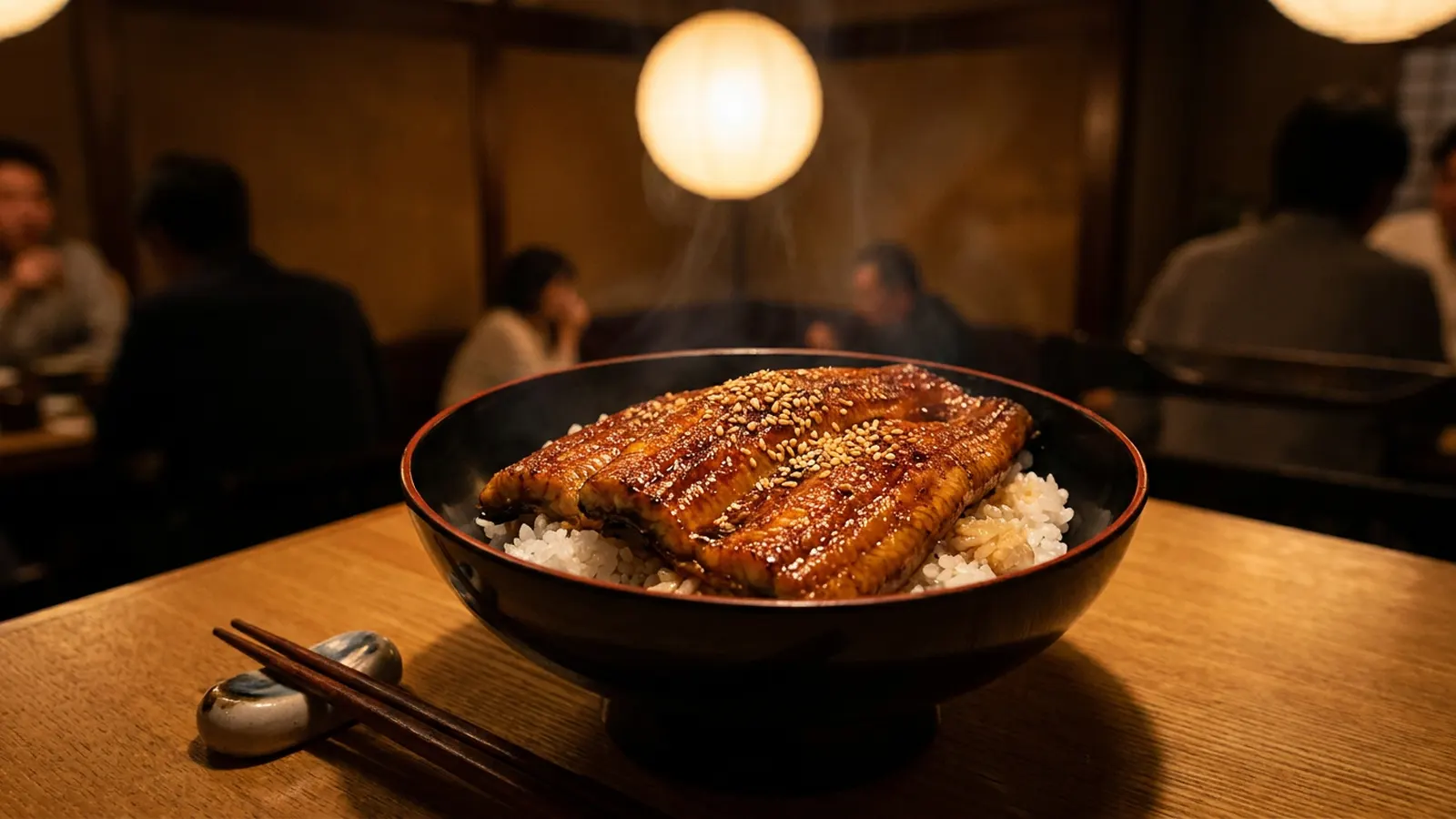
The bigger risk for people with a shellfish allergy at a sushi bar isn’t the eel itself but cross-contact. Unagi and anago are often prepared on the same boards and with the same knives as shrimp, crab and other shellfish, and rolls frequently combine eel with imitation crab, shrimp tempura or roe. Sauces can be a problem too. The sweet “eel sauce” (kabayaki or nitsume) is usually soy sauce, mirin and sugar, sometimes simmered with eel bones, but recipes vary and some sauces or dashi stocks contain fish or shellfish ingredients.
If you have a serious allergy of either kind, tell the staff, ask how the eel is prepared, and ask whether the same surfaces are used for shellfish. Many sushi restaurants can prepare dishes separately, but some can’t guarantee it. Also remember that eel at a sushi bar is always cooked; we explain why in can you eat eel.
Is imitation eel a shellfish?
Read the label: imitation seafood is usually fish.
Because eel has become expensive and some species are endangered, imitation eel products have appeared, made from fish paste, konjac, tofu or other plant ingredients shaped and glazed to look like unagi. Fish-based versions use surimi, the same processed white-fish paste used in imitation crab, and some surimi products include crab extract or other shellfish flavouring. Plant-based versions may contain soy or wheat. If you have allergies, imitation eel needs as much label-checking as the real thing.
Eel and religious dietary rules
Eel’s fish status doesn’t settle every rule.
Jewish dietary law permits only water animals that have both fins and scales. Eels have fins, and freshwater eels technically have tiny embedded scales, but those scales aren’t the kind that can be seen and removed in the traditional sense, so eel is not considered kosher. Shellfish are not kosher either, but for a different reason: they have neither fins nor scales.
In Islamic dietary practice, most schools of law consider all fish permissible, and eel is generally treated as a fish. Views on other seafood, especially shellfish, differ between schools. If religious rules matter to you, consult your own tradition’s authorities rather than relying on a biology definition.
Other “eels” and the shellfish question
Every animal called an eel is still a fish.
Several animals called eels aren’t true eels, but none of them are shellfish. The electric eel is a knifefish, the wolf eel is a wolffish, the rice field eel is a swamp eel, and lampreys are jawless fish. All are vertebrates with backbones, so all fall under fish for allergy purposes, not shellfish. The only “shellfish” that come close to an eel in shape are some worms and sea cucumbers, which aren’t shellfish either.
From my years writing about the ocean, I’ve found that this kind of mix-up usually comes from the word “seafood”. Everything from seaweed to sea urchins gets lumped together on a menu, but biology splits them into very different groups, and for allergies those differences can be important. When in doubt, ask what the animal is, and check with your doctor about what’s safe for you.
Why people think eel might be shellfish
A few understandable reasons for the mix-up.
Eels don’t look like the fish most people picture. They have no obvious scales, no forked tail and no separate fins along the body, and they feel slimy rather than scaly. That puts them, in many people’s minds, in the “strange sea creature” category alongside squid, octopus and shrimp. Eel is also served in places where shellfish dominate the menu, from sushi bars to seafood shacks, and the words “seafood” and “shellfish” are often used as if they were the same thing.
Language adds to it. In some languages and regional dialects, the word for shellfish or seafood is used broadly for anything edible from the water, and menu translations don’t always distinguish between them. Even in English, the phrase “fish and shellfish” is sometimes read as a single category. The simplest test is the backbone: if it has one, it’s a fish (or another vertebrate); if it doesn’t, it might be a shellfish.
Hidden fish in other foods
For fish-allergic people, eel isn’t the only thing to check.
If you’re avoiding eel because of a fish allergy, remember that fish turns up in less obvious places too. Japanese dashi stock is often made from bonito flakes, Southeast Asian fish sauce is made from fermented fish, Worcestershire sauce traditionally contains anchovies, and Caesar dressing often does as well. Surimi products contain fish, and some “vegetarian” sushi rolls are brushed with sauces that include fish ingredients. Allergy organisations recommend checking labels every time you buy a product, because recipes change. And if you’re unsure about a restaurant dish, ask; good kitchens would rather answer a question than deal with an allergic reaction.
Is eel considered shellfish?
No. Eel is a finfish. Shellfish are crustaceans and molluscs, which are invertebrates.
Can I eat eel if I’m allergic to shellfish?
Eel itself isn’t shellfish, but cross-contact at sushi bars is common. Ask how it’s prepared and follow your allergist’s advice.
Can I eat eel if I’m allergic to fish?
Eel is a fish and contains fish allergens, so people with fish allergy should avoid it unless an allergist says otherwise.
Is unagi a fish?
Yes. Unagi is freshwater eel, a fish of the genus Anguilla.
Is eel sauce made from shellfish?
Usually not. It’s typically soy sauce, mirin and sugar, but recipes vary, so check if you have an allergy.
Is eel seafood?
Yes. Eel is seafood and a fish, but it is not a shellfish.
Is eel kosher?
No. Kosher rules require visible fins and scales, and eels lack removable scales.
- U.S. Food and Drug Administration, Food Allergen Labeling and Consumer Protection Act (FALCPA) and major food allergens.
- European Union, Regulation (EU) No 1169/2011, Annex II (substances causing allergies or intolerances).
- Food Allergy Research & Education (FARE): fish allergy and shellfish allergy.
- Sharp, M. F. & Lopata, A. L. (2014). Fish allergy: in review. Clinical Reviews in Allergy & Immunology 46: 258–271.
Blane Perun has been exploring Earth’s oceans and marine life for over 25 years. Founder of TheSea.Org in 1999, underwater photographer, coral aquaculture pioneer, and explorer of 80+ countries.
About Blane Perun → More on Eels →