Can You Eat Eel? — Raw Eel, Unagi, Moray Eel and What Makes Eel Safe
No. Eel should always be cooked. Eel blood contains a protein toxin that can cause illness if eaten raw or gets into cuts or eyes, and heat destroys it. That’s why unagi and anago in sushi are always grilled or simmered. Cooked freshwater eel and conger are widely eaten; large moray eels are risky because they can carry ciguatera toxin.
Eel is one of the oldest seafoods in the world. It’s grilled over charcoal in Japan, jellied in London’s East End, smoked in the Netherlands and Germany, and fried in Madeira. But eel comes with a few rules that other fish don’t. It must never be eaten raw, some eels can make you seriously ill even when cooked, and the most popular species are now endangered. This guide answers the common questions about eating eel, from sushi bar menus to moray eels caught on a reef.
Why you can’t eat eel raw
Eel blood is toxic until it’s cooked.
The blood and serum of freshwater eels, and of several other eels, contain a protein toxin sometimes called ichthyohaemotoxin. In large enough amounts it can cause nausea, vomiting and other symptoms if swallowed, and it can irritate the eyes or open cuts of people cleaning eels. In the late 19th century, scientists studying this toxin injected eel serum into animals to measure its effects, and it was one of the classic examples of a blood-borne fish toxin.
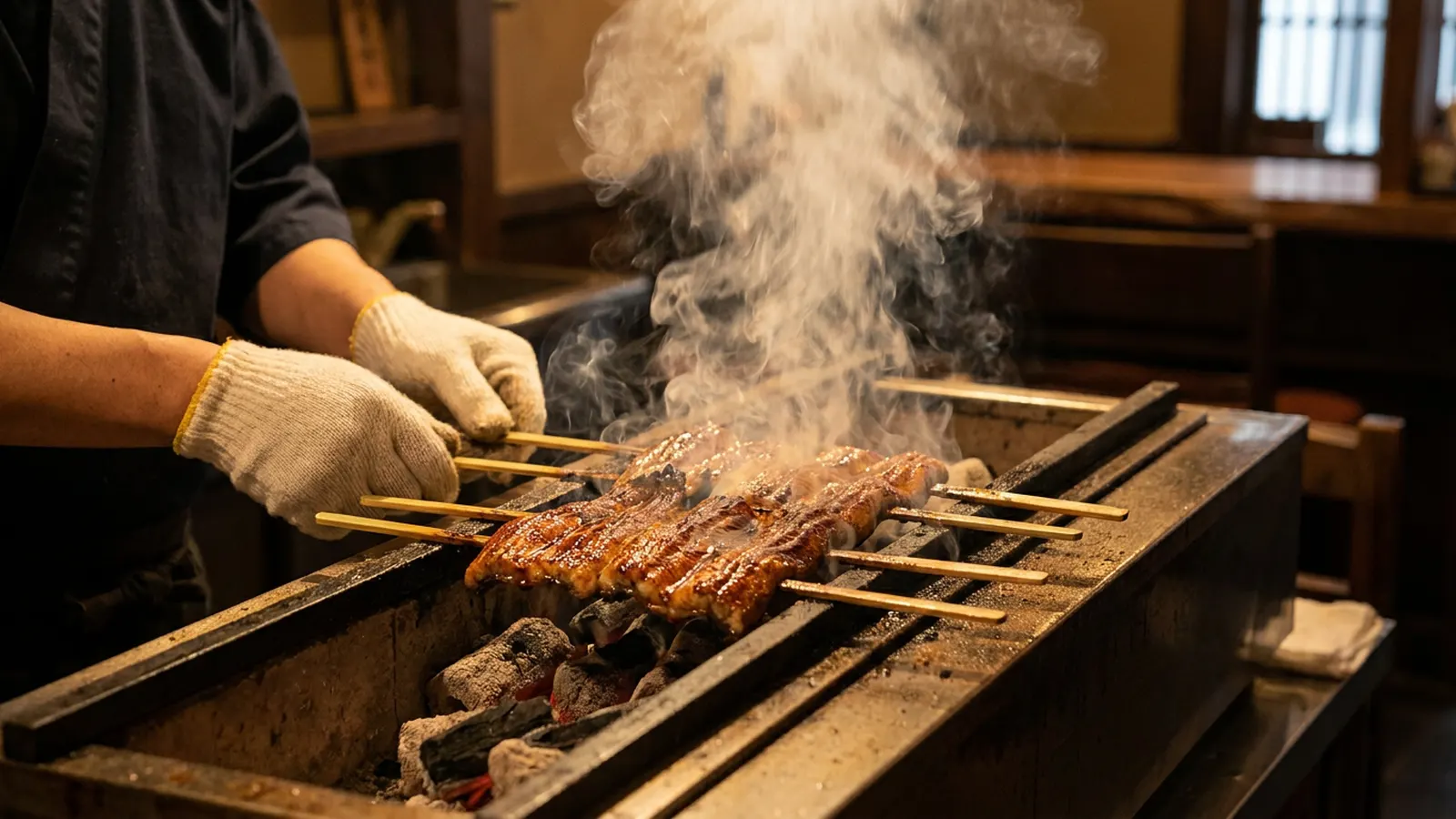
The good news is that it’s a protein, and proteins are broken down by heat. Normal cooking, whether grilling, steaming, frying or simmering, makes eel safe in that respect. That’s why you won’t find raw eel sashimi on a traditional Japanese menu. Unagi (freshwater eel) and anago (conger) are always cooked, usually grilled and glazed or gently simmered, before they’re served on rice or in sushi. If you see eel on a sushi menu, it’s cooked eel.
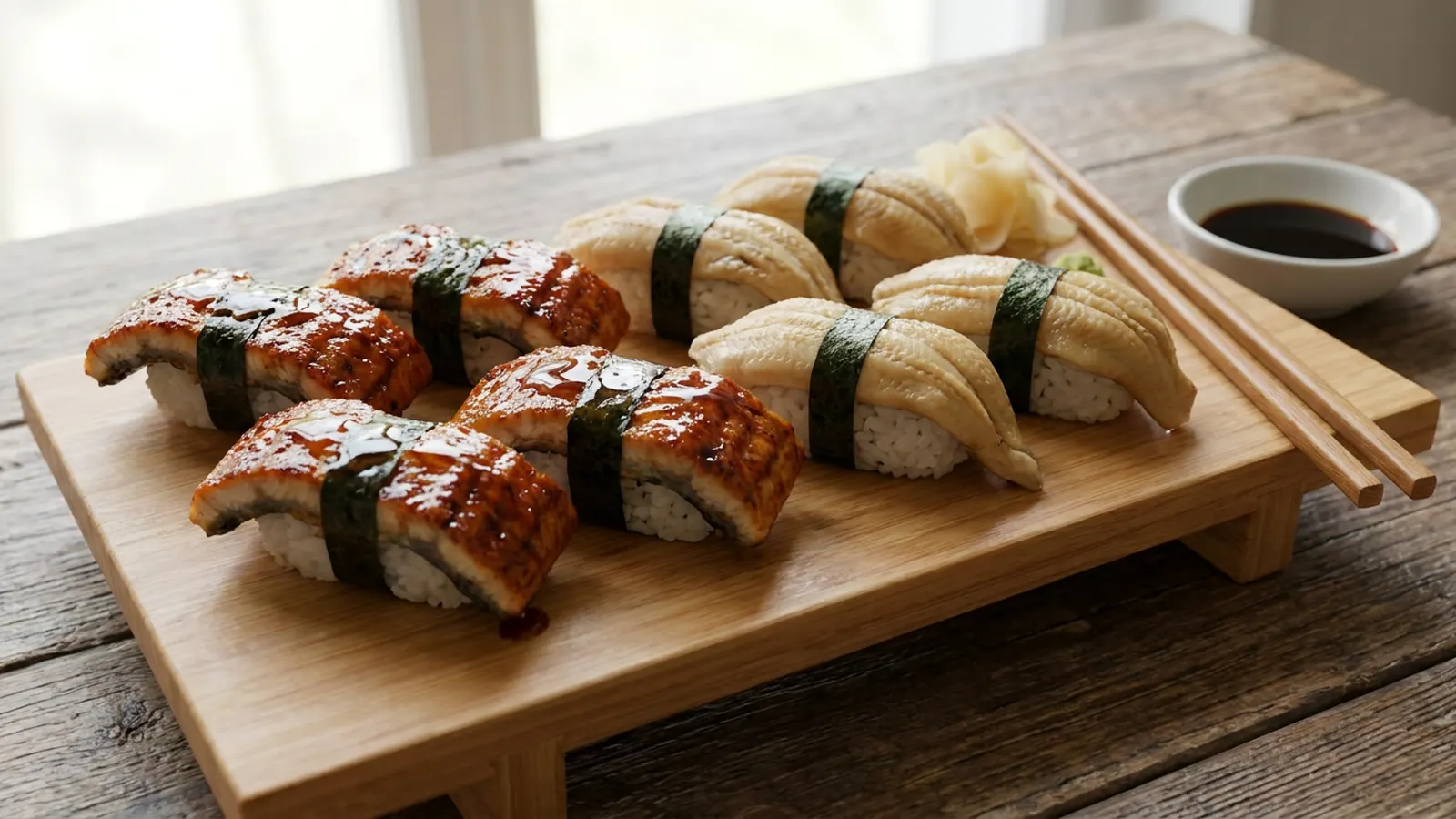
Unagi vs anago: the eels on sushi menus
Two different eels, two different cooking styles.
| Unagi | Anago | |
|---|---|---|
| What it is | Freshwater eel (Anguilla) | Conger (sea eel), usually Conger myriaster |
| Flavour | Rich, fatty | Lighter, softer, sweeter |
| Typical cooking | Grilled over charcoal with a sweet soy glaze (kabayaki) | Simmered, then lightly grilled or served with a reduced sauce |
| Source | Mostly farmed from wild-caught glass eels | Mostly wild-caught |
| Status | Japanese eel Endangered; European eel Critically Endangered | Varies by region |
Japan has a tradition of eating unagi on the “Day of the Ox” in midsummer, said to give strength in the heat, and it’s one of the biggest days for eel sales in the country. Most of the eel sold in Japan and elsewhere is farmed, but farmed eel still starts as a wild glass eel caught at a river mouth, because eels can’t yet be bred in commercial numbers. Our eel life cycle guide explains why.
Can you eat a moray eel?
People do, but big morays are one of the classic causes of ciguatera.
Moray eels are eaten in several parts of the world. In Madeira and the Azores, fried moray is a traditional dish, and morays are eaten in parts of Asia and the Pacific. The Romans famously farmed Mediterranean morays in seaside ponds. But tropical morays come with a serious risk: ciguatera fish poisoning.
Ciguatoxins are made by microscopic algae (dinoflagellates) that grow on reef surfaces and seaweed. Small grazing fish eat the algae, bigger fish eat the grazers, and the toxin builds up as it moves up the food chain. Large morays, especially the giant moray, sit near the top of that chain and can carry high levels. Ciguatera causes gastrointestinal illness followed by neurological symptoms such as tingling, itching and a strange reversal of hot and cold sensations, which can last for weeks or months. Cooking, freezing, smoking or marinating does not destroy ciguatoxins, and affected fish look, smell and taste normal. Several tropical regions advise people not to eat large morays at all. Our moray eel page has more on the species involved.
Eel around the world
Few fish have as many traditional recipes.
In London, jellied eels, chopped freshwater eel boiled in spiced stock that sets into jelly as it cools, were cheap working-class food in the 18th and 19th centuries, and eel pie and mash shops still survive in the East End. In the Netherlands, Germany and Scandinavia, smoked eel is a delicacy. In Spain, baby eels (angulas) were once a common tapa, but they became so scarce and expensive that most people now eat “gulas”, an imitation made from fish paste. In Italy, roast eel (capitone) is part of Christmas Eve tradition in some regions. In Korea, grilled freshwater eel (jangeo) is a popular stamina food. And in parts of the Pacific and Southeast Asia, freshwater eels are both food and, in some villages, sacred animals that aren’t eaten at all.
Is eel healthy?
Nutritious, rich, and best eaten in moderation.
Eel is a fatty fish, high in calories and protein, and a good source of vitamin A, vitamin D and omega-3 fatty acids. That fat is also why eel can accumulate pollutants. Because freshwater eels live for many years near the bottom of rivers and estuaries and store a lot of fat, they can build up PCBs, dioxins and mercury. Some rivers have consumption advisories for wild eels for exactly this reason, so if you catch your own, check local advice first. Commercially sold eel is usually farmed and tested, but sauces like the sweet kabayaki glaze add a lot of sugar and salt.
Wild eels can also carry parasites, including nematodes, another reason they must be cooked thoroughly. And eels are bony: most species have fine intermuscular bones, which are why eel is usually filleted carefully or cooked until the bones soften. We look at that in eel bones.

Is eel a shellfish? Allergies and labels
Eel is a fish, not a shellfish.
Eel is a finfish, so it’s grouped with fish, not shellfish, for allergy purposes. People with a fish allergy may react to eel, and people with a shellfish allergy usually don’t, although individual cases vary and cross-contamination in restaurants is common. Our page on whether eel is a shellfish covers this in more detail, alongside the difference between crustaceans and shellfish.
Should you eat eel at all?
The sustainability question.
The European eel is listed as Critically Endangered by the IUCN, and the American and Japanese eels are Endangered. Wild populations have fallen dramatically since the 1970s, and fishing for glass eels to stock farms is a big part of the problem, along with dams, habitat loss and pollution. The European Union restricts eel fishing and the export of European eels, and trafficking of glass eels to Asian farms has become a serious wildlife crime. Seafood guides such as the Monterey Bay Aquarium’s Seafood Watch recommend avoiding freshwater eel.
My own view is that eel should be treated as an occasional luxury, if you eat it at all. Ask what species it is and where it came from, and favour conger from well-managed fisheries over freshwater eel. Eel farming has a long history, which we cover in the history of aquaculture, but until hatcheries can produce glass eels at scale, every plate of unagi still depends on wild eels.
Preparing eel safely at home
A few precautions make home-cooked eel safe.
If you buy a whole eel or catch your own, handle it with care. Wear gloves or wash your hands well after cleaning it, keep eel blood away from your eyes and any cuts, and rinse the fillets thoroughly. Eel skin is tough and slimy, and cooks traditionally remove the slime with salt or by scalding before cooking. Many recipes remove the skin altogether, while Japanese kabayaki keeps it on and grills it until crisp.
Cook eel all the way through. Grilling, smoking, baking, frying and stewing all work, and the rich flesh stands up well to strong flavours such as soy, vinegar, garlic and herbs. Hot smoking cooks the fish, but cold-smoked eel relies on curing rather than heat, so buy that only from reputable producers. If you’ve caught a wild freshwater eel, check your state or national fish consumption advisories first, because eels from some industrial rivers are not recommended for eating.
If you’re travelling in the tropics and are offered moray, ask locally. In places with a history of ciguatera, local fishermen usually know which reefs and which sizes of fish to avoid. When in doubt, choose a smaller fish lower on the food chain. There is no test you can do in a kitchen to tell whether a fish carries ciguatoxin.
What about other “eels”?
Several eel-shaped fish end up on plates, too.
The rice field eel, a swamp eel rather than a true eel, is a common food in China and Southeast Asia, where it’s stir-fried or braised; it must be cooked thoroughly because it can carry parasites. Lampreys, which are jawless fish, were a medieval delicacy in Europe and are still eaten in parts of Portugal, Spain and France. The wolf eel is edible but rarely sold. Electric eels are eaten locally in South America. As with true eels, the safe approach for any of them is the same: cook it well and know where it came from.
Can you eat eel raw?
No. Eel blood contains a toxin that’s destroyed by cooking, so eel is always cooked, including in sushi.
Is the eel in sushi cooked?
Yes. Unagi and anago are grilled or simmered before being served.
Can you eat a moray eel?
Morays are eaten in some places, but large tropical morays can carry ciguatera toxin, which cooking doesn’t destroy. Many regions advise against eating them.
What does eel taste like?
Freshwater eel is rich and fatty with a firm texture; conger is lighter and softer.
Is eel healthy to eat?
It’s high in protein, vitamins A and D and omega-3s, but also fatty, and wild eels can carry pollutants. Eat it in moderation.
Is eel endangered?
The European eel is Critically Endangered and the American and Japanese eels are Endangered on the IUCN Red List.
Is eel a fish or seafood?
Both: eel is a fish and counts as seafood, but it is not a shellfish.
- U.S. Food and Drug Administration, Fish and Fishery Products Hazards and Controls Guidance (ciguatera and natural toxins).
- Centers for Disease Control and Prevention, ciguatera fish poisoning.
- IUCN Red List assessments: Anguilla anguilla, A. rostrata, A. japonica.
- Monterey Bay Aquarium Seafood Watch, freshwater eel recommendations.
- Froese, R. & Pauly, D. (eds.). FishBase: Conger myriaster, Gymnothorax javanicus.
Blane Perun has been exploring Earth’s oceans and marine life for over 25 years. Founder of TheSea.Org in 1999, underwater photographer, coral aquaculture pioneer, and explorer of 80+ countries.
About Blane Perun → More on Eels →