Are There Whales in the Atlantic Ocean? — Yes — From Blue Whales to Right Whales and Narwhals
Yes, the Atlantic has many whales. Large baleen whales include the blue, fin, sei, minke and humpback whales and the critically endangered North Atlantic right whale (about 384 left). Toothed whales include sperm whales, orcas, pilot whales and many beaked whales, while the Arctic Atlantic adds belugas, narwhals and bowheads. The one notable absence is the gray whale, wiped out in the Atlantic by the 1700s, though a few have wandered back from the Pacific since 2010.
Gulf of Maine and Cape Cod (humpback, fin, minke), Gulf of St Lawrence (blue, beluga), Iceland and northern Norway (humpback, orca, sperm), the Azores (sperm, blue, fin), Dominican Republic’s Silver Bank (breeding humpbacks), and South Africa’s Hermanus (southern right whales).
Which whales live in the Atlantic Ocean?
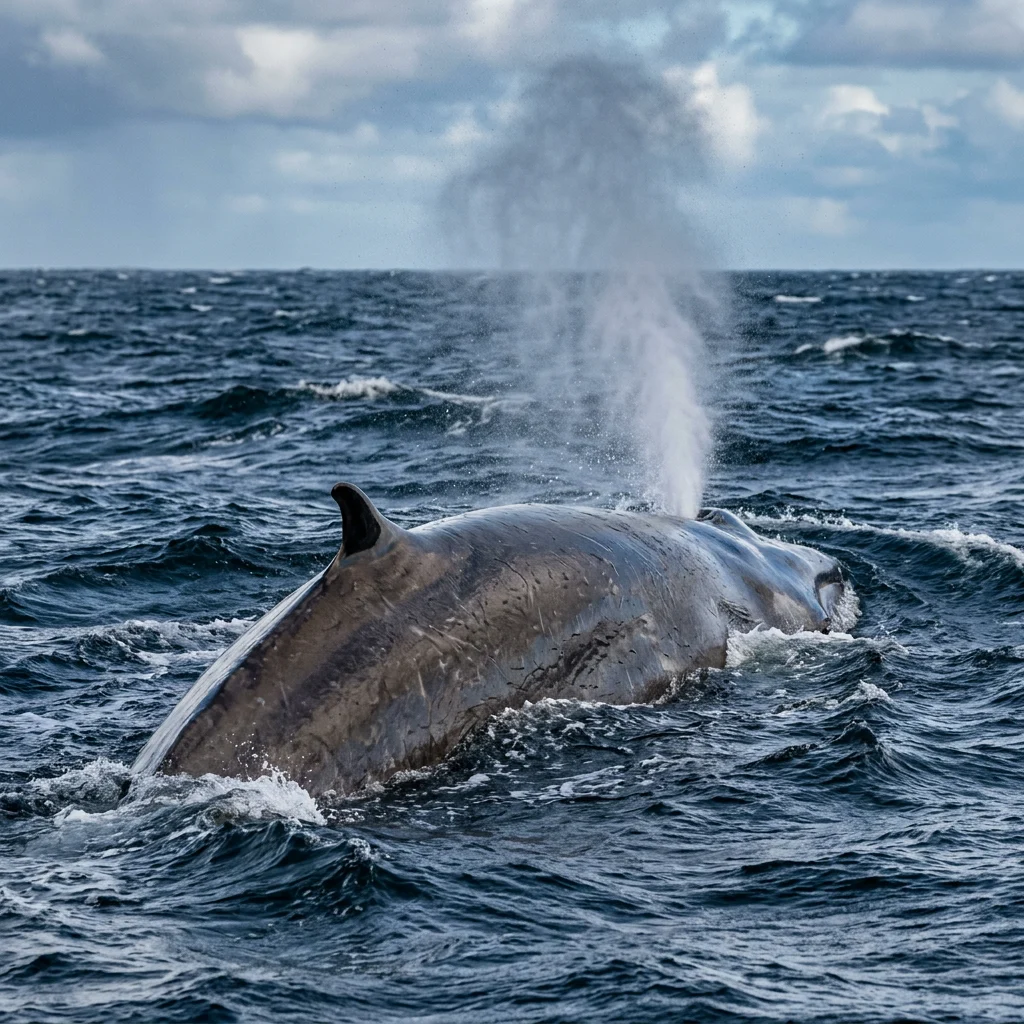
A summary of the main species.
| Whale | Where in the Atlantic | Status |
|---|---|---|
| Blue whale | Gulf of St Lawrence, Azores, Iceland | Endangered |
| Fin whale | Widespread, temperate to sub-Arctic | Vulnerable |
| Humpback | Gulf of Maine to Iceland; breeds in Caribbean | Least Concern |
| North Atlantic right whale | US and Canadian east coast | Critically Endangered |
| Minke whale | Widespread | Least Concern |
| Sperm whale | Deep water: Azores, Dominica, Norway | Vulnerable |
| Orca | Norway, Iceland, Strait of Gibraltar | Data Deficient |
| Pilot whales | Long-finned north; short-finned south | Least Concern |
| Beluga, narwhal, bowhead | Arctic Atlantic, Greenland, Svalbard | Varies |
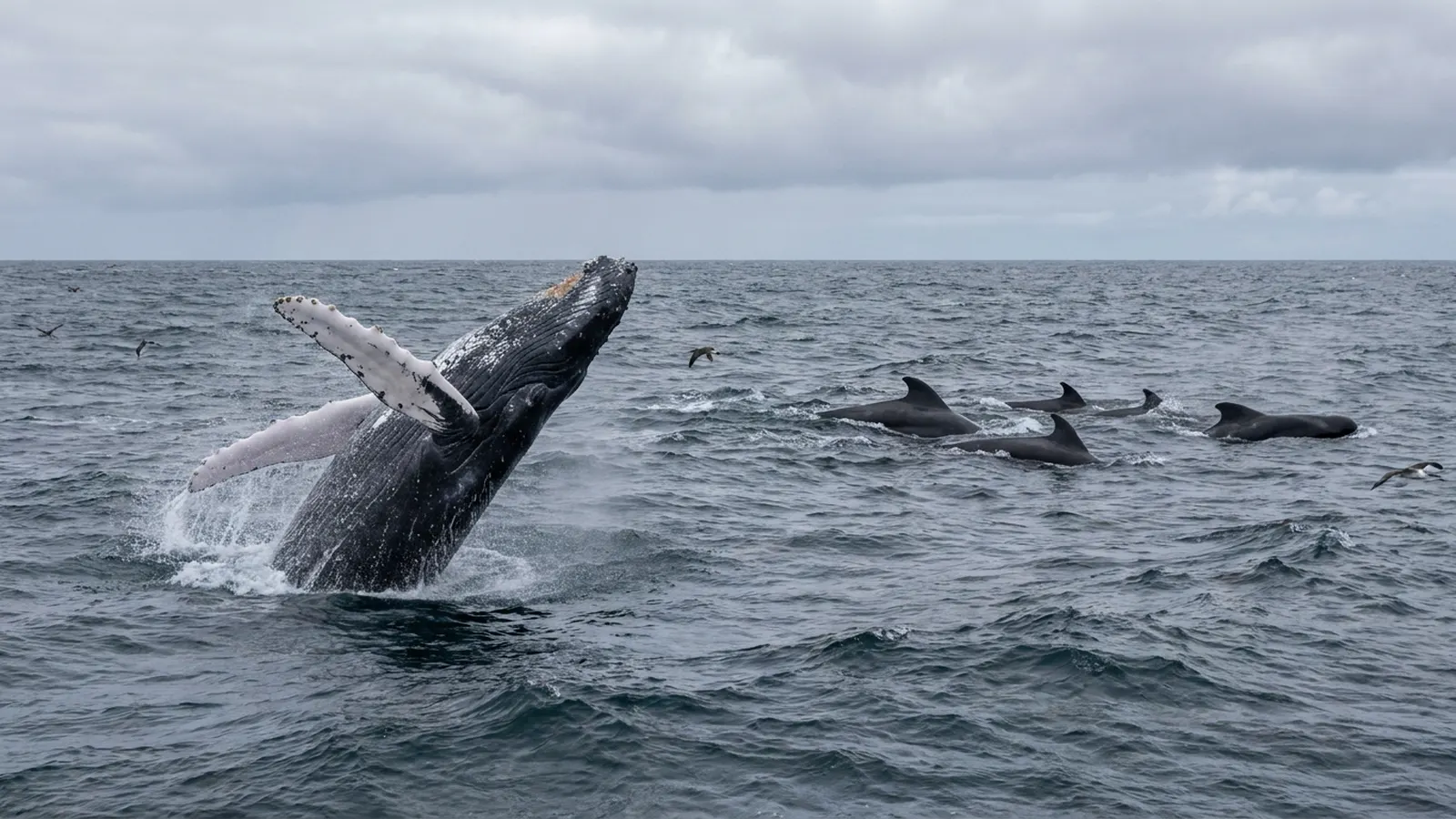
Why does the Atlantic have so many kinds of whale?
The Atlantic is the second-largest ocean, covering about 85 million square kilometres, or roughly 106 million including its marginal seas. More importantly for whales, it runs almost from pole to pole. Its northern end opens into the Arctic Ocean through the waters around Greenland, Iceland and Svalbard, and its southern end merges with the Southern Ocean around Antarctica. In between lie cold, productive shelf seas, warm tropical waters, deep basins and the Mid-Atlantic Ridge. That spread of habitats is why the same ocean holds ice-adapted narwhals and bowheads in the far north, Rice’s whales in the warm Gulf of Mexico, and Antarctic blue and minke whales around South Georgia.
It helps to think of the Atlantic’s whales in four broad groups. The Arctic Atlantic, from Baffin Bay and Greenland to Svalbard and the Barents Sea, is home to belugas, narwhals and bowheads all year. The temperate North Atlantic, from the US East Coast and Canada to Iceland, Norway, Britain and the Bay of Biscay, is the summer feeding ground for humpback, fin, sei, minke, blue and North Atlantic right whales, with sperm whales, long-finned pilot whales and beaked whales offshore. The tropical Atlantic and Caribbean hold breeding humpbacks in winter, resident sperm whales around islands such as Dominica, short-finned pilot whales, Bryde’s whales and the Gulf of Mexico’s Rice’s whale. The South Atlantic has southern right whales off Argentina, Brazil and South Africa, humpbacks that breed off Brazil and West Africa, and Antarctic species that feed in the cold waters of the far south.
Many of these whales migrate between those zones. Humpbacks that feed off New England, eastern Canada, Greenland, Iceland and Norway in summer travel to the Caribbean, especially the banks north of the Dominican Republic, to breed in winter, and a smaller breeding group uses the waters around Cape Verde. North Atlantic right whales move between feeding areas from Cape Cod Bay to the Gulf of St Lawrence and their calving grounds off Georgia and Florida. In the south, humpbacks travel between Antarctic feeding grounds and coastal breeding areas off Brazil and Africa. So the answer to “are there whales in the Atlantic?” changes with the season as well as the place.
Are there whales off the US East Coast?
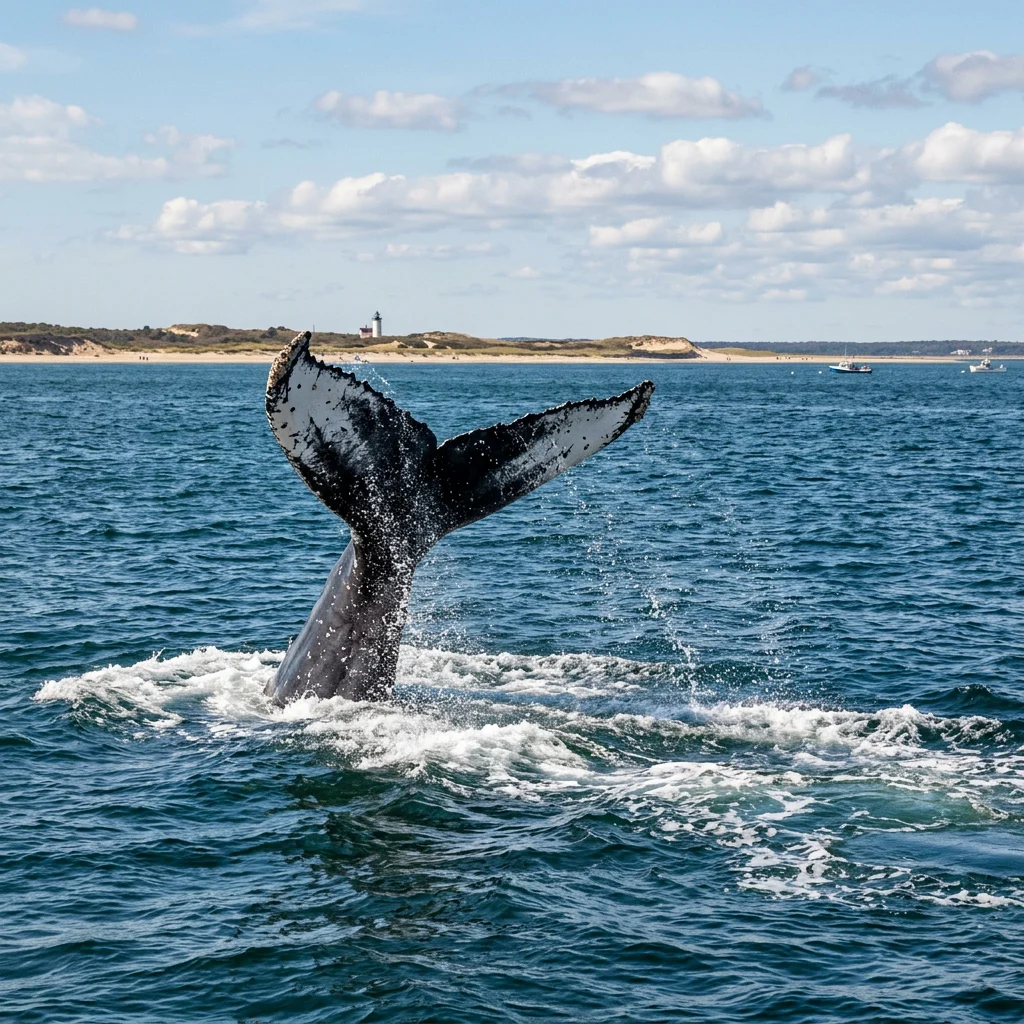
Yes, all year in some places.
Humpbacks, fin and minke whales feed in the Gulf of Maine and around Stellwagen Bank each summer, and juvenile humpbacks now winter off Virginia and North Carolina. The North Atlantic right whale migrates between New England and Canadian feeding grounds and its only known calving grounds off Georgia and north-east Florida. Sperm whales and beaked whales live along the continental shelf edge, and the Gulf of Mexico has its own endangered Rice’s whale, estimated at about 50 animals and likely fewer than 100.
How many North Atlantic right whales are left?
The North Atlantic right whale is the Atlantic’s most endangered large whale. The latest official estimate, released in October 2025 by the New England Aquarium and NOAA, put the population at 384 whales in 2024, give or take about ten, a rise of 2.1 percent from a revised figure of 376 for 2023. That is good news after a decade of decline, but the species remains critically endangered. In 2024 alone researchers recorded five right whale deaths, 16 new entanglements and eight vessel strikes, and entanglement in fishing gear and collisions with ships remain the two leading causes of serious injury and death.
Right whales are slow, feed near the surface and live close to some of the busiest coasts in the world, which makes them vulnerable. Their main feeding areas include the Bay of Fundy, the Gulf of Maine and Cape Cod Bay, and in recent years many have shifted into the Gulf of St Lawrence as their copepod prey has moved with warming water. Their only known calving grounds are off Georgia and north-east Florida. The United States introduced seasonal vessel speed restrictions along the East Coast in 2008 and bans gillnets in the southeastern calving area for five months from 15 November each year, while Canada has added its own speed limits and fishing closures in the Gulf of St Lawrence. The species’ history explains its rarity: it was the original “right” whale to hunt, and colonial records include one report of 29 whales killed in Cape Cod Bay in a single day in January 1700.
Which whales live in the deep Atlantic?
Far from the coast, the Atlantic’s continental slopes, canyons and island chains support deep-diving toothed whales. Sperm whales are found from Norway and the Azores to the Caribbean and the South Atlantic. Around Dominica, in the Lesser Antilles, fewer than 500 sperm whales from an estimated 35 family units spend much of their time, and in November 2023 the government announced a reserve of about 800 square kilometres off the island’s west coast to protect their nursing and feeding grounds, while still allowing sustainable artisanal fishing and moving shipping traffic away from the whales.
The beaked whales are the Atlantic’s least-known cetaceans. Cuvier’s, Sowerby’s, True’s, Gervais’ and Blainville’s beaked whales all occur in Atlantic waters, but most are seen only rarely because they spend long periods at depth and surface briefly. The northern bottlenose whale lives only in the North Atlantic, in deep, cold water from the Davis Strait and Labrador Sea to the Greenland and Barents seas, ranging south to Nova Scotia. A population of about 164 animals lives in the Gully, a large submarine canyon east of Nova Scotia, and is listed as endangered under Canada’s Species at Risk Act.
The Gulf of Mexico has its own whale. The Rice’s whale, a baleen whale formerly treated as a population of Bryde’s whale, was shown in 2021 to be genetically and physically distinct, with genetic differences from Bryde’s whales as large as those between fin and blue whales. NOAA listed it as endangered in 2019. The most recent abundance estimate, from surveys in 2017 and 2018, was about 50 individuals, and NOAA says there are likely fewer than 100. It is thought to live nowhere else, mostly along the continental shelf break in the north-eastern Gulf, which places it in an area of heavy oil and gas activity and shipping.
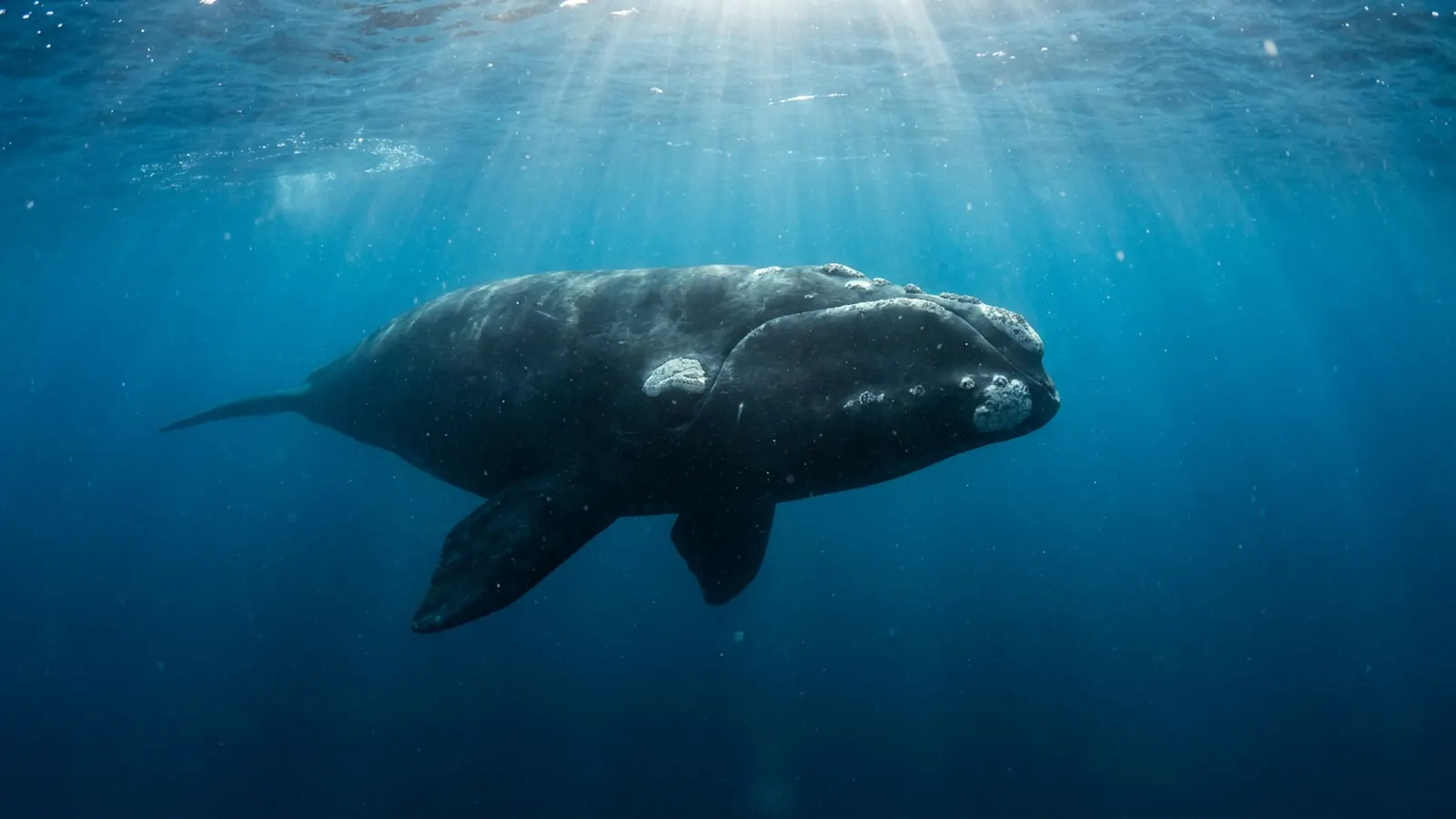
Which whales live in the South Atlantic?
The South Atlantic is often left out of the question, but it holds some of the ocean’s best whale-watching. Southern right whales come close to shore to breed and calve in winter off Argentina’s Península Valdés, southern Brazil and South Africa. Between about June and October more than 100 whales visit the Hermanus area alone, and they are increasingly recolonising coasts further north in South Africa. Humpbacks breed off Brazil’s Abrolhos Bank region and along West and southern Africa, and the large rorquals, including fin, sei and Antarctic minke whales, feed in the cold, productive waters towards the Southern Ocean.
Smaller toothed whales are common too. Killer whales range from the Antarctic to the tropics, and off Argentina some individuals are famous for deliberately stranding on beaches to catch sea lion pups. Long-finned pilot whales occur in the cooler southern waters, and many dolphin species, from dusky dolphins to the Atlantic spotted dolphin, round out the cetacean fauna.
What happened to Atlantic gray whales?
They were hunted out centuries ago.
Gray whales lived on both sides of the North Atlantic until roughly the 1600s–1700s, likely eliminated by coastal whaling. Remarkably, single gray whales have been seen off Israel and Spain in 2010, Namibia in 2013, and the US East Coast in 2023–2024, probably wanderers from the Pacific travelling through ice-free Arctic waters. See gray whale feeding.
Each sighting has been documented carefully. A single gray whale was photographed off the Israeli coast on 9 May 2010, and the same animal later appeared off Spain. Another was confirmed at Walvis Bay, Namibia, in May 2013; photographs showed it was a different individual from the Mediterranean whale. One was seen off Florida in December 2023, and in early 2024 New England Aquarium scientists photographed a gray whale about 30 miles south of Nantucket, believed to be the same animal. Researchers think these whales most likely crossed from the North Pacific through Arctic waters when sea ice was at a low, which would make them a sign of how quickly a warming Arctic can reconnect the two oceans.
How did whaling change the Atlantic?
Commercial whaling began in the Atlantic. Basque whalers hunted right whales in the Bay of Biscay from at least the 11th century; a measure of 1059 regulated whale meat in the market of Bayonne, and by the later Middle Ages up to 49 ports along the coast from the French Basque country to Cape Finisterre had whaling stations. Lookouts in stone towers on the headlands watched for the whales’ winter migration. From around the 1530s the Basques crossed the ocean to the Strait of Belle Isle between Newfoundland and Labrador, where Red Bay became a major whaling harbour; there they took mainly bowhead whales. The Bay of Biscay hunt faded in the early 18th century as the whales themselves disappeared.
Later whaling fleets from England, the Netherlands and New England followed. Nantucket and New Bedford became the centres of American sperm whaling, and the North Atlantic gray whale disappeared altogether, probably by the late 1600s or early 1700s. In the 20th century, industrial whaling moved south. At South Georgia, in the South Atlantic, whalers killed 42,698 blue whales between 1904 and 1971. The western South Atlantic humpback population, hunted from about 1830, fell to an estimated 440 animals by 1958.
Recovery since the international ban on commercial whaling took effect in 1986 has been uneven but real. A 2019 study led by Alex Zerbini estimated that about 25,000 humpbacks now live in the western South Atlantic, around 93 percent of their pre-whaling numbers. Blue whales are also returning to South Georgia: dedicated ship surveys there logged only a single blue whale sighting between 1998 and 2018, but a survey in February 2020 recorded 58. Not every species has bounced back. The right whale is still in danger, and the Atlantic gray whale never returned.
What threatens whales in the Atlantic?
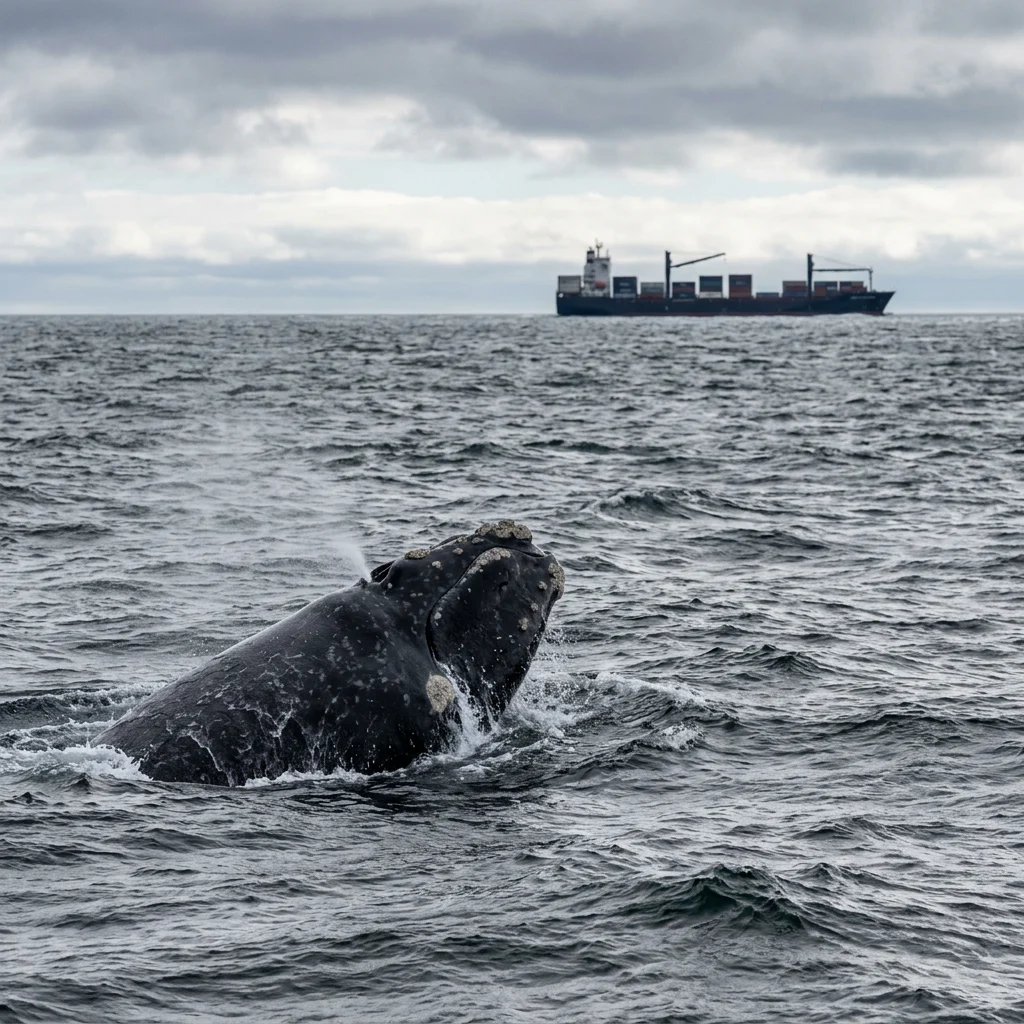
Busy shipping lanes and fishing gear.
The North Atlantic is one of the most industrialised oceans. Vessel strikes and entanglement in fixed fishing gear, such as lobster and crab lines, are the leading causes of death for North Atlantic right whales. Ocean noise, pollution and shifting prey due to warming waters also affect many species. Seasonal speed limits and gear changes are among the main protections. See where baleen whales are found.
Humpbacks have their own warning signs. Since January 2016 NOAA has tracked an unusual mortality event, with elevated numbers of dead humpbacks along the Atlantic coast from Maine to Florida. Of the 129 whales examined in full or in part by July 2025, about 45 percent showed evidence of human interaction, either a vessel strike or entanglement. The event shows that even a species listed as Least Concern globally can face serious local pressures in a crowded ocean.
When and where should you look for Atlantic whales?
Timing matters more than location. In the North Atlantic, the main feeding season runs from late spring to early autumn, when humpback, fin and minke whales gather off Cape Cod and Stellwagen Bank, in the Bay of Fundy, the Gulf of St Lawrence, Iceland and northern Norway. Late autumn and winter in northern Norway is the time for orcas and humpbacks following herring into the fjords. The breeding season in the Caribbean runs through the northern winter, when humpbacks sing and court on the Silver Bank north of the Dominican Republic, while sperm whales around Dominica and the Azores can be seen for much of the year.
In the South Atlantic the seasons are reversed. Southern right whales are best seen in the southern winter and spring at Península Valdés and Hermanus, which also allows good land-based watching from cliffs and shorelines. Wherever you go, choose operators who follow local whale-watching rules on approach distances and speed. Right whales in US waters are protected by a 500-yard approach limit, and disturbance from boats is one of the pressures that responsible whale-watching aims to keep low.
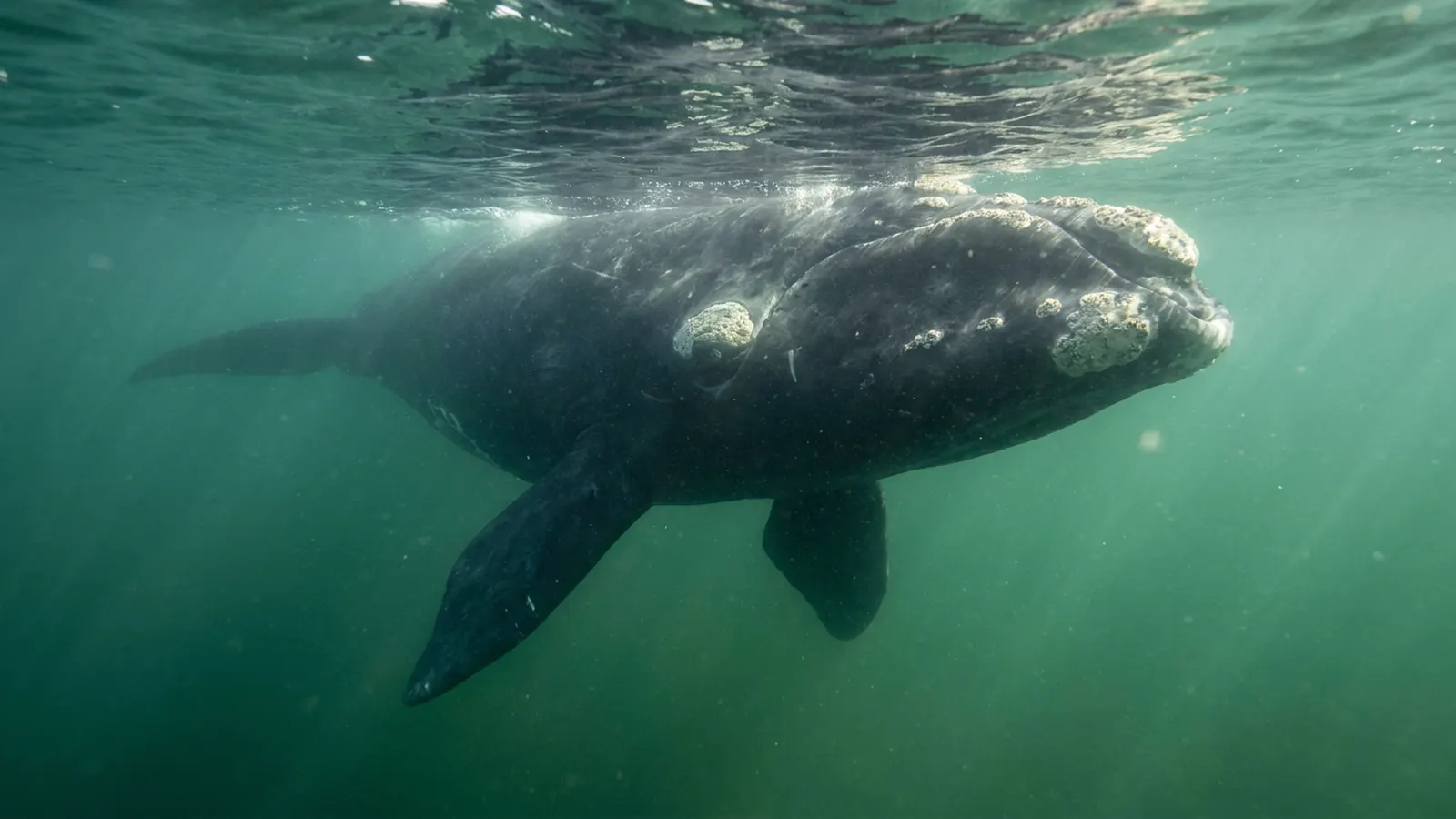
Are there whales in the Atlantic Ocean?
Yes, dozens of species, including blue, humpback, fin, right and sperm whales.
Are there blue whales in the Atlantic?
Yes, notably in the Gulf of St Lawrence, around Iceland and the Azores.
Are there orcas in the Atlantic?
Yes, from Norway and Iceland to the Strait of Gibraltar and the Caribbean.
Where can I see whales in the Atlantic?
Cape Cod, the Gulf of St Lawrence, Iceland, the Azores and the Dominican Republic are top spots.
Are there gray whales in the Atlantic?
They went extinct there by the 1700s; only rare wanderers appear now.
What is the rarest whale in the Atlantic?
The Rice’s whale of the Gulf of Mexico and the North Atlantic right whale.
How many North Atlantic right whales are left?
About 384 in 2024, according to the estimate released in October 2025, up slightly from 376 in 2023.
Are there blue whales in the South Atlantic?
Yes. Antarctic blue whales are returning to South Georgia, where a 2020 survey recorded 58 sightings after decades of near absence.
- North Atlantic Right Whale Consortium (2025). Annual population estimate: 384 whales in 2024.
- NOAA Fisheries. Species directory: whales, dolphins and porpoises. fisheries.noaa.gov.
- Scheinin, A. P. et al. (2011). Gray whale (Eschrichtius robustus) in the Mediterranean Sea: anomalous event or early sign of climate-driven distribution change? Marine Biodiversity Records 4: e28.
- IUCN Red List of Threatened Species. Species assessments for Cetacea (Cetacean Specialist Group).
- New England Aquarium (21 October 2025). North Atlantic right whale population estimate for 2024: 384 (+10/−9).
- NOAA Fisheries. Frequently asked questions: Rice’s whales.
- Zerbini, A.N. et al. (2019). Assessing the recovery of an Antarctic predator from historical exploitation. Royal Society Open Science.
- Calderan, S.V. et al. (2020). South Georgia blue whales five decades after the end of whaling. Endangered Species Research.
- Irish Whale and Dolphin Group (2013). Second gray whale for the Atlantic (Walvis Bay, Namibia).
Blane Perun has been exploring Earth’s oceans and marine life for over 25 years. Founder of TheSea.Org in 1999, underwater photographer, coral aquaculture pioneer, and explorer of 80+ countries.
About Blane Perun → More on Whales →