Jacques Cousteau and Lake Tahoe — Fact-Checking “The World Isn’t Ready for What’s Down There”
There is no reliable evidence that Jacques Cousteau ever dived Lake Tahoe or said “the world isn’t ready for what’s down there”. The story does not appear in his films, books, expedition records or in reporting from his lifetime, and no original source for the quote has ever been produced. It is a local legend, usually told alongside claims that the lake’s cold, deep water preserves bodies. Tahoe really is deep and cold, but the famous Cousteau line is almost certainly invented.
Every few months a version of this story goes viral: Jacques Cousteau dived to the bottom of Lake Tahoe, saw something so disturbing that he never released the footage, and told reporters, “The world isn’t ready for what’s down there.” Depending on who tells it, “what’s down there” is a row of perfectly preserved bodies dumped by the mob, a monster, or simply something too terrible to describe. It is a great campfire story. It is also, as far as anyone has been able to show, untrue.
I run a website that quotes Cousteau a lot, and I care about getting those quotes right. So I wanted to set out what we actually know, what we do not, and why a story like this sticks so well to a lake like Tahoe.
What the legend says
The core of the story is always the same: Cousteau dived Tahoe, came up shaken and said the world was not ready for what lay below.
The details change with each retelling. Some versions say he was filming for a documentary in the 1970s and the footage was locked away. Others say he dived as a favour to local authorities. The most popular modern version ties the quote to the claim that Lake Tahoe holds the bodies of people murdered by organised crime in the heyday of the Nevada casinos, perfectly preserved by the cold water and standing upright on the bottom. Some versions add that the lake contains a monster, usually called “Tessie”, or a secret network of underwater caves linking it to other lakes. The story has spread through tourist boat tours, social media posts and online articles, often presented as an amazing fact rather than a legend.
Is there any record of Cousteau diving Tahoe?
I have found none, and neither has anyone who has looked seriously.
Cousteau’s expeditions are unusually well documented. His television series, films and books list where Calypso and his teams went and what they filmed, and his biographers have gone through his life in detail. A dive in Lake Tahoe, a high mountain lake on the California–Nevada border, would have required moving divers and equipment far inland, which the Cousteau team did occasionally, for example to Lake Titicaca in the Andes and up the Amazon and Mississippi rivers. Those expeditions produced films. There is no Tahoe film, no Tahoe chapter in his books and no contemporary newspaper report of a Cousteau dive there. The quote itself has no date, no named reporter and no original publication. In my experience, a quote with no source and a perfect punchline is almost always too good to be true.
It is possible, of course, that Cousteau visited Tahoe privately at some point in his long life, as a tourist might. But there is no evidence of even that, and certainly none of a deep dive or a dramatic statement.
Why Lake Tahoe makes the story believable
Legends attach to places that seem to deserve them, and Tahoe has the right ingredients.
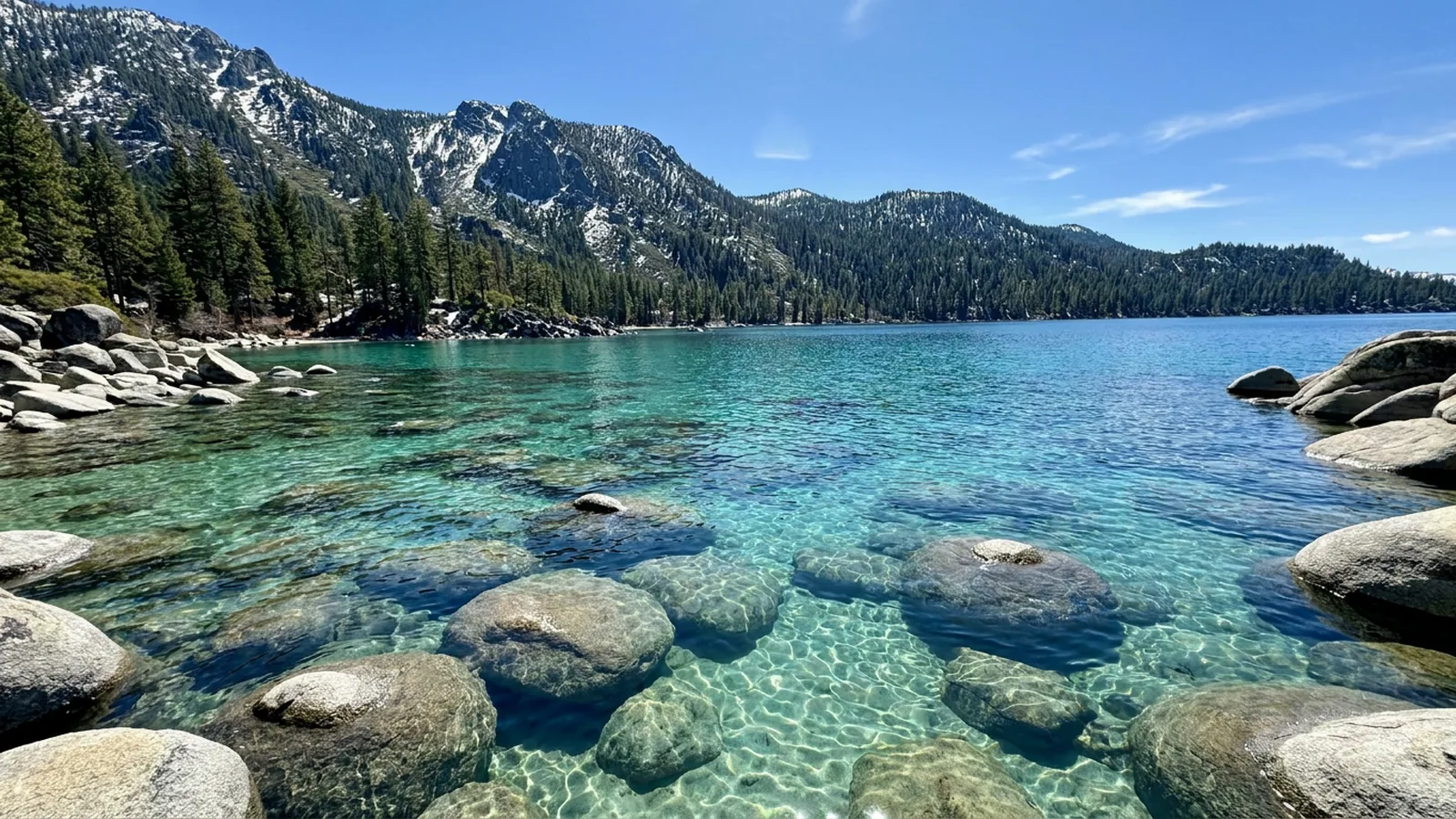
Lake Tahoe is enormous and deep. Its maximum depth is about 1,645 feet (501 m), making it the second-deepest lake in the United States after Crater Lake in Oregon, and one of the deepest in the world. It sits at about 6,200 feet above sea level, which complicates diving because divers must use altitude-adjusted decompression procedures. Its water is famously clear, so clear that scientists from the University of California, Davis have measured how far down a white disc stays visible every year since the late 1960s, tracking how pollution and runoff have reduced clarity over the decades. That clarity makes the deep blue below look all the more mysterious.
The lake’s surroundings add to the mood. The Nevada shore has had casinos since the mid-20th century, with the usual rumours of organised crime that went with them. The Donner Party tragedy of 1846–47 happened nearby. Put together a very deep, very cold, very clear lake, a famous explorer and a history of mobsters, and the story almost writes itself.
Do bodies really stay preserved in Lake Tahoe?
This part of the legend has a real scientific basis, though it is greatly exaggerated.
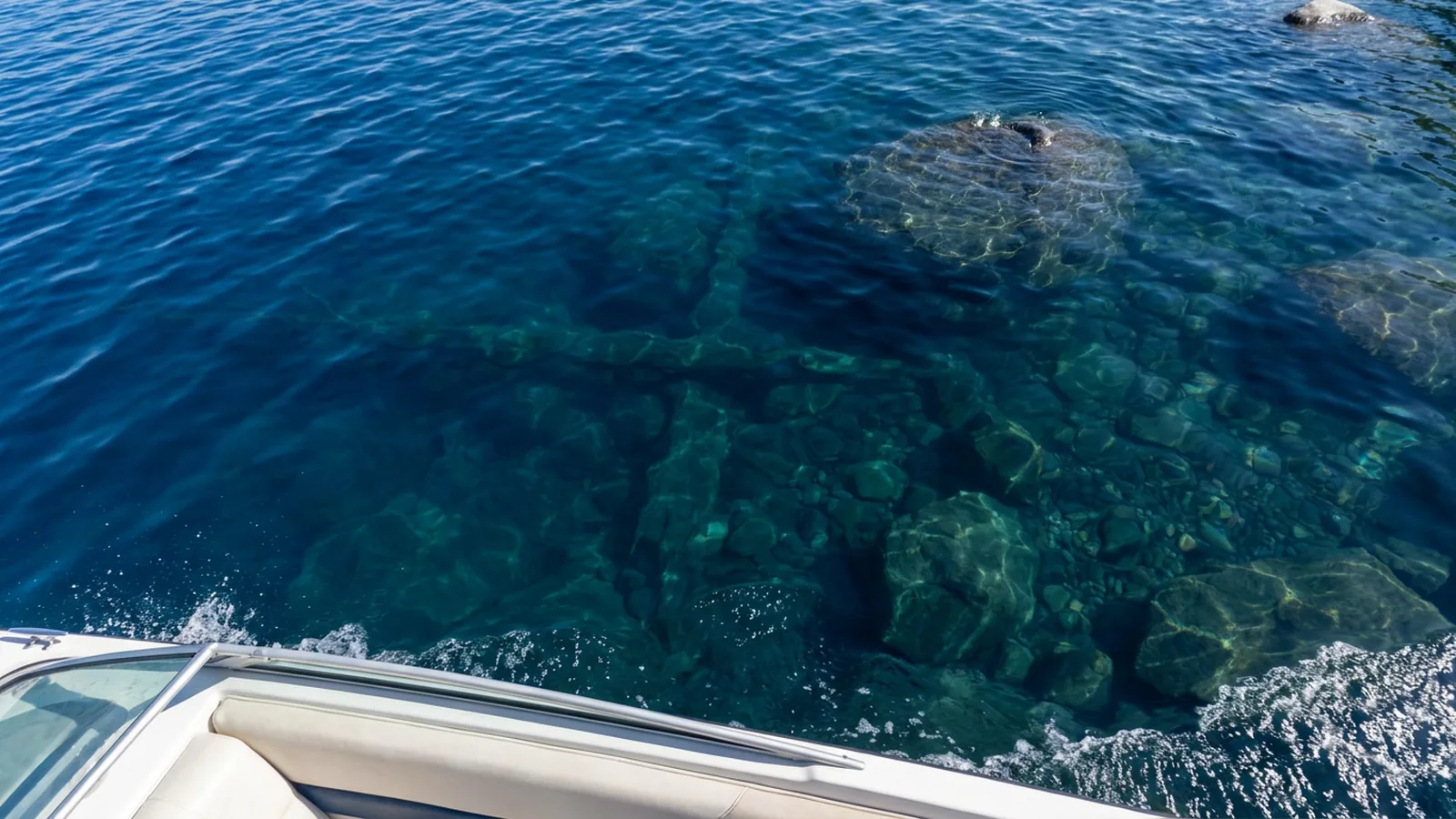
When a person drowns in warm water, bacteria in the body produce gases as it decomposes, and after some days the body usually becomes buoyant and floats to the surface. In very cold water, that process slows dramatically. Tahoe’s deep water stays at around 4 to 5 °C (39 to 41 °F) all year, and at great depth the pressure also compresses any gas that does form. As a result, bodies of people who drown in the deep parts of the lake often do not resurface, and some have been recovered years later in better condition than would be expected elsewhere. Cold, deep lakes such as Lake Superior have similar reputations; there is an old saying on the Great Lakes that “Superior never gives up her dead”.
That is a long way from rows of upright mob victims. There is no evidence of a mass dumping ground, and recovered bodies are generally the result of drownings and accidents. The real story is sad rather than sinister: people who drown in Tahoe are often never found, which is hard on families and one reason local authorities stress cold-water safety so strongly.
| Claim | What the evidence says |
|---|---|
| Cousteau dived Lake Tahoe | No record in his films, books, expedition logs or contemporary press |
| He said “the world isn’t ready for what’s down there” | No original source, date or reporter; almost certainly invented |
| Tahoe is very deep and cold | True: about 1,645 ft deep, with deep water near 4–5 °C |
| Bodies may not resurface | Broadly true for deep, cold water, due to slowed decomposition and pressure |
| The lake is full of preserved mob victims | No evidence |
| A monster called Tessie lives there | Local folklore; no evidence |
Tessie and other lake legends
Like many big lakes, Tahoe has its own monster, Tessie, said to be a large serpentine creature seen occasionally near the surface.
Tessie follows the same pattern as the Loch Ness Monster and Champ in Lake Champlain: a deep, cold lake, a few dramatic sightings, and real explanations involving large fish, waves, boat wakes and floating logs. Tahoe does contain large fish, notably big lake trout, an introduced species that can grow very large in deep, cold water. A big trout rolling at the surface on a calm day, seen at a distance, is just the kind of thing that turns into a monster story. Tessie has become a friendly local mascot rather than a source of fear, which is how many lake monsters end up.
There are also stories of underwater caves connecting Tahoe to other lakes, of a hidden “underwater forest” and of sunken boats from the steamer era. Some of these have a basis: the lake does hold historic wrecks, and in shallower areas near the shore researchers have documented ancient tree stumps rooted on the lake bed, the remains of forests that grew when the water level was much lower centuries ago. That is the kind of real discovery that gets lost when attention goes to invented quotes. For a diver, the genuine sights in Tahoe, the clarity, the granite boulders and the drowned trees, are far more interesting than any ghost story.
How to check a Cousteau quote
Cousteau is one of the most quoted ocean figures in the world, and many lines attributed to him are paraphrases, translations or inventions.
When I check a quote, I look for three things: the original source (a book, film, interview or speech with a date), the original language (Cousteau often spoke and wrote in French), and whether the wording appears before the internet era. Real Cousteau quotes, such as his line that people protect what they love, can usually be traced to a book or interview, even if the exact wording varies in translation. The Tahoe quote fails all three tests. It has no source, no French original and, as far as I can find, no appearance in print before the internet era, when it began circulating on forums and social media. Our pages on Jacques Cousteau quotes in French and scuba diving quotes with sources give the original wording and origin of the lines we can verify.
None of this makes Lake Tahoe less impressive. It is one of the clearest, deepest and most beautiful lakes in North America, and its real story, of scientists measuring its clarity year after year and campaigning to protect it, is worth more attention than a made-up quote. For other legends that have grown around real places, see our hub on sea myths and legends, and for where Cousteau really did dive, see Cousteau’s top dive sites.
Did Jacques Cousteau really dive Lake Tahoe?
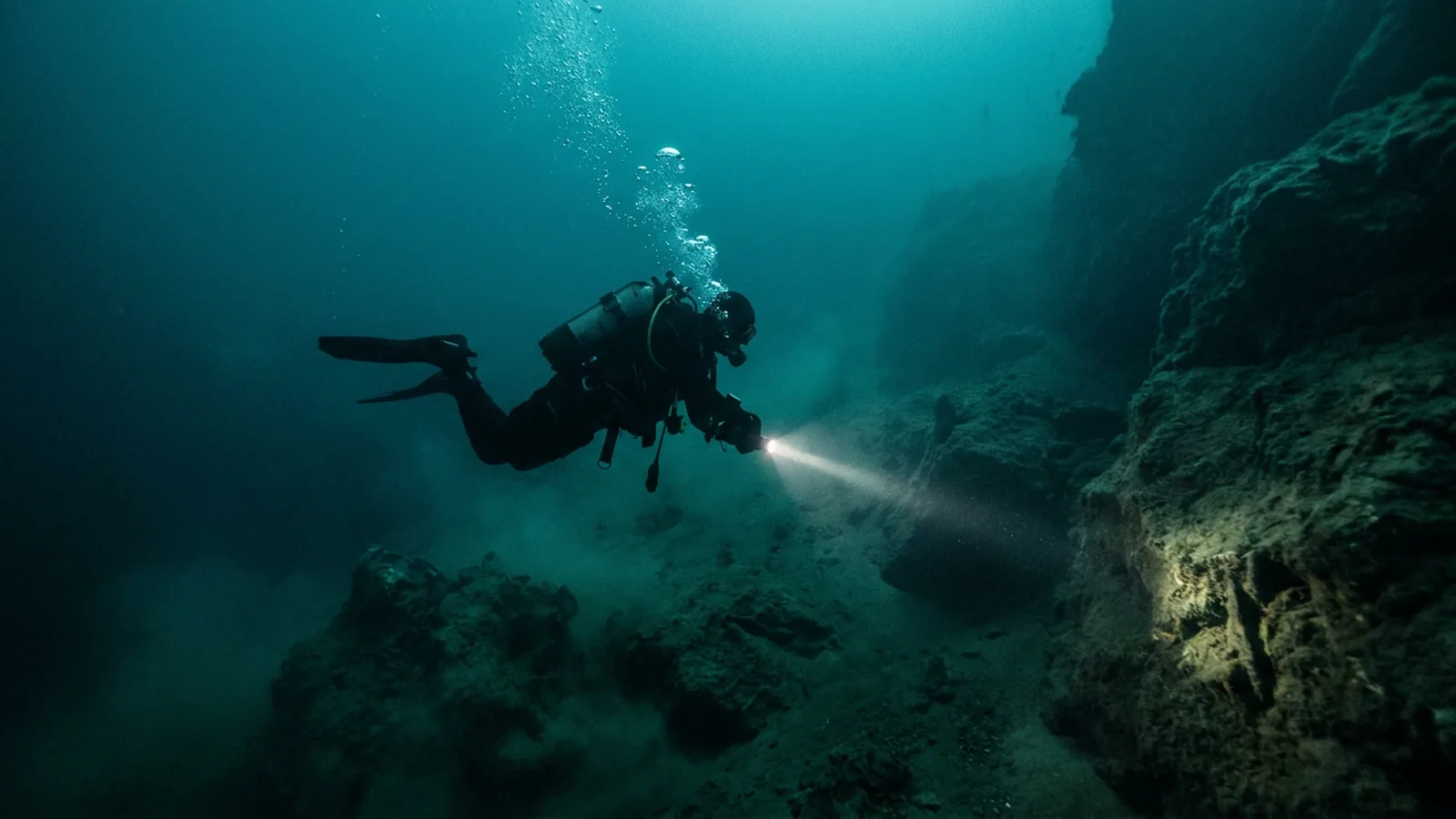
There is no reliable record that he did. No film, book, expedition log or contemporary news report mentions a Cousteau dive in Lake Tahoe.
Did Cousteau say “the world isn’t ready for what’s down there”?
No original source for the quote has ever been found. It is best treated as part of a local legend.
Are there bodies preserved in Lake Tahoe?
Drowning victims in very deep, cold water may not resurface and can be found later in relatively preserved condition, but there is no evidence of the mass mob dumping ground described in the legend.
How deep is Lake Tahoe?
About 1,645 feet (501 metres) at its deepest point, making it the second-deepest lake in the United States.
Is there a monster in Lake Tahoe?
Local folklore tells of “Tessie”, but there is no evidence for it. Large lake trout and waves are the likeliest explanations for sightings.
Where did Cousteau actually dive in lakes?
His team filmed at Lake Titicaca in the Andes, among other inland expeditions, which were documented in his television series.
- UC Davis Tahoe Environmental Research Center, Tahoe: State of the Lake Report (annual), depth, temperature and clarity.
- US Geological Survey, Lake Tahoe bathymetry and facts.
- Matsen, B. (2009). Jacques Cousteau: The Sea King. Pantheon (expedition history).
- The Cousteau Society, filmography and expedition list.
Blane Perun has been exploring Earth’s oceans and marine life for over 25 years. Founder of TheSea.Org in 1999, underwater photographer, coral aquaculture pioneer, and explorer of 80+ countries.
About Blane Perun → More on Jacques Cousteau →