Sea Nymphs in Greek Mythology — Nereids, Oceanids and Naiads, and Who Ruled Which Water
A sea nymph is a minor female goddess of the sea. Greek myth has three main groups of water nymphs: the Nereids, the fifty daughters of the sea god Nereus who live in the Mediterranean; the Oceanids, the three thousand daughters of the Titans Oceanus and Tethys, linked to the world ocean, springs and clouds; and the Naiads, nymphs of fresh water such as rivers, springs and fountains. Famous sea nymphs include Thetis, Amphitrite, Galatea and Calypso.
Nymphs are everywhere in Greek mythology. They are the spirits of particular places: a spring, a mountain, a tree, a stretch of coast. They are not immortal in quite the way the Olympian gods are, though they live for an immensely long time, and they are tied to the place they belong to. The water nymphs are the largest and most varied group, and the sea nymphs among them are the ones sailors cared about most. They were thought to calm the sea, guide ships and rescue the drowning, and their images filled Greek and Roman art.
Sorting out which nymph belongs to which group can be confusing, because ancient writers did not always agree. The basic division, though, is clear, and it follows the type of water.
The Nereids: nymphs of the Mediterranean
The Nereids are the true sea nymphs. They are the fifty daughters of Nereus, the kindly old man of the sea, and Doris, a daughter of Oceanus.
They lived with their father in a shining palace in the depths of the Aegean Sea, and they were pictured as beautiful young women riding on dolphins, seahorses and tritons, often carrying shells, garlands or wreaths. Their job was to look after sailors and fishermen, calm the waves and help those in danger. In the Iliad, when Thetis cries out in grief for her son Achilles, the Nereids rise from the sea to mourn with her, and Homer gives a long list of their names. Hesiod gives his own list of fifty in the Theogony, and many of the names describe the sea: Galene means calm, Kymothoe swift wave, Glauke the blue-grey of sea water, Thalia blooming, Psamathe sand.
The Nereids were honoured at altars along the coasts, and a monumental tomb from Xanthos in ancient Lycia, now in the British Museum and known as the Nereid Monument, has statues of women in wind-blown dresses standing on sea creatures between its columns. They have long been interpreted as Nereids.
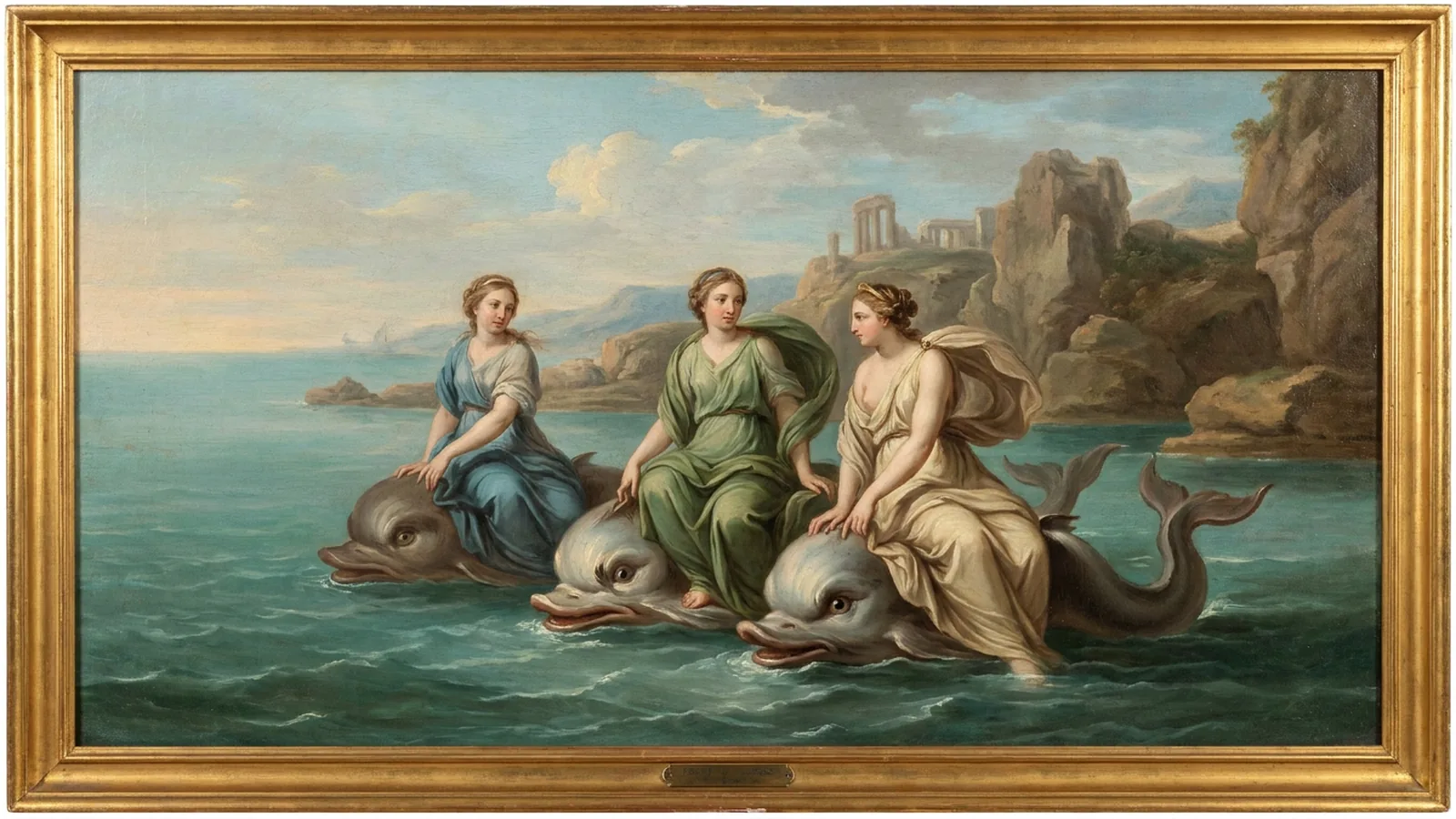
Famous Nereids: Thetis, Amphitrite and Galatea
A few Nereids have stories of their own, and they are among the best known figures in Greek myth.
Thetis is the most important. Both Zeus and Poseidon wanted to marry her until the Titan Prometheus revealed a prophecy that her son would be greater than his father. The gods quickly married her to a mortal, the hero Peleus, and their son was Achilles. Thetis tried to make him immortal, in the best-known version by dipping him in the River Styx and holding him by the heel. She remains his protector throughout the Iliad.
Amphitrite became queen of the sea when she married Poseidon. She was shy and fled to the far west to avoid him, and Poseidon sent his creatures to find her. A dolphin persuaded her to return, and as a reward Poseidon placed the dolphin among the stars as the constellation Delphinus. She is often pictured beside Poseidon in a chariot drawn by sea creatures.
Galatea is known from a love story told by Ovid in the Metamorphoses. The Cyclops Polyphemus loved her, but she loved a young shepherd named Acis. When Polyphemus caught them together he crushed Acis with a boulder, and Galatea turned her dead lover into a river that flows into the sea on the coast of Sicily near Mount Etna.
The Oceanids: daughters of the world ocean
The Oceanids are older and far more numerous. Hesiod says there were three thousand of them, the daughters of the Titans Oceanus and Tethys.
Because Oceanus was the great river believed to circle the whole world, his daughters were spread across all its waters. Some were nymphs of the outer ocean, others of springs, lakes, clouds and even meadows. Hesiod names forty-one and says the rest are too many to count. Some of the Oceanids are important goddesses in their own right. Metis, goddess of wisdom, was the first wife of Zeus and the mother of Athena. Styx was the goddess of the river of the underworld by which the gods swore their most binding oaths. Doris married Nereus and became the mother of the Nereids. Eurynome was the mother of the three Graces, and Clymene was the mother of Prometheus and Atlas in some versions.
Calypso, the nymph who kept Odysseus on her island for seven years, is listed by Hesiod among the Oceanids, though Homer calls her a daughter of Atlas. Her island, Ogygia, was said to be in the middle of the sea, far from any other land.
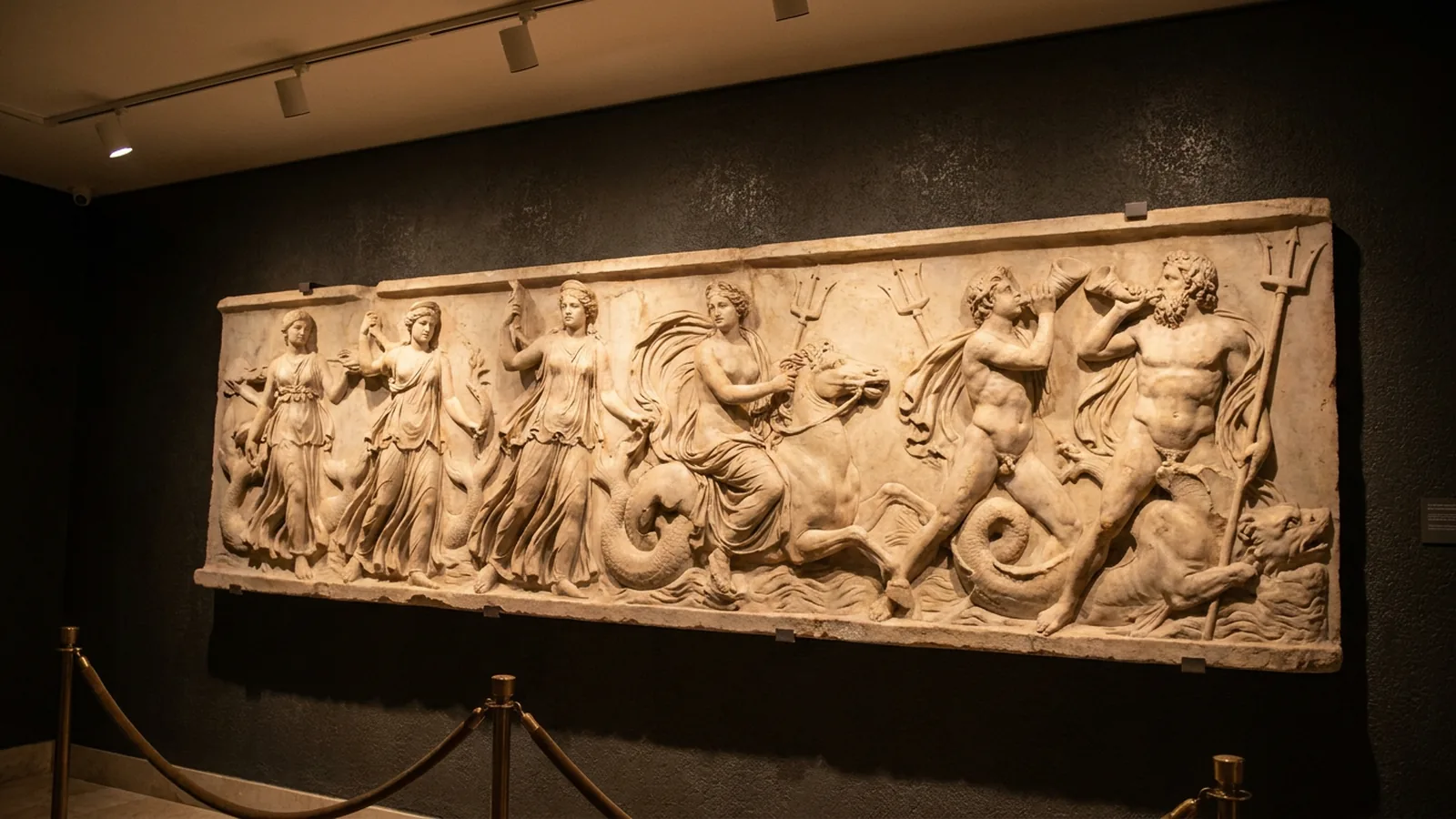
The Naiads: nymphs of fresh water
The Naiads are not sea nymphs, strictly speaking, but they are so often confused with them that they belong in this guide.
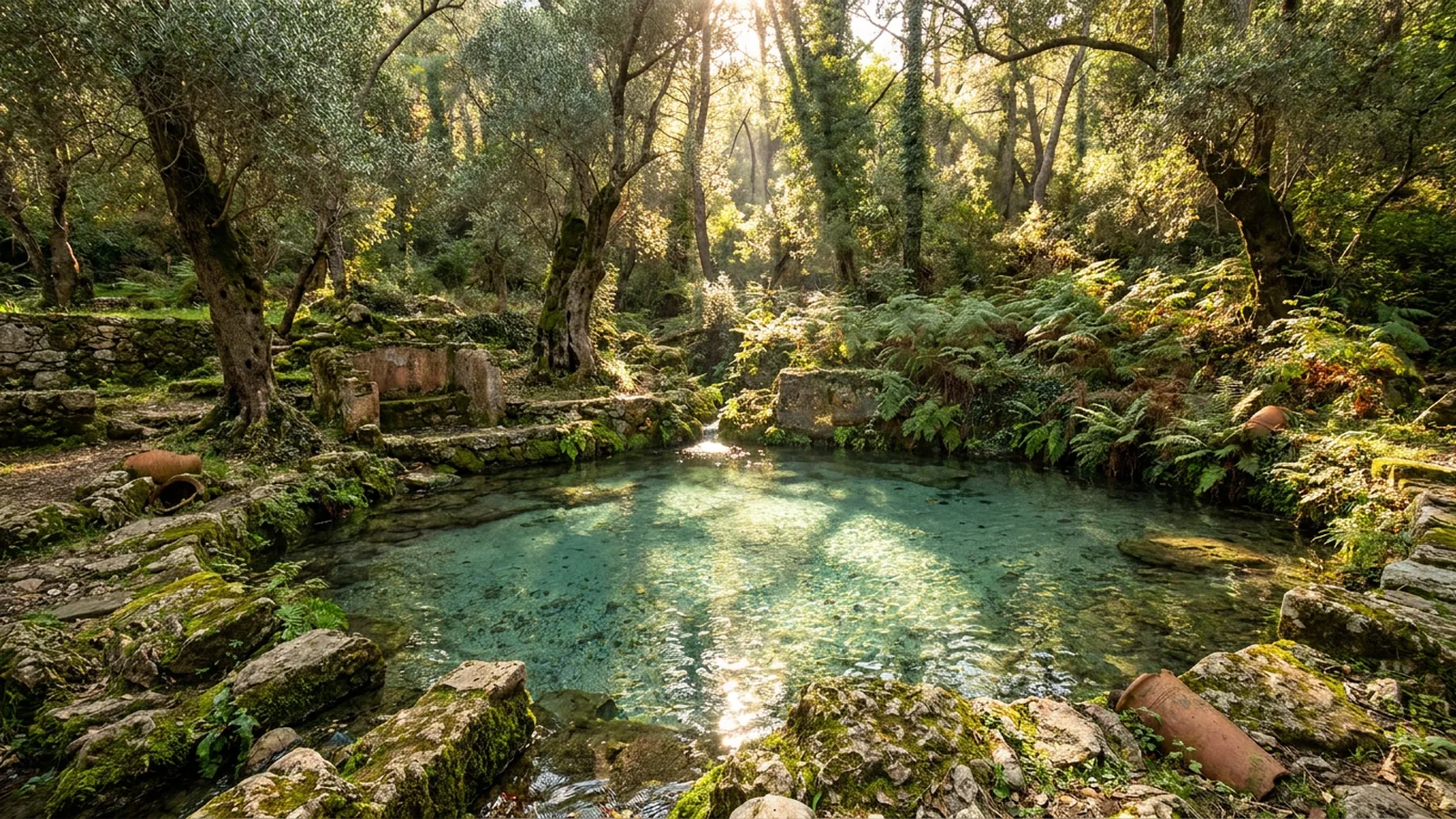
Naiads were the nymphs of fresh water: springs, fountains, wells, streams, rivers, lakes and marshes. They were usually the daughters of river gods, and each was bound to her own spring or stream. If the water dried up, the Naiad was thought to die with it, which gives a sense of how precious fresh water was in a dry country. Many springs had shrines, and offerings were made to their nymphs. Daphne, who was turned into a laurel tree to escape Apollo, was a Naiad, the daughter of a river god. Arethusa was a nymph who fled beneath the sea from Greece to Sicily and emerged as a freshwater spring on the island of Ortygia in Syracuse, where the spring still flows today, a short walk from the harbour.
The distinction between salt and fresh water mattered to the Greeks. Salt water belonged to the sea gods; fresh water belonged to the rivers, and the rivers were the children of Oceanus.
That divide is one I think about a lot as a reef keeper. Fresh water and salt water support completely different communities, and moving an animal from one to the other kills it. Topping up evaporation in a reef tank is done with fresh water, because the salt stays behind, while water changes use mixed salt water; getting those two wrong is one of the quickest ways to crash a system. The Greeks had no chemistry to explain it, but they clearly understood that the two kinds of water were different worlds, and they gave each its own family of spirits.
| Group | Parents | Number | Waters | Famous members |
|---|---|---|---|---|
| Nereids | Nereus and Doris | 50 (some sources 100) | The Mediterranean, especially the Aegean | Thetis, Amphitrite, Galatea, Psamathe |
| Oceanids | Oceanus and Tethys | 3,000 | The world ocean, springs, clouds | Metis, Styx, Doris, Calypso (Hesiod) |
| Naiads | Usually river gods | Countless | Fresh water: rivers, springs, lakes | Daphne, Arethusa |
Sea nymphs versus sirens and mermaids
Sea nymphs are often mixed up with sirens and mermaids, but in Greek myth they are quite different.
The Nereids and Oceanids were goddesses, generally kind to sailors, and they were usually shown with fully human bodies, riding sea creatures rather than having tails themselves. Sirens were dangerous bird-women whose song lured sailors to their deaths. The fish-tailed mermaid is mainly a later European idea that grew partly out of the sirens; we tell that story in sirens vs mermaids. In later art, especially from the Renaissance onward, the lines blurred, and painters sometimes gave Nereids fish tails like tritons. But a Greek sailor praying to the Nereids for a safe voyage would have pictured beautiful young women on the backs of dolphins.
The nymphs also lived on in Greek folklore long after the ancient religion faded. In modern Greek, a fairy or water spirit is a neraida, a word that comes straight from “Nereid”, and village stories into the 20th century told of neraides dancing near springs and the sea.
Where sea nymphs live on today
You can still find the sea nymphs in science, if you know where to look.
When astronomers named the moons of Neptune, the god of the sea in Roman myth, they turned to his family and the nymphs of the sea. Neptune’s moons include Nereid, Galatea, Thalassa, Naiad, Despina, Larissa, Proteus, Triton, Psamathe, Sao, Laomedeia, Halimede and Neso, several of them named after individual Nereids. In biology, the marine bristle worms of the genus Nereis, common on shores and in aquariums, take their name from the Nereids. And the Greek word for nymph itself is used for the young stage of many insects.
I like the Nereids because they are the friendly face of the Greek sea. Poseidon sends storms and monsters; the Nereids calm the water and help sailors home. Anyone who has drifted over a calm reef on a clear day, with sunlight dancing on the sand, can understand why the Greeks imagined fifty young goddesses playing in the shallows. For the rest of the family, see Greek sea gods and goddesses and the Old Man of the Sea, the Nereids’ father.
What is a sea nymph called?
A Nereid, if she belongs to the Mediterranean, or an Oceanid, if she belongs to the great world ocean of Oceanus. Freshwater nymphs are Naiads.
How many Nereids are there?
Fifty, according to Hesiod and most sources, though a few later writers give one hundred.
What is the difference between Nereids and Oceanids?
Nereids are daughters of Nereus and live in the Mediterranean. Oceanids are daughters of Oceanus and Tethys, far more numerous and linked to the world ocean, springs and clouds.
Is Thetis a sea nymph?
Yes. Thetis is a Nereid, one of the daughters of Nereus, and the mother of Achilles.
Are Naiads sea nymphs?
No. Naiads are nymphs of fresh water: springs, rivers and lakes.
Did sea nymphs have fish tails?
Not in classical Greek art, where they had human bodies and rode dolphins and sea monsters. Fish-tailed versions appear mostly in later art.
- Hesiod, Theogony, catalogues of the Nereids and Oceanids.
- Homer, Iliad, Book 18 (the Nereids mourn with Thetis).
- Ovid, Metamorphoses, Book 13 (Galatea, Acis and Polyphemus).
- Larson, J. (2001). Greek Nymphs: Myth, Cult, Lore. Oxford University Press.
- The British Museum, the Nereid Monument from Xanthos (c. 390–380 BC).
Blane Perun has been exploring Earth’s oceans and marine life for over 25 years. Founder of TheSea.Org in 1999, underwater photographer, coral aquaculture pioneer, and explorer of 80+ countries.
About Blane Perun → More Sea Myths & Legends →