Types of Coral Polyps — Hard, Soft and Everything Between
Coral polyps are usually grouped in four ways. By what they build: hard (stony) polyps secrete a limestone skeleton and build reefs, while soft coral polyps don’t. By symmetry: hexacoral polyps (stony corals and relatives) have smooth tentacles in multiples of six, and octocoral polyps (soft corals, sea fans, sea pens) have exactly eight feathery tentacles. By size: aquarists and many reef guides split stony corals into large-polyp stony (LPS) and small-polyp stony (SPS) corals. And by lifestyle: most polyps are colonial, but some corals are a single solitary polyp. A further split is whether the polyp hosts symbiotic algae (zooxanthellate) or not.
All coral polyps share the same basic design — a soft tube with a ring of tentacles around a single mouth, described on the page about the parts of a coral polyp. But within that design there is a lot of variety. Polyps differ in what they build, how many tentacles they carry, how big they are, whether they live alone or in colonies, and whether they farm algae inside them. Those differences decide which corals build reefs, which sway in the current, and which thrive in the deep sea.
Hard polyps and soft polyps
The most important way to sort coral polyps is by what they build: a solid limestone skeleton, or none at all.
Hard or stony coral polyps (the scleractinians) secrete a rigid cup of calcium carbonate, called a corallite, beneath and around themselves. Thousands of these cups fuse into the skeleton of a colony, and over centuries those skeletons accumulate into a reef. Brain corals, staghorn and table corals, boulder corals and pillar corals are all built by hard polyps. The process is explained on the page about how coral is formed.
Soft coral polyps don’t build a solid stony cup. Their colonies are fleshy or leathery, held up by water pressure inside the tissue and stiffened by tiny limestone needles called sclerites. Sea fans and sea whips add a flexible internal axis made largely of protein. Soft corals sway with the current, add colour and shelter to reefs, and dominate some reef areas, but they don’t build reef framework. Learn more on what soft coral is.
Both kinds are true coral polyps — animals in the class Anthozoa — and both catch food with stinging tentacles. What differs is the building material and the result: permanent stone on one hand, flexible living tissue on the other.
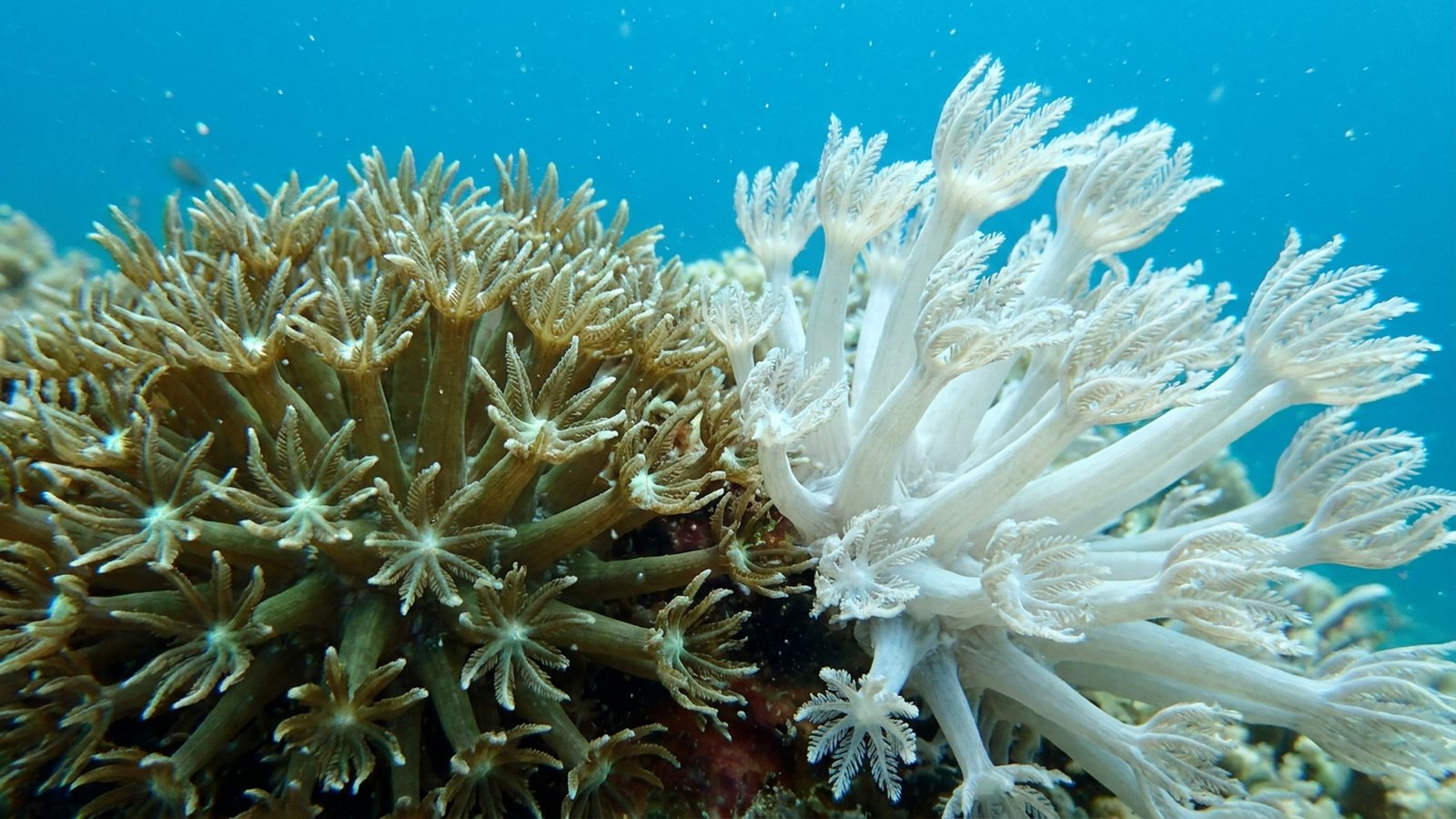
Counting tentacles: hexacorals and octocorals
Biologists split corals into two great branches by the symmetry of their polyps — sixes and eights.
Hexacorallia polyps are built in multiples of six. Their internal partitions (mesenteries) come in sixes, and their tentacles are usually smooth and simple, often numbering six, twelve, twenty-four or more. This branch includes the stony corals, sea anemones, zoanthids, corallimorphs (the “mushroom anemones” of the aquarium trade) and black corals.
Octocorallia polyps always have eight tentacles, and each tentacle is fringed with small side branches called pinnules, giving it a feathery look. This branch includes soft corals such as leather corals, sea fans and sea whips (gorgonians), sea pens, organ-pipe coral and blue coral. A couple of octocorals, notably blue coral and organ-pipe coral, do build hard skeletons, which is a good reminder that “soft coral” is a loose everyday term rather than a strict scientific one.
So a quick count can tell you a lot. Smooth tentacles in sixes and a stony cup usually mark a reef-building hexacoral; eight feathery tentacles usually mark an octocoral.
| Classified by | Types | Examples |
|---|---|---|
| What they build | Hard (stony) / soft | Brain coral / leather coral |
| Symmetry | Hexacoral (6s) / octocoral (8) | Acropora / sea fan |
| Polyp size | Large-polyp (LPS) / small-polyp (SPS) | Brain and hammer corals / staghorn and Montipora |
| Living arrangement | Solitary / colonial | Mushroom coral / most reef corals |
| Algae partners | Zooxanthellate / azooxanthellate | Shallow reef corals / many deep-sea and sun corals |
Large-polyp (LPS) and small-polyp (SPS) stony corals
Among stony corals, a practical split by polyp size is widely used, especially in reef aquariums.
Large-polyp stony corals (LPS) have big, fleshy polyps — often a centimetre or more across — that inflate with water and may extend long tentacles. Brain corals, hammer and torch corals, bubble corals and many solitary corals are typical. Their large polyps can catch relatively big food, and their fleshy tissue often hides the skeleton completely during the day. See TheSea.Org’s guide to large-polyp stony corals.
Small-polyp stony corals (SPS) have tiny polyps, often just a millimetre or two across, packed densely over a fine, intricate skeleton. Acropora, Montipora, Pocillopora and many other branching and plating corals belong here. They tend to rely heavily on their algae and on strong light and water flow, and many are fast growers, as covered on the page about how fast coral grows. More detail is on the small-polyp stony corals page.
LPS and SPS aren’t formal scientific groups — they cut across coral families — but they are a useful shorthand for how a coral looks and lives.
Solitary and colonial polyps
Most corals are colonies of many connected polyps, but some live as a single polyp.
The great majority of reef corals are colonial: one founding polyp buds into thousands or millions of genetically identical polyps linked by shared tissue, building one skeleton together. This is why coral is described as a colonial animal.
Some corals are solitary. The best-known are the mushroom corals (family Fungiidae), each a single large polyp that, as an adult, usually lies loose on the reef rather than being cemented down, and can even slowly right itself if overturned. Many deep-sea stony corals are small solitary cup corals. Solitary polyps tend to be larger than the individual polyps of colonial corals, since one polyp has to do all the work.
Polyps with and without algae
Another important split is whether a polyp hosts symbiotic algae.
Zooxanthellate polyps carry single-celled algae called zooxanthellae in their tissue. The algae supply most of the coral’s energy through photosynthesis, so these polyps live in clear, sunlit water and include almost all shallow reef-builders. Azooxanthellate polyps have no algae and depend entirely on catching food with their tentacles. They include many deep-sea and cold-water corals and some shallow species such as the brightly coloured sun corals, which often grow in shaded overhangs and caves.
Different polyps, different vulnerabilities
Coral polyp types don’t all respond to stress in the same way, and that shapes how reefs change.
Fast-growing, small-polyp branching corals are often among the first to bleach and die when seas overheat, while some massive corals and certain soft corals can be more tolerant. After repeated heatwaves, reefs can shift from intricate branching thickets toward fewer, rounder, hardier corals, or toward soft corals and seaweed.
That shift matters because each polyp type builds a different kind of habitat. Branching corals create the complex nooks that shelter small fish and invertebrates; massive corals form durable foundations; soft corals and sea fans add vertical structure. Protecting the full range of coral polyp types is part of keeping reefs diverse and resilient, a goal of coral reef conservation. You can explore the bigger picture of coral diversity on the page about how many coral species there are.
Related on TheSea
What are the main types of coral polyps?
Hard (stony) polyps that build limestone skeletons and soft polyps that don’t. They are further divided by symmetry (hexacorals in sixes, octocorals in eights), by size (LPS and SPS), by lifestyle (solitary or colonial) and by whether they host algae.
What is the difference between hexacorals and octocorals?
Hexacoral polyps, including stony corals and anemones, are built in multiples of six with smooth tentacles. Octocoral polyps, including soft corals and sea fans, always have eight feathery tentacles.
What is the difference between LPS and SPS corals?
LPS (large-polyp stony) corals have big, fleshy polyps, often a centimetre or more across, like brain and hammer corals. SPS (small-polyp stony) corals have tiny polyps on dense skeletons, like Acropora and Montipora.
Are soft coral polyps different from hard coral polyps?
Yes. Soft coral polyps usually have eight feathery tentacles and no stony cup; their tissue is stiffened by tiny spicules. Hard coral polyps sit in a limestone cup and have smooth tentacles in sixes.
Do all coral polyps live in colonies?
No. Most do, but some corals, such as mushroom corals and many deep-sea cup corals, are a single solitary polyp.
Which type of coral polyp builds reefs?
Stony coral polyps that host symbiotic algae are the main reef-builders. Their limestone cups fuse into colonies, and colonies accumulate into reef framework over centuries.
Blane Perun has been exploring Earth’s oceans and marine life for over 25 years. Founder of TheSea.Org in 1999, underwater photographer, coral aquaculture pioneer, and explorer of 80+ countries.
About Blane Perun → More Coral Species →