Sea Sponge Symmetry — Why Most Sponges Have None, and Why That Works
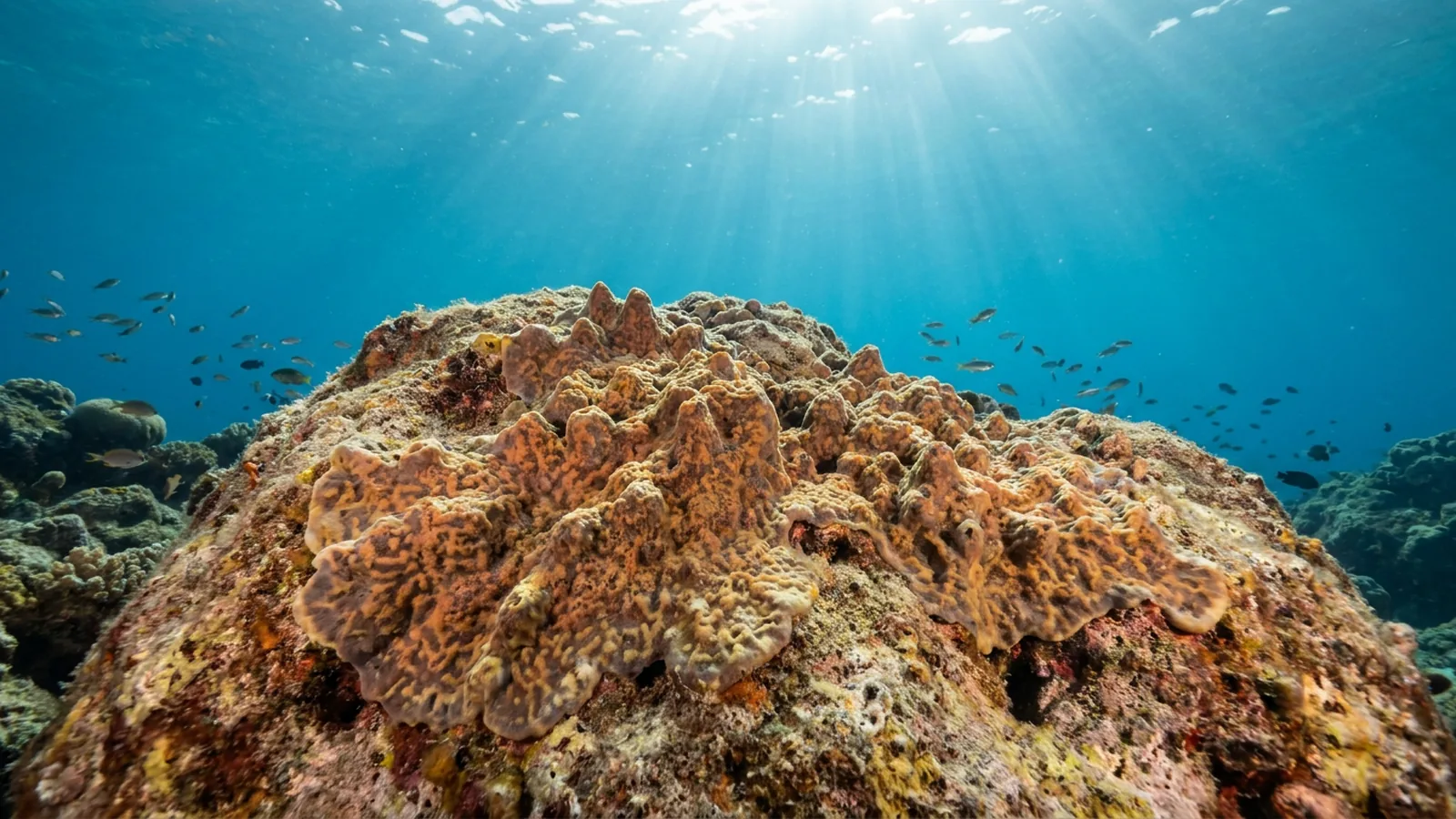
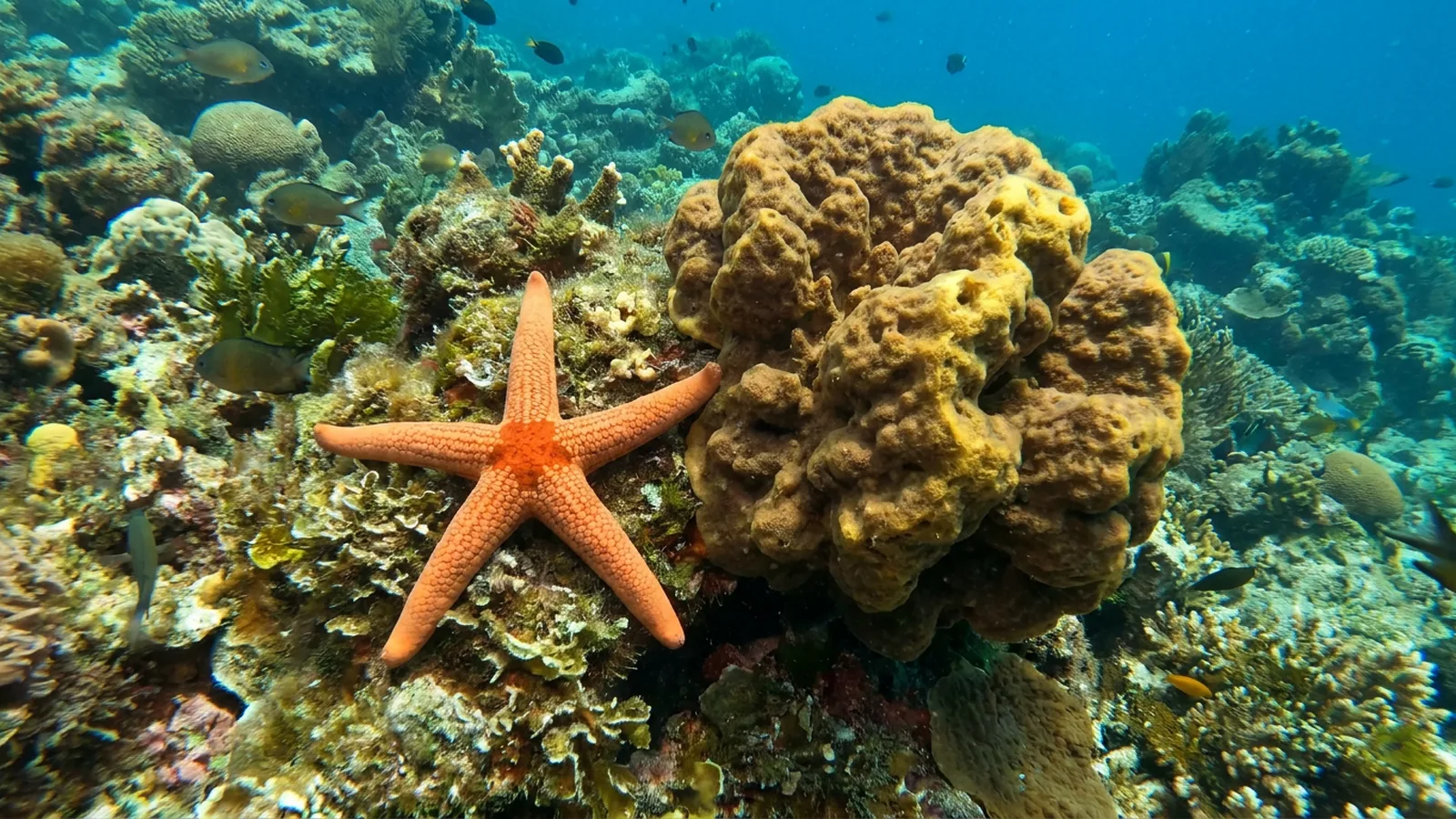
Most sponges are asymmetrical: you cannot cut them along any line or plane to get matching halves. Their shape is set by where they grow, the water flow and the space available, so the same species can look very different from one reef to the next. A few sponges, such as small tube-shaped calcareous sponges and some glass sponges, are roughly radially symmetrical around a central axis. Sponges are the only major animal group in which asymmetry is the rule.
Symmetry is one of the first things biology students learn to use when classifying animals. A jellyfish or sea anemone has radial symmetry, like a wheel. A fish, a crab or a human has bilateral symmetry, with matching left and right sides. Sponges are the odd ones out: most have no symmetry at all. That can seem like a sign that sponges are “primitive” or unfinished, but it is better understood as a perfectly sensible design for an animal that never moves and spends its life pumping water.
Anyone who keeps a reef tank with live rock, as I have since 1996, gets a small-scale view of this. Sponges that arrive on live rock grow into whatever space they find, filling crevices, spreading under ledges and following the flow from pumps and wave makers. It is a good illustration of why sponges do not need a fixed body shape.
Types of symmetry in animals
Animal body plans are usually grouped into a few kinds of symmetry.
Asymmetry means no plane or axis divides the body into matching parts; most sponges fall here. Radial symmetry means the body is arranged around a central axis, so many planes through that axis produce similar halves; cnidarians such as jellyfish, anemones and coral polyps are radial. Biradial symmetry is a variation in which only two planes produce mirror halves; comb jellies are biradial. Bilateral symmetry means a single plane divides the body into left and right mirror images, with a distinct head and tail end; most animals, from worms to whales, are bilateral. Sea stars and sea urchins are a special case: their larvae are bilateral, but adults develop five-part radial symmetry.
Why most sponges are asymmetrical
Symmetry is usually linked to how an animal moves and senses its world. Sponges do neither in the usual way.
Bilateral symmetry evolved with directional movement: an animal that travels forward benefits from a head end, where sense organs and a brain meet the world first, and matching sides for efficient locomotion. Radial symmetry suits animals that sit still or drift and meet food and danger from every direction, such as an anemone catching prey with a ring of tentacles. Sponges have no head, no nervous system, no mouth or gut and no limbs. They feed by pumping water through countless pores and channels, which works in any shape as long as water can get in and out. There is no advantage in being symmetrical, and there is a big advantage in being flexible: a sponge can grow into whatever space is available, spread across a rock, fill a crevice or build upward into the current. Our page on sea sponge structure explains the skeleton that makes this possible.
Shape follows the water
Because they lack a fixed body plan, many sponges change shape to suit their environment, a property biologists call phenotypic plasticity.
In calm, sheltered water, some species grow tall and branching, or form big vases and tubes, reaching up into the water column to catch more particles. In areas with strong waves or surge, the same species may grow low and encrusting, flattened against the rock where it is less likely to be torn off. Sponges on walls often grow outward from the face, and sponges in currents may align their oscula downstream, so the water they expel is carried away and not re-filtered. Even the arrangement of pores and canals inside a sponge adjusts to local flow. For divers, this is one reason sponge identification is hard: shape alone is often not enough, and experts look at colour, texture, oscula and, in the lab, the spicules.
That match between shape and flow is something any reef keeper learns about. Placing corals and rock so that water reaches every surface without blasting delicate animals was one of the hardest parts of designing my reef systems, and sponges in a tank respond to that flow just as they do on a reef.
Sponges that are radially symmetrical
Some sponges do show a regular, roughly radial shape arranged around a central axis.
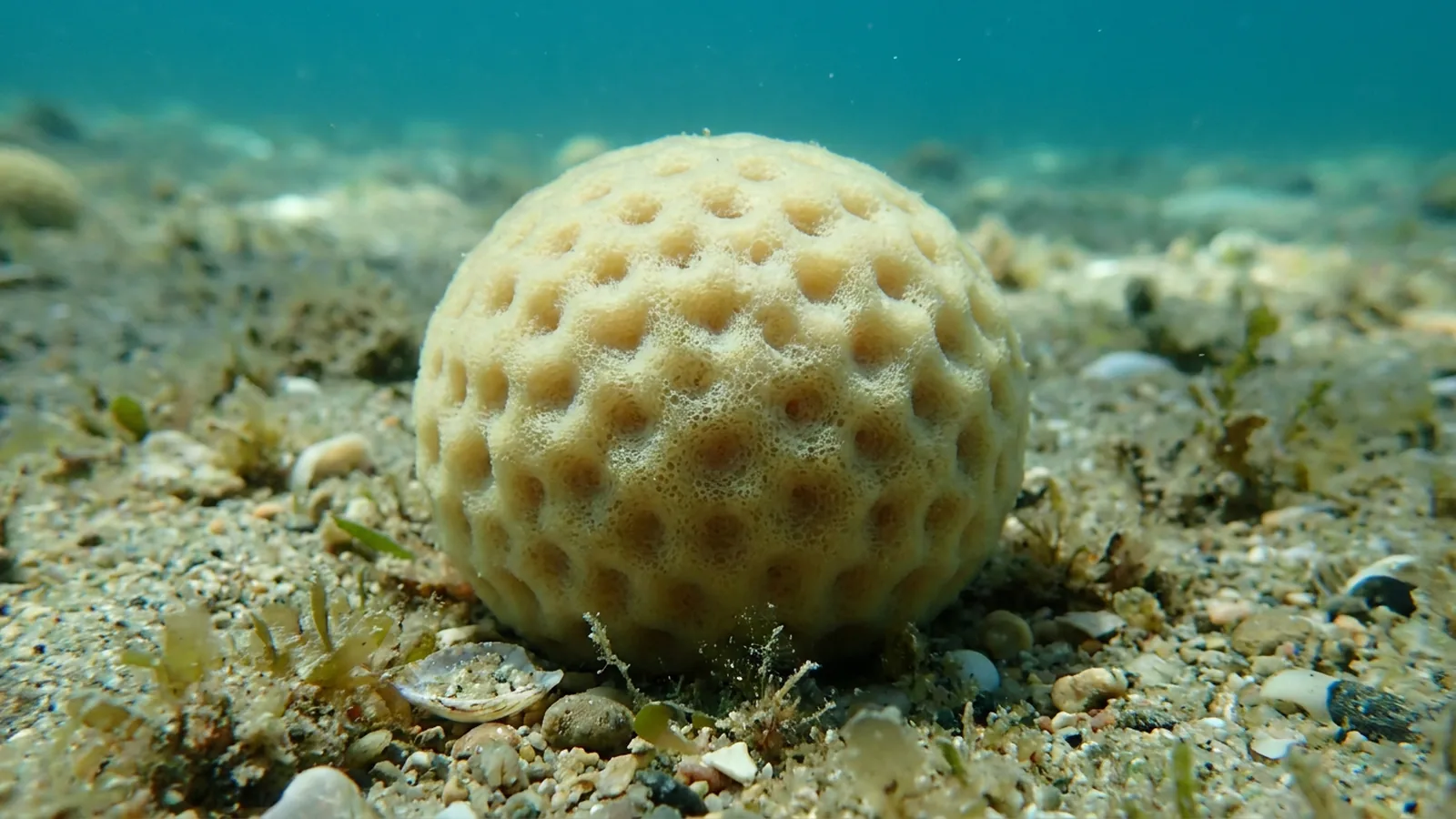
The simplest, the asconoid and syconoid calcareous sponges such as Leucosolenia and Sycon, are small tubes or vases with a single osculum at the top, and their bodies are arranged fairly evenly around the central cavity; see sponge body types. Many glass sponges are strikingly regular too. The Venus flower basket is a curved cylinder with a lattice wall that looks almost machine-made, and some deep-sea glass sponges form near-perfect cups or funnels. Large vase and barrel sponges, such as the giant barrel sponge, can look roughly radial from a distance, but up close their walls are irregular and their growth is uneven. Even in these sponges, symmetry is approximate rather than exact.
| Animal group | Symmetry | Example | Why it fits |
|---|---|---|---|
| Most sponges | Asymmetrical | Encrusting and massive sponges | Sessile; shape adapts to space and flow |
| Some sponges | Approximately radial | Sycon, Venus flower basket | Tube or vase built around one osculum |
| Cnidarians | Radial | Jellyfish, anemones, coral polyps | Meet food from all directions |
| Comb jellies | Biradial | Comb jellies | Swimming drifters with paired features |
| Echinoderms (adult) | Five-part radial | Sea stars, urchins | Slow-moving bottom dwellers |
| Bilaterians | Bilateral | Fish, crabs, worms, humans | Directional movement with a head end |
Symmetry hidden inside sponges
Although adult sponges are mostly asymmetrical, symmetry appears at other levels.
Larvae. Many sponges produce swimming larvae that have a distinct front and back end, an axis along which they swim, often with cilia arranged in patterns. Some larvae also show a clear polarity that relates to how they settle and attach. Spicules. The skeletal needles of sponges often have very precise symmetry. Glass sponge spicules are typically built on three perpendicular axes, giving six rays; demosponge spicules may be single rods or four-rayed; and calcareous sponge spicules are often three-rayed. These geometric shapes are used to identify species. Choanocyte chambers. At the microscopic level, the chambers of collar cells are often rounded and regular. In other words, sponges are not formless; they simply do not impose symmetry on the body as a whole.
Using symmetry to tell reef animals apart
For divers and snorkellers, symmetry is a surprisingly useful field tool.
When you see something attached to a reef and are not sure what it is, look at its shape. If it is built around a centre, with tentacles or arms arranged in a ring, it is probably a cnidarian: a coral polyp, an anemone or a hydroid. If it has five arms or a five-part pattern, it is an echinoderm such as a sea star, brittle star or sea urchin. If it has two siphons side by side, it is likely a tunicate. If it is an irregular lump, crust, tube or branching mass with round holes and no tentacles, it is almost certainly a sponge, even if it happens to be shaped like a tidy vase or a neat cluster of tubes. Animals that move, such as fish, crabs, shrimp, worms and sea slugs, will nearly always be bilateral, with a clear head end. It is a simple checklist, but it sorts out most of the confusing things people see on a first reef dive.
Sponges are also a reminder that shape can mislead. Many of the most beautiful sponges, such as azure vase sponges or purple tube clusters, look almost designed, but their regularity comes from growth around oscula and water flow rather than from a genetic body plan like a fish or a crab. The same species growing a few metres deeper or in a stronger current may look entirely different. Our guide to what sponges look like underwater shows the range of forms.
What sponge symmetry tells us about early animals
Because sponges are among the oldest animal lineages, their body plan raises questions about how symmetry evolved.
One long-standing idea is that the earliest animals were asymmetrical or loosely radial, and that radial and then bilateral symmetry evolved as animals developed nerves, muscles and directed movement. Genetic studies complicate that picture. Sponges have versions of some of the genes that pattern body axes in other animals, and some researchers argue that the common ancestor of animals may already have had a basic axis, perhaps expressed most clearly in the larva. The placement of comb jellies near the base of the animal tree adds to the debate. Whatever the answer, what is clear is that sponges have done extremely well without a symmetrical adult body for more than half a billion years; see sponge fossils for that long history, and are sponges multicellular? for how their cells cooperate without tissues.
Do sponges have symmetry?
Most sponges are asymmetrical. A few tube-shaped and glass sponges are roughly radially symmetrical.
Are sponges radial or bilateral?
Neither, in most cases. Sponges are generally asymmetrical; none are bilaterally symmetrical as adults.
Why are sponges asymmetrical?
They are sessile filter feeders with no head, nerves or gut, so a fixed symmetrical shape offers no advantage, while flexible growth lets them fit their surroundings.
Which sponges are radially symmetrical?
Small tube or vase-shaped calcareous sponges such as Sycon, and some glass sponges such as the Venus flower basket.
Do sponge larvae have symmetry?
Many sponge larvae have a front-to-back axis along which they swim.
What symmetry do cnidarians have?
Radial symmetry, arranged around a central mouth, as in jellyfish, anemones and coral polyps.
- Brusca, R. C., Moore, W. & Shuster, S. M. (2016). Invertebrates, 3rd ed. Sinauer Associates.
- Bell, J. J. (2008). The functional roles of marine sponges. Estuarine, Coastal and Shelf Science 79: 341–353.
- Leys, S. P. & Degnan, B. M. (2002). Embryogenesis and metamorphosis in a haplosclerid demosponge. Invertebrate Biology 121: 171–189.
- University of California Museum of Paleontology, “Introduction to the Porifera”.
Blane Perun has been exploring Earth’s oceans and marine life for over 25 years. Founder of TheSea.Org in 1999, underwater photographer, coral aquaculture pioneer, and explorer of 80+ countries.
About Blane Perun → More on Sponges →