How Many Shark Attacks Happen Each Year? — The Latest Global Numbers
Worldwide, there are usually about 50 to 75 confirmed unprovoked shark bites a year, and fewer than ten unprovoked deaths. The International Shark Attack File (ISAF) confirmed 65 unprovoked bites in 2025, nine of them fatal, against a 2020 to 2024 average of 61 bites and eight deaths a year. The United States had 25 of those bites and Australia 21. The year before, 2024, was unusually quiet, with 47 unprovoked bites and four deaths, while 2023 had 69 bites and ten unprovoked deaths.
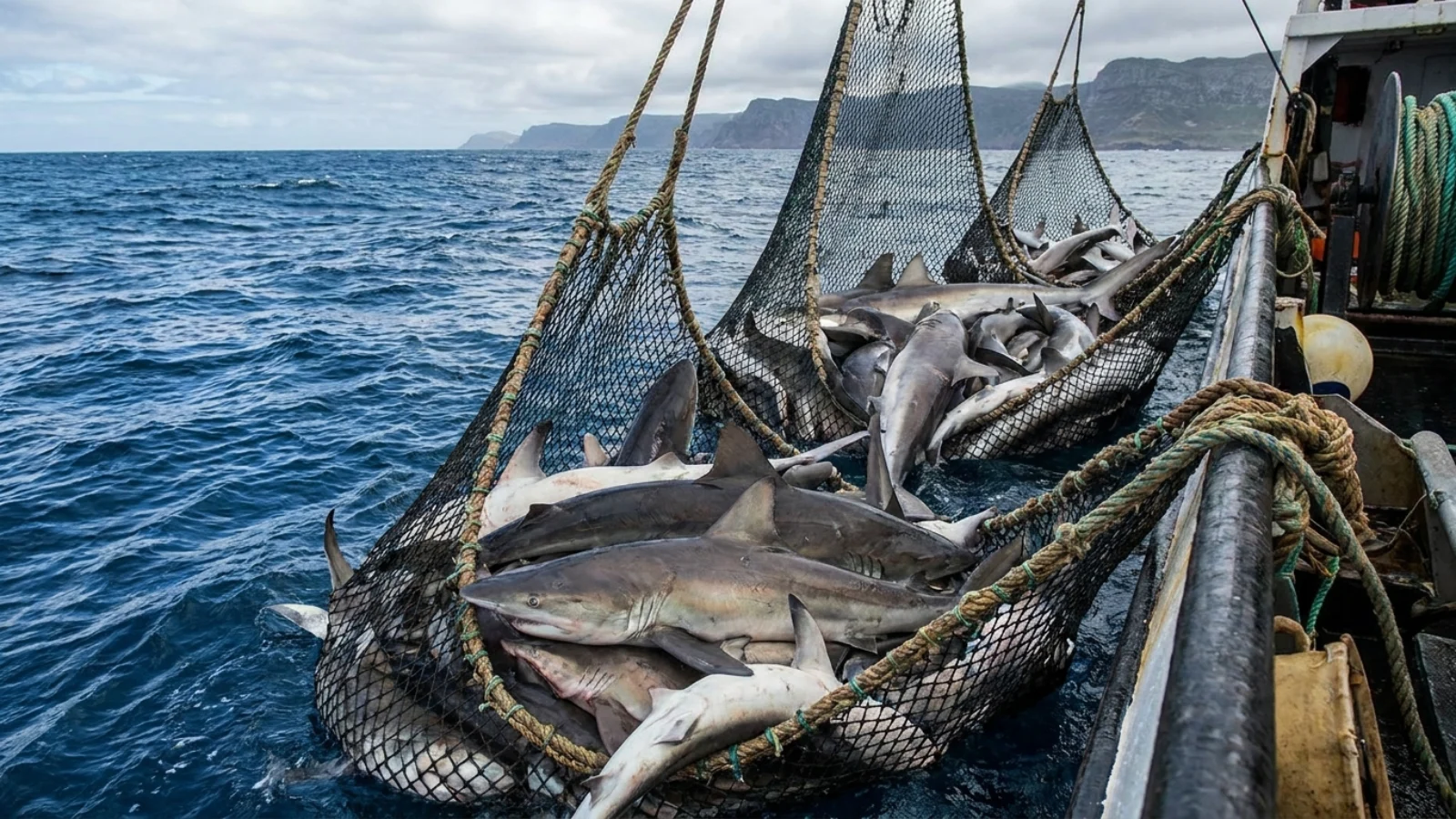
Shark bites make headlines, but worldwide they number a few dozen a year, while people kill sharks by the tens of millions.
How many shark attacks are there each year?
Every year the International Shark Attack File, run by the Florida Museum of Natural History at the University of Florida, investigates reports of shark bites from around the world and publishes a worldwide summary. Its figures are the closest thing there is to an official global count, and they show that unprovoked shark bites are rare. In a typical recent year, the ISAF confirms somewhere between about 50 and 75 unprovoked bites worldwide, and fewer than ten of them are fatal.
The most recent summary covers 2025. That year the ISAF investigated 105 alleged shark-human interactions worldwide and confirmed 65 unprovoked shark bites on people. A further 29 bites were classed as provoked. There were 12 confirmed shark-related deaths, nine of them from unprovoked bites. The ISAF described the 2025 total as in line with the most recent five-year average, for 2020 to 2024, of 61 unprovoked incidents a year, and the nine unprovoked deaths as in line with the five-year average of eight.
So if you want a single answer: roughly 60 unprovoked shark bites a year worldwide, and roughly eight deaths. Individual years can be well above or below that.
What counts as a shark attack?
The ISAF draws a sharp line between unprovoked and provoked bites, and most of the headline numbers refer to unprovoked bites only. An unprovoked bite is one that happens in the shark’s natural habitat with no human provocation of the shark. A provoked bite is one where a person started the interaction: for example, a fisherman unhooking a shark, a diver grabbing or feeding one, or someone trying to touch a shark resting on the bottom. Provoked bites are counted separately because they say more about human behaviour than about shark behaviour.
Other incidents are generally kept out of the unprovoked total too, such as bites on boats or scavenging on people who had already drowned, and some reports turn out on investigation not to involve a shark at all; the 2025 summary noted that some unconfirmed cases were more likely bites from bluefish, which are not sharks. That is why the number of cases investigated, 105 in 2025, is so much higher than the number of confirmed unprovoked bites.
The ISAF also prefers the word “bite” to “attack” for most of these incidents. Many involve a single bite that the shark does not follow up, and the word attack suggests a deliberate, predatory act that does not fit most cases.
The last few years in numbers
Recent annual totals show both a stable long-term level and sizeable swings from year to year.
| Year | Unprovoked bites | Unprovoked deaths | Notes |
|---|---|---|---|
| — | — | — | — |
| 2023 | 69 | 10 | 14 shark-related deaths in all; USA 36, Australia 15 |
| 2024 | 47 | 4 | Well below the previous 10-year average of about 70 |
| 2025 | 65 | 9 | 12 shark-related deaths in all; USA 25, Australia 21 |
The 2023 total of 69 unprovoked bites was slightly above the 2018 to 2022 average of about 63, and the ten unprovoked deaths were above that period’s average of about six, which drew a lot of media attention. The ISAF pointed out that there had been years in the past, such as 2011, in which fatalities were also higher. The following year swung the other way: 2024 saw just 47 unprovoked bites and four deaths, about a third fewer bites than the year before and well below the previous ten-year average of roughly 70. Then 2025 returned to the middle of the range.
Year-to-year changes like these are expected. The ISAF lists several reasons why totals rise and fall. Ocean conditions change the local abundance of sharks and their prey. Weather patterns change how many people go into the water and where. Even economic conditions matter, because they influence how many people take beach holidays. A single unusual event, such as a shark repeatedly biting people in one area, can also move the numbers in a small dataset.
Where do most shark bites happen?
The United States consistently records more unprovoked bites than any other country. In 2023 it accounted for 36 bites, 52 percent of the world total, and the ISAF described that as consistent with long-term trends. In 2024 the United States had 28 of the 47 unprovoked bites worldwide, and in 2025 it had 25, one of them fatal, slightly fewer than the year before.
Within the United States, Florida has long topped the charts. In 2023 it had 16 bites, none fatal. In 2025 it had 11, none fatal, below its five-year average of 19. Volusia County, home of New Smyrna Beach, is a perennial hotspot and had six bites in 2025 alone. Most Florida bites are minor injuries to the hands, feet and legs of surfers and waders, and the Florida Museum attributes many in Volusia County to juvenile blacktip sharks feeding in the surf. Our page on shark attacks in Florida goes through the state’s numbers in detail.
Elsewhere in the United States, California recorded five bites in 2025, one of them fatal, Hawaii four with no deaths and South Carolina two. Outside the United States, Australia is the other big contributor. It had 15 unprovoked bites in 2023, four of them fatal, and 21 in 2025, five of them fatal, well above its five-year average of 13. The Bahamas recorded five bites in 2025 and New Zealand three.
Why do so many fatal bites happen in Australia?
Australia stands out not for the number of bites, which is lower than in the United States, but for the share that are fatal. Florida’s bites are mostly from small sharks in the surf; Australia’s include bites from large white sharks, tiger sharks and bull sharks. In 2025, according to the ISAF, most fatalities worldwide were due to white sharks, three of them in Australia and one in California. The museum suggested that the rise in white shark fatalities may partly reflect random year-to-year variation, and partly an increase in white sharks at aggregation sites near beaches popular with surfers, particularly in Australia. Species matter: we compare the dangerous ones in our page on the most aggressive sharks.
What happened in the quiet year of 2024?
The low 2024 total is a good example of how local events shape the global count. Reporting on the ISAF’s 2024 summary, UPI noted that the United States still accounted for 28 of the year’s 47 unprovoked bites, with Florida again the leading state and Volusia County alone contributing eight. The Florida Museum attributed many of those Volusia bites to juvenile blacktip sharks, which feed in the surf and cannot yet reliably tell a human hand or foot from the small fish they hunt. Gavin Naylor, director of the Florida Program for Shark Research, described how 20 to 30 of these sharks can be seen patrolling the coast about 500 feet offshore, minding their own business, most of the time.
The same report pointed to unusual local conditions elsewhere. In the Florida Panhandle, dune lakes that normally release fresh water into the sea were reportedly blocked, which may have drawn fish, and the sharks that follow them, closer to shore. In Texas, several bites at Padre Island in a short period raised the question of whether a single animal was responsible, and Naylor said that could not be ruled out. Weather that brings people to the beach also brings warm, calm water and baitfish close to shore, so busy beach days and busy shark days often coincide.
Why most bites are not really attacks
One reason the numbers stay so low is that people are not shark prey. Most bites are quick and exploratory, and the shark lets go once it realises its mistake. For white sharks hunting seals, the leading explanation is mistaken identity. A 2021 study in the Journal of the Royal Society Interface, led by Laura Ryan, processed video of seals, swimmers and people paddling surfboards to show what a white shark’s eye would detect from below. Neither the movement nor the outline of a swimmer or surfer differed significantly from that of a seal, which helps explain why surfers are bitten and why the shark so often swims away afterwards. For small blacktips in the Florida surf, the equivalent mistake is a splashing foot or hand in murky water full of baitfish.
What are people doing when sharks bite?
The activity data say a lot about how bites happen. In 2025, swimming and wading accounted for 46 percent of incidents, surfing and other board sports for 32 percent, and snorkelling and free-diving for 15 percent. In 2023 the balance was different, with surfing and board sports making up 42 percent of incidents. Surfers have historically made up a large share of bites because they spend long periods at the surface in the surf zone, where many sharks hunt, often in murky water, and splash in ways that can attract a shark’s attention.
Are shark attacks increasing?
Over the long term, yes, in absolute numbers, but not necessarily in risk. Far more people go into the sea than a century ago, and they spend more time there, surfing, diving and swimming in places that were once remote. More people in the water means more encounters, even if the risk per person stays the same or falls. Reporting has also improved: a bite that would once have gone unrecorded is now likely to be posted online, covered by local news and investigated.
A 2019 study in PLOS ONE by Stephen Midway, Tyler Wagner and George Burgess, a former director of the ISAF, looked at global trends since the 1960s and concluded that shark attack rates are low but variable across regions and decades. Countries with small populations had the highest rates of attack relative to population, while countries with large populations, such as the United States, Australia and South Africa, had low overall rates but much more variation from year to year. Those high-population countries were also where rates had tended to increase since the 1960s. The study also stressed that local conditions, such as time of day and which species are present, drive much of the real risk.
Changes in shark populations can push numbers either way. Where protected seal populations have grown, as in parts of the northwest Atlantic, white sharks that feed on them now patrol coasts where people swim. Where shark populations have collapsed through overfishing, as for many oceanic species, encounters fall. Climate change is also shifting where some sharks live, with young white sharks, for example, now found more often in areas like Monterey Bay.
How dangerous are sharks, really?
Even at the busiest beaches, the risk of being bitten by a shark is very small, and the ISAF repeatedly describes it as extremely low. Every year hundreds of millions of people swim, surf and dive in the sea, and a few dozen are bitten. Most survive, often with minor injuries, and most fatal bites happen in a handful of places where large white, tiger and bull sharks overlap with surfers and swimmers.
The flip side of the statistic is far more dramatic. A 2013 study in Marine Policy by Boris Worm and colleagues estimated that fishing killed about 100 million sharks in 2000 and about 97 million in 2010, with a plausible range of roughly 63 to 273 million a year. Set against fewer than ten unprovoked human deaths a year, the imbalance is enormous. For sharks, people are by far the most dangerous animal in the ocean.
How to lower your own risk
Standard safety advice is practical. Swim in groups and stay close to shore and to lifeguards. Avoid the water at dawn, dusk and night, when many sharks feed most actively. Stay out of murky water, river mouths and channels, especially after heavy rain. Do not swim near people fishing, near bait or near schools of fish and diving birds, and keep away from seal colonies. Leave shiny jewellery on the beach, since it can look like the flash of fish scales. If a shark is seen, leave the water calmly. And never touch, feed or chase a shark, which is how most provoked bites begin.
So how many shark attacks happen each year?
The best current answer is about 60 confirmed unprovoked bites a year worldwide, with about eight unprovoked deaths, based on the ISAF’s 2020 to 2024 average. The latest year on record, 2025, came in at 65 bites and nine unprovoked deaths, with the United States and Australia accounting for most of them. The numbers move up and down from year to year, but they stay small: a shark bite is news precisely because it is so rare.
How many shark attacks happen per year?
Usually about 50 to 75 unprovoked bites worldwide; 65 in 2025, against a 2020 to 2024 average of 61.
How many people die from shark attacks each year?
Usually fewer than ten. In 2025 there were nine unprovoked deaths, close to the five-year average of eight.
Which country has the most shark attacks?
The United States, followed by Australia. In 2025 the US had 25 unprovoked bites and Australia 21.
Which US state has the most shark bites?
Florida, with 11 in 2025 and a five-year average of 19, most of them minor.
What is an unprovoked shark bite?
A bite in the shark’s natural habitat where the person did nothing to provoke the shark.
Were there fewer shark attacks in 2024?
Yes. 2024 had 47 unprovoked bites and four deaths, well below recent averages.
Are shark attacks increasing?
Totals have risen since the 1960s as more people use the sea, but year-to-year numbers vary and risk stays very low.
How many sharks do humans kill each year?
About 100 million, according to a 2013 estimate, with a range of roughly 63 to 273 million.
- International Shark Attack File (2026), “Yearly worldwide summary” for 2025, Florida Museum of Natural History, University of Florida.
- International Shark Attack File (2024), “The ISAF 2023 shark attack report”, Florida Museum of Natural History.
- UPI (2025), report on the ISAF 2024 worldwide summary (47 unprovoked bites, four deaths).
- Midway, S.R., Wagner, T. & Burgess, G.H. (2019), “Trends in global shark attacks”, PLOS ONE.
- Worm, B. et al. (2013), “Global catches, exploitation rates, and rebuilding options for sharks”, Marine Policy.
Blane Perun has been exploring Earth’s oceans and marine life for over 25 years. Founder of TheSea.Org in 1999, underwater photographer, coral aquaculture pioneer, and explorer of 80+ countries.
About Blane Perun →