How Do Coral Polyps Eat? — Farmers by Day, Hunters by Night
Coral polyps eat in two main ways. First, symbiotic algae called zooxanthellae living inside the polyp’s tissue photosynthesise and pass sugars to the polyp — in shallow reef corals this can supply most of its energy. Second, polyps hunt: they extend a ring of tentacles armed with stinging cells (nematocysts), paralyse zooplankton and other tiny prey, and pass it to a central mouth. Food is digested in a stomach-like gastrovascular cavity with the help of mesenterial filaments, and undigested waste leaves through the same mouth. Polyps also catch particles in mucus, move them with tiny hair-like cilia, and absorb some dissolved nutrients directly from seawater. Most reef polyps do their hunting at night.
A single coral polyp is usually no bigger than a pencil eraser, and in many species it is only a millimetre or two across. Yet these tiny animals feed well enough to build reefs visible from space. They manage it by combining two strategies that most animals cannot: they grow food inside their own bodies with the help of algae, and they hunt drifting prey with stinging tentacles. Understanding how a polyp eats means looking at its simple but effective anatomy — and at the partnership that powers it.
The anatomy of a feeding polyp
A coral polyp is built around one simple plan: a tube with a mouth at the top, surrounded by tentacles, opening into a single internal cavity.
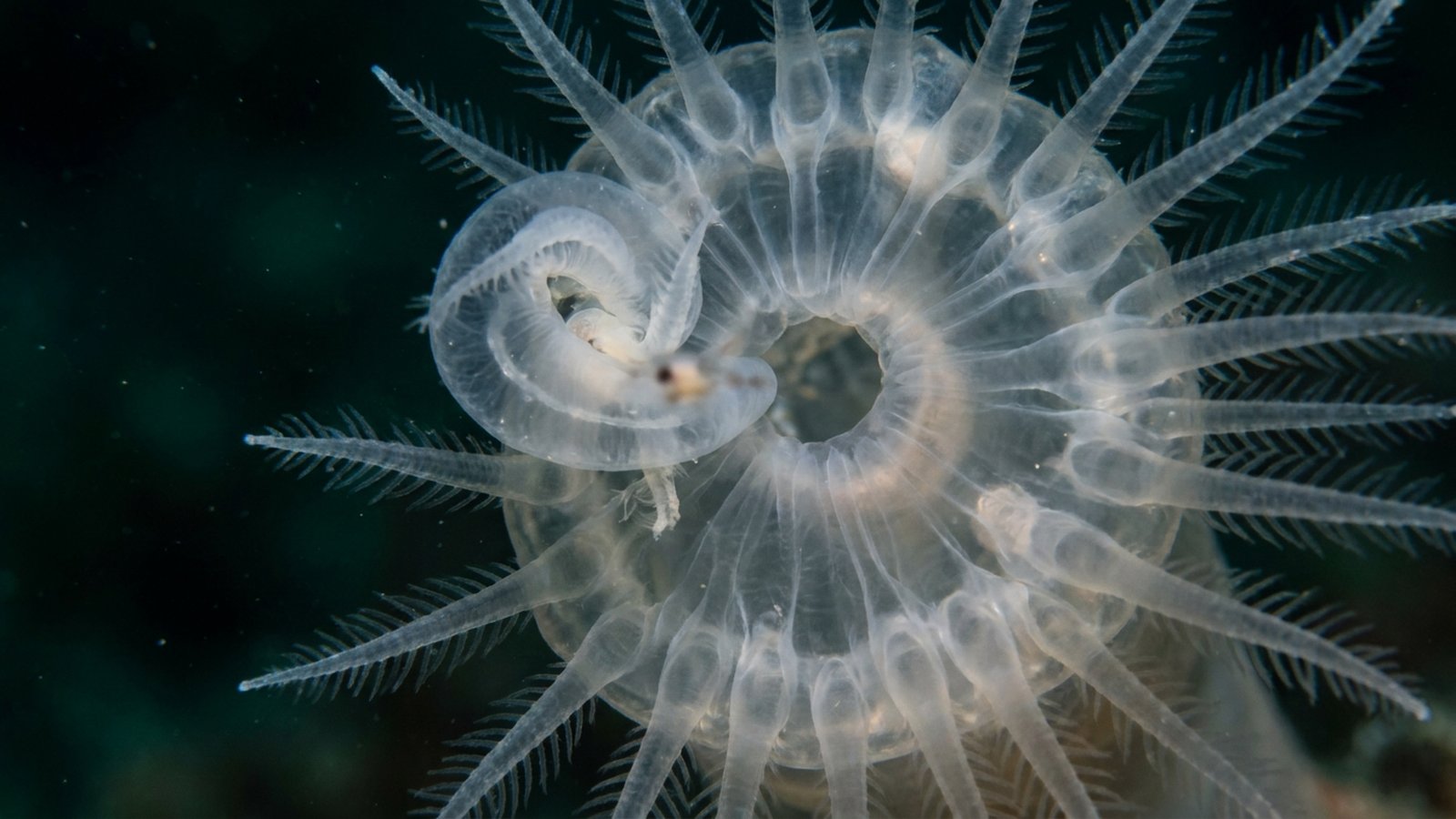
The polyp’s body is a soft, cylindrical sac. At the top is the oral disc with a slit-like mouth in the centre, ringed by tentacles — usually in multiples of six in stony corals. The mouth leads through a short throat, the pharynx, into the gastrovascular cavity, which works as both stomach and circulatory system. The cavity is divided by vertical folds called mesenteries, whose edges carry mesenterial filaments rich in digestive cells.
The polyp’s body wall has two cell layers. The outer layer (epidermis) contains stinging cells and mucus-producing cells. The inner layer (gastrodermis) lines the gut and is where the symbiotic algae live. In stony corals, the base of the polyp sits in a limestone cup it has built, and neighbouring polyps are linked by a sheet of tissue, so nutrients can move across the colony. To learn more about the animals themselves, see the animals that make coral reefs.
Farming sunlight with zooxanthellae
Most of a reef-building polyp’s food is not caught at all. It is made inside the polyp by algae that live in its tissue.
The cells of the gastrodermis are packed with zooxanthellae — single-celled dinoflagellate algae. They photosynthesise using sunlight that passes through the polyp’s transparent tissue and release much of the sugar, glycerol and other organic compounds they make to the polyp. In shallow, well-lit reef corals, this can amount to the large majority of the polyp’s energy — figures of up to around 90% are often cited. In return, the polyp gives the algae a safe home in the light, plus carbon dioxide and nutrient-rich waste.
This “farming” is why reef-building corals are limited to clear, sunlit water, and why many keep their tentacles retracted during the day: exposing the tissue to sunlight lets the algae work. It is also why heat stress is so dangerous. If the water gets too hot, the algae are expelled in coral bleaching and the polyp loses its main food supply.
Hunting with stinging tentacles
Algae supply energy, but polyps still need protein and nutrients such as nitrogen and phosphorus. They get them by hunting tiny animals drifting in the water.
Each tentacle is studded with cnidocytes, cells that contain nematocysts — microscopic capsules holding a coiled, often barbed thread. When prey brushes against a tentacle, the trigger is set off and the thread fires out extremely quickly, piercing or entangling the prey and injecting venom. Many nematocysts fire at once, holding and paralysing the victim.
Typical prey includes copepods and other small crustaceans, the larvae of fish and invertebrates, and other zooplankton. Once prey is caught, the tentacles bend toward the mouth and push it inside. Corals with larger polyps can catch larger prey, and some large-polyp species can even take small fish or shrimp. The coral’s sting is why many corals feel slightly sticky to the touch — and why fire corals, a related group, can give swimmers a painful sting.
Polyps are not passive about this. Many corals respond to chemical cues from prey in the water: when they detect substances released by plankton, they expand their tentacles and open their mouths, a feeding response that aquarium keepers often see when food is added to a tank. Water flow also matters. A gentle current carries a steady stream of plankton past the tentacles, so corals on current-swept parts of the reef often have more opportunities to feed than those in still, sheltered water.
Why polyps hunt at night
Visit a reef at night with a torch and it looks transformed: corals that seemed bare by day are covered in extended, feeding polyps.
Many reef corals keep their polyps retracted during daylight and open them after dusk. One reason is prey availability. Much of the reef’s zooplankton hides in the reef or in deeper water during the day to avoid fish, then rises into the water column at night. Another reason is safety: retracted polyps are less exposed to fish that nibble coral tissue during the day. Daytime retraction may also help the algae, since tentacles extended in daylight could shade the tissue beneath.
Not all corals follow this pattern. Some, especially species with large fleshy polyps, feed during the day as well, and many soft corals extend their polyps whenever there is a current carrying food. Corals living in deeper or murkier water, where light is limited, tend to rely more on hunting overall.
Digestion: one opening, many tricks
Once inside the polyp, food is broken down in the gastrovascular cavity. The polyp has no separate anus, so everything leaves the way it came in.
Digestive enzymes released by the gastrodermis and the mesenterial filaments break the prey into small particles, which are then absorbed by the cells lining the cavity. Nutrients can move from polyp to polyp through the shared gut system and connecting tissue, so a polyp that catches food can help feed its neighbours. Undigested remains are expelled back out through the mouth.
Mesenterial filaments have another use: many corals can extrude them through the mouth or body wall to digest food outside the body. They also serve as weapons. Corals competing for space can extend these filaments onto a neighbouring coral and digest its tissue, which is one reason you often see narrow bare zones between coral colonies on a reef.
Mucus nets, cilia and dissolved food
Tentacles are not the only way a polyp collects food. Mucus and tiny beating hairs gather much smaller particles.
The surface of a coral is coated in mucus that traps bacteria, organic particles and very small plankton. Hair-like cilia on the tissue surface beat in coordinated patterns, moving mucus strands laden with food toward the mouth, where they are swallowed. Some corals produce mucus nets or strands specifically for catching food. Corals can also absorb dissolved organic compounds and inorganic nutrients such as ammonium directly from the seawater through their tissue. These pathways add relatively small amounts of food compared with photosynthesis and hunting, but they help the polyp balance its diet. The mucus released by corals also becomes food for many other reef animals.
See also: Coral Reef Conservation, What Is the Purpose of the Tentacles of Coral Polyps? and Why Are Zooxanthellae Important to Corals?
Related on TheSea
- Types of Coral Polyps
- How Fast Does Living Coral Grow?
- How Does Coral Protect Itself?
- How Many Known Species of Coral Are There?
- Why Is the Coral Polyp Considered a Colonial Animal?
- Life Cycle Of a Coral Polyp
- How Fast Does Coral Grow? Growth Rates by Coral Type
- Why Is Coral Important?
- Why Is Coral Bleaching A Problem?
How do coral polyps get their food?
Mainly from symbiotic algae (zooxanthellae) in their tissue that make sugars by photosynthesis, plus plankton caught with stinging tentacles, particles trapped in mucus and nutrients absorbed from seawater.
What do coral polyps eat?
Zooplankton such as copepods, small crustaceans and larvae, along with bacteria and organic particles. Large-polyp corals can catch larger prey. They also rely heavily on food made by their algae.
How do coral polyps catch prey?
Their tentacles carry nematocysts, stinging capsules that fire tiny threads into prey on contact, injecting venom and holding it. The tentacles then pass the prey to the mouth.
Do coral polyps have a mouth?
Yes. Each polyp has a single mouth in the centre of its ring of tentacles. It leads to a gastrovascular cavity where food is digested, and waste is expelled back out through the same opening.
When do coral polyps feed?
Their algae feed them during daylight. Many reef corals extend their polyps to hunt at night, when zooplankton is most abundant, though some species feed during the day too.
Can coral polyps survive without algae?
Reef-building polyps can survive for a short time after bleaching by hunting more, but most cannot thrive long-term without their algae. Some coral species naturally lack algae and live entirely by feeding.
Blane Perun has been exploring Earth’s oceans and marine life for over 25 years. Founder of TheSea.Org in 1999, underwater photographer, coral aquaculture pioneer, and explorer of 80+ countries.
About Blane Perun → More Coral Reef Q&A →