The Taroko Whale Shark — Georgia Aquarium’s Whale Shark from Hualien, Taiwan
“Taroko” was a male whale shark at Georgia Aquarium in Atlanta, named after Taroko Gorge National Park in Hualien, Taiwan. He and a companion, Yushan, were caught off Hualien and made their Atlanta debut on June 1, 2007, shortly before Taiwan banned the whale shark fishery in 2008. After nearly two decades on display, Taroko was euthanised on August 20, 2025, when staff found his condition deteriorating despite veterinary care. There is no separate “Taroko” species: he was a Rhincodon typus, the same whale shark found in warm seas worldwide, including off Taiwan’s east coast in the Kuroshio Current.
Georgia Aquarium named its two 2007 arrivals after Taiwanese landmarks: Taroko for Taroko Gorge National Park in Hualien County, near where the sharks were caught, and Yushan for Jade Mountain, Taiwan’s highest peak. The aquarium’s first whale sharks had been named Ralph, Norton, Alice and Trixie, after characters in the television series The Honeymooners.
Who was Taroko the whale shark?
A whale shark from eastern Taiwan who spent nearly two decades at Georgia Aquarium in Atlanta.
Taroko was one of two male whale sharks that Georgia Aquarium received from Taiwan in 2007. According to the Atlanta Journal-Constitution, he made his debut at the aquarium on June 1, 2007, and lived there for nearly two decades. His age was never known; an aquarium representative said he probably arrived as a juvenile. The aquarium said he showed more than 43 million people the majesty of his species. His companion, Yushan, arrived with him and, according to the aquarium in August 2025, was doing well.
The two sharks were among the last whale sharks to leave Taiwan’s fishery. A Taipei Times report from May 2007, announcing Taiwan’s full ban on whale shark fishing, noted that two sharks accidentally caught off Hualien would be sent to an aquarium in Georgia early the following month for education, research and display. Wikipedia’s account of the aquarium says the pair arrived just before the ban on capturing the species took effect, and that all of Georgia’s whale sharks were taken from Taiwan’s annual fishing quota, under which they would otherwise have been eaten. The Journal-Constitution’s 2025 obituary describes Taroko as rescued from a seafood market in Taiwan; both descriptions point to the same history, of sharks bought out of a commercial food fishery.
Taroko and Yushan were not the aquarium’s first sharks from Taiwan. The Taipei Times reported in 2007 that the Georgia aquarium had already bought Taiwanese whale sharks in 2005 and 2006. The first group became famous as Ralph, Norton, Alice and Trixie, named after the main characters in The Honeymooners. When Ralph and Norton died in 2007, the two Hualien sharks became their replacements, and the new names marked a change of theme from American television to Taiwanese geography. For many visitors in Atlanta, Taroko and Yushan were the first whale sharks they had ever seen.
How did Taroko die?
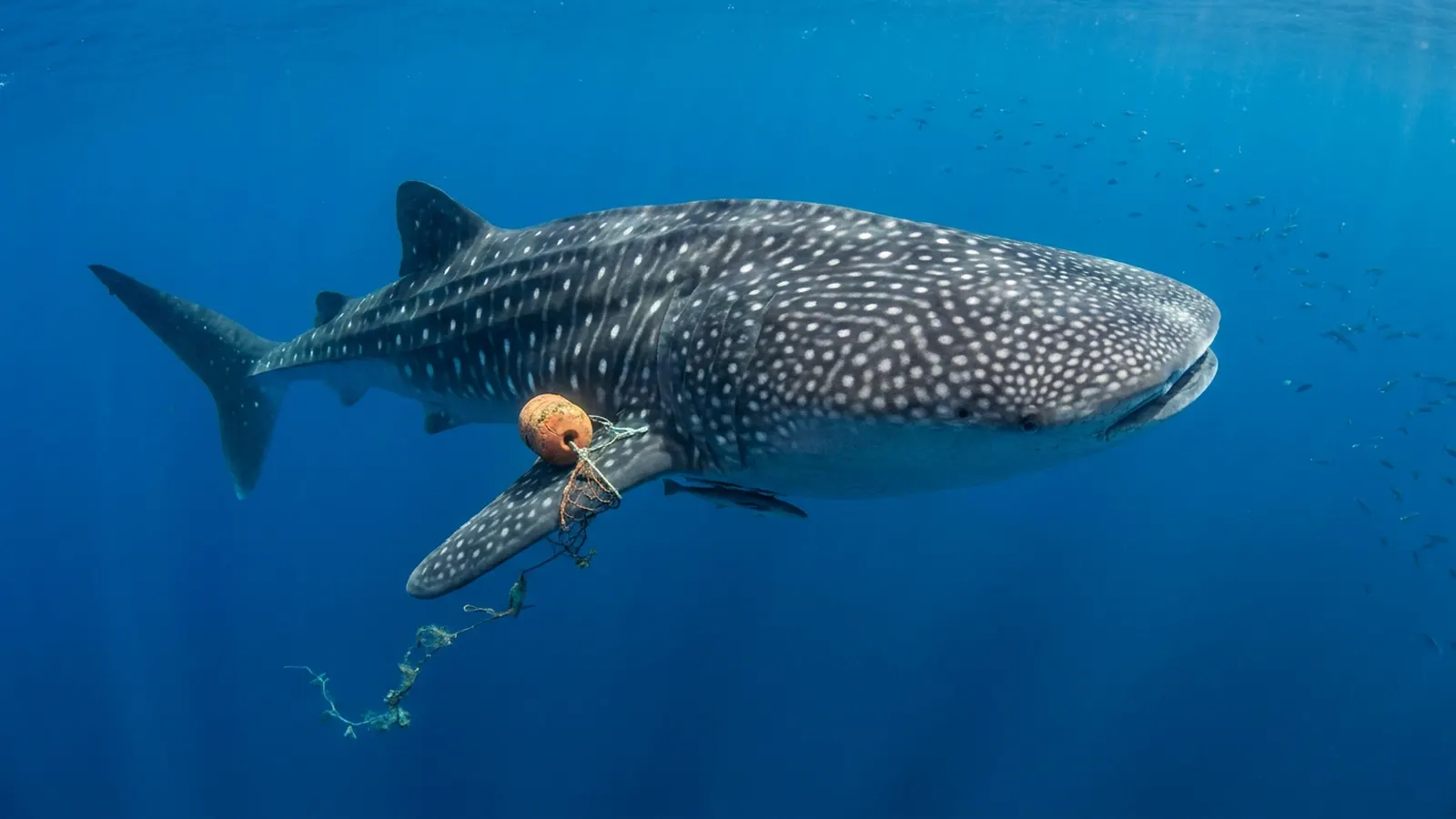
Georgia Aquarium announced on August 21, 2025, that Taroko had died the previous evening. In a statement on social media, the aquarium said its team had noticed changes in his appetite and behaviour through routine wellness monitoring, and that his overall condition was deteriorating despite all veterinary and care interventions, so it made the humane decision to euthanise him. The published reports did not give a cause. His death left Yushan as the aquarium’s only whale shark, according to the same reports.
Taroko was the fifth whale shark to die at the aquarium since it opened in 2005. Ralph and Norton, two of the original sharks, both died in 2007; a Taipei Times report that May said one of the aquarium’s sharks had died earlier that year of peritonitis. Trixie died in 2020 after her health declined, and Alice died in 2021. Whale shark lifespans in the wild are estimated from growth studies at roughly 80 to 130 years, and Taroko’s true age at death is unknown, so it is not possible to say how his life span compared with that of wild sharks.
Where did Taroko live?
Georgia Aquarium was designed around its whale shark habitat. When it opened in November 2005 it was the largest aquarium in the world, a title it held until 2012, and it remains the largest in the United States. The whale sharks live in the Ocean Voyager exhibit, which holds 6.3 million US gallons (about 24,000 cubic metres) of water, measures about 284 by 126 feet (87 by 38 metres) and is 20 to 30 feet (6 to 9 metres) deep. Wikipedia describes it as the largest indoor aquatic habitat in the world. The exhibit is themed on the Mesoamerican Barrier Reef and includes a 100-foot (30-metre) acrylic tunnel and one of the world’s largest viewing windows. Manta rays have shared it since 2008. Across its seven galleries the aquarium now holds more than 11 million US gallons of water, and the whale shark habitat alone accounts for more than half of it, which shows how much space a single species of filter-feeding giant demands.
Keeping whale sharks is rare and difficult. The first attempt was in 1934, when a whale shark was held for about four months in a netted-off bay in Izu, Japan, and the first aquarium attempt began at what is now Okinawa Churaumi Aquarium in 1980. Several aquariums in Japan, South Korea, China, Taiwan, India and Dubai have kept the species since, some for years and some only briefly. Outside Asia, Georgia Aquarium is the only place that has kept whale sharks. Transporting them from Taiwan by air, truck and boat had never been attempted before, and the journeys took 28 to 36 hours.
Public aquariums that keep large sharks argue that they help people connect with the species and support research; Georgia Aquarium funds whale shark research off Mexico’s Yucatán Peninsula. Critics argue that even the largest tank is tiny for an animal that migrates across oceans and dives hundreds of metres, and point to the deaths of several captive whale sharks. Both arguments have been made about Taroko’s exhibit, and readers will weigh them differently.
What kind of animal was Taroko?
Taroko belonged to the largest fish species on Earth. The whale shark is a slow-moving, filter-feeding carpet shark and the only living member of its family; the largest individual accepted by scientists, a female from the Arabian Sea, had an estimated total length of about 18.8 m (61.7 ft). Females grow much larger than males: a 2020 growth study estimated that males reach an average of about 8 to 9 m and females about 14.5 m. Despite their size, whale sharks feed almost entirely on plankton and small fish, either by swimming forward with the mouth open or by gulping water while stationary, and they pose no threat to people. Their many rows of tiny teeth play no part in feeding.
In an aquarium, those habits shape daily care. Whale sharks need very large volumes of water, steady warm temperatures and food delivered in a form they can filter, and keepers monitor appetite and behaviour closely because changes can be the first sign of illness. That is the kind of monitoring Georgia Aquarium described in Taroko’s last weeks. In the wild, researchers identify individual whale sharks by the pattern of pale spots behind the gills, which is unique to each animal, and photographs taken years apart, or at different sites, can be matched to the same individual.
Why are there whale sharks off Taroko and Hualien?
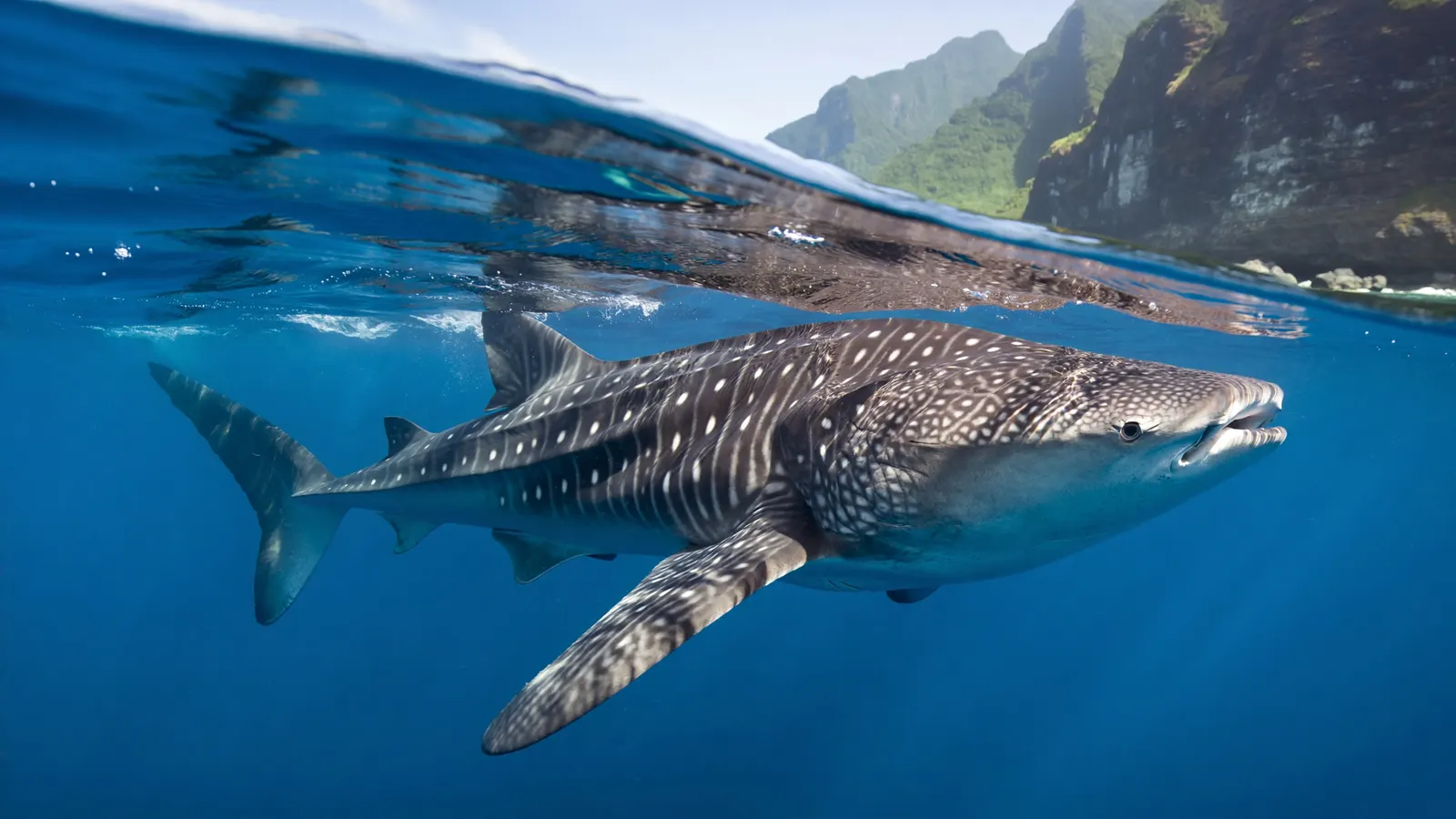
Taroko Gorge, which gave the shark its name, is the landmark of Taroko National Park, a 920 square kilometre park established in 1986 that spans parts of Taichung, Nantou and Hualien. The gorge was carved by the Liwu River into marble formed from limestone deposits laid down some 230 million years ago, then uplifted as Taiwan was pushed up by colliding tectonic plates. The same mountains run straight into the Pacific along the Hualien coast, where cliffs such as the Qingshui Cliffs drop to the sea and deep water lies close to shore.
Offshore runs the Kuroshio, a warm, north-flowing western boundary current on the western side of the North Pacific. It begins where the North Equatorial Current splits off Luzon in the Philippines, flows north past eastern Taiwan toward Japan, has an annual average surface temperature of about 24 °C (75 °F), and is about 100 kilometres wide. Whale sharks are rarely found in water below about 21 °C, so the Kuroshio gives them a warm corridor along Taiwan’s east coast. Upwelling northeast of Taiwan boosts phytoplankton and the zooplankton that feeds on it, which is the kind of food whale sharks seek.
Whale sharks off eastern Taiwan are seasonal visitors rather than residents, and they tend to be encountered in fixed coastal set nets rather than at a reliable dive site. That is how both Taroko and Yushan were caught. Taiwan’s fishing rules now require such sharks to be released and reported, and fishermen can apply for a cash reward for releasing them alive.
How did Taiwan go from fishing whale sharks to protecting them?
Within a few years, through shrinking quotas and then a full ban.
Whale shark meat was sold in Taiwan as “tofu shark,” because the flesh was said to taste like tofu. As scientists and conservation groups raised concern about the species, Taiwan’s Fisheries Administration introduced annual quotas. In July 2006, the Taipei Times reported that the year’s quota of 60 sharks had already been filled, that fishermen could no longer catch, keep, sell or dispose of whale sharks for the rest of the year, and that violators faced up to three years in jail or a fine of up to NT$150,000. At that point the plan was to cut the quota to 45 in 2007 and 30 in 2008.
| Year | Taiwan whale shark quota | What happened |
|---|---|---|
| Before 2006 | About 80 a year | Quota reported by the Taipei Times in 2007 |
| 2006 | 60 | Filled by mid-July; catching, possession and sale barred to December 31 |
| 2007 | 30 (a 2006 plan had proposed 45) | Filled by March 27; 12 of the 30 were caught in fixed nets and released |
| 2008 onward | None | Full ban on fishing, sale, import and export |
The timetable moved faster. In May 2007 the same newspaper reported that the annual quota had fallen from 80 in earlier years to 60 in 2006 and 30 in 2007, that the 2007 quota had been reached on March 27, and that from 2008 fishing, selling, importing and exporting whale sharks would be fully banned. Of the 30 sharks counted against the 2007 quota, 12 had been caught in fixed nets and released, with satellite tags fitted to track them, and the Fisheries Administration had paid fishermen NT$3.47 million for their co-operation. Fishermen in the three counties that mainly targeted whale sharks opposed the ban. Wikipedia’s whale shark article lists Taiwan’s protection from May 2007, following the Philippines in 1998 and India in 2001, and states that Taiwan closed the fishery entirely in 2008.
| Year | Milestone |
|---|---|
| 1995 | 10.6 m female carrying 304 embryos caught off eastern Taiwan (some summaries say 1996) |
| 2005 | Georgia Aquarium opens in Atlanta with whale sharks bought from Taiwan’s fishing quota |
| 2006 | Taiwan’s quota of 60 sharks filled; fishing closed for the rest of the year |
| 2007 | Quota of 30 filled by March 27; Taroko and Yushan, caught off Hualien, go on show in Atlanta on June 1 |
| 2008 | Taiwan bans fishing, sale, import and export of whale sharks |
| 2010 | Paternity study: 29 embryos from the 1995 female all share one father |
| 2016 | IUCN lists the whale shark as Endangered |
| 2025 | Taroko is euthanised at Georgia Aquarium on August 20 after his condition declines |
What did a Taiwanese whale shark teach scientists?
Taiwan’s fishery produced one of the most important specimens in whale shark biology. A 10.6 m female caught off the coast of eastern Taiwan was found to be carrying 304 embryos, at stages ranging from young still in egg cases to hatched, free-swimming animals near term. The discovery showed that whale sharks are ovoviviparous: the eggs hatch inside the mother, who gives birth to live young, and the young are born at about 40 to 60 cm. A 2010 paper by Jennifer Schmidt and colleagues in Endangered Species Research, which includes the Taiwanese researcher Shoou-Jeng Joung among its authors, dates the capture to 1995; some summaries, including Wikipedia’s whale shark article, give July 1996.
The same 2010 study determined the paternity of 29 of the embryos, about 10 percent of the litter, and found that all were full siblings sired by the same male, suggesting that one male may have fathered the entire litter. Because the embryos were at such different stages, the finding supports the idea that a female can store sperm from a single mating and produce young over an extended period. The authors noted that a second father could have gone undetected if he had sired less than 10 percent of the litter. For more on how whale sharks reproduce, see do whale sharks lay eggs?
Can you see whale sharks near Taroko today?
Sometimes, but not reliably. Unlike the Philippines, Mexico’s Yucatán coast or Ningaloo Reef in Western Australia, eastern Taiwan has no well-known seasonal aggregation where tourists can expect to swim with whale sharks. Most local records come from fixed nets and from chance encounters by boats. Visitors to Taroko Gorge, usually reached from Hualien City (the nearest railway station, Xincheng, is about 7 km from the park headquarters), who want to see a whale shark in the wild will have better odds at one of the established aggregation sites; see whale sharks in the Philippines for a nearby option.
If you do meet a whale shark, follow the standard etiquette used at aggregation sites: do not touch or ride the animal, keep a respectful distance, especially from the head and tail, avoid blocking its path, and do not use flash photography. The species is listed as Endangered by the IUCN, which in 2016 estimated a global decline of more than 50 percent over three generations, so each encounter is with an animal worth protecting. Taroko’s story, from a Hualien set net to an Atlanta aquarium, spans exactly the years in which Taiwan moved from eating whale sharks to protecting them. Read more about the species in our whale shark guide.

Who was Taroko the whale shark?
A male whale shark from Hualien, Taiwan, who lived at Georgia Aquarium in Atlanta from 2007 until 2025.
Why was he named Taroko?
After Taroko Gorge National Park in Hualien County, near where he was caught.
When did Taroko die?
He was euthanised on August 20, 2025, after staff saw changes in his appetite and behaviour and his condition declined.
Is there still a whale shark at Georgia Aquarium?
Yes. Yushan, who arrived with Taroko in 2007, was reported to be doing well in August 2025.
Is the Taroko whale shark a separate species?
No. Taroko was a whale shark, Rhincodon typus, the same species found worldwide.
Did Taiwan fish for whale sharks?
Yes, as “tofu shark,” under shrinking quotas until a full ban took effect in 2008.
Where was the whale shark with 304 embryos caught?
Off eastern Taiwan, in 1995 according to the 2010 paternity study (some summaries say 1996).
Can you swim with whale sharks in Taiwan?
There is no regular aggregation; encounters are rare and opportunistic.
- Atlanta Journal-Constitution (August 21, 2025) — “Whale shark Taroko dies at Georgia Aquarium following health issue.”
- Taipei Times (July 14, 2006; May 27, 2007) — Whale shark quotas and the Fisheries Administration’s ban from 2008.
- Schmidt et al. (2010), Endangered Species Research 12: 117–124 — Paternity analysis in a litter of whale shark embryos.
- Wikipedia — “Georgia Aquarium,” “Whale shark,” “Taroko National Park” and “Kuroshio Current” (2023 snapshot).
- IUCN Red List (Pierce & Norman, 2016) — Rhincodon typus: Endangered; >50% decline over three generations.
Blane Perun has been exploring Earth’s oceans and marine life for over 25 years. Founder of TheSea.Org in 1999, underwater photographer, coral aquaculture pioneer, and explorer of 80+ countries.
About Blane Perun → More on Whale Shark →