Famous Oceanographers — The Explorers and Scientists Who Opened Up the Ocean
A scientist who studies the ocean as a system: physical oceanographers study currents, waves and heat; chemical oceanographers study seawater chemistry and carbon; geological oceanographers study the seafloor and plate tectonics; and biological oceanographers study marine life and food webs. The people in this series include working scientists and explorers whose voyages and dives made modern oceanography possible.
Who are the most famous oceanographers?
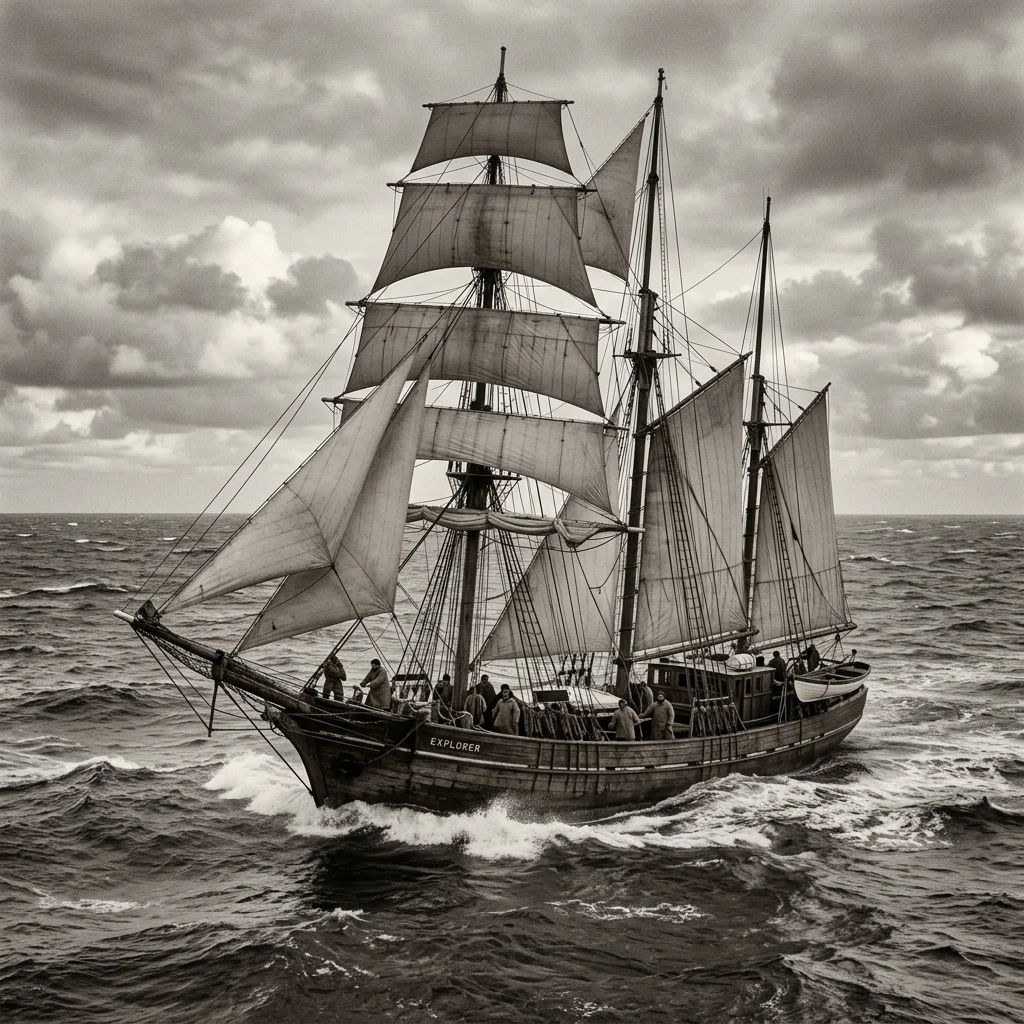
The figures below span 250 years, from sailing ships to submersibles.
Navigators and naturalists. James Cook charted the Pacific and crossed the Antarctic Circle; Charles Darwin explained how coral atolls form.
Deep-sea pioneers. William Beebe watched living deep-sea animals from the bathysphere; Jacques Piccard reached the deepest point in the ocean; James Cameron returned there solo.
Divers and aquanauts. Jacques Cousteau co-invented the Aqua-Lung and brought the sea to television; Robert Sténuit became the first aquanaut; Sylvia Earle led Tektite II and walked the deep seafloor.
Discoverers. Robert Ballard helped find vent ecosystems and the Titanic; George Bass founded scientific underwater archaeology.
Where did oceanography begin?
People have studied the sea for as long as they have sailed it, but oceanography as a science is usually dated to the nineteenth century. In 1855 the American naval officer Matthew Fontaine Maury, nicknamed the “Pathfinder of the Seas”, published The Physical Geography of the Sea, the first comprehensive book on the subject. Maury had compiled thousands of ships’ logs into wind and current charts that shortened voyages, and his standard system for recording observations at sea was adopted by navies and merchant fleets around the world.
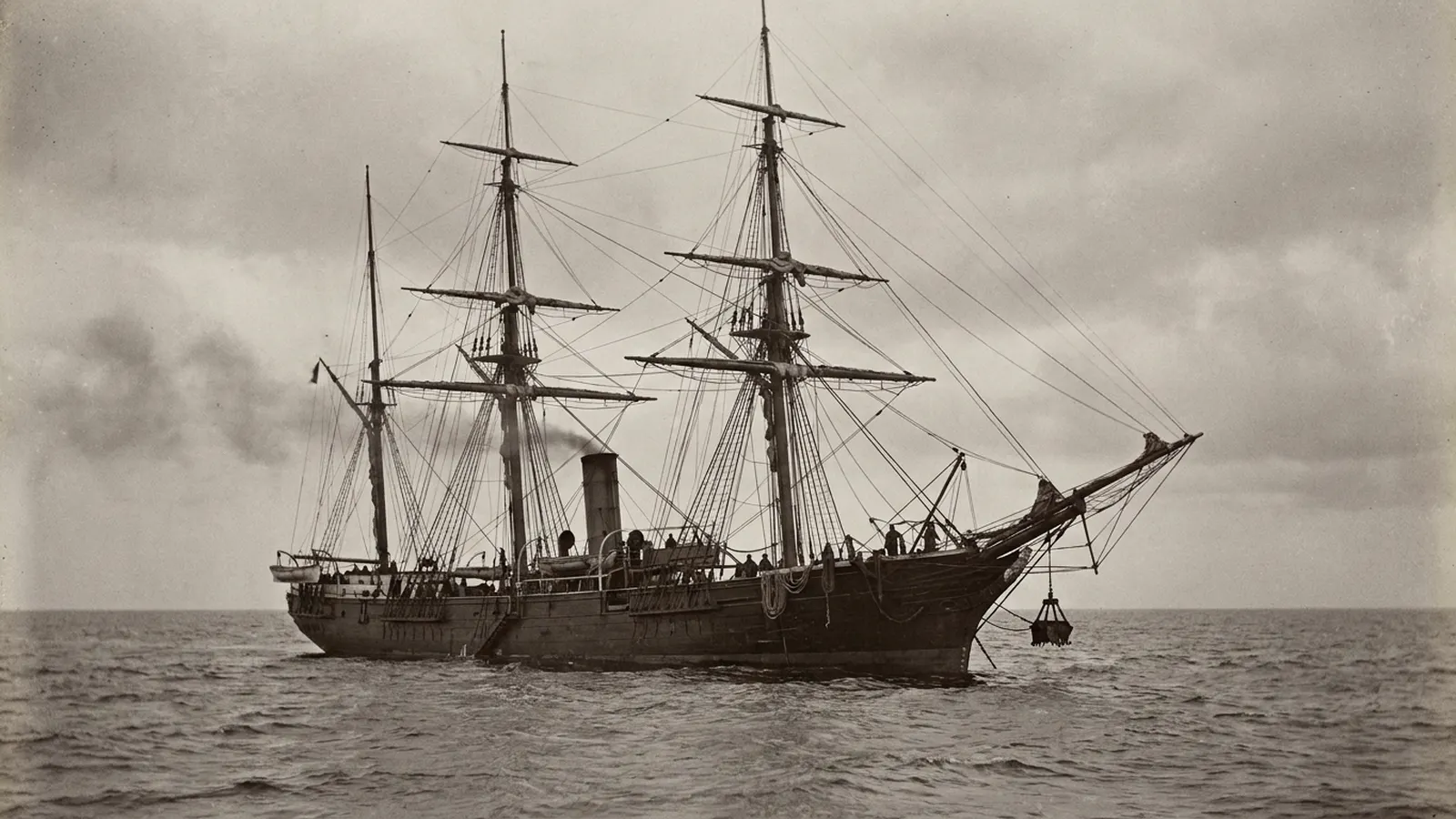
The decisive step came with HMS Challenger. Between December 1872 and May 1876 the converted warship, with 15 of her 17 guns removed to make room for laboratories, sailed about 127,600 km under the scientific direction of Charles Wyville Thomson and John Murray. Her crew made 492 deep-sea soundings, 133 bottom dredges and 151 open-water trawls, and the results, published in a report of about 50 volumes, described roughly 4,700 species new to science. Murray called it the greatest advance in knowledge of the planet since the voyages of discovery of the fifteenth and sixteenth centuries. Challenger showed that life exists even on the deepest seafloor and that the ocean has a structure of currents, temperatures and sediments that can be measured.
How did people first reach the deep sea?
For decades after Challenger, the deep sea was known only from what came up in nets. That changed in 1934, when William Beebe and engineer Otis Barton were lowered off Bermuda in the bathysphere, a steel ball on a cable, to 923 m (3,028 ft). Beebe’s descriptions of glowing fish and drifting jellies in the dark were the first eyewitness accounts of the living deep ocean. The bathysphere’s weakness was its cable; Auguste Piccard’s bathyscaphe solved that with a float full of petrol and a crew sphere slung underneath. In January 1960 his son Jacques Piccard and US Navy officer Don Walsh took the bathyscaphe Trieste to the bottom of the Challenger Deep in the Mariana Trench, nearly 11 km down. No one returned for 52 years, until James Cameron’s solo dive in 2012; since then, the submersible Limiting Factor has made repeated trips to full ocean depth.
How did mapping the seafloor change science?
Echo sounders developed in the early twentieth century made it possible to measure depth continuously as a ship moved. In the 1950s, at what is now the Lamont–Doherty Earth Observatory, the geologist and cartographer Marie Tharp turned thousands of these soundings into maps. Working with Bruce Heezen, she noticed a deep valley running along the crest of the Mid-Atlantic Ridge and argued it was a rift where the seafloor was pulling apart. Heezen initially dismissed the idea, but the rift was confirmed, and the global mid-ocean ridge system became key evidence for plate tectonics. Tharp and Heezen’s painted maps of the ocean floor became some of the most reproduced images in earth science.
The job is not finished. The international Seabed 2030 project, which aims to map the whole ocean floor at high resolution, reported in June 2025 that about 27% had been mapped to modern standards. Large parts of the seabed are still known only from satellite measurements of the sea surface, which give a far blurrier picture.
What did divers and aquanauts add?
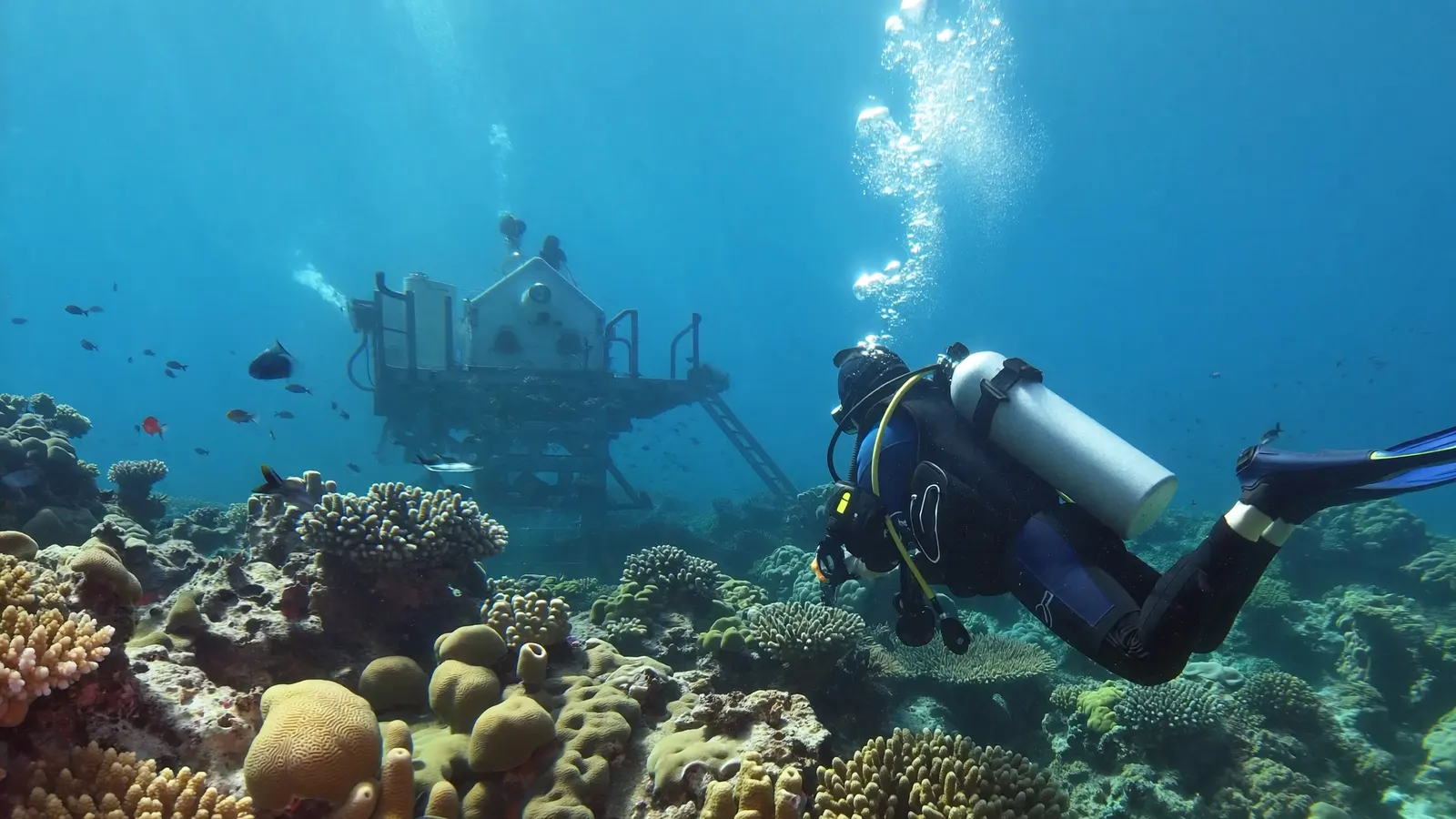
The Aqua-Lung, developed by Cousteau and the engineer Émile Gagnan in 1943, let scientists swim freely in the upper ocean for the first time. Archaeologists were among the first to benefit: in 1960 George Bass led the excavation of a Bronze Age wreck at Cape Gelidonya off Turkey, the first ancient shipwreck excavated entirely on the seabed by archaeologists who did the diving themselves. Saturation diving pushed further. In 1962 the Belgian diver Robert Sténuit spent about a day at 61 m off Villefranche in Edwin Link’s small chamber, becoming the first aquanaut, and Cousteau’s Conshelf habitats and the US Navy’s Sealab followed. In 1970 Sylvia Earle led the first all-female team of aquanauts in the Tektite II habitat in the US Virgin Islands, and in 1979 she walked untethered on the seafloor off Oahu at 381 m in a pressurised JIM suit, a record for a solo dive of that kind.
Which discoveries changed oceanography most?
One of the biggest surprises came in 1977, when scientists diving in the submersible Alvin on the Galápagos Rift found hot springs on the seafloor surrounded by giant tubeworms, clams and crabs. Those communities live on energy from chemosynthesis, bacteria using chemicals such as hydrogen sulphide rather than sunlight, and the discovery changed ideas about where life can exist and how it may have begun. Robert Ballard, who took part in that expedition, later led the search with the French oceanographer Jean-Louis Michel that located the Titanic in 1985 using a towed camera sled, a demonstration of how remote vehicles could survey the deep without risking divers.
Today most ocean data come from instruments rather than people. About 4,000 Argo floats drift through the world ocean, sinking to 2,000 m and rising every ten days to measure temperature and salinity, and their records underpin estimates of how much heat the ocean is absorbing as the climate warms. Satellites measure sea level, surface temperature and plankton colour; gliders and remotely operated vehicles do the deep work. The explorers in this series opened the door, and modern oceanography is the continuous, global watch that followed.
How has ocean exploration changed?
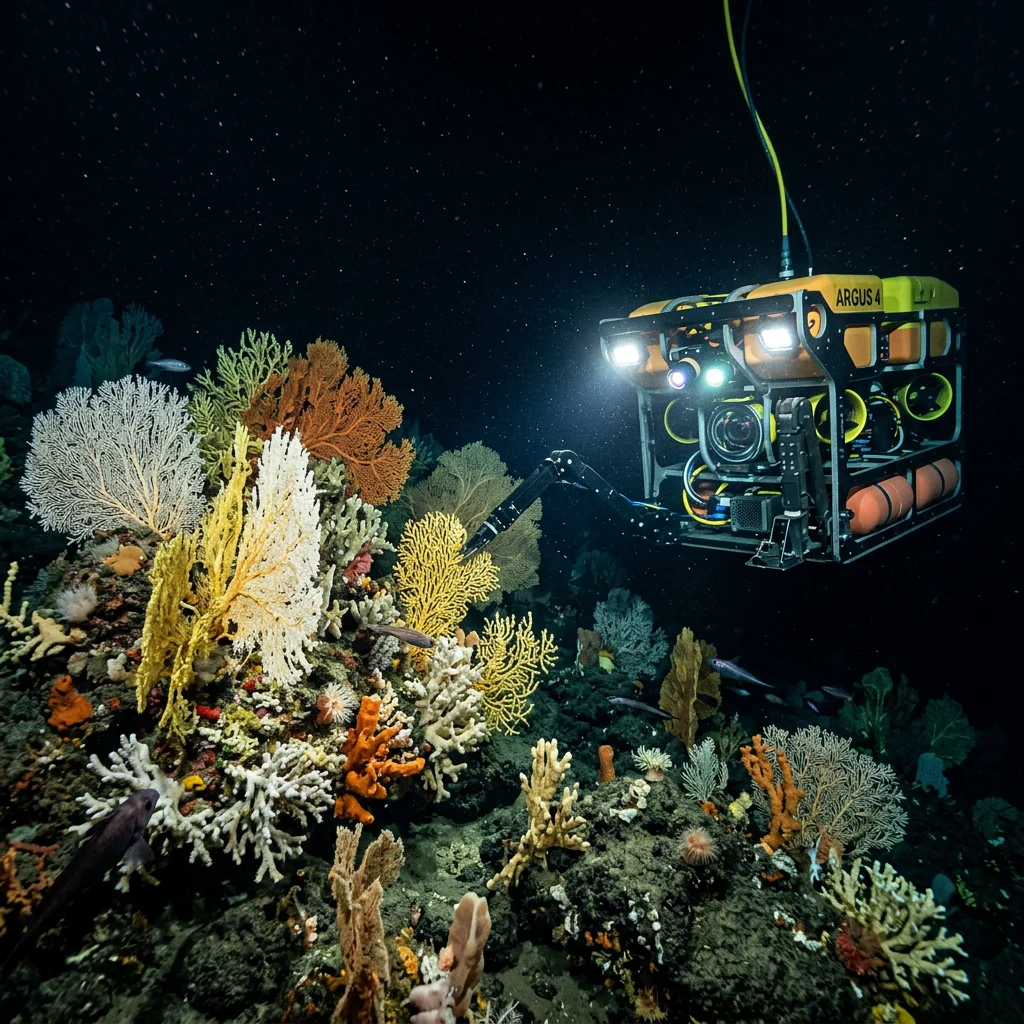
From lead lines and dredges to satellites, robots and live-streamed dives.
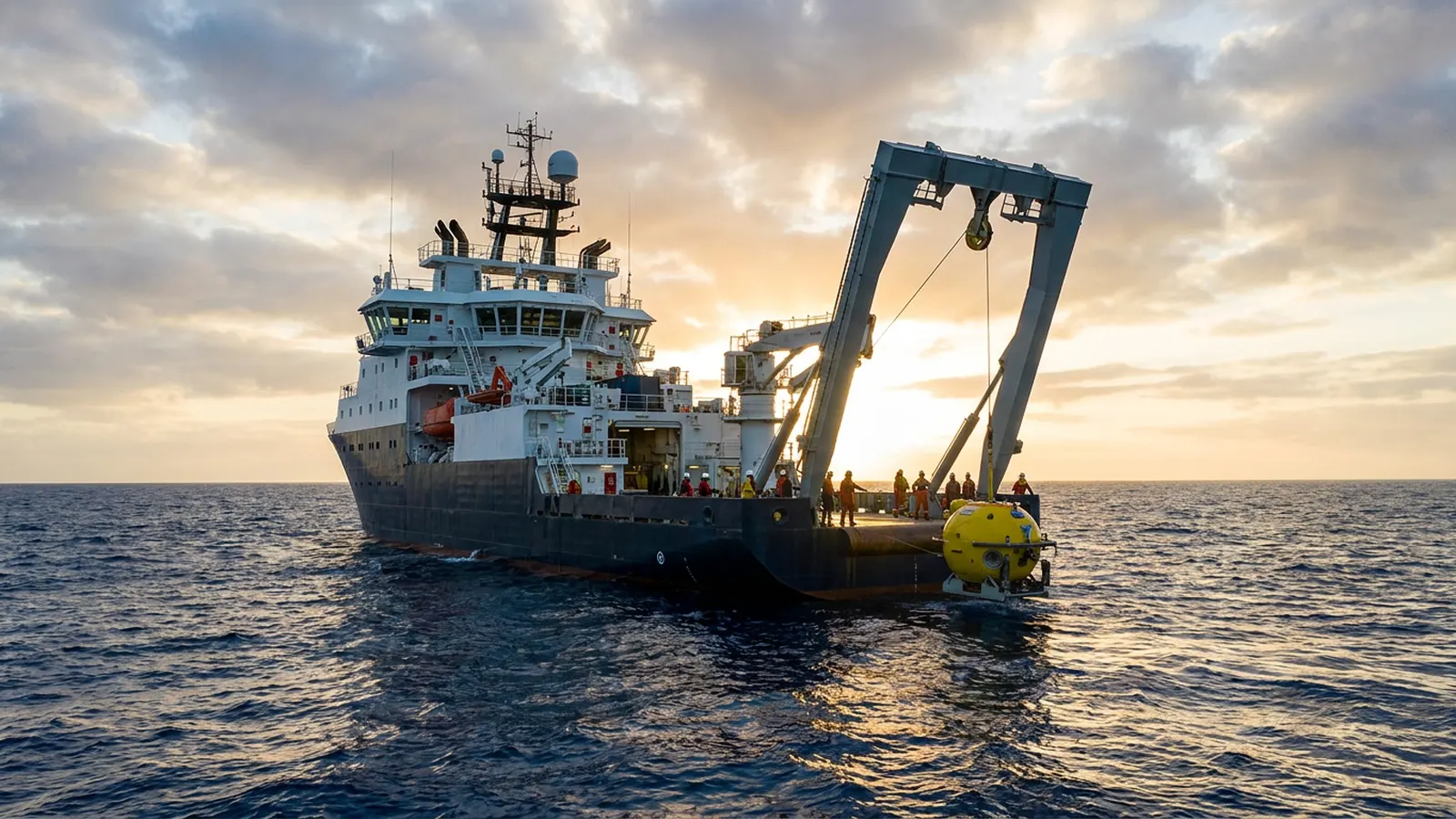
In Cook’s day, depth was measured by dropping a weighted line. The Challenger expedition of the 1870s founded oceanography as a science. Sonar mapped the seafloor in the 20th century and revealed the mid-ocean ridges behind plate tectonics. Today, satellites measure sea level and temperature, thousands of Argo floats profile the ocean, and remotely operated vehicles stream deep dives to anyone online. Yet much of the seafloor still hasn’t been mapped in high resolution. See how ocean exploration has increased our understanding.
More on the profession and why it matters: what an oceanographer does, physical oceanographers, geological oceanographers, the Oceanographer of the Navy, why ocean exploration is important, ocean vs space exploration and Sylvia Earle’s books.
What does an oceanographer do?
Studies the ocean’s physics, chemistry, geology or biology, using ships, satellites, floats, submersibles and computer models.
Who is the most famous oceanographer?
Jacques Cousteau is the best known to the public; Sylvia Earle and Robert Ballard are among the most famous living ocean explorers.
Who was the first oceanographer?
There’s no single answer. The HMS Challenger expedition (1872–1876) is usually considered the founding of oceanography as a science.
Who first reached the deepest part of the ocean?
Jacques Piccard and Don Walsh, in the bathyscaphe Trieste, on January 23, 1960.
Who was the first aquanaut?
Robert Sténuit, in September 1962.
What is the difference between an oceanographer and a marine biologist?
Marine biologists study marine life; oceanographers study the ocean as a whole system, and biological oceanography is one branch.
- NOAA Ocean Exploration, history of ocean exploration
- Woods Hole Oceanographic Institution, What is oceanography?
- Seabed 2030 (Nippon Foundation–GEBCO), June 2025 update: 27.3% of the seafloor mapped.
- Maury, M. F. (1855). The Physical Geography of the Sea. Harper & Brothers.
- Report of the Scientific Results of the Exploring Voyage of H.M.S. Challenger during the years 1873–76.
Blane Perun has been exploring Earth’s oceans and marine life for over 25 years. Founder of TheSea.Org in 1999, underwater photographer, coral aquaculture pioneer, and explorer of 80+ countries.
About Blane Perun →