Sylvia Earle — “Her Deepness” and Six Decades for the Ocean
An American marine botanist, explorer and conservationist, born in 1935 in New Jersey and raised on Florida’s Gulf coast. She led the all-female Tektite II saturation mission in 1970, set a women’s depth record by walking untethered on the seafloor at 381 m (1,250 ft) in a JIM suit off Oahu in 1979, co-founded submersible companies with engineer Graham Hawkes, served as NOAA’s first female chief scientist, and in 2009 founded Mission Blue, which designates ocean Hope Spots. Admirers call her “Her Deepness.”
Sylvia Earle has spent more than six decades underwater, first as a botanist counting seaweeds and later as one of the best-known voices for the ocean.
Her career runs through some of the most important chapters in modern ocean exploration: the first experiments in living on the seafloor, the arrival of one-atmosphere diving suits and small submersibles, the growth of US marine sanctuaries and the global campaign for marine protected areas. This profile follows that career in order, from a childhood on Florida’s Gulf coast to the founding of Mission Blue, and explains why her work still matters to divers, scientists and anyone who cares about the sea.
Who is Sylvia Earle?
Sylvia Alice Earle, born on August 30, 1935, is an American marine biologist, oceanographer, explorer and author. She trained as a phycologist, a specialist in algae, and her early research described the seaweeds of the Gulf of Mexico. She later became known for leading the first all-female team of aquanauts in 1970, for a record-setting walk on the seafloor in an armoured diving suit in 1979, for co-founding companies that built small submersibles, and for serving as the first woman chief scientist of the US National Oceanic and Atmospheric Administration, NOAA.
Since 1998 she has been associated with the National Geographic Society, first as Explorer in Residence and later as Explorer at Large. That same year Time magazine named her its first “Hero for the Planet”. Admirers call her “Her Deepness”, and she has also been nicknamed “the Sturgeon General”. In 2009 she used the TED Prize to launch Mission Blue, the ocean-protection campaign that has defined the later part of her career.

How did Sylvia Earle become an ocean scientist?
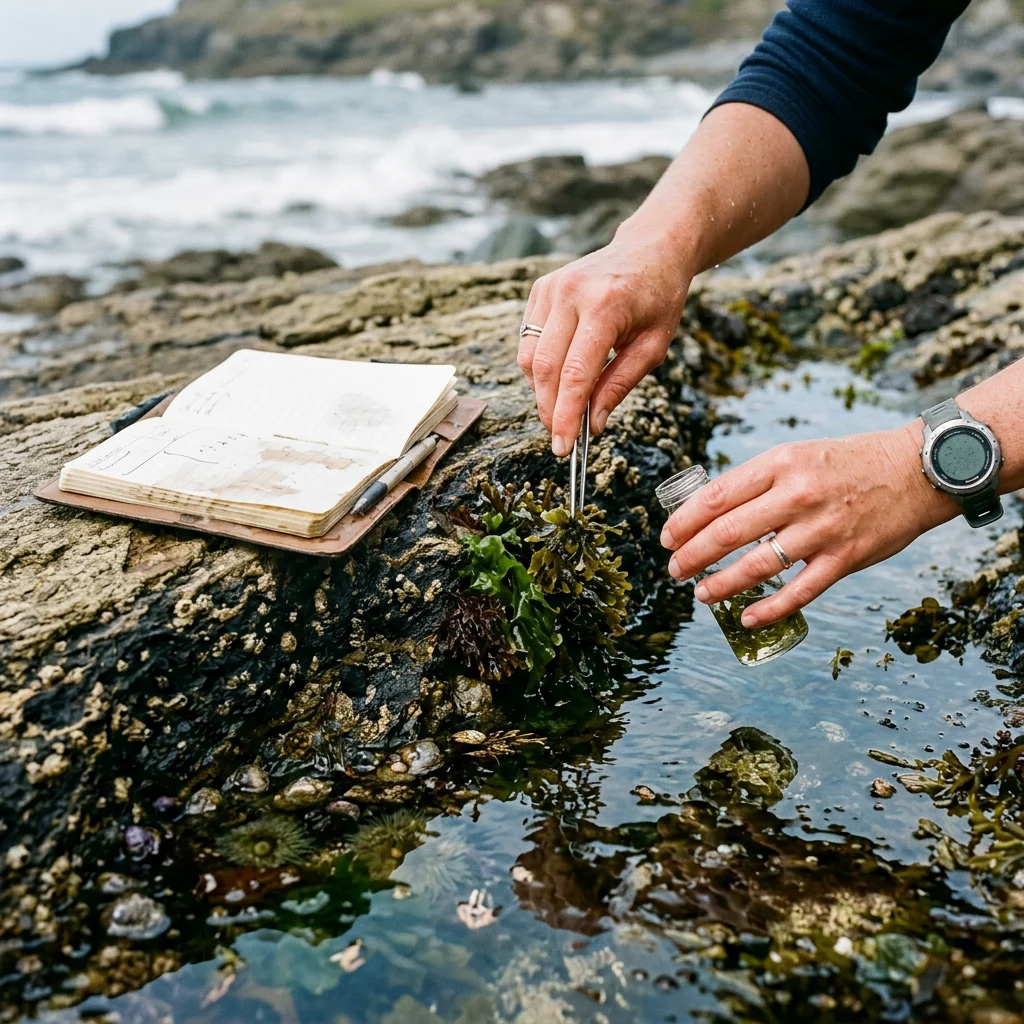
Earle was born in the Gibbstown section of Greenwich Township in Gloucester County, New Jersey. Both of her parents loved the outdoors and encouraged her early interest in nature. During her childhood the family moved to Dunedin on Florida’s west coast, near Clearwater, and the shallow, clear water of the Gulf of Mexico became her first laboratory. She explored salt marshes and seagrass beds and collected the animals and plants she found there.
She moved quickly through her education. She earned an associate degree from St. Petersburg Junior College in 1952, a bachelor’s degree in botany from Florida State University in 1955 and a master’s degree from Duke University in 1956. She returned to Duke for her doctorate in phycology, completed in 1966, with a thesis on the brown algae (Phaeophyta) of the eastern Gulf of Mexico. Over about ten years of fieldwork for the project she collected some 20,000 specimens of algae, building one of the most detailed pictures of Gulf seaweeds then available.
That choice of subject was unusual. Algae and seagrasses rarely attract public attention, yet they form the base of many coastal food webs and provide nursery habitat for fish and invertebrates. Earle’s training as a botanist shaped her outlook for the rest of her life. She has often emphasised that the ocean’s plants and microbes, not just its whales and sharks, keep the planet habitable, an idea that runs through her later writing and campaigning.
What did she do before Tektite?
After her doctorate Earle spent a year as a research fellow at Harvard University and then returned to Florida as resident director of the Cape Haze Marine Laboratory, the institution on the Gulf coast later renamed Mote Marine Laboratory. She was a Radcliffe Institute Scholar from 1967 to 1969, kept a long research fellowship at Harvard, and from 1969 was a research associate at the University of California, Berkeley. Her research took her to places as different as the Galápagos Islands, China and the Bahamas.
By the end of the 1960s she was already an exceptionally experienced scientific diver. When she applied to join the Tektite underwater-habitat programme in 1969, she had logged more than 1,000 hours underwater. She was nonetheless turned down for the first mission, an experience that set the stage for the next chapter of her career.
What was Tektite II?
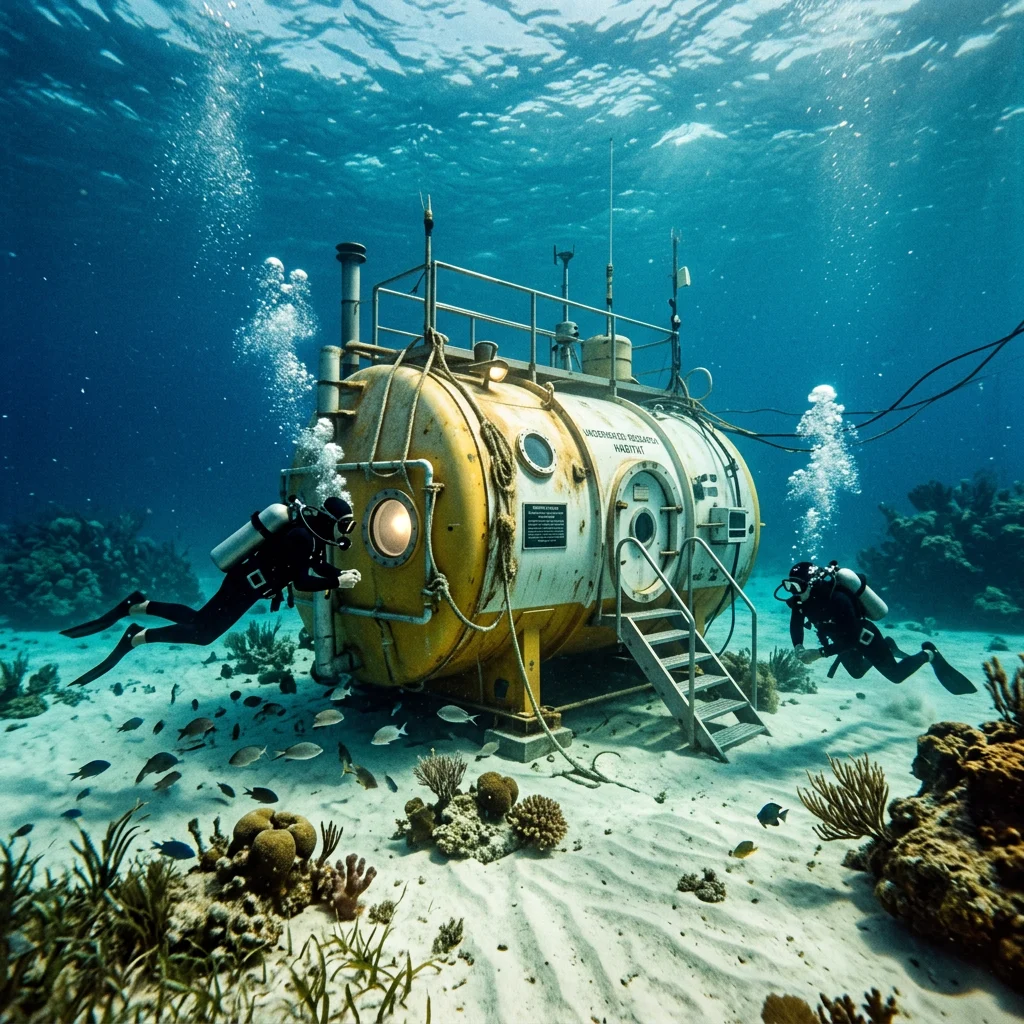
A 1970 underwater-habitat programme in the US Virgin Islands, in which Earle led the first all-female team of saturation divers.
Tektite was the first nationally sponsored “scientists in the sea” programme in the United States. Its habitat, built by General Electric’s space division, looked like a pair of white silos joined by a flexible tunnel, each 3.8 metres across and 5.5 metres tall, sitting on the bottom of Great Lameshur Bay off St. John at a depth of about 13 metres. Tektite I, in 1969, put four Interior Department scientists on the seafloor for about two months. Tektite II, in 1970, was coordinated by the Department of the Interior with part of its funding from NASA, which wanted to study how small teams cope with isolation and confinement, as astronauts would on long missions. Behavioural observers watched the crews around the clock on closed-circuit television.
Tektite II ran ten missions of 10 to 20 days, each with four scientists and an engineer. The fifth, Mission 6-50, was the first all-female saturation team. Earle led it, with Renate Schlentz True of Tulane University, Ann Hurley Hartline and Alina Szmant, graduate students at the Scripps Institution of Oceanography, and Margaret Ann “Peggy” Lucas, a Villanova electrical engineering graduate who served as habitat engineer. The team spent about two weeks living under the sea, and Earle has described diving for up to 12 hours a day to study the reef’s plants and fish.
The mission made the five women famous. They were greeted with a ticker-tape parade and invited to a White House reception, and Earle used the attention to talk about the ocean to audiences who had never heard of a research habitat. The Tektite missions were also the first to carry out in-depth ecological studies from a saturation habitat, and they helped pave the way for later undersea laboratories.
What was the JIM suit dive?

On September 19, 1979, off Oahu, Earle walked on the seafloor 381 metres (1,250 feet) down in a JIM atmospheric diving suit, untethered from the surface.
The JIM suit is an atmospheric diving suit: a hard, articulated shell with jointed arms and legs that keeps the occupant at the same pressure as at the surface. Because the diver breathes air at one atmosphere, there is no risk of nitrogen narcosis or decompression sickness and no need for decompression on the way up. The suit was invented in 1969 by Mike Humphrey and Mike Borrow of the British firm Underwater Marine Equipment Ltd, and by the late 1970s it was being used for offshore oil work in deep and very cold water.
For the 1979 dive Earle rode down to the seabed on the submersible Star II. There she walked for about two and a half hours, linked only to the submersible rather than to a ship at the surface. She later described seeing a dozen or so long-legged, bright-red galatheid crabs swaying on the branches of a pink sea fan, lanternfish, sea pens and “sparks of living light” from bioluminescent animals. The dive set a women’s depth record for an untethered walk that is still cited today, and it brought her the nickname “Her Deepness”.
The experience also convinced her that scientists needed better tools to reach the deep sea, more cheaply and more often than large research submarines allowed.
Why did she start building submarines?
In 1982 Earle and the British engineer and submersible designer Graham Hawkes, who later became her husband, founded Deep Ocean Engineering to design, build and operate piloted and robotic subsea systems. In 1985 the company produced Deep Rover, a one-person research submersible with a clear acrylic sphere, rated to roughly 900 to 1,000 metres. In 1986 Earle trained in it off Lee Stocking Island in the Bahamas and set a women’s record for solo diving depth, matching Hawkes’s overall record.
From 1979 to 1986 she was also Curator of Phycology at the California Academy of Sciences in San Francisco, and from 1980 to 1984 she served on the US National Advisory Committee on Oceans and Atmosphere. In 1980 she co-wrote Exploring the Deep Frontier with the underwater cinematographer Al Giddings, a National Geographic book about the history and future of people in the sea. In 1992, after her time at NOAA, she founded a second engineering company, Deep Ocean Exploration and Research (DOER Marine), which is now run by her daughter Elizabeth and continues to design and operate deep-ocean equipment.
What did Sylvia Earle do at NOAA?
From 1990 to 1992 she was NOAA’s chief scientist, the first woman to hold the post.
NOAA oversees US weather forecasting, fisheries management, coastal science and marine sanctuaries, and the chief scientist advises on the agency’s research. Because of her expertise in oil spills, Earle was asked during the 1991 Gulf War to lead research trips assessing the environmental damage caused when Iraqi forces set fire to Kuwait’s oil wells and released oil into the Persian Gulf. She also brought her experience of the Exxon Valdez and Mega Borg oil spills to the job, and in 2010 she was called on again as a consultant during the Deepwater Horizon disaster in her home waters of the Gulf of Mexico.
She left NOAA in 1992 to return to exploration and engineering. The move marked a shift in her career from scientist and engineer toward explorer and advocate.
What did she do with National Geographic?
In 1998 Earle became a National Geographic Explorer in Residence. From 1998 to 2002 she led the Sustainable Seas Expeditions, a five-year programme sponsored by the National Geographic Society and funded by the Richard and Rhoda Goldman Fund to explore the US National Marine Sanctuaries. The expeditions used small one-person submersibles, including the DeepWorker 2000 she supplied, to survey fish and habitats in sanctuaries such as Stellwagen Bank off Massachusetts.
In the same period she chaired the advisory council for the ocean layer in Google Earth and became council chair for the Harte Research Institute for Gulf of Mexico Studies in Texas. In July 2012 she co-led, with Mark Patterson, an expedition to NOAA’s Aquarius underwater laboratory off Key Largo in Florida, marking the 50th anniversary of Jacques Cousteau’s Conshelf I habitat and studying the health of the coral reef. More than four decades after Tektite, she was once again living on the seafloor.
What is Mission Blue?
In 2009 Earle won the TED Prize, which came with a wish to change the world. Hers was to ignite public support for a global network of marine protected areas, “Hope Spots”, large enough to save and restore the ocean. The campaign became Mission Blue, also known as the Sylvia Earle Alliance. Hope Spots are described as areas critical to the health of the ocean because of an abundance or diversity of species, a unique habitat or ecosystem, or significant cultural or economic value to a community.
Mission Blue’s early expeditions went to Cuba in 2009, Belize and the Galápagos Islands in 2010, Costa Rica and the Central American Dome in 2014 and the South African coast later that year. By 2020 the organisation listed more than 120 Hope Spots, and more than two hundred organisations had signed on in support. Mission Blue backs the goal of protecting 30 percent of the ocean by 2030, often called 30×30. A Netflix documentary, Mission Blue, released in 2014, follows Earle’s life and the campaign.
What has she written?
Earle has written more than 150 publications, ranging from technical papers on algae to children’s books. Her best-known books for general readers include Sea Change: A Message of the Oceans, published in the mid-1990s, which combines memoir with a warning about the state of the sea; Wild Ocean: America’s Parks Under the Sea (1999); the National Geographic Atlas of the Ocean (2001); Ocean: An Illustrated Atlas (2008, with Linda Glover); The World Is Blue: How Our Fate and the Ocean’s Are One (2009); and Blue Hope (2014). A recurring message is “no blue, no green”: without a healthy ocean, there is no healthy planet.
What honours has she received?
Earle’s awards span science, exploration and conservation. Among them are the Explorers Club’s Lowell Thomas Award in 1980 and its Explorers Club Medal in 1996, induction into the National Women’s Hall of Fame in 2000, the National Geographic Society’s highest honour, the Hubbard Medal, in 2013, and the United Nations Champions of the Earth lifetime achievement award in 2014. In 2018 she received the Princess of Asturias Award for Concord, and the Seattle Aquarium created a lifetime achievement award in her name. In 2020 an expedition cruise company announced that a new expedition ship would be named Sylvia Earle.
Why does Sylvia Earle matter?
Because she joined exploration to protection, and helped open ocean science to women.
When Earle began diving, most marine scientists studied the sea from the deck of a ship. She belongs to the generation that went underwater to see for themselves, following pioneers such as William Beebe, whose bathysphere dives in the 1930s first showed what lived in the deep, and the early habitat divers such as Robert Sténuit. Her career overlapped with the deep-sea milestones of Jacques Piccard and the popular films of Cousteau, and she helped turn the tools of that era, from saturation habitats to small submersibles, into everyday instruments of science.
Her second legacy is advocacy. Earle has been an outspoken critic of overfishing, deep-sea mining and pollution, and she was among the early prominent scientists to argue that large, strongly protected areas are needed to let ocean ecosystems recover. She is part of the Ocean Elders group and has supported making ecocide an international crime. Not everyone agrees with all of her positions, but few people have done more to make the health of the ocean a mainstream concern. For an introduction to how ocean protection works, see conserving oceans.
Finally, she changed who gets to be an ocean explorer. In 1969 she was turned away from a habitat programme despite more than 1,000 hours of diving experience. Within a year she was leading a team of women on the seafloor, and within a decade she held a depth record. Generations of women in marine science cite her as an inspiration, and her story is a reminder of how recently the underwater world was considered a man’s domain. She has told much of that story herself; see our guide to Sylvia Earle’s books, from Sea Change to The World Is Blue.
Who is Sylvia Earle?
An American marine biologist and explorer, born in 1935, known for leading Tektite II, her 1979 JIM suit dive, serving as NOAA chief scientist and founding Mission Blue.
Why is Sylvia Earle called Her Deepness?
For her deep-sea exploration, especially her 1979 untethered walk on the seafloor at 381 metres.
How deep did Sylvia Earle dive?
She walked on the seafloor at 381 m (1,250 ft) in a JIM suit off Oahu in 1979.
What is Mission Blue?
An ocean-conservation organisation she founded in 2009 with her TED Prize, which names Hope Spots critical to ocean health.
Was Sylvia Earle the first female chief scientist of NOAA?
Yes. She held the post from 1990 to 1992.
What did Sylvia Earle study?
Marine algae. Her Duke PhD (1966) described the brown algae of the eastern Gulf of Mexico.
Where did Sylvia Earle grow up?
She was born in New Jersey and grew up in Dunedin, near Clearwater, on Florida’s Gulf coast.
What submarines did Sylvia Earle help build?
With Graham Hawkes she co-founded Deep Ocean Engineering, which built the one-person Deep Rover submersible.
- Australian National Maritime Museum: Ocean changemakers, Dr Sylvia Earle (Tektite II, JIM suit dive, Deep Rover).
- Encyclopædia Britannica: Sylvia Earle (education, 1979 dive date and depth, NOAA 1990–1992, books).
- Wikipedia: Sylvia Earle; Tektite habitat; JIM suit (career dates, Tektite II crew and habitat, suit history), accessed 2023.
- Earle, S. & Giddings, A. (1980). Exploring the Deep Frontier: The Adventure of Man in the Sea. National Geographic Society.
- Earle, S. (2009). The World Is Blue: How Our Fate and the Ocean’s Are One. National Geographic.
- Hakai Magazine (2019): California seamounts are Sylvia Earle’s newest “Hope Spots” (Hope Spot definition).
Blane Perun has been exploring Earth’s oceans and marine life for over 25 years. Founder of TheSea.Org in 1999, underwater photographer, coral aquaculture pioneer, and explorer of 80+ countries.
About Blane Perun →