Reef Tank Aquarium — The Main Types of Reef Tank and How to Choose One
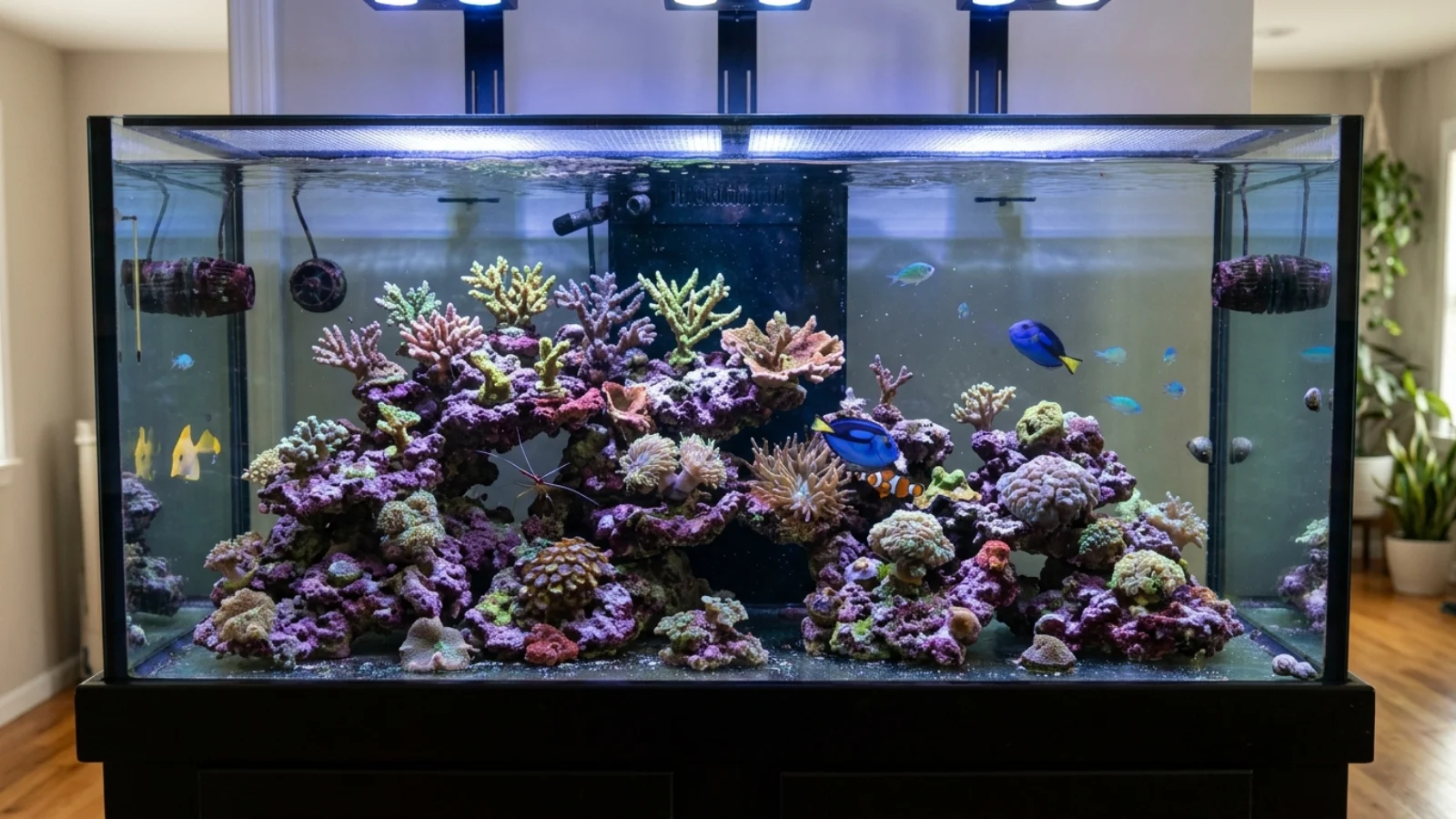
A reef tank aquarium is a saltwater aquarium designed to keep living corals, together with the fish and invertebrates that live among them. Unlike a fish-only tank, it has to supply what corals need: strong lighting for their symbiotic algae, water movement, and stable calcium, alkalinity and magnesium for building skeletons. The main styles are soft-coral, LPS, SPS, mixed and biotope tanks such as mangrove reefs, and the right one depends on how much time, money and precision you can give it.
The modern hobby took off in the 1980s and 1990s, when better lighting, protein skimmers and the “Berlin method” of using live rock for biological filtration made it practical to keep stony corals at home. Today aquacultured corals, LED lighting and reliable test kits mean that a well-planned reef tank is within reach of most dedicated hobbyists. This page is the index for our Reef Tank Aquarium section; each style has its own in-depth guide below.
What are the main types of reef tank?
The first decision is which corals you want, because that sets the light, flow and chemistry for everything else. A soft-coral tank of leathers, mushrooms, zoanthids and polyps is the most forgiving: moderate light, moderate flow and higher nutrients suit it. An LPS tank, built around large-polyp stony corals such as hammers, torches, acans and brains, adds calcium and alkalinity demands but tolerates small mistakes and rewards target feeding. An SPS tank of Acropora, Montipora and their relatives needs the most light, the strongest flow and the steadiest chemistry, and is the hardest style to master.
A mixed reef combines all three, zoned by height in the tank, and is the most popular style. Biotope tanks recreate one particular habitat, such as a seagrass lagoon, a fore-reef slope or a mangrove shoreline, and choose corals, fish and invertebrates to match.
| Style | Difficulty | Light | Flow | Nutrients |
|---|---|---|---|---|
| Soft coral | Easy | Low–moderate | Moderate | Higher |
| LPS | Easy–moderate | Moderate | Low–moderate | Moderate |
| Mixed | Moderate–hard | Zoned | Zoned | Moderate |
| SPS | Hard | High | High | Low but measurable |
| Mangrove / lagoon | Moderate | High above water | Gentle | Moderate |
What equipment does a reef tank need?
Every style needs the same core: a tank and stand, ideally with a sump below for equipment; live or dry rock for biological filtration and aquascaping; a heater and good thermometer; circulation pumps; a return pump; reef-capable lighting; a protein skimmer; a reverse osmosis/deionisation unit for pure top-off and mixing water; an automatic top-off; and reliable test kits for alkalinity, calcium, magnesium, nitrate and phosphate. Stony-coral tanks add a dosing pump or calcium reactor as they fill out.
Bigger is easier, within reason. A larger volume of water buffers temperature and chemistry swings, so a 200–400 litre tank is often more forgiving than a nano. That said, many keepers start small to learn, and our nano reef tanks guide covers how to make a small system work.
Which fish and invertebrates belong in a reef tank?
Reef-safe animals are those that leave corals, clams and other invertebrates alone. Clownfish, gobies, blennies, cardinalfish, anthias, fairy and flasher wrasses and most tangs are standard choices, along with cleaner shrimp, snails and small hermit crabs as a cleanup crew. Butterflyfish, many large angelfish, triggerfish and puffers eat coral polyps or invertebrates and belong in fish-only systems. Stock fish slowly, a few at a time, so the biological filter can keep up with the extra waste, and quarantine new arrivals to keep parasites such as marine ich out of the display.
How should a beginner choose?
Start with what you can keep stable. For most people that means a soft-coral or LPS tank first, cycled properly, stocked slowly and run for six months to a year before adding demanding SPS. Read about the chemistry before you buy livestock, budget for good lighting and a decent skimmer, and buy aquacultured corals and captive-bred fish where possible. Our reef aquarium basics and tank cycling guides are the place to begin.
How long does a new reef tank take to mature?
Longer than most beginners expect. The nitrogen cycle, in which bacteria colonise the rock and learn to convert ammonia to nitrite and then nitrate, typically takes four to eight weeks with dry rock, less with good live rock or bottled bacteria. That only makes the tank safe for a few hardy fish. Over the next several months it passes through an “ugly phase” of diatoms, green hair algae and sometimes cyanobacteria as nutrients and microbes settle down, and coralline algae slowly begins to colour the rock. Most experienced keepers regard a tank as genuinely stable only after six months to a year, which is why the demanding corals come last.
Patience in that first year pays back for the life of the tank. Adding livestock slowly, testing regularly and resisting the urge to chase every number with a new additive gives the system time to build the biological buffering that makes a mature reef forgiving.
Where can you get corals and fish responsibly?
Buy aquacultured or maricultured corals wherever possible. Most popular soft corals, LPS and many SPS are now grown from fragments in hobbyist systems, commercial farms and ocean nurseries, and these colonies are usually hardier than wild-collected ones because they are already adapted to aquarium conditions. For fish, captive-bred clownfish, dottybacks, gobies and a growing list of other species are widely available. Local reef clubs are a good source of frags and advice, and buying from them keeps money and knowledge in the hobby. Whatever the source, quarantine new fish for several weeks and dip new corals before they go into the display; a single unquarantined fish can bring marine ich or velvet into a tank, and a single frag can carry flatworms or nudibranchs that take months to eradicate.
What does it cost to run a reef tank?
Costs vary enormously with size and style, but the running costs are as important as the purchase. Electricity for lighting, pumps and heating or cooling is the biggest ongoing item, followed by salt mix, test reagents, replacement filter media and food. SPS tanks add two-part supplements or reactor media. Plan for regular water changes, typically 10–20 per cent every week or two, and for occasional equipment failures; a spare heater and pump are cheap insurance. Time is the other cost: expect to spend a few minutes a day checking the tank and an hour or two a week on testing, cleaning and water changes, more for SPS systems.
What is a reef tank aquarium?
A saltwater aquarium designed to keep living corals together with fish and invertebrates.
What is the easiest type of reef tank?
A soft-coral tank, followed by an LPS tank. Both tolerate small mistakes in chemistry.
What is the hardest type of reef tank?
An SPS-dominant tank, because Acropora need intense light, strong flow and very stable alkalinity.
How long before adding corals to a new reef tank?
After the nitrogen cycle is complete, usually four to eight weeks, starting with hardy soft corals.
What size reef tank is best for beginners?
A medium tank of roughly 200–400 litres is more stable than a nano, though many keepers start smaller.
Do reef tanks need a sump?
Not strictly, but a sump hides equipment, adds water volume and makes maintenance easier.
How often should you change water in a reef tank?
Typically 10–20 per cent every week or two, with salt mixed to match the tank.
- Kraken Corals, “Parameters for your reef”
- Gulf Coast Aquatics, “Coral lighting: PAR targets by coral type”
Blane Perun has been exploring Earth’s oceans and marine life for over 25 years. Founder of TheSea.Org in 1999, underwater photographer, coral aquaculture pioneer, and explorer of 80+ countries.
About Blane Perun →