Is a Shark a Fish? — Yes: a Cartilaginous Fish, Not a Mammal
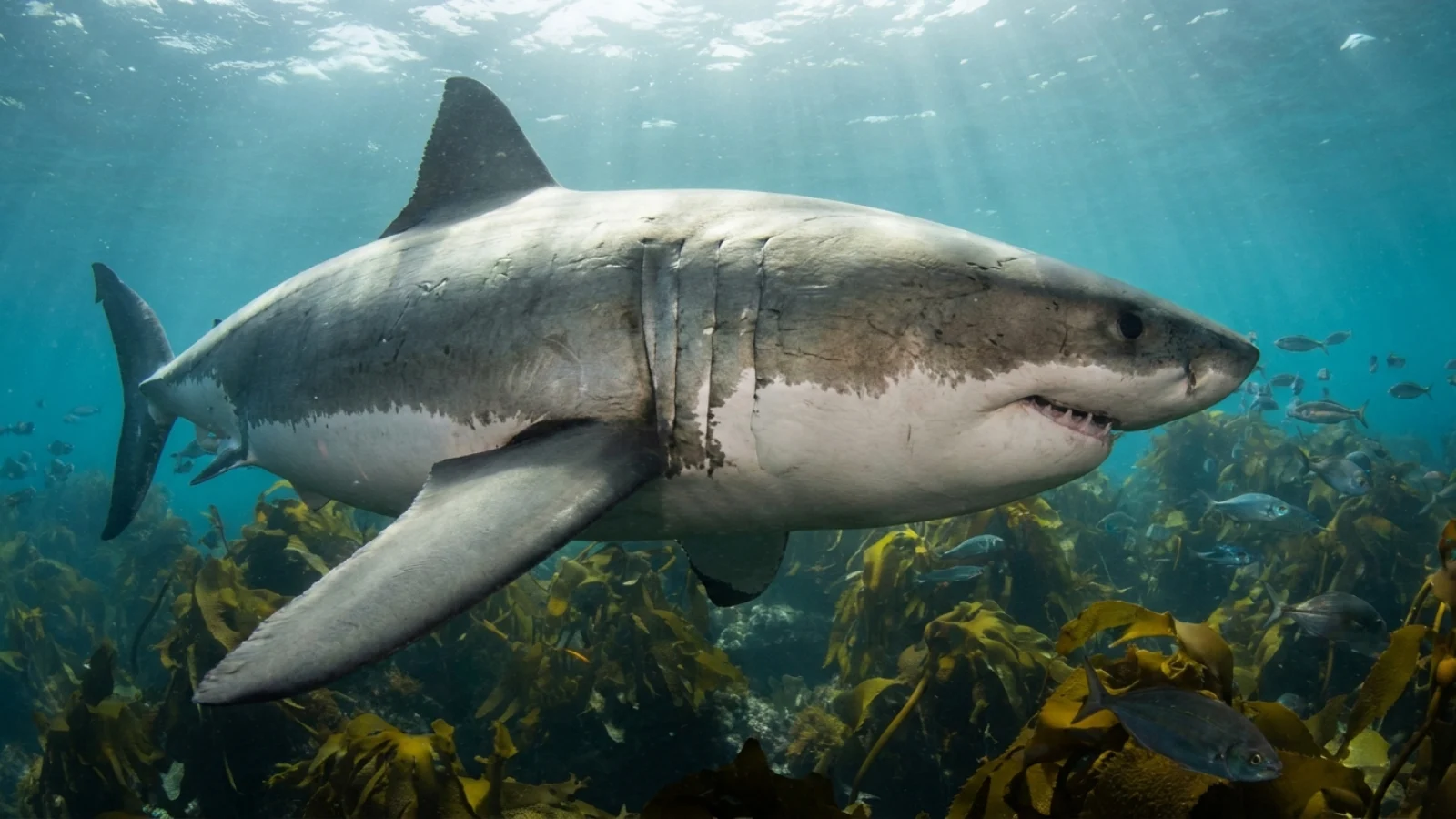
Yes, a shark is a fish. Sharks are cartilaginous fish (class Chondrichthyes), the same group as rays, skates and chimaeras. Like all fish they live in water, breathe through gills, swim with fins and have a backbone. What makes them different from “ordinary” fish like snapper or tuna is that their skeleton is cartilage instead of bone, they have no swim bladder, and their gill slits are open to the water with no bony gill cover. They are not mammals.
What makes a shark a fish?
A fish is a vertebrate that lives in water, breathes with gills and moves with fins rather than limbs. A shark ticks every box.
“Fish” is a broad label covering three living groups: the jawless fish (hagfish and lampreys), the cartilaginous fish (sharks, rays, skates and chimaeras) and the bony fish, which make up the overwhelming majority. Sharks belong to the second group. They have a backbone made of cartilage vertebrae, a jaw, paired pectoral and pelvic fins, and gills that pull oxygen from water. They are cold-blooded for the most part, and they never leave the water. There is no reasonable definition of “fish” that a shark fails.
The confusion usually runs the other way: people know that whales and dolphins look like big fish but are mammals, and wonder whether sharks might be the same. They are not. For the full mammal comparison, see are sharks mammals?
How are sharks different from bony fish?
Sharks and bony fish split more than 400 million years ago, and the two lineages solved life in water in different ways.
| Feature | Sharks | Bony fish (e.g. grouper, tuna) |
|---|---|---|
| Skeleton | Cartilage, partly calcified | Bone |
| Gills | 5–7 open slits per side | One slit under a bony cover (operculum) |
| Buoyancy | Large oily liver; sink if they stop swimming | Gas-filled swim bladder in most species |
| Scales | Placoid denticles, tooth-like | Thin, overlapping bony scales |
| Teeth | Rows, replaced constantly | Usually fixed, replaced less often |
| Fertilisation | Internal; males have claspers | Mostly external spawning |
| Young | Few, large pups or egg cases | Often thousands to millions of tiny eggs |
| Tail | Upper lobe usually longer | Usually symmetrical |
The biggest practical difference is buoyancy. Without a swim bladder, a shark relies on a large liver full of low-density oil, up to around a quarter of body weight in some species, plus the lift from its pectoral fins. That is why many sharks sink if they stop swimming. Some species, such as the great white and the whale shark, also need to keep moving to push water over their gills (ram ventilation), while bottom-dwellers like the nurse shark can pump water over their gills while resting.
Do sharks have bones?
No true bone. A shark’s skeleton is cartilage, the same flexible tissue as your nose and ears, stiffened in places with mineral deposits.
Cartilage is lighter than bone, which helps with buoyancy, and more flexible, which helps with tight turns. Shark vertebrae and jaws are reinforced with tiles of calcified cartilage, so they hold their shape and sometimes fossilise. Mostly, though, the only parts of a shark that survive for millions of years are its teeth, which is why megalodon teeth are so common and its skeleton is almost unknown. More in how many bones sharks have.
If sharks are fish, why do some give live birth?
Because live birth is a reproductive strategy, not a class trait. Plenty of fish do it.
Most shark species bear live pups. Some nourish embryos with a yolk-sac placenta (hammerheads, bull and blue sharks), some let embryos feed on unfertilised eggs, and in sand tiger sharks the largest embryo in each uterus eats its siblings. Others, like horn sharks and catsharks, lay leathery egg cases. Among bony fish, guppies, mollies and many rockfish give live birth too. None of these fish nurse their young with milk, which is the real dividing line between fish and mammals. See do sharks lay eggs?
Is a shark a fish or a mammal?
A fish. Sharks are cartilaginous fish; they breathe with gills, have no hair and never feed their young milk.
What type of fish is a shark?
A cartilaginous fish, class Chondrichthyes, subclass Elasmobranchii, which it shares with rays and skates.
Why are sharks considered fish?
They are aquatic vertebrates that breathe with gills and swim with fins, which is what defines a fish. Their cartilage skeleton places them in the cartilaginous branch rather than the bony branch.
Is a shark a reptile?
No. Reptiles breathe air with lungs and have scaly, keratin skin. Sharks are fish.
Do sharks have swim bladders?
No. Sharks use a large, oil-rich liver and the lift from their fins to control buoyancy, which is why many sink if they stop swimming.
Are rays and skates fish too?
Yes. Rays and skates are flattened cartilaginous fish and the closest relatives of sharks.
Is a whale shark a fish?
Yes. It is the largest living fish, reaching about 18 m.
Is a dolphin a fish?
No. Dolphins are mammals: they breathe air through a blowhole, are warm-blooded and nurse their calves.
- Hawaii Department of Land and Natural Resources. Sharks in General: about 550 shark species vs about 35,000 bony fish; 5–7 gill slits; denticles.
- Compagno, L. J. V. (2001). FAO Species Catalogue: Sharks of the World, Vol. 2.
- Klimley, A. P. (2013). The Biology of Sharks and Rays. University of Chicago Press.
Blane Perun has been exploring Earth’s oceans and marine life for over 25 years. Founder of TheSea.Org in 1999, underwater photographer, coral aquaculture pioneer, and explorer of 80+ countries.
About Blane Perun → More on Sharks →