Blackbeard’s Island: Pirate Refuge Turned Wildlife Sanctuary
Blackbeard Island is a 5,000-acre barrier island in McIntosh County, Georgia, now a National Wildlife Refuge administered by the US Fish and Wildlife Service. Its name comes from persistent local tradition that Edward Teach used it as a hiding place during his piracy career, possibly burying treasure there. No primary historical source confirms that Blackbeard ever used the island. The last serious treasure-hunting expedition was in 1880 and found nothing. The island is today accessible only by boat and is protected habitat for species including the bald eagle, loggerhead sea turtle, and piping plover.
Blackbeard Island sits in a geographic position that makes the pirate legend plausible even if it cannot be confirmed. A barrier island off the Georgia coast, accessible only by water, situated near major Atlantic shipping lanes, with dense maritime forest providing cover — the geography is exactly what you would design if you wanted a pirate hideout. Whether Edward Teach actually used it is a different question, and the historical record does not answer it definitively.
The island’s geography and strategic position
Blackbeard Island lies approximately 15 miles north of Darien, Georgia, between the Sapelo and Altamaha sounds. It is separated from the Georgia mainland by the Blackbeard Creek and the Sapelo Sound — water barriers that made it inaccessible to wheeled transport and difficult to reach without local knowledge of the tidal channels.
The island’s barrier position on the Georgia coast placed it within easy reach of the shipping lanes that connected the American colonial ports — Charleston, Savannah, and the Carolina and Georgia settlements — with the Caribbean and with Britain. A vessel operating from a concealed anchorage on Blackbeard Island could observe and intercept traffic through the sounds and coastal channels without being visible to vessels further offshore.
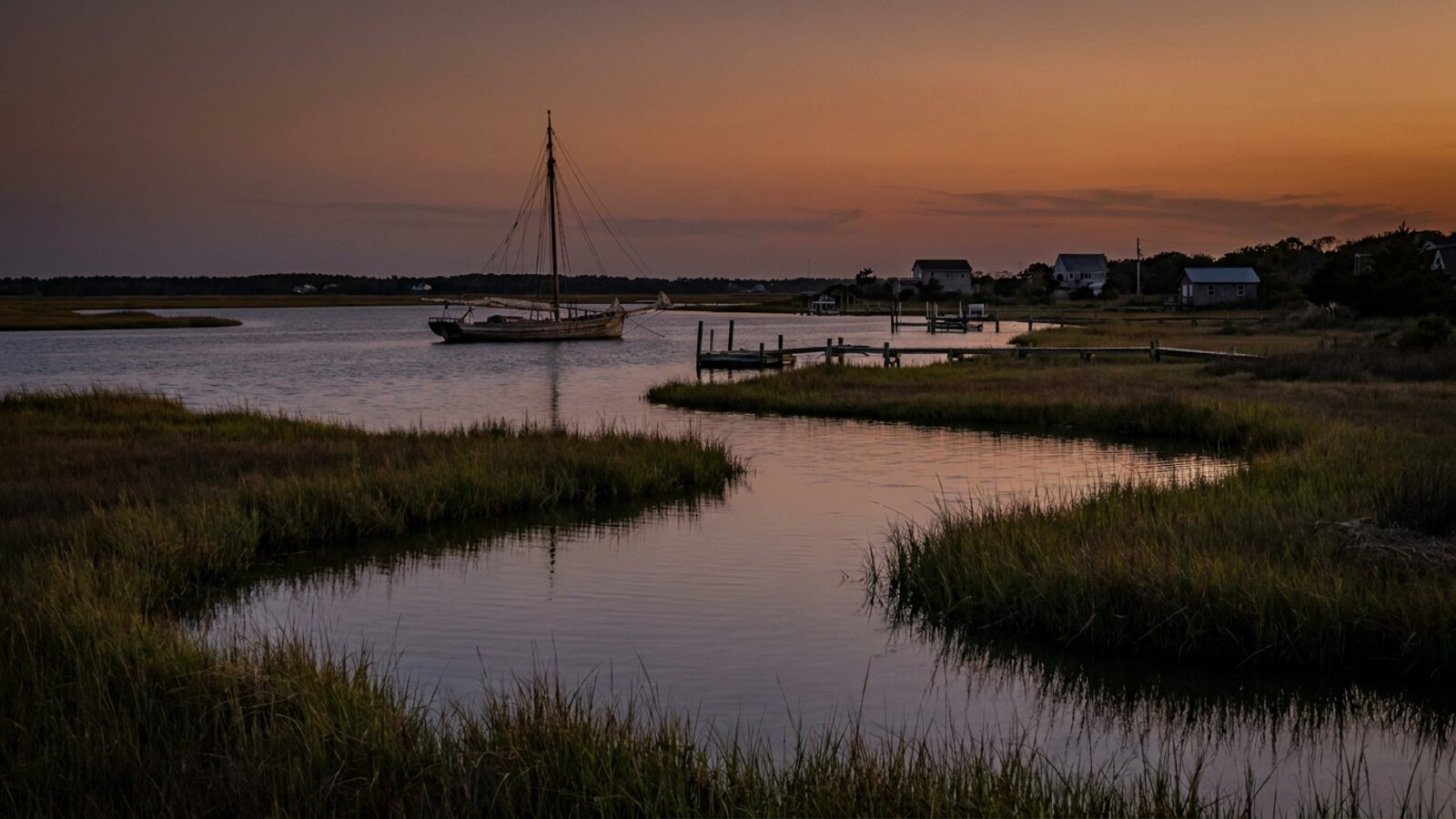
The island itself consisted of interconnecting barrier dunes covered with maritime forest — live oak, palmetto, and other coastal vegetation. This dense cover provided concealment for vessels careened for hull maintenance, for camps or temporary structures, and for the kind of activities that pirates needed to conduct away from populated areas. The combination of geographic concealment, strategic position near major shipping lanes, and water-only access created exactly the conditions that made barrier islands attractive to pirates operating in the Golden Age.
What the historical record does and doesn’t say
The honest answer about Blackbeard Island’s connection to its namesake is that the historical record does not confirm it. No primary source — no colonial record, no naval account, no court document, no contemporary narrative — places Edward Teach on the island.
The association comes from regional tradition that was already established well before the mid-19th century. Local accounts describe the island as a pirate refuge during the Golden Age and specifically associate it with Blackbeard as a place where treasure was concealed. These traditions were old enough by the 1880s to motivate a serious organised treasure-hunting expedition to the island, which searched systematically and found nothing attributable to Blackbeard.
The absence of documentary confirmation does not prove Blackbeard never used the island. Pirates of the Golden Age did not file itineraries, and the specific locations of their anchorages and careening beaches are rarely documented in primary sources. The island’s geography is consistent with pirate use, and its location within the operational range of a Caribbean-based fleet working up the American colonial coast is geographically plausible. But plausible and confirmed are different standards, and the Blackbeard Island connection meets the first without meeting the second.
The 1880 treasure expedition and its aftermath
The last serious organised attempt to find Blackbeard’s treasure on the island occurred in 1880, when a group of treasure hunters conducted a systematic search of the island’s most likely concealment locations. The expedition found nothing that could be attributed to Blackbeard or any other pirate.
The 1880 expedition is historically significant not just for its negative result but for what it demonstrates about the legend’s persistence. By 1880 the island had already been associated with Blackbeard for at least several generations, and that association was compelling enough to motivate a significant organised search effort. The failure to find anything did not destroy the legend; it has continued to circulate unchanged in the century and a half since.
Since the island became a National Wildlife Refuge, treasure hunting has been prohibited under federal law. This means that no further organised searches are possible without special permission, which is not granted for speculative treasure hunting. Whatever may or may not be buried on the island — and the historical evidence suggests probably nothing attributable to Blackbeard — it will remain undisturbed for the foreseeable future.
The island today: wildlife, access, and visiting
Blackbeard Island National Wildlife Refuge is accessible only by boat, with no bridge, causeway, or ferry service connecting it to the Georgia mainland. This geographic isolation, which may have contributed to its attraction as a pirate hiding place, now contributes to its value as undisturbed wildlife habitat.
The island provides nesting habitat for loggerhead sea turtles, which use its undisturbed beach for egg-laying during summer months. Bald eagles nest on the island, and the piping plover — a threatened shorebird — uses its beach habitat during migration and winter. The maritime forest of live oak and palmetto provides habitat for numerous migratory songbirds. The combination of beach, marsh, and forest habitats makes the island one of the more diverse wildlife areas on the Georgia coast.
Visitors can access the island during daylight hours by private boat, kayak, or chartered vessel from nearby marinas. Hiking trails provide access to the interior forest, and beach walking is permitted along most of the shoreline outside of sea turtle nesting season restrictions. The National Wildlife Refuge status means the island maintains the geographic character that presumably made it attractive to pirates three centuries ago: remote, quiet, covered in dense coastal vegetation, and accessible only to those with local knowledge of the surrounding waterways.
Did Blackbeard actually use Blackbeard Island?
No primary historical source confirms it. The association comes from regional tradition that predates the mid-19th century but has not been corroborated by colonial records, court documents, or other contemporary sources. The island’s geography is consistent with pirate use, but consistent is not the same as confirmed.
Where is Blackbeard Island?
In McIntosh County, Georgia, approximately 15 miles north of Darien. It is a barrier island separated from the mainland by the Blackbeard Creek and Sapelo Sound, accessible only by boat. It is now Blackbeard Island National Wildlife Refuge, administered by the US Fish and Wildlife Service.
Has any treasure been found on Blackbeard Island?
No. The last serious organised treasure search was in 1880 and found nothing attributable to Blackbeard or any other pirate. Since the island became a National Wildlife Refuge, treasure hunting has been prohibited under federal law. No confirmed pirate treasure has ever been recovered from the island.
Can you visit Blackbeard Island?
Yes, during daylight hours by private boat, kayak, or chartered vessel. There is no bridge, causeway, or ferry service. Hiking trails and beach access are available within the wildlife refuge regulations. Sea turtle nesting season restrictions may apply to beach areas during summer months.
What wildlife is on Blackbeard Island?
The island provides habitat for loggerhead sea turtles (nesting), bald eagles, piping plovers, and numerous migratory songbirds. The combination of beach, maritime forest, and salt marsh creates diverse habitats across the 5,000-acre refuge. It is considered one of the more ecologically significant coastal wildlife areas on the Georgia coast.
Blane Perun has been exploring Earth’s oceans and marine life for over 25 years. Founder of TheSea.Org in 1999, underwater photographer, coral aquaculture pioneer, and explorer of 80+ countries.
About Blane Perun →