Harbor Porpoise vs Dolphin — The Shy Porpoise of Coastal Waters
The harbor porpoise (Phocoena phocoena) is smaller than almost every dolphin, about 1.5 m long, with a rounded, beakless face, a small triangular dorsal fin and spade-shaped teeth. It is shy, lives alone or in small groups, rarely leaps and avoids boats. Dolphins are usually larger, beaked, more social and more acrobatic, with curved fins and cone-shaped teeth.
The harbor porpoise, spelled harbour porpoise in British English, is the most widespread porpoise in the world and the one most people in the Northern Hemisphere have the best chance of seeing. It is also easy to overlook. Unlike bottlenose dolphins, it doesn’t ride bow waves, leap clear of the water or come over to inspect a boat. A typical sighting is a small dark back and a little triangular fin rolling briefly through the surface, then gone. This page explains how the harbor porpoise differs from a dolphin, where it lives, how it survives on a near-constant diet of small fish, and why it has become a symbol of the problem of bycatch. For all seven species, see our porpoise species guide.
Harbor porpoise vs dolphin: the key differences
Porpoises and dolphins are both small toothed whales, but they belong to different families: porpoises to Phocoenidae and oceanic dolphins to Delphinidae.
Size is the first clue. An adult harbor porpoise is roughly 1.5 metres long, while a bottlenose dolphin is typically 2 to 4 metres. The head is next. A harbor porpoise has a short, rounded face with no visible beak; most dolphins have a distinct beak. The dorsal fin of a porpoise is small, low and triangular, while a bottlenose dolphin’s fin is tall and curved backward. Inside the mouth, porpoise teeth are flattened and spade-shaped, while dolphin teeth are conical.
Behaviour is often the easiest way to tell them apart at sea. Harbor porpoises usually travel alone or in pairs, surface with a quiet forward roll and rarely show more than the back and fin. Dolphins tend to travel in larger, noisier groups, often leap and bow-ride, and are more likely to approach boats. Our page on the difference between a dolphin and a porpoise goes into more detail, and is a porpoise a whale? explains where both fit on the cetacean family tree.
| Feature | Harbor porpoise | Bottlenose dolphin |
|---|---|---|
| Family | Phocoenidae | Delphinidae |
| Length | About 1.5 m | About 2–4 m |
| Face | Rounded, no beak | Distinct beak |
| Dorsal fin | Small, triangular | Tall, curved |
| Teeth | Spade-shaped | Cone-shaped |
| Group size | 1–3 usually | Often 2–15 or more |
| Behaviour around boats | Shy, avoids them | Often curious, bow-rides |
| Echolocation | Narrow-band, very high frequency | Broadband clicks |
Where harbor porpoises live
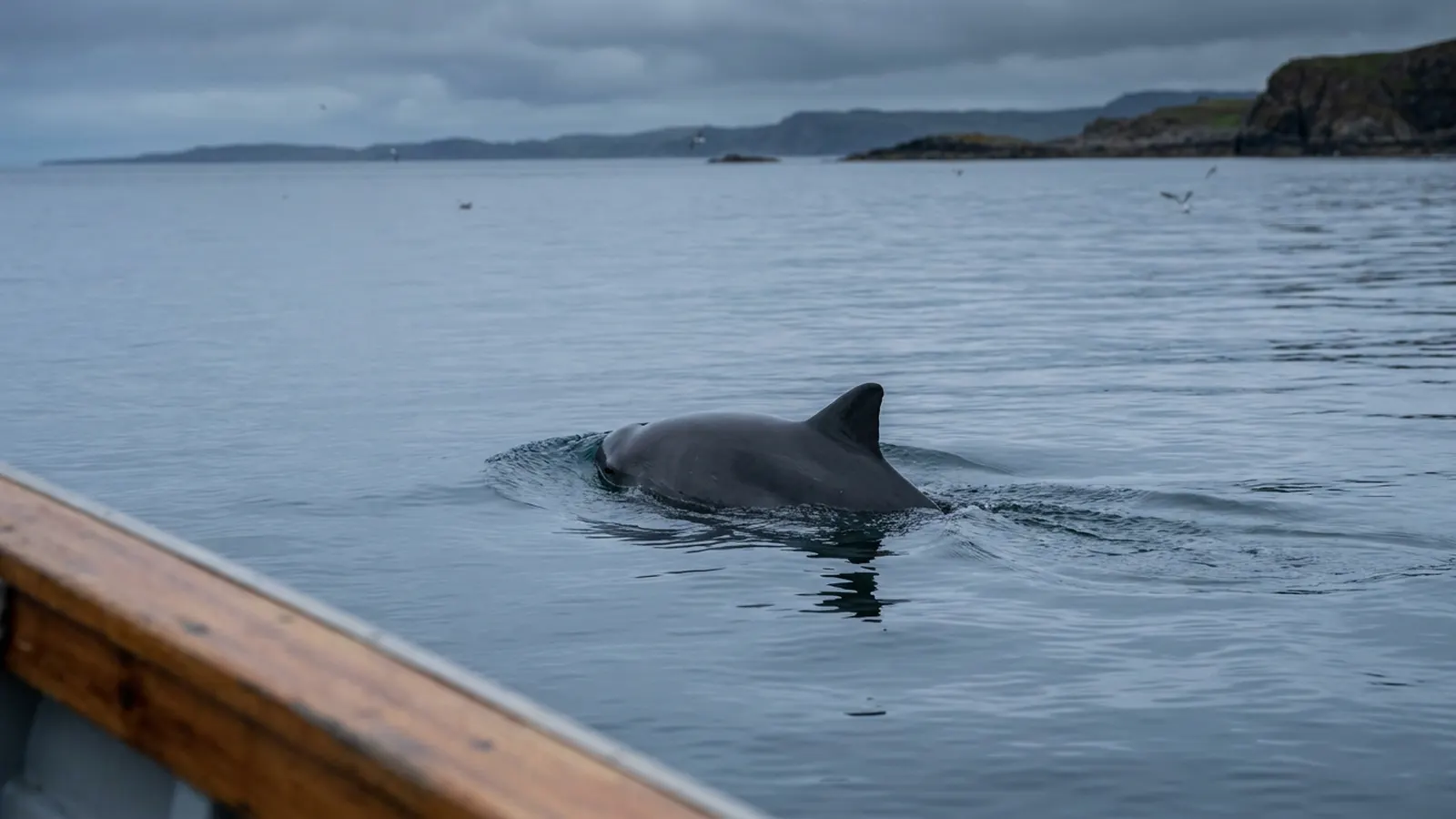
Harbor porpoises live in cool coastal waters across the Northern Hemisphere. In the North Atlantic they range from the eastern United States and Canada to Greenland, Iceland, Norway, the British Isles and the coasts of continental Europe, including the North Sea and the Baltic. Separate populations live in the Black Sea and off northwest Africa. In the North Pacific they range from Alaska to central California and from Japan to the Russian Far East.
They favour shallow water over the continental shelf, often less than 200 metres deep, and are common in bays, estuaries, sounds and tidal channels. Strong tidal currents around headlands and islands concentrate fish, and porpoises often feed in these spots. In the eastern Pacific, harbor porpoises largely disappeared from Puget Sound in Washington State in the late twentieth century, and their return in the 2000s has been one of the region’s welcome wildlife stories. See where do porpoises live for the ranges of all seven species.
Living life in the fast lane
Harbor porpoises have one of the toughest energy budgets of any marine mammal. They are small, so they lose heat quickly in cold water, and they carry less fat in reserve than larger whales. To stay alive they have to eat almost constantly. A study led by Danuta Wisniewska and published in Current Biology in 2016 attached high-resolution sound and movement tags to wild harbor porpoises in Danish waters. It found that the animals foraged nearly around the clock and caught small fish at extraordinary rates, often hundreds per hour, many of them only a few centimetres long. Even short periods without food can be serious for them.
Their diet is mainly small schooling fish such as herring, sprat, sand eels, capelin, whiting and small cod, along with squid and some bottom-living fish. They hunt with echolocation, sending out clicks and listening for echoes from prey. See what do porpoises eat for more.
Whispering clicks and hiding from orcas
Harbor porpoises produce an unusual type of echolocation click. Instead of the broadband clicks used by most dolphins, they make narrow-band, high-frequency clicks with energy concentrated around 130 kilohertz, far above the range of human hearing. Several other small toothed whales that live alongside killer whales use similar clicks.
One leading explanation is that these clicks act as acoustic camouflage. Killer whales hear well at lower frequencies but are thought to be much less sensitive at the very high frequencies porpoises use. By “whispering” in a frequency band that orcas can barely hear, porpoises may be able to echolocate without advertising their presence to their main predator. Mammal-eating killer whales do take porpoises; see orca.
When dolphins attack porpoises
The relationship between harbor porpoises and bottlenose dolphins is not always peaceful. In several places, including the Moray Firth in Scotland, Cardigan Bay in Wales and parts of California, researchers have documented bottlenose dolphins chasing, ramming and killing harbor porpoises without eating them. Post-mortem examinations of stranded porpoises have found broken ribs and internal injuries consistent with dolphin attacks. The reasons are debated. Ideas include competition for food, practice for aggression toward young dolphins, or simply aggression toward a smaller species. It is a reminder that dolphins’ friendly public image doesn’t tell the whole story. See common bottlenose dolphin.
Life cycle
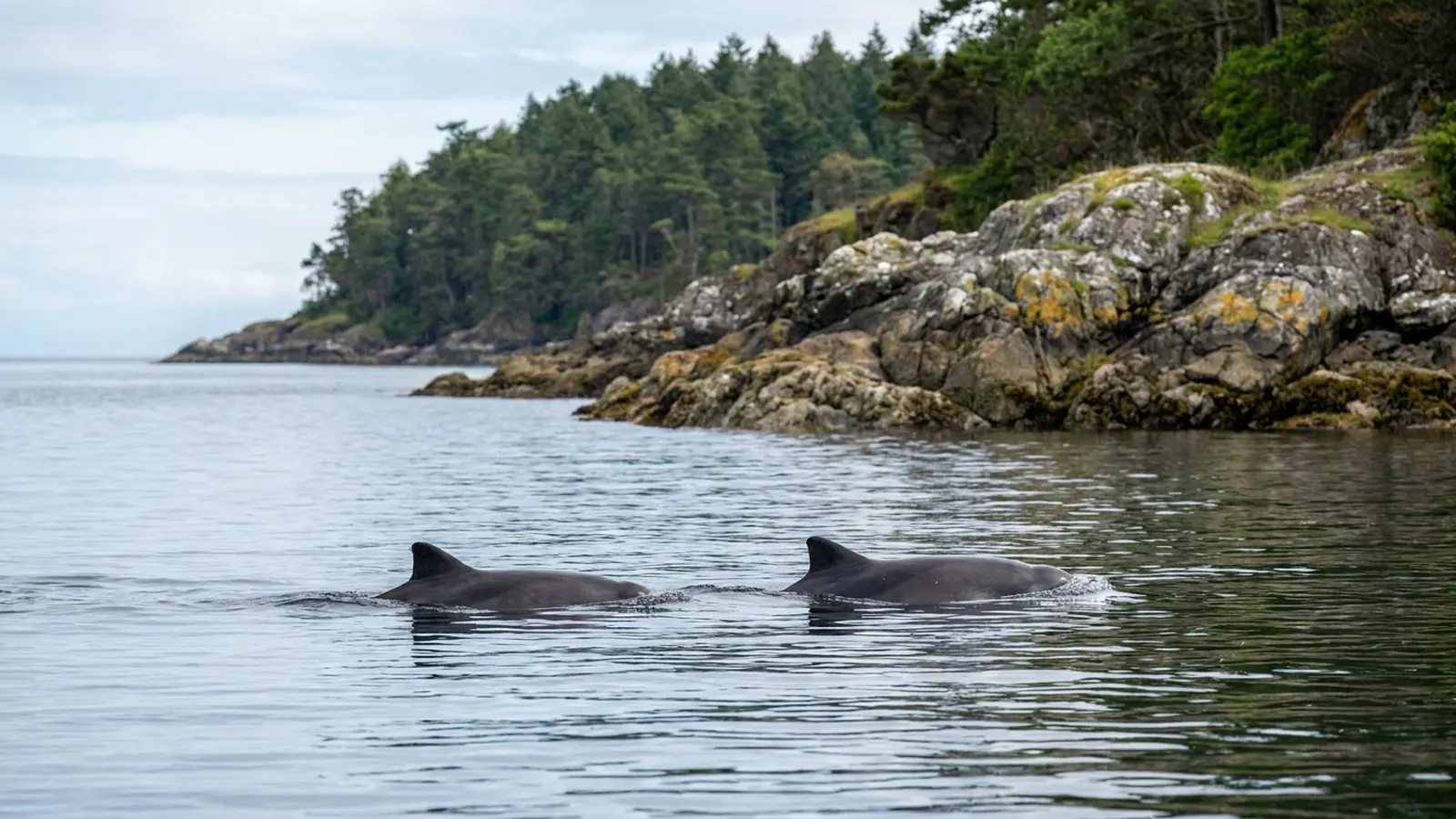
Harbor porpoises mature early and live fast. Females can begin breeding at around three or four years old and in some populations give birth almost every year. Pregnancy lasts about ten to eleven months, and calves are usually born in late spring or summer. A newborn is roughly 70 to 90 centimetres long. Calves nurse for several months and stay with their mothers for less than a year. Most harbor porpoises live less than twelve years, and few reach twenty. Compared with larger whales, this is a short life, and it is another reason the species is so sensitive to anything that interrupts feeding or kills adult females.
Threats: bycatch and noise
The biggest threat to harbor porpoises is bycatch, accidental entanglement in fishing nets, especially bottom-set gillnets. Because porpoises live close to shore, where gillnets are common, thousands are thought to die this way each year across their range. Acoustic pingers attached to nets, time and area closures and switching to other fishing gear have reduced bycatch in some places.
Underwater noise is another concern. Porpoises depend on hearing to find food and are known to move away from loud sources such as pile driving for offshore wind farms, seismic surveys and military sonar. Pollutants such as PCBs, which build up in their blubber, may affect their health and reproduction. The Baltic Proper population, in the central Baltic Sea, has been reduced to a few hundred animals and is listed as critically endangered. Overall, though, the species is still widespread and assessed as Least Concern.
Porpoises in human history
People have lived alongside harbor porpoises for as long as they have fished northern coasts. In medieval Europe porpoise meat was eaten as a delicacy, partly because the church classed it with fish and allowed it on fast days, and porpoise appeared at royal banquets in England. Hunting continued in places such as Denmark’s Little Belt and the Black Sea into the twentieth century, when porpoises were taken for meat and for oil rendered from their blubber. Large-scale direct hunting has now largely ended, and the species is protected across most of its range, including under the Marine Mammal Protection Act in the United States and European Union law. Today the threats are less deliberate but no less real: nets set for other fish, noise and pollution. In many ways, the harbor porpoise has become the test case for whether busy coastal seas can still make room for small whales.
My tips for spotting one
My own diving has mostly been in warm, clear water, from the Florida Keys and the Caribbean to the Red Sea and the South Pacific, and that is exactly where you won’t find a harbor porpoise. If I were setting out to see one, I would go to a cool, calm coastline: the Gulf of Maine, Puget Sound and the San Juan Islands, Monterey Bay, the Welsh or Scottish coast, or the Danish straits. Pick a flat, calm day, scan near headlands and tidal races, and look for a small dark fin that appears for a second or two in a gentle roll. If you hear a short, sharp “puff”, that is a porpoise breathing. Patience beats speed; chasing them in a boat only pushes them away.
In parts of the North Pacific, harbor porpoises share the water with their faster, bolder relative, the Dall’s porpoise, which prefers deeper water and readily rides the bow waves of boats.
What is the difference between a harbor porpoise and a dolphin?
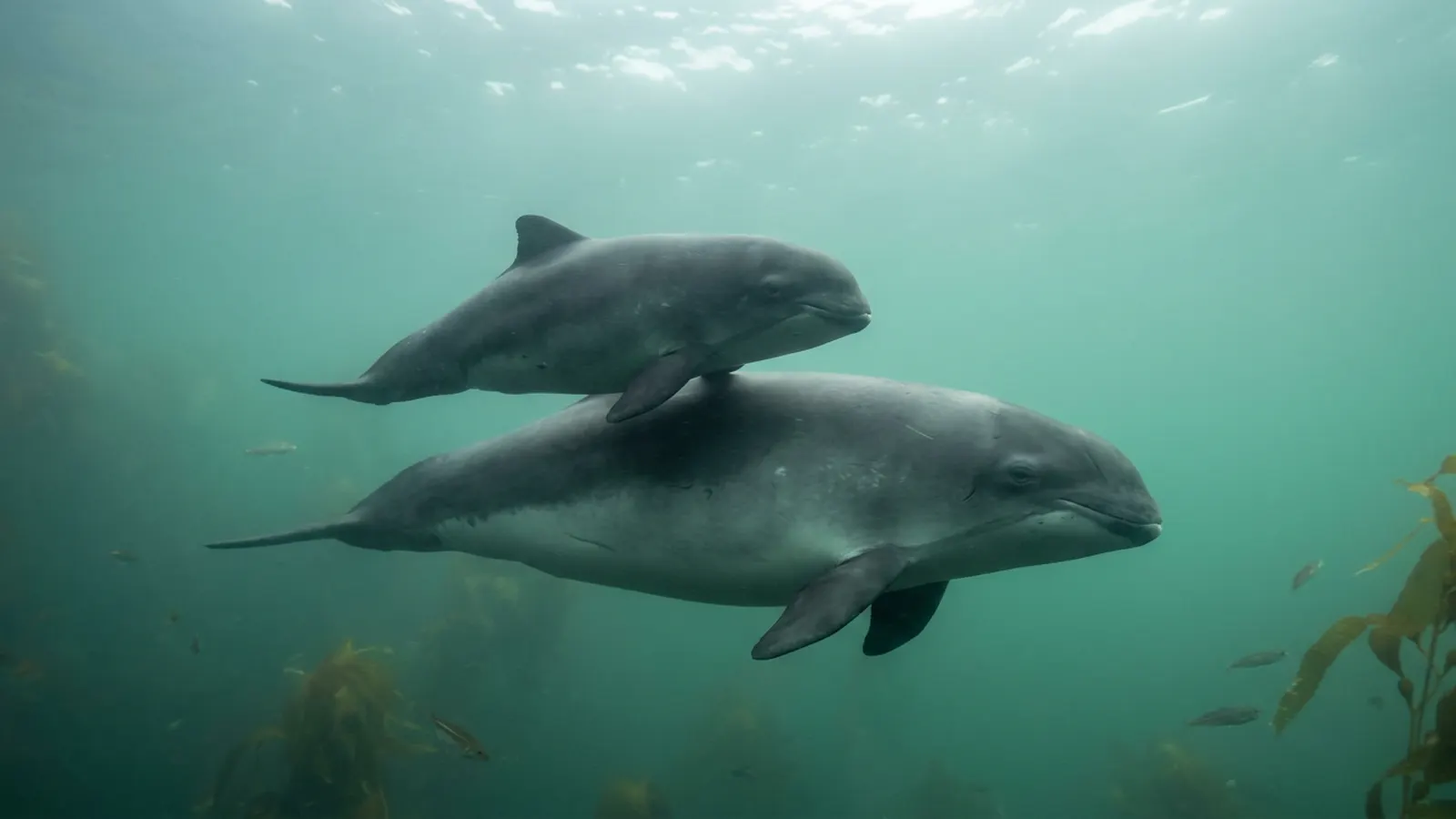
Harbor porpoises are smaller, have no beak, a triangular fin and spade-shaped teeth, and are shy; dolphins are larger, beaked and more social.
How big is a harbor porpoise?
About 1.4–1.9 metres long and usually 45–65 kilograms; females are larger than males.
Where do harbor porpoises live?
In cool coastal waters of the North Atlantic, North Pacific and Black Sea.
Are there harbor porpoises in Puget Sound?
Yes. They largely vanished from Puget Sound in the late twentieth century but have returned since the 2000s.
What eats harbor porpoises?
Killer whales and large sharks; bottlenose dolphins also kill them in some areas.
Are harbor porpoises endangered?
Not overall, but some populations, such as the Baltic Proper, are critically endangered.
How long do harbor porpoises live?
Usually under 12 years, with a maximum of about 20.
- NOAA Fisheries: Harbor porpoise species profile.
- Wisniewska, D.M. et al. (2016). Ultra-high foraging rates of harbor porpoises make them vulnerable to anthropogenic disturbance. Current Biology 26: 1441–1446.
- IUCN Red List of Threatened Species: Phocoena phocoena.
- Ross, H.M. & Wilson, B. (1996). Violent interactions between bottlenose dolphins and harbour porpoises. Proceedings of the Royal Society B 263: 283–286.
Blane Perun has been exploring Earth’s oceans and marine life for over 25 years. Founder of TheSea.Org in 1999, underwater photographer, coral aquaculture pioneer, and explorer of 80+ countries.
About Blane Perun → More on porpoises →