Where Did Blackbeard Live During His Piracy Years
Blackbeard had no permanent residence during his active piracy career. His documented locations across 1716–1718 include Nassau in the Bahamas, where the pirate republic was based; the waters of the Caribbean and American colonial coast where he operated; and Bath Town, North Carolina, where he settled briefly after accepting a pardon in 1718. The only confirmed fixed address in his documented life is Bath Town. Everything before Nassau is undocumented, and the romantic image of secret island hideouts has no historical support.
The question of where Blackbeard lived is fundamentally a question about the nature of a Golden Age pirate’s existence. Unlike a merchant captain or a naval officer with a home port and a family residence, a pirate operating in 1717 and 1718 lived primarily on his ship, in temporary anchorages, and in whatever port communities were willing to accommodate him. For Blackbeard, the ship was the home. Everything else was a waypoint.
Before piracy: probable Bristol origins
What is known about Blackbeard’s geographic origins before his appearance in the Nassau pirate community comes from a combination of sparse documentary evidence, regional tradition, and reasonable inference from what was known of his background.
Bristol is the most commonly cited birthplace, and there is circumstantial support for it. Bristol was the second most important port in England during the late 17th century and a major centre of the Atlantic slave trade — the trade that produced many of the sailors who ended up in Nassau. A man from Bristol who served on slave ships or merchant vessels before transitioning to privateering and then piracy would have followed exactly the path that produced most of the Nassau pirate community. The name variants in the historical record — Teach, Thatch, Thache, Tack — are consistent with Bristol regional phonology, which has been cited as circumstantial evidence for the Bristol connection.
None of this is documented. No birth record, no family document, no early employment record has been definitively identified for Edward Teach. Bristol is the best-supported candidate for his origins but remains an inference rather than a confirmed fact.
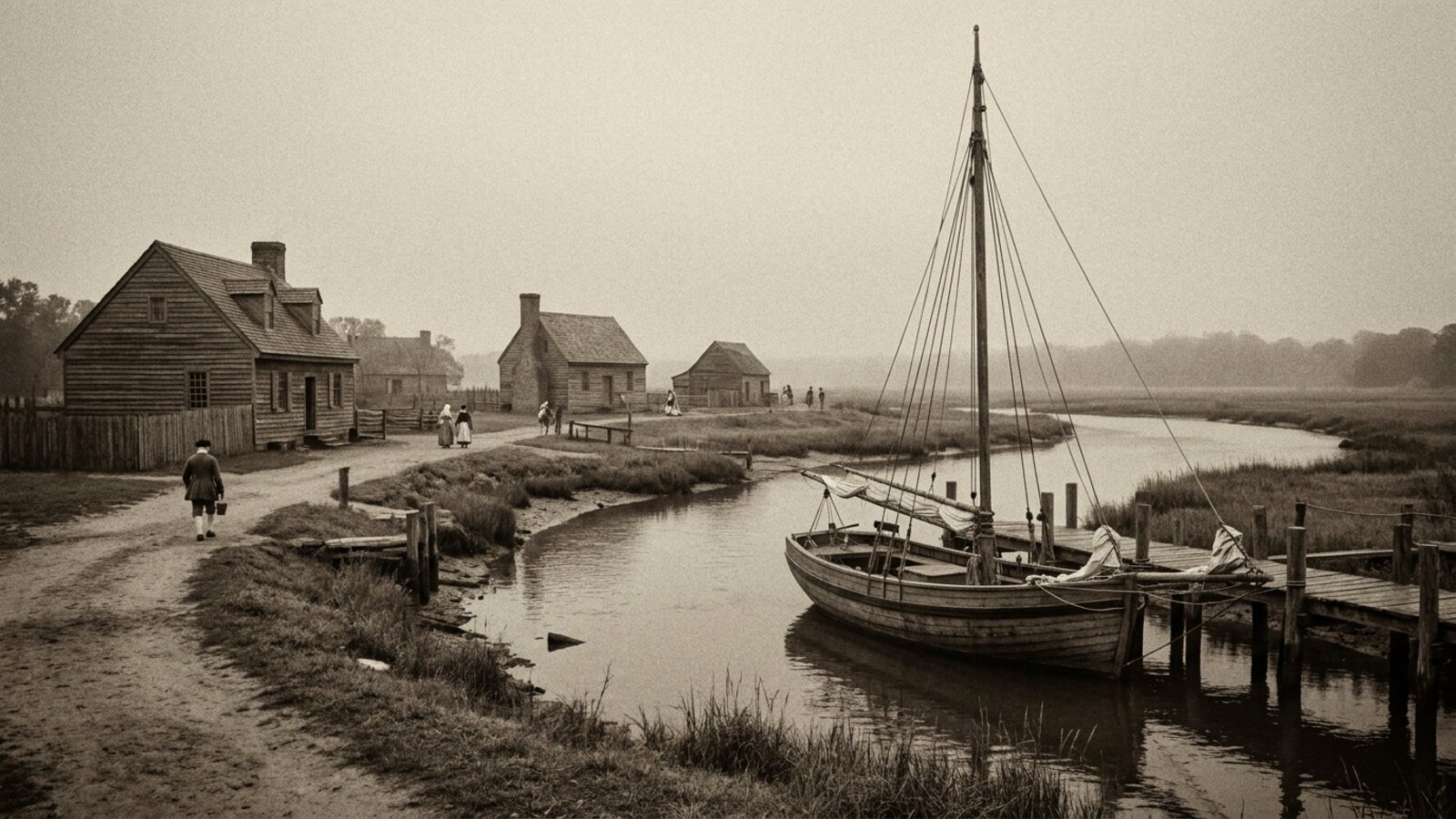
Nassau: the pirate republic and Blackbeard’s base
For the documented period of Blackbeard’s active career, Nassau was the closest thing he had to a home port. Nassau in 1716 and 1717 was the centre of the Nassau pirate republic — a community of pirates, former privateers, and assorted maritime workers who had established effective control of the Bahamian island and used it as a base for operations across the Caribbean.
Nassau provided everything a pirate operation needed: a sheltered harbour, a careening beach for hull maintenance, a market for plunder, a recruitment pool for crew, and a social community of fellow pirates with whom alliances could be made. Benjamin Hornigold, who brought Blackbeard into the pirate community, was one of Nassau’s senior figures. The Nassau period is where Blackbeard developed his operational base, his network, and the early stages of his fearsome reputation.
Nassau was not a permanent residence in any conventional sense — pirates came and went, and extended periods away on raiding voyages were the norm. But it was the consistent point of return, the place where provisions were taken on, prizes disposed of, and plans made. For the 1716–1718 period, Nassau was Blackbeard’s home base in the same way that a naval port was a home base for Royal Navy vessels: the ship lived there between operations, even if the captain did not have a house in the town.
The ship as home: Queen Anne’s Revenge
For the most active and consequential period of Blackbeard’s career — from his capture of La Concorde in November 1717 to the grounding at Beaufort Inlet in June 1718 — his primary residence was Queen Anne’s Revenge itself.
Life aboard a pirate flagship in 1718 was not comfortable by any standard. The captain typically had a small stern cabin that provided more privacy than the crew quarters but remained cramped, damp, and subject to the same conditions as the rest of the vessel. The crew slept in hammocks on the gun deck or below. Food was preserved salt meat, hardtack, and whatever fresh provisions could be acquired in port. Fresh water was a constant concern on extended voyages.
But the ship was also the command centre, the treasury, the social space, and the operational platform from which everything else was managed. For a man whose entire identity and authority were bound up with his command, the ship was home in a more fundamental sense than any shore residence could have been. When Queen Anne’s Revenge grounded at Beaufort Inlet — deliberately, most historians believe — Blackbeard lost not just a vessel but his primary residence and the physical platform of his power.
The legends: Blackbeard’s Castle and Blackbeard’s Island
Two locations are commonly associated with Blackbeard as possible residences or hideouts: Blackbeard’s Castle on St Thomas in the US Virgin Islands, and Blackbeard Island off the Georgia coast. Neither has documentary support as an actual Blackbeard residence.
Blackbeard’s Castle on St Thomas is a Danish watchtower built in the late 17th century atop Government Hill in Charlotte Amalie harbour. Its name comes from local tradition rather than historical documentation — no colonial record, naval account, or contemporary source places Blackbeard there. The tower’s location in the harbour made it strategically valuable for observing incoming vessels, which is likely why the legend attached itself to a pirate figure. Blackbeard certainly operated in Caribbean waters during his career, but the specific attribution is not supported by primary sources.
Blackbeard Island is a 5,000-acre barrier island in McIntosh County, Georgia, now a National Wildlife Refuge. The name comes from persistent local tradition that Blackbeard used it as a hiding place and possibly buried treasure there. The last serious treasure-hunting expedition was in 1880 and found nothing. No documentary source places Blackbeard on the island. The name is likely the product of legend rather than documented use, though the island’s geography — remote, accessible by boat, situated near major shipping lanes — is consistent with the kind of location a pirate might have used.
Where did Blackbeard live?
During his active piracy career, primarily on his ship — Queen Anne’s Revenge and later smaller sloops. Nassau served as his home port from around 1716 until the pirate republic ended in 1718. After accepting a pardon, he settled briefly in Bath Town, North Carolina — his only confirmed fixed address. He was killed at Ocracoke Inlet in November 1718.
Did Blackbeard live at Blackbeard’s Castle in St Thomas?
No documentary evidence supports this. The castle is a Danish watchtower built in the late 17th century whose association with Blackbeard comes from local tradition rather than historical records. Blackbeard operated in Caribbean waters but no primary source places him at this specific location.
What was Nassau’s role as Blackbeard’s base?
Nassau was the centre of the Golden Age pirate republic from approximately 1714 to 1718. It provided Blackbeard with a sheltered harbour, careening facilities, a market for plunder, and a community of fellow pirates. It functioned as his home port in the way that a naval port functions for warships: the operational base between voyages rather than a domestic residence.
Where did Blackbeard live after accepting the pardon?
Bath Town, North Carolina — now the town of Bath — was then the colonial capital of North Carolina and the location where Governor Charles Eden granted Blackbeard his pardon in 1718. Blackbeard settled there, reportedly received a house, and may have married. He resumed piracy within months and was killed at Ocracoke Inlet in November 1718.
Was Blackbeard’s Island actually used by Blackbeard?
The name comes from persistent local tradition but no documentary source confirms Blackbeard ever used the island. The last treasure-hunting expedition there was in 1880. The island is now a National Wildlife Refuge in McIntosh County, Georgia. Its geographic position near major shipping lanes is consistent with pirate use, but the specific Blackbeard attribution is unconfirmed.
Blane Perun has been exploring Earth’s oceans and marine life for over 25 years. Founder of TheSea.Org in 1999, underwater photographer, coral aquaculture pioneer, and explorer of 80+ countries.
About Blane Perun →