Treasure of the RMS Republic — The Liner, the First CQD and the Rumoured Gold
Not the gold it is famous for. The White Star liner RMS Republic sank about 50 miles south of Nantucket on January 24, 1909, after a collision with the SS Florida. Rumours say she carried gold: about $250,000 in US Navy payroll, earthquake relief money, or a $3 million loan to the Russian tsar. Martin Bayerle found the wreck in 1981 at about 82 m. A 1987 expedition recovered china, wine, champagne and the anchors, but no gold cargo has ever been confirmed. Estimates of its value today run from hundreds of millions to billions of dollars.
The Republic has given up champagne, china and her own anchors. The gold that made her famous has never been seen.
The White Star liner RMS Republic is one of the great “what if” wrecks of the North Atlantic. She sank off Nantucket in January 1909 after a collision in fog, in a rescue that made wireless radio famous and saved almost everyone aboard. Ever since, rumours have placed a fortune in gold coins in her strongroom. This page focuses on what has actually come up from the wreck, how it was recovered, and what that tells us about the treasure still being hunted. The story of the rumoured gold itself, and the case for and against it, is covered on our companion page, unfound treasure on the RMS Republic.
Was treasure found on the RMS Republic?
Yes, but not the treasure people mean. Salvage work on the wreck, above all a major expedition in 1987, recovered hundreds of artifacts: White Star Line china, silverware, ashtrays, glassware, personal belongings of passengers, the ship’s anchors, and a large haul of wine and champagne that had lain on the seabed since 1909. Some of the champagne was reportedly still drinkable. No gold coins, bullion or other specie cargo has ever been confirmed from the wreck.
That distinction matters, because headlines about the Republic often blur it. The artifacts were valuable enough to be handled by the auction house Christie’s, and investors in the 1987 project were reported to have roughly broken even on them. But the main target, a strongroom said to hold millions of dollars in American gold eagle coins, was not reached. The 1987 divers dug into the right general area of the ship and found themselves in the wine locker instead.
| Recovered item | When | Where it went |
|---|---|---|
| White Star china, including a piece dated August 1906 | 1985, 1987 | Auctioned; some pieces in museums |
| Wine and champagne, incl. 1898 Moët & Chandon | 1987 | Offered through Christie’s |
| Ashtrays with the White Star insignia, pots, pans | 1987 | Auctioned |
| Fluted vase from the first-class smoking room | 1987 | Auctioned |
| Hand-decorated panes of glass, light switch, passenger items | 1987 | Auctioned |
| The ship’s anchors | 1987 | Marine Museum at Fall River, Massachusetts |
| Gold coins | — | None confirmed |
What was the RMS Republic?
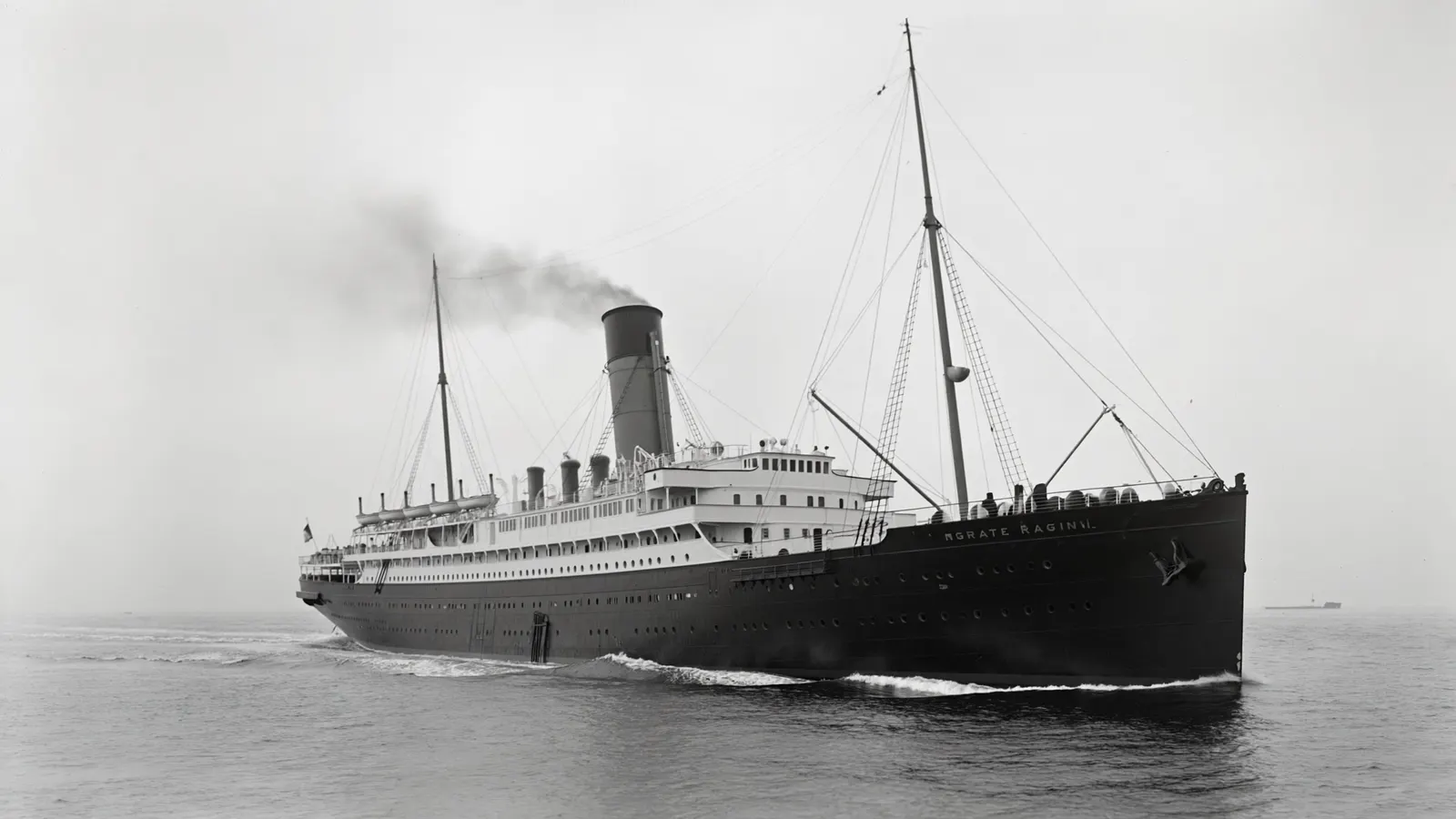
The Republic was built by Harland and Wolff in Belfast, the yard that later built the Titanic. She was launched on February 26, 1903 as Columbus for the Dominion Line, a sister company of White Star within J. P. Morgan’s International Mercantile Marine. After only two voyages she was transferred to the White Star Line, renamed Republic and placed on the service between Liverpool and Boston, where she became the flagship. She measured about 174 metres (570 feet) long and 15,400 gross tons, could carry up to 2,830 passengers, and had a top speed of about 16 knots.
Her wealthy American clientele earned her the nickname “the Millionaires’ Ship”. In January 1909 she was sailing from New York for Gibraltar and Mediterranean ports with several hundred passengers and crew. Among the passengers were members of the Mellon banking family, the historian Alice Morse Earle and the St. Louis businessman Samuel Cupples. Several of them carried jewellery and money for a long Mediterranean cruise, which is one reason the ship’s contents have attracted treasure hunters ever since.
How did the RMS Republic sink?
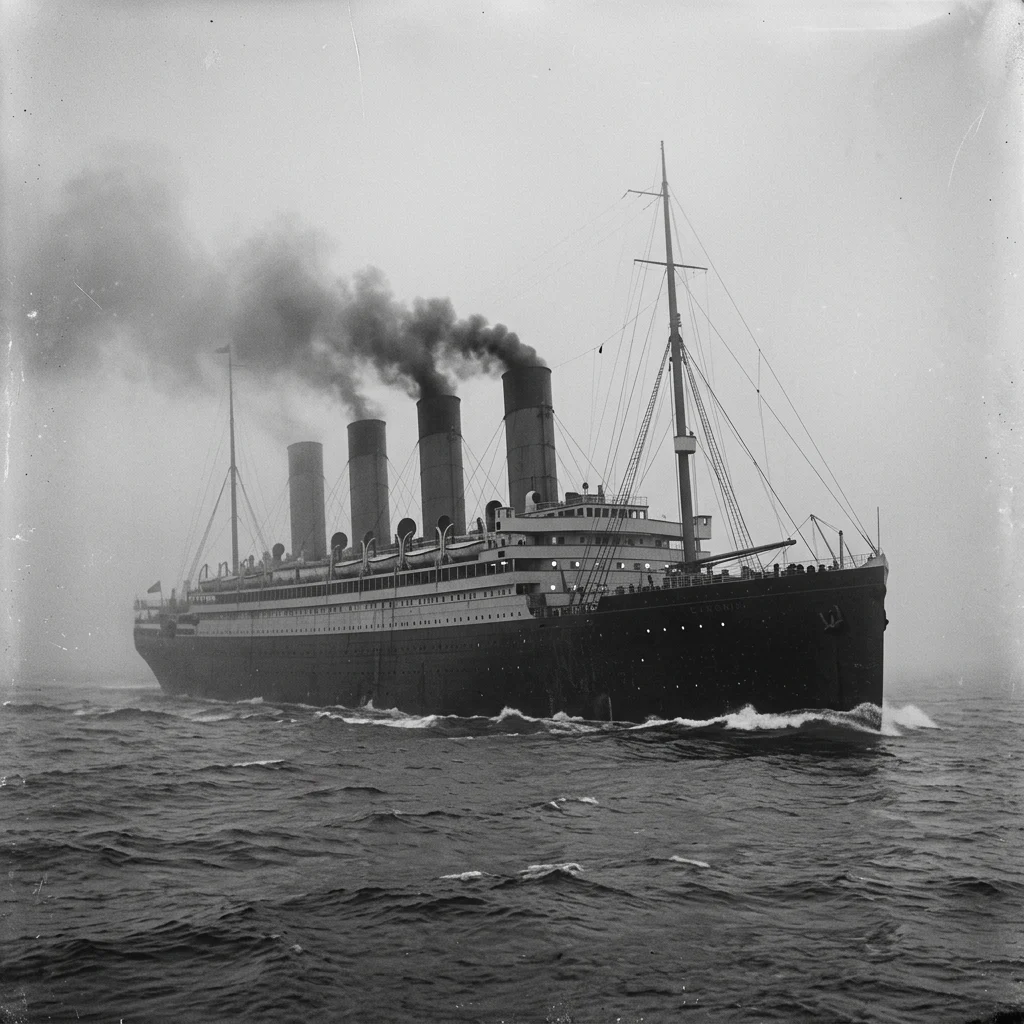
In thick fog off Nantucket early on January 23, 1909, the Italian liner Florida struck her amidships. She stayed afloat for more than a day before sinking stern first while under tow.
The Republic was sounding her whistle in the fog when another whistle was heard close by at about 5:47 a.m. Her engines were thrown into full reverse, but the Lloyd Italiano liner Florida, inbound with Italian emigrants, emerged from the fog and hit her on the port side at roughly a right angle. Two passengers asleep in their cabins on the Republic were killed outright and a third died of his injuries days later. Three crewmen died on the Florida, whose bow was crushed back to the collision bulkhead. Six people died in all, every one of them in the collision itself rather than the sinking.
Water flooded the Republic’s engine and boiler rooms. Captain Inman Sealby organised the passengers calmly on deck, and the ship’s Marconi operator, Jack Binns, sent a CQD distress call, the Marconi company’s signal for “all stations: distress”. Passengers were transferred first to the Florida, which was already carrying some 900 emigrants and became dangerously overloaded, and to the US Revenue Cutter Gresham. That evening the White Star liner Baltic, which had answered the radio call but struggled to find the ship in the fog, arrived and took everyone aboard for New York. Around 1,500 people from the two ships were saved.
Captain Sealby and a skeleton crew stayed aboard to try to save the Republic. Crews from the Gresham tried collision mats to slow the flooding and then attempted a tow, without success. On January 24 the ship sank stern first. At about 15,400 tons she was described as the largest ship to have sunk up to that time, a distinction she held until the Titanic three years later.
| Date | Event |
|---|---|
| 1903 | Launched in Belfast as Columbus; soon renamed Republic for White Star |
| Jan 23, 1909 | Collision with SS Florida in fog; Jack Binns sends CQD |
| Jan 24, 1909 | Republic sinks stern first under tow off Nantucket |
| 1919 | Early salvage attempt reported unsuccessful |
| 1981 | Martin Bayerle locates the wreck |
| 1985 | Bayerle recovers china from the wreck |
| 1987 | 74-day saturation-diving salvage: wine, champagne, china, anchors; no gold |
| 2011 | US court confirms Bayerle’s company’s salvage rights |
| 2016 | History Channel series Billion Dollar Wreck follows a new search |
Why is the Republic famous for its radio call?
Wireless telegraphy was still new in 1909. Distress calls had been sent by radio before, and the Marconi company had adopted CQD as its distress signal in 1904, but the Republic was the first important marine rescue made possible by radio, and it brought the technology worldwide attention. Binns stayed at his key for hours, and he became an international hero, later decorated by France. The fact that ships could summon help across miles of fog-bound sea was a revelation to the public.
The rescue also carried a lesson that was not learned in time. Liners were not then required to carry enough lifeboats for everyone aboard. The assumption on the busy North Atlantic was that help would always be close at hand and that lifeboats would only need to ferry people to rescue ships. For the Republic that assumption held, and it reinforced confidence in the approach. Three years later, when the Titanic sank with lifeboat space for only part of her passengers and no ship close enough to help in time, it failed catastrophically.
What treasure was the Republic supposed to be carrying?
Several overlapping stories surround the cargo. One report says she carried about $250,000 in American gold coins as payroll for the US Navy’s Great White Fleet, then completing its round-the-world cruise. A larger claim, repeated by newspapers including The Washington Post and The New York Times in later decades, says she carried $3 million in US gold eagle coins. Bayerle’s own research describes a consignment of about five tons of new American gold eagles, together with a navy payroll of about $265,000 bound for the Atlantic Fleet at Gibraltar, relief money for survivors of an earthquake in Italy, a consignment of silver ingots and the personal valuables of wealthy passengers.
The best-known version links the gold to Russia. According to this account, the coins had been bought for a loan arranged through the Bank of France to support Tsar Nicholas II, whose finances had been badly damaged by war and revolution, which would explain why the shipment was never officially declared. Bayerle set out this argument in his 2013 book The Tsar’s Treasure. In 1909 dollars, $3 million is equivalent to roughly $100 million after inflation, but treasure hunters have quoted far higher figures, from $400 million to $1.6 billion in the 1980s and more than a billion dollars since, based on gold prices and the collector value of early 20th-century coins.
None of this has been proven. Cargo manifests that would settle the question have not surfaced, and the case rests on newspaper reports, financial records and inference. The companion page on the unfound Republic treasure weighs the evidence in more detail.
Who found the wreck of the Republic?
Martin Bayerle, a diver and treasure hunter from Brooklyn, found the wreck in 1981. He had run a dive shop in New York and led trips to local shipwrecks before moving to Martha’s Vineyard, where he set up a diving business partly as a base for the search. After about two and a half years of research into the ship’s last position, he located her lying upright roughly 50 miles (80 kilometres) south of Nantucket in about 82 metres (270 feet) of water.
That depth is the central problem. Eighty metres is far beyond the range of ordinary scuba diving, the water is cold and dark, and currents on the edge of the continental shelf can be strong. Any serious work on the wreck requires commercial saturation diving, remotely operated vehicles or both, and that makes every expedition expensive.
What happened on the 1987 salvage expedition?
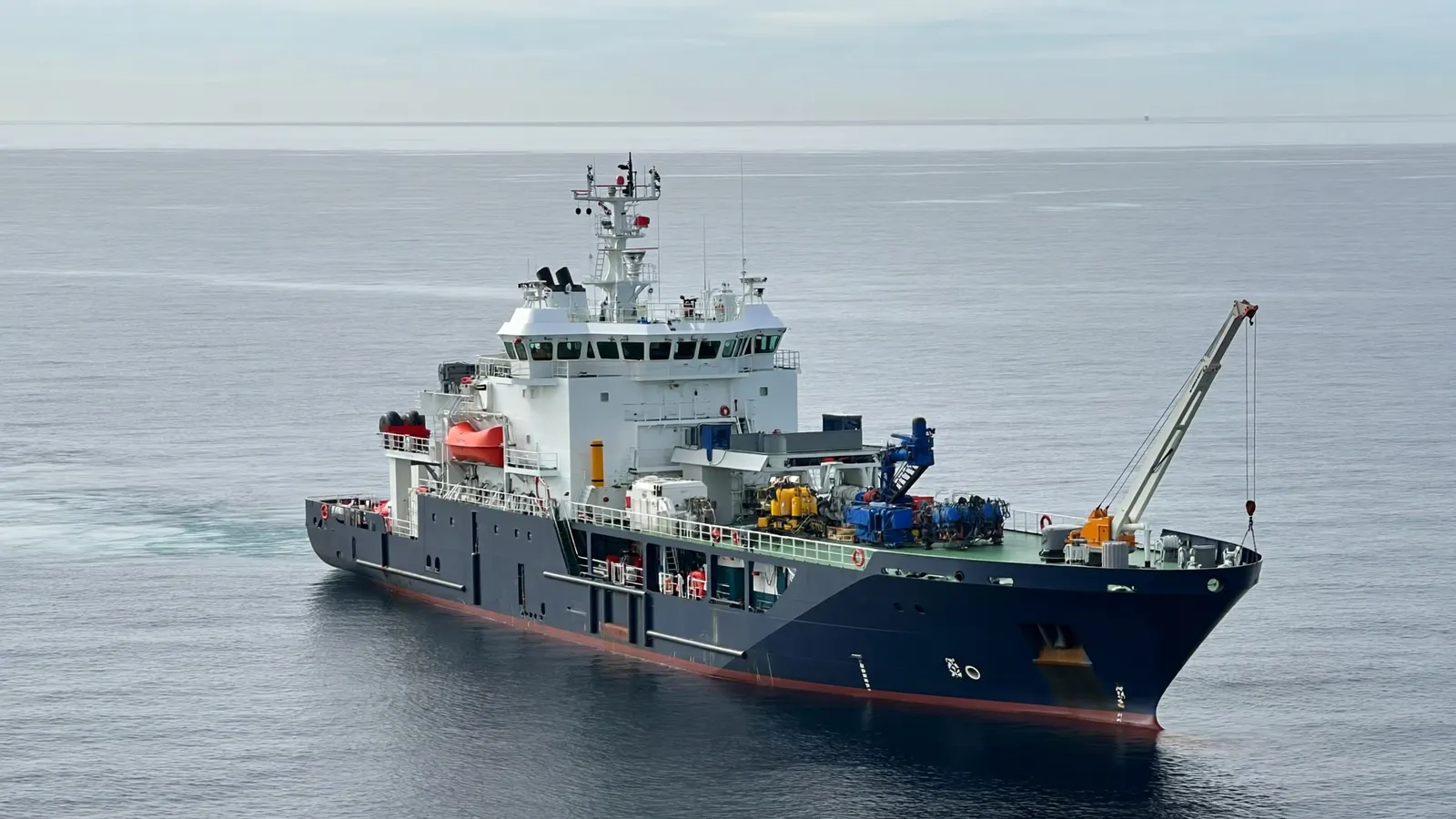
In June 1987 Bayerle’s backers, organised as Sub-Ocean Salvors, sailed from New York aboard the Inspector, a diving support vessel of about 280 feet bought from a bankrupt offshore oil-services company. The company’s president, the naval architect Robert Stevens, had spent years reconstructing the ship’s plans from scattered sources, because no complete set of construction drawings could be found. He compared the job to taking a 60-storey building, shaking it violently and throwing it on its side, and said the gold was thought to be in a space the size of a broom closet.
The divers lived under pressure in a compression chamber aboard the ship and were lowered to the wreck in a three-man diving bell, working around the clock at a cost reported at $20,000 to $30,000 a day. By late July they had brought up china marked with the White Star emblem, including a piece dated August 1906, ashtrays with the company insignia, a fluted vase from the first-class smoking room, a creamer jar, an electric light switch and a bottle of Hall’s Hair Renewer. Bayerle came ashore on Cape Cod holding a bottle of 1898 Moët & Chandon champagne and pronounced it “quite good. Robust.” Christie’s set up an office in Boston to evaluate the finds.
The expedition lasted 74 days. When the Inspector returned to port in September, the haul included dozens of cases of wine and champagne, said in one report to number in the thousands of bottles, as well as china, pots and pans, hand-decorated glass panes and the ship’s anchors. The total cost was put at about $2.2 million. Organisers blamed autumn currents for ending the dive season early. Once it became clear that the divers had excavated the wine locker rather than the specie room, the team offered a reward of £25,000 for the Republic’s construction plans. No one produced them, and the plans have still not been found.
Where are the Republic artifacts now?
After the 1987 venture broke up, the recovered items were sold at auction, so most are in private collections. The most visible pieces are the anchors, which now form the entrance to the Marine Museum at Fall River, Massachusetts, where other salvaged items from the Republic are also displayed. White Star china and other small pieces occasionally appear at maritime auctions, where their link to the line that built the Titanic adds to their appeal.
The wine is the most unusual part of the collection. Cold, dark, stable water at 80 metres preserved many corked bottles remarkably well, much as other deep wrecks have yielded drinkable wine and champagne. It is a reminder that a shipwreck’s most valuable recoveries are not always the ones it was famous for.
Why has the gold not been found?
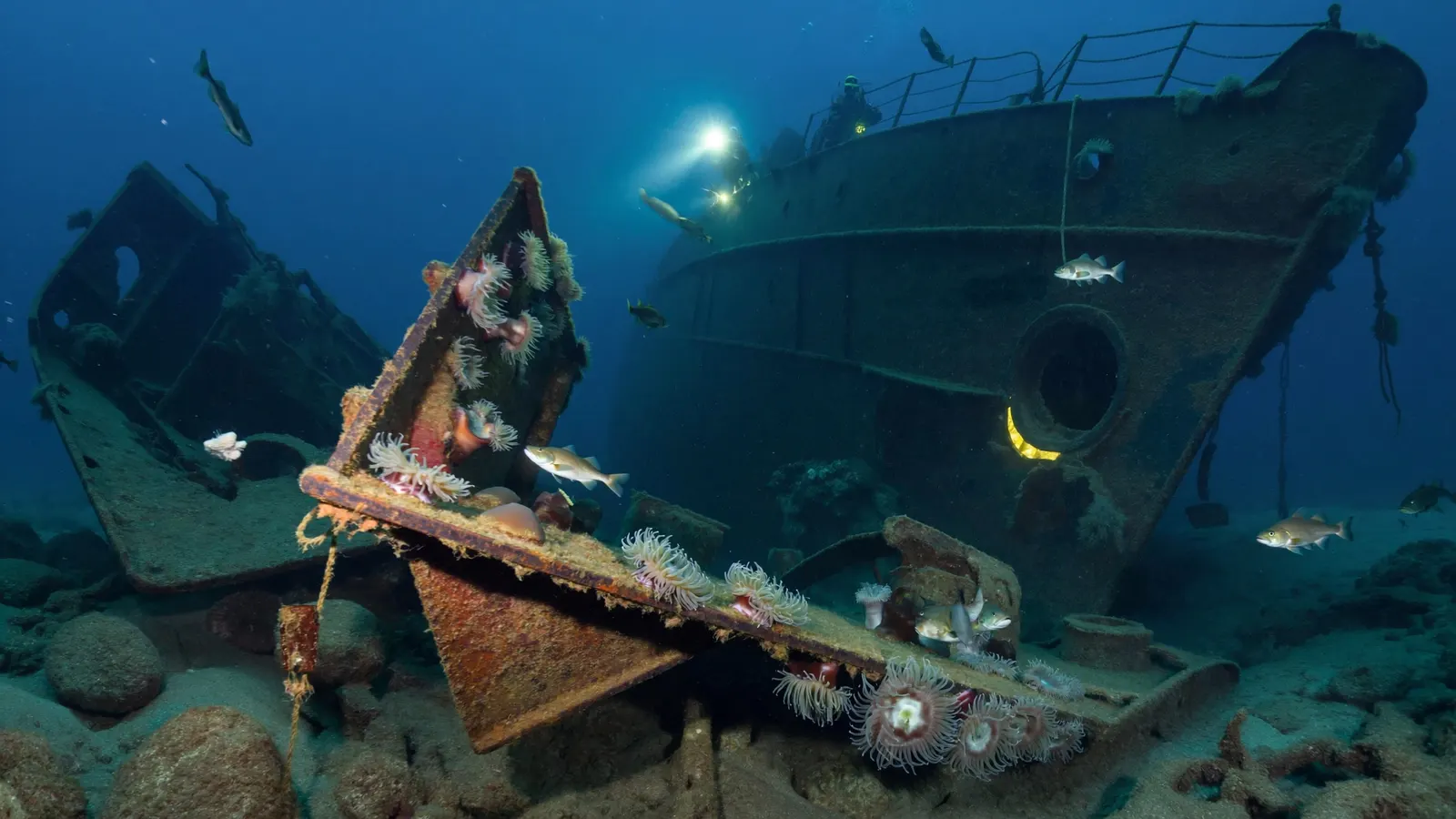
Several obstacles combine. The ship lies on her side in deep water, so decks that were once horizontal are now vertical walls, and the interior has collapsed in places after more than a century on the seabed. Without the original construction plans, salvors cannot be sure where the specie room, the strongroom where valuables were kept, was located. Bayerle has likened the search to looking for nine cubic feet inside a skyscraper. Each expedition depends on large private investment, deep-diving or robotic technology and a short summer weather window.
There is also the possibility that the gold was never there, or not in the amounts claimed. Treasure stories often grow as they are retold, and the strongest evidence remains indirect. Supporters point out that the wreck has not been fully searched; sceptics note that more than a century of rumour has produced no direct trace of a gold shipment.
Who owns the wreck and anything found on it?
Bayerle’s company, MVSHQ Inc., holds the salvage rights; a US court confirmed its exclusive rights in 2011. Salvage law gives a recognised salvor rights to work a wreck and claim an award, but ownership of any cargo actually recovered could still be contested by insurers, the heirs of original owners or governments, as has happened with other treasure wrecks. In 2016 the History Channel aired an eight-part series, Billion Dollar Wreck, following Bayerle’s renewed search; under his agreement with the network he was not allowed to disclose the results before broadcast, and no confirmed gold recovery has been announced since.
Can divers visit the Republic?
Only highly experienced technical divers. At about 82 metres, the wreck lies well beyond recreational limits and requires mixed-gas diving, long decompression and a capable boat far offshore in cold, often rough water. Because the site is subject to active salvage claims, anyone planning a visit should also respect the salvor’s rights and avoid removing anything. For most people the best way to see the Republic is through the artifacts at Fall River and the archive of photographs and press coverage of the 1987 expedition.
Was gold found on the RMS Republic?
No. Salvors have recovered china, wine, champagne and the anchors, but no gold has been confirmed.
What has been recovered from the RMS Republic?
Hundreds of artifacts, mostly in 1987: White Star china, ashtrays, glassware, passenger items, wine, champagne and the anchors.
Where are the Republic’s anchors?
At the entrance to the Marine Museum at Fall River, Massachusetts.
Where is the RMS Republic wreck?
About 50 miles (80 km) south of Nantucket, upright, in roughly 82 m (270 ft) of water.
When did the RMS Republic sink?
On January 24, 1909, the day after a collision with SS Florida in fog.
How many people died on the Republic?
Six, all killed in the collision: three on the Republic and three on the Florida.
What was the Republic’s CQD call?
The radio distress call sent by Jack Binns; the rescue it enabled made wireless famous.
Who owns the Republic salvage rights?
Martin Bayerle’s company, MVSHQ Inc., confirmed by a US court in 2011.
- Associated Press (Sept 13, 1987). Expedition to sunken ship ends with valuable artifacts but no gold.
- United Press International (July 29, 1987). Treasure hunters sip wine, confident of finding gold.
- St. Petersburg Times (Sept 13, 1987). Salvagers find trinkets, not treasure.
- The New York Times (June 15, 1987). Crew begins quest for sunken vessel’s treasure.
- The Martha’s Vineyard Times (Feb 8, 2016). Hunt for RMS Republic treasure continues on the History Channel.
- Bayerle, M. (2013). The Tsar’s Treasure.
- Reference summaries: RMS Republic (1903), SS Florida (1905), CQD, Martin Bayerle (Wikipedia, 2023).
- Coin World. Treasure wreck set for salvage.
Blane Perun has been exploring Earth’s oceans and marine life for over 25 years. Founder of TheSea.Org in 1999, underwater photographer, coral aquaculture pioneer, and explorer of 80+ countries.
About Blane Perun → More on Shipwreck Treasure →