Olimar’s Shipwreck Tale — Pikmin 4’s Crash-Landing Side Story
Olimar’s Shipwreck Tale is a side-story mode in Nintendo’s Pikmin 4, not a real maritime wreck. You play as Captain Olimar, who has crash-landed on a strange planet, and you must recover 30 lost parts of his spaceship, the S.S. Dolphin, within 15 in-game days, with help from his dog, Moss.
The name is often searched alongside real wrecks and is sometimes mistaken for a historical voyage, but it is a video game story. Below is what the mode is, how to unlock it and how to finish it, followed by a few real shipwreck stories with the same flavor of stranded survival.
What is Olimar’s Shipwreck Tale?
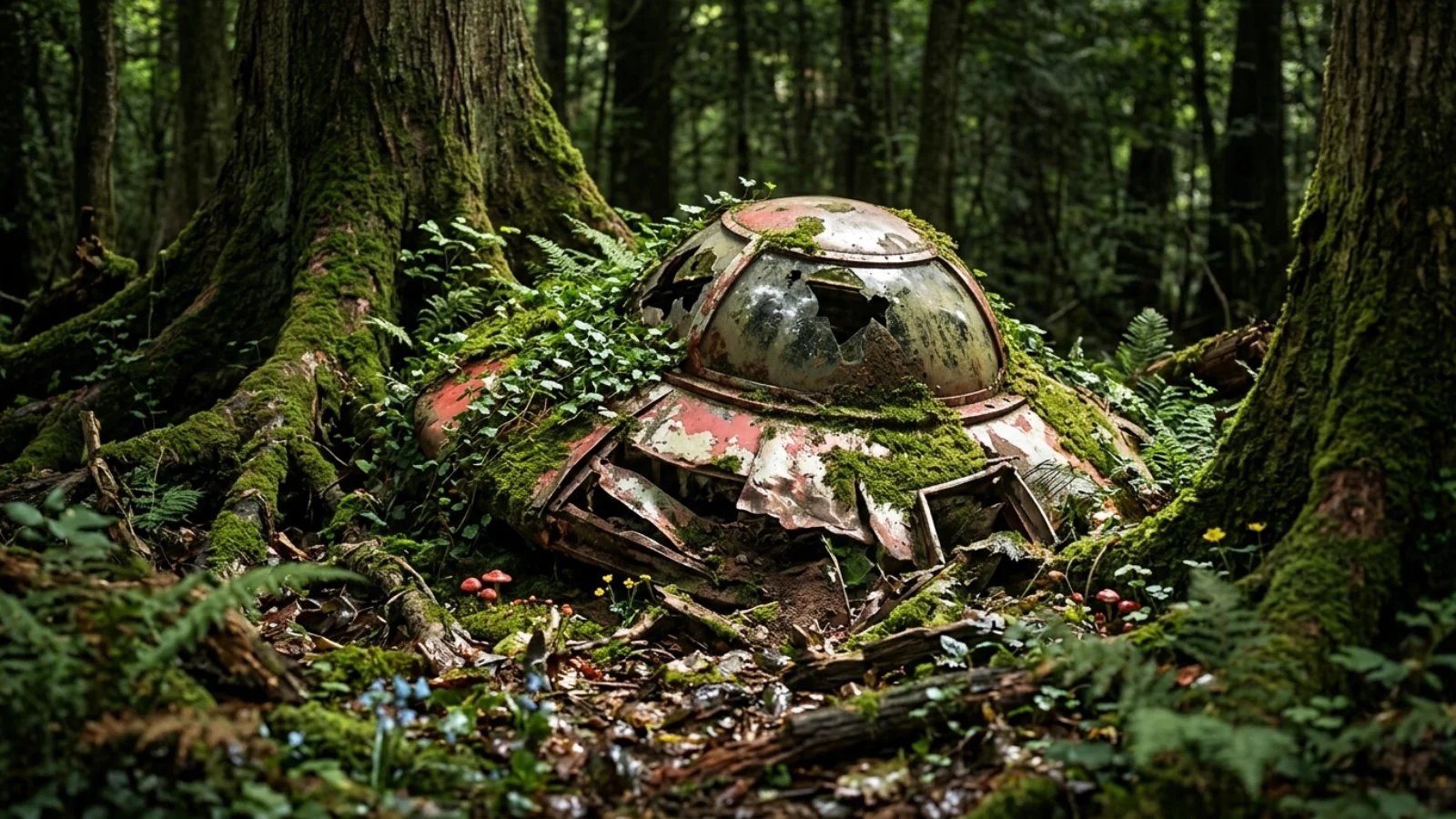
It is an alternate story mode in Pikmin 4 that retells the plot of the original Pikmin game with many details changed. Olimar’s ship, the S.S. Dolphin, has broken apart in a crash, and its parts are scattered across the landscape. Using only the original three Pikmin types, Red, Yellow and Blue, plus Moss, you search the map, carry parts back and race the clock. Each in-game day lasts about 11 minutes, and you get 15 days, so time pressure is the core of the challenge.
Where does the Shipwreck Tale story come from?
The mode reworks the plot of the very first Pikmin game, released for the Nintendo GameCube in 2001 and created under the direction of Shigeru Miyamoto. In that game Captain Olimar, a tiny space pilot from the planet Hocotate, is knocked off course while on vacation, and his ship, the S.S. Dolphin, breaks apart as it crashes on an unknown world. The air there contains oxygen, which is poisonous to his species, and his life-support system can keep him alive for only 30 days.
To get home, Olimar has to find 30 missing ship parts with the help of the Pikmin, small plant-like creatures that follow his commands, fight for him and carry objects many times their size. Collecting enough parts to fly by the deadline gave the good ending; failing meant a grim one. The original 30-day limit made the game unusual at the time, because it forced players to plan each day carefully instead of exploring freely.
Pikmin 4, released for the Nintendo Switch in July 2023, retells that story as a side mode with a shorter clock and different maps. Fans of the GameCube game will recognize the setup, the S.S. Dolphin and the three original Pikmin colors, while players who started with the newer game get a compact taste of the series’ roots.
Why does the series use a shipwreck story at all?
A stranded traveler collecting the pieces of a broken ship is one of the oldest frames in storytelling, from Homer’s Odysseus clinging to wreckage to Robinson Crusoe salvaging tools from his ship. It gives a clear goal, a reason to explore and a ticking clock all at once. In Pikmin the frame also explains why everything is so large: Olimar is about the size of a coin, so ordinary objects such as bottle caps, fruit and batteries become treasures and obstacles. The game’s shipwreck is a spaceship, but its logic is the same as any castaway tale, survive, salvage and find a way home before time runs out.
How do you unlock Olimar’s Shipwreck Tale?
Finish the main portion of Pikmin 4: rescue Captain Olimar and defeat Leafling Olimar and Moss in the final Dandori Battle. The Shipwreck Tale then opens as post-game content, and you can play it alongside your remaining main-game objectives.
Where are the 30 ship parts?
They are spread across four areas from the main game:
| Area | Ship parts |
|---|---|
| Sun-Speckled Terrace | 7 |
| Blossoming Arcadia | 8 |
| Serene Shores | 8 |
| Hero’s Hideaway | 7 |
| Total | 30 |
Some parts need Moss’s abilities, such as a charge to break pottery. Plan each day so you carry several parts back rather than wandering, and use the early days to grow your Pikmin numbers.
What do you get for finishing?
Collect all 30 parts before the 15 days run out and a new cave opens at the Rescue Command Post. It holds 10 levels of Dandori Challenges in which you can obtain the White and Purple Onions, which let you grow those Pikmin types in the main game.
How is it different from the main Pikmin 4 campaign?
The main campaign gives you more Pikmin types, more tools and no hard overall deadline. The Shipwreck Tale strips that back: three Pikmin types, Moss, a shorter day and a fixed 15-day limit. It rewards route planning over exploration. If you enjoyed the main game’s Dandori Challenges, which score how efficiently you split tasks, this mode is the same skill stretched over a whole campaign.
What real shipwrecks feel like Olimar’s story?
Castaways rebuilding a way home is an old sea story. In 1609 the survivors of the Sea Venture, wrecked on Bermuda’s reefs, built two new ships from the wreck and island timber and sailed on to Jamestown; read it on our Bermuda shipwrecks page. The crew of the Portuguese Bom Jesus vanished on the Namib coast in 1533, and the two survivors of the pirate ship Whydah Gally washed ashore on Cape Cod in 1717. For the full list, visit our shipwrecks hub.
How did the Sea Venture castaways build their way home?
The real story closest to Olimar’s is the wreck of the Sea Venture. In 1609 it was the flagship of a fleet carrying supplies and settlers to the English colony at Jamestown, Virginia, with the admiral Sir George Somers and the colony’s new deputy governor, Sir Thomas Gates, aboard. A hurricane separated it from the rest of the fleet, and after days of pumping a leaking hull, Somers deliberately ran the ship onto the reefs of Bermuda to save the people on board. About 150 people, and a dog, reached shore alive.
Bermuda turned out to have fresh water, fish, turtles, birds and wild hogs, and the castaways stayed for about ten months. Using timber salvaged from the Sea Venture and Bermuda cedar, they built two small ships, the Deliverance and the Patience, and sailed for Jamestown in May 1610. They found the colony in the grip of the starving time, with only a few dozen settlers left alive, and the food they brought helped it survive. William Strachey’s account of the storm and the island is widely thought to have influenced Shakespeare’s play The Tempest, and the wreck led England to claim Bermuda, which it settled from 1612.
What happened to the castaways of the Grafton?
In January 1864 the schooner Grafton was wrecked in Carnley Harbour in the Auckland Islands, a cold, windswept group far south of New Zealand. Its five crew, led by Captain Thomas Musgrave, got ashore with tools and salvage, built a stone-chimneyed hut and lived on sea lions, birds and shellfish. One of them, the Frenchman François Raynal, built a forge, with bellows made from sea lion skin, and made the tools they needed to rebuild the ship’s dinghy into a seagoing boat.
After about 18 months, Musgrave, Raynal and one other man sailed that small boat across roughly 450 kilometers of the Southern Ocean to Stewart Island, then Musgrave returned with a ship to rescue the other two. All five survived. By chance, another ship, the Invercauld, was wrecked on the north side of the same island group a few months after the Grafton. Its crew of 19 never organized in the same way, and only three survived to be rescued. The two wrecks are often compared as a lesson in how leadership, cooperation and skill decide whether castaways live.
How did Shackleton’s crew survive the loss of the Endurance?
Ernest Shackleton’s Endurance never reached land at all. The ship became trapped in the pack ice of Antarctica’s Weddell Sea in January 1915, drifted with it for months and was finally crushed and sank in November 1915. The 28 men camped on the drifting ice, then took to three lifeboats and reached remote Elephant Island in April 1916.
With no chance of rescue there, Shackleton and five others sailed the lifeboat James Caird about 1,300 kilometers across the Southern Ocean to South Georgia, then crossed the island’s unmapped mountains on foot to reach a whaling station. After several failed attempts, the men left on Elephant Island were rescued in August 1916. Every member of the Weddell Sea party survived. The wreck of the Endurance itself stayed lost until March 2022, when a search expedition found it remarkably intact at a depth of about 3,000 meters.
What do real castaway stories have in common?
The survivors who made it home shared a few things. They saved tools and materials from their wreck instead of abandoning it, used whatever the land offered, kept a clear plan and divided the work so that everyone had a job. The castaways who failed, such as most of the Invercauld’s crew, often split up, lost hope or never organized a shared camp.
Those are, in a simpler form, the same skills Olimar’s Shipwreck Tale asks of its players: plan each day, split tasks between team members, protect your workers and keep the goal in sight before the clock runs out. Many video game survival stories borrow that structure from history, and the real wrecks show how much harder the original versions were.
What happened to the Batavia castaways?
Not every castaway story ends in teamwork. In June 1629 the Dutch East India Company ship Batavia, on its maiden voyage to the East Indies, ran onto a reef in the Houtman Abrolhos, a chain of low coral islands off Western Australia. Most of the more than 300 people aboard reached the barren islands, which had almost no fresh water. The commander, Francisco Pelsaert, set off with the senior officers and others in the ship’s longboat to fetch help from the company’s base at Batavia, the city now called Jakarta, a journey of about a month.
While he was gone, an under-merchant named Jeronimus Cornelisz took control of the survivors and led a group of mutineers who murdered more than 110 men, women and children. A group of soldiers under Wiebbe Hayes, sent to search a neighboring island for water, found it, held out against the mutineers and built simple stone shelters that are counted among the oldest European structures in Australia. When Pelsaert returned with a rescue ship, Hayes warned him in time, and the mutineers were captured and tried. The wreck was found in 1963, and part of its hull is displayed in the Western Australian Shipwrecks Museum in Fremantle.
Which castaway inspired Robinson Crusoe?
The most famous fictional castaway grew partly from a real one. In 1704 the Scottish sailor Alexander Selkirk, serving on the privateer Cinque Ports in the Pacific, quarreled with his captain over the ship’s leaky condition and asked to be put ashore on Más a Tierra, an uninhabited island off Chile. He was right about the ship, which later sank, but no one came back for him. Selkirk lived alone for more than four years, hunting feral goats, building huts and reading his Bible, until he was picked up in 1709 by an English expedition under Woodes Rogers.
His story became widely known in England and is often cited as an inspiration for Daniel Defoe’s novel Robinson Crusoe, published in 1719. In 1966 Chile renamed the island Robinson Crusoe Island. Defoe’s hero, unlike Selkirk, is shipwrecked, and the novel’s long scenes of salvaging tools and supplies from the wreck set the pattern that castaway stories, Pikmin included, still follow.
How did the Essex survivors make it home?
In November 1820 the Nantucket whaling ship Essex was rammed and sunk by a large sperm whale in the equatorial Pacific. Its 20 crew took to three small whaleboats with limited food and water. Fearing cannibals on the islands closer by, they chose a much longer route toward South America. After about three months adrift, during which starvation forced the survivors to eat the bodies of the dead, five men in the boats were rescued; three others who had chosen to stay behind on uninhabited Henderson Island were picked up later, so eight of the 20 survived. The first mate, Owen Chase, published an account in 1821 that Herman Melville later read, and the sinking became one of the sources for Moby-Dick.
What was found when the Bom Jesus wreck turned up?
The Portuguese ship Bom Jesus left Lisbon for India in 1533 and disappeared on the way, with no word of its fate for almost five centuries. In 2008 geologists working for a diamond-mining operation near Oranjemund, on Namibia’s coast, found its remains in an area of former seabed that had been drained behind sea walls to reach diamond-bearing gravels. The wreck held more than 2,000 gold coins, mostly Spanish and Portuguese, along with tons of copper ingots, more than 100 elephant tusks, navigational instruments and cannon.
Unlike the Sea Venture or the Grafton, the Bom Jesus left no survivors’ account. Archaeologists have found only a few human remains at the site, and how many of the crew reached the barren Skeleton Coast, and what happened to them there, is unknown. It is the oldest known shipwreck found off sub-Saharan Africa and a reminder that most real castaway stories ended without anyone left to tell them.
Is Olimar’s Shipwreck Tale a real shipwreck?
No. It is a story mode in the video game Pikmin 4 about a crashed spaceship.
How do you unlock Olimar’s Shipwreck Tale?
Finish the main game by rescuing Olimar and beating Leafling Olimar and Moss in the final Dandori Battle.
How many ship parts are in Olimar’s Shipwreck Tale?
30 parts of the S.S. Dolphin.
How many days do you get?
15 in-game days, each about 11 minutes long.
What Pikmin can you use?
Only the original three: Red, Yellow and Blue, plus Moss.
What is the reward for finishing Olimar’s Shipwreck Tale?
A new cave with 10 Dandori Challenge levels where you can get the White and Purple Onions.
When did Pikmin 4 come out?
July 21, 2023, on Nintendo Switch.
- Pikmin Wiki: Pikmin 4; Olimar’s Shipwreck Tale.
- GGRecon: Olimar’s Shipwreck Tale ship part locations.
- Wikipedia: Pikmin 4.
- Nintendo: Pikmin (GameCube, 2001) and Pikmin 4 (Nintendo Switch, 2023) official game information.
- Strachey, W. (1610). A True Reportory of the Wracke and Redemption of Sir Thomas Gates (Sea Venture, Bermuda).
- Raynal, F.E. (1874). Wrecked on a Reef; or, Twenty Months among the Auckland Isles (the Grafton).
- Falklands Maritime Heritage Trust (2022). Endurance22 expedition: discovery of the Endurance wreck.
Blane Perun has been exploring Earth’s oceans and marine life for over 25 years. Founder of TheSea.Org in 1999, underwater photographer, coral aquaculture pioneer, and explorer of 80+ countries.
About Blane Perun →