Mako Shark Tooth — Narrow, Smooth-Edged, Curved — Designed to Pierce Fast Fish Prey
Mako shark teeth are narrow, smooth-edged, and curved — designed for gripping and piercing slippery fish prey rather than cutting through large carcasses. The shape is dramatically different from the broad serrated triangular teeth of great whites and tigers, reflecting the mako’s specialised diet of fast pelagic fish (tuna, mackerel, billfish). Mako teeth are visible even when the mouth is closed, protruding outside the jaws in a permanently exposed display unique among large predatory sharks. Each shark has approximately 20–30 functional teeth at any time, with continuous replacement throughout life.
Mako teeth are visually distinctive and frequently appear in collections, museums, and shark-tooth jewelry. The shape is genuinely different from other large shark teeth in ways that reveal the species’ specialised feeding niche. Understanding mako tooth design illuminates why this species has evolved differently from great whites and tigers despite all three being top predators.
The distinctive shape
Mako teeth are unlike the teeth of any other large predatory shark. The narrow, curved, smooth-edged design is highly specialised.
A tooth designed to pierce, not slice
- Long and narrow — up to 5–7 cm in adult shortfin makos, 7–9 cm in longfin makos. Length-to-width ratio greater than any other large shark.
- Smooth edges with no serrations — the cutting capability typical of great white and tiger teeth is absent.
- Slightly curved, with the upper teeth in particular curving backward toward the throat. This shape grips slippery prey and pulls it back during the bite.
- Sharp pointed tip for piercing through scales and muscle.
- Visible from outside the mouth — mako teeth protrude beyond the jaws even when the mouth is closed, giving the species its characteristic “fanged” appearance.
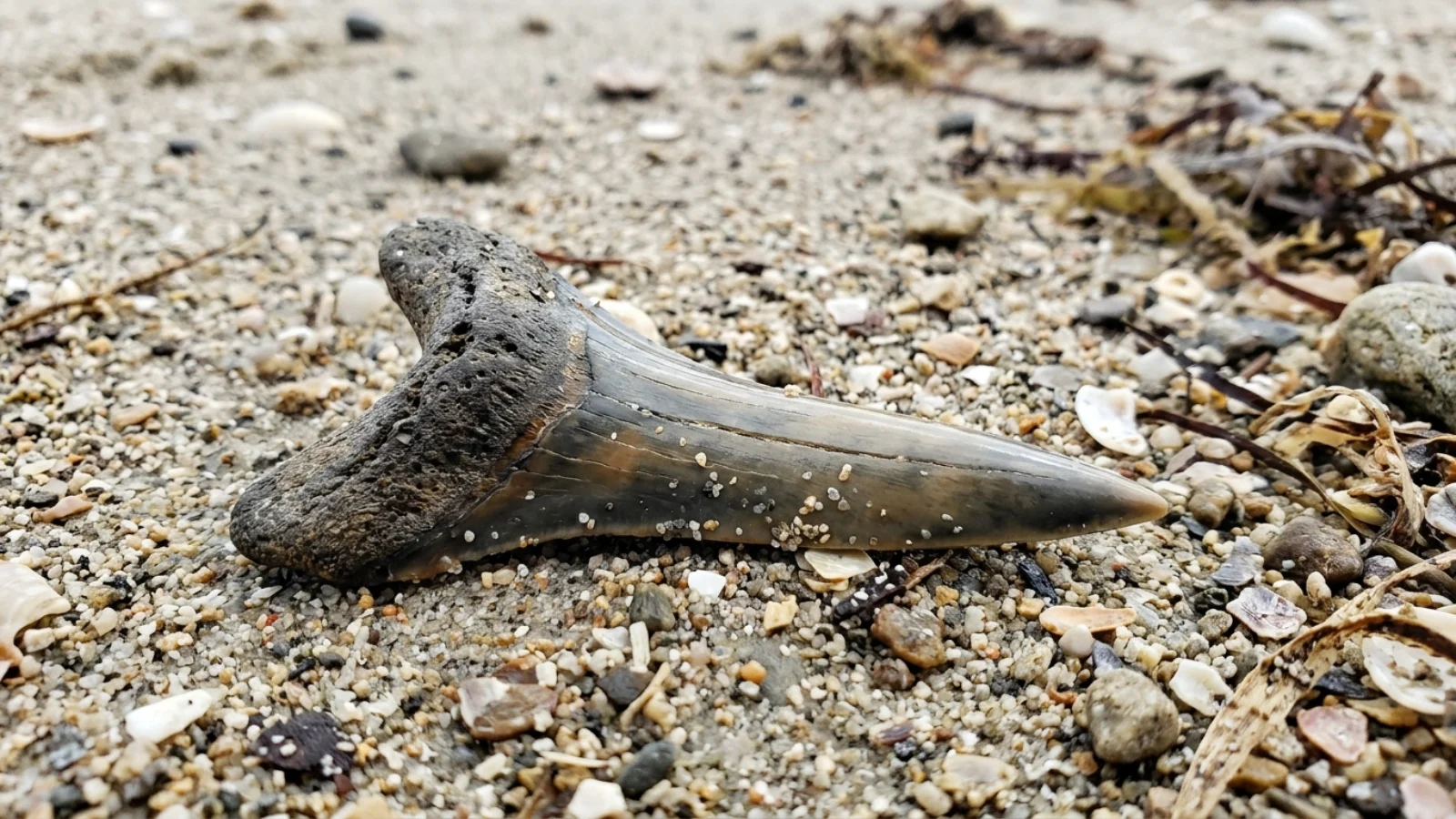
Mako vs other large shark teeth
| Species | Tooth shape | Edge | Function |
|---|---|---|---|
| Mako shark | Long, narrow, curved | Smooth (no serrations) | Pierce and grip fast fish prey |
| Great white | Broad triangular | Heavy serrations | Cut through large mammal prey |
| Tiger shark | Wide notched | Coarse serrations + notches | Cut through varied prey including turtle shells |
| Bull shark | Triangular upper, narrow lower | Serrations | Versatile generalist |
| Hammerhead | Curved, broad-based | Smooth or fine serrations | Crush stingrays and bottom prey |
The contrast highlights a key principle in shark biology: tooth shape predicts diet. Sharks that eat large carcasses need cutting blades; sharks that eat fast slippery prey need piercing grips; sharks that eat hard-shelled prey need crushing surfaces. Mako teeth are textbook fish-grippers and reflect a feeding niche entirely different from that of great whites or tigers.
The bite mechanics
Mako sharks use their teeth in a different way than great whites or tigers do. The technique reflects the tooth design.
The mako bite is a single piercing strike followed by gripping retention. The shark approaches a fast-swimming fish (typically a tuna, mackerel, or billfish), strikes from below or behind at high speed, and captures the prey with the front teeth. The smooth, sharp, slightly curved teeth pierce through scales and grip the muscle, preventing the prey from escaping. Once gripped, the prey is swallowed whole or in large pieces — not cut into smaller portions.
Compare to the great white bite: a great white strikes large prey, makes a large initial bite, and then often retreats while the prey bleeds out. The shark returns to consume the carcass at depth. The mako does not work this way; its teeth are not designed for the cutting strikes that large mammal predation requires. Mako prey is captured whole and consumed whole.
Tooth count and replacement
Like all sharks, makos continuously replace their teeth. The pattern is similar to other large shark species.
Functional teeth in a mako jaw at any moment: approximately 20–30, with the smaller number typical of younger sharks and the larger number for mature adults. Behind each functional tooth, replacement teeth wait in rotating reserve. Total teeth in the jaw including replacements: approximately 200, fewer than great whites’ ~300 because mako teeth are larger individually and there’s less room in the jaw.
Replacement is fast. During active feeding periods, individual teeth may be replaced within days. Across a 30-year mako lifespan, an individual may go through 10,000 to 15,000 teeth — a large but lower lifetime count than great whites primarily because of the shorter mako lifespan.
Mako teeth as fossils and collectibles
Modern mako teeth are widely available as collectibles and fossil teeth from extinct mako relatives are common finds.
The fossil record for makos extends back tens of millions of years. Isurus hastalis, an extinct shark whose teeth are common fossil finds, was probably an ancestor or close relative of the modern shortfin mako. Fossil mako teeth are abundant in many marine sediment deposits worldwide and are often confused with great white fossil teeth (which are more triangular and serrated).
Modern mako teeth are sold as collectibles, jewelry, and educational specimens. Prices range from $5–30 for typical small teeth to several hundred dollars for exceptional specimens. The teeth are also used in shark-tooth necklaces and similar items in some Pacific island cultures, both for traditional purposes and as tourist items.
Why “tooth visible outside mouth”
The mako’s distinctive permanent dental display — teeth visible even with mouth closed — is more than just appearance. It serves a function.
The protruding teeth produce a permanently aggressive-looking face that may serve as a visual signal to other animals. Whether the function is intimidation of conspecifics, prey conditioning, or simply a side-effect of jaw and tooth proportions is debated. The protrusion is especially pronounced in the longfin mako and in older shortfin individuals, where the teeth grow long enough to reach beyond the lower jaw line.
The “visible teeth” feature has practical implications for divers. A mako encounter is unmistakable — the species is identifiable from a distance by the protruding fangs alone, even before other markers (the streamlined body, the cobalt-blue colouration) are visible. This is one of the few large sharks identifiable by tooth visibility alone in dive encounters.
What does a mako shark tooth look like?
Long, narrow, smooth-edged, and slightly curved. Adult shortfin mako teeth are 5–7 cm long; longfin mako teeth can reach 7–9 cm. The smooth edges (no serrations) and pointed tip distinguish them sharply from great white teeth (broad, serrated triangles) and tiger shark teeth (wide, notched serrated).
Why are mako teeth different from great white teeth?
Different prey requires different tools. Mako sharks specialise in fast pelagic fish (tuna, mackerel, billfish), which need to be pierced and gripped. Great whites specialise in marine mammals, which need to be cut. Tooth shape follows feeding niche — piercing teeth for makos, cutting teeth for great whites.
Why are mako shark teeth visible outside the mouth?
Mako teeth are long enough to extend beyond the closed jaw line, producing the species’ distinctive “fanged” appearance. This is more pronounced in longfin makos and in older shortfin individuals. The visible teeth may serve as visual signaling but are largely a structural consequence of the tooth size relative to the jaw.
How many teeth does a mako shark have?
Approximately 20–30 functional teeth at any time, with about 200 total teeth when including replacement teeth waiting behind. Mako teeth are larger individually than great white teeth, so fewer fit in the jaw despite similar overall jaw size.
Are mako teeth good fossil specimens?
Yes — mako teeth and the teeth of related extinct mako species are common fossil finds in many marine sediments. Modern mako teeth are also widely available as collectibles, with prices typically $5–30 for small teeth and higher for exceptional specimens.
- Compagno, L. J. V. (2001). FAO Species Catalogue: Sharks of the World. Mako tooth anatomy reference.
- Whitenack, L. B., & Motta, P. J. (2010). Comparative shark tooth morphology and bite mechanics.
- Frazzetta, T. H. (1988). Foundational work on shark tooth function and shape.
- Klimley, A. P. (2013). The Biology of Sharks and Rays.
Blane Perun has been exploring Earth’s oceans and marine life for over 25 years. Founder of TheSea.Org in 1999, underwater photographer, coral aquaculture pioneer, and explorer of 80+ countries.
About Blane Perun → Back to Sharks →