Lake Erie Silver Dolphins — A Historic Swim Club, Not a Freshwater Dolphin
The Lake Erie Silver Dolphins (LESD) are a competitive swim club, not an animal. Founded in 1965 and owned by Hawken School in the Cleveland area, the club runs a year-round program for swimmers from beginners to international-level athletes and describes itself as one of the oldest swim clubs in the United States. And no, there are no dolphins in Lake Erie; the closest wild dolphins live in the Atlantic, hundreds of miles away.
LESD is a year-round competitive swim team serving northeast Ohio, owned and operated by Hawken School. It was founded in 1965 and offers professional coaching for all ages and abilities, from novice swimmers through national and international competitors. Its athletes race in USA Swimming meets in the Lake Erie region, and their times appear in results databases such as SwimCloud and ScoreMeUp under the team code LESD. For schedules and tryouts, use the team’s own site through Hawken School.
Are there dolphins in Lake Erie?
No. Lake Erie is fresh water and has never had dolphins.
All but a handful of dolphin species are marine. The true river dolphins that live in fresh water survive today only in South America and South Asia; China’s baiji is probably extinct. A marine dolphin would have to travel from the Atlantic up the St. Lawrence River and through the locks of the St. Lawrence Seaway and the Welland Canal to reach Lake Erie, and it could not survive long in fresh water anyway: coastal dolphins trapped in water that turns fresh after floods develop a severe ulcerating skin disease.
Lake Erie does have plenty of big fish, including walleye, lake sturgeon, muskellunge and freshwater drum, the “sheepshead”, whose large ear stones (otoliths) are collected as “lucky stones”. Curious about other surprising visitors? Read bull sharks in Lake Erie, and the lake’s history of wrecks in Lake Erie shipwrecks.
| Lake Erie fact | Value |
|---|---|
| Surface area | ~25,700 km² (9,910 sq mi) |
| Average depth | ~19 m (62 ft), shallowest Great Lake |
| Maximum depth | ~64 m (210 ft) |
| Volume | ~480 km³, smallest of the Great Lakes |
| Water | Fresh; no marine mammals |
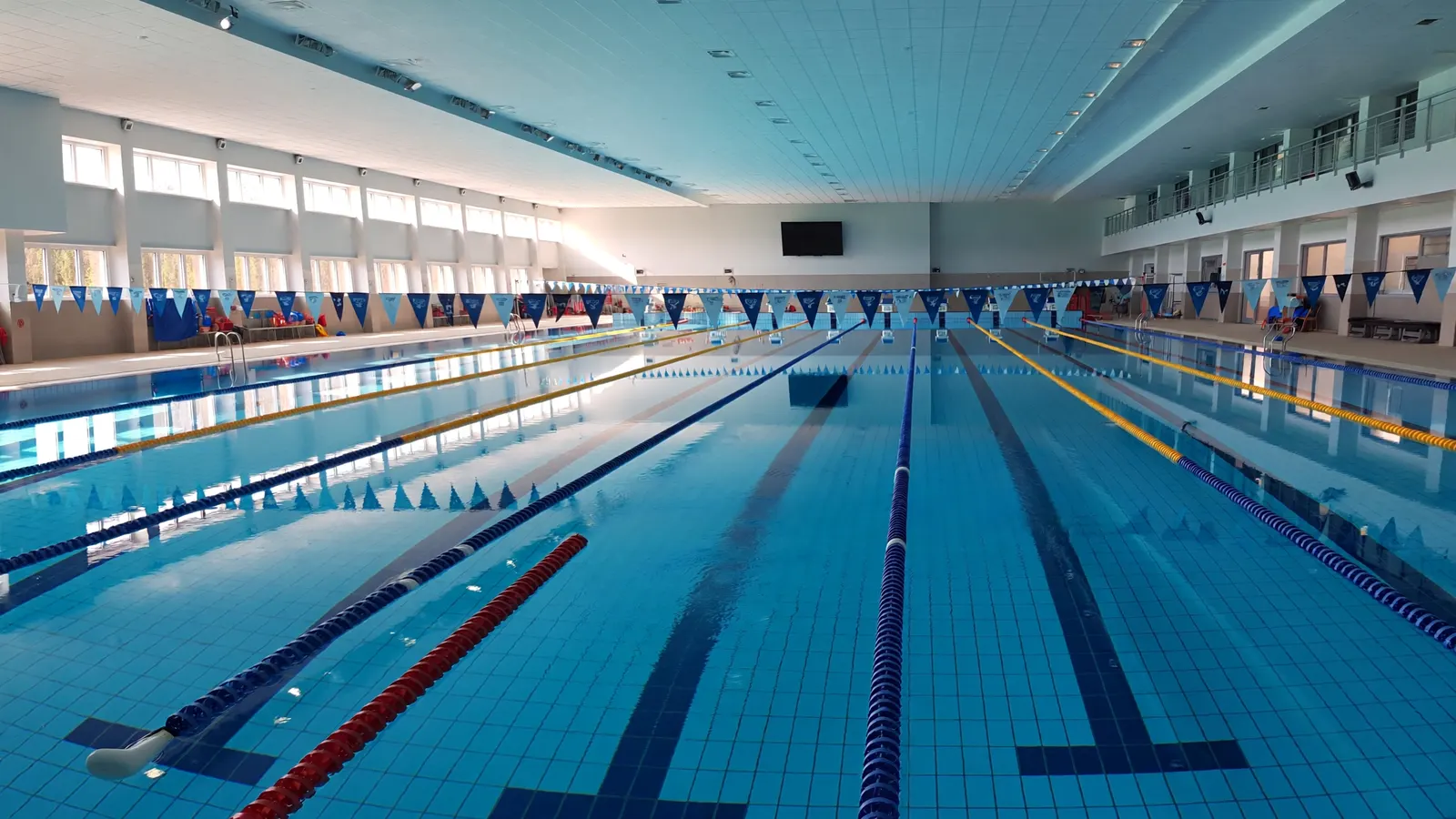
Who runs the club, and what is Hawken School?
The Lake Erie Silver Dolphins describe themselves as a year-round competitive team founded in 1965 and offering coaching “from novice to international competitor”. The club is owned by Hawken School, a private day school in the Cleveland area, and calls itself one of the oldest and most prestigious swim clubs in the United States. Its swimmers compete in the Lake Erie region of USA Swimming, where results are published under the team code LESD.
Hawken itself is much older than the swim team. James A. Hawken opened a school for boys in Cleveland’s Hough neighbourhood in 1915; it moved to its campus in Lyndhurst in 1922 and now also has an upper-school campus east of Cleveland and an urban centre in University Circle. Swimming has been one of the school’s strongest sports: its girls’ team won titles almost every year from 1984 into the 2020s, and its alumni include Melanie Valerio, an Olympic gold medallist in 1996. For current practice groups, tryouts and pool locations, the club’s own page on the Hawken website is the reliable source; schedules change by season.
How did Lake Erie form?
Lake Erie is young. It was carved by glacial ice, and in its present form it is less than 4,000 years old. More than two million years ago an east-flowing river carved a lowland basin here; successive glaciers deepened it, cutting more deeply into the soft shale on the east side than into the harder dolomite and limestone in the west. That is why the eastern and central basins are much deeper than the western basin, which averages only about 7.6 metres and is the most nutrient-rich, fish-rich part of the lake. Between glacial advances, temporary lakes formed at different levels. The last, Lake Warren, existed about 13,000 to 12,000 years ago, and its old beach ridges became Native trails and later roads such as stretches of U.S. Routes 20 and 30.
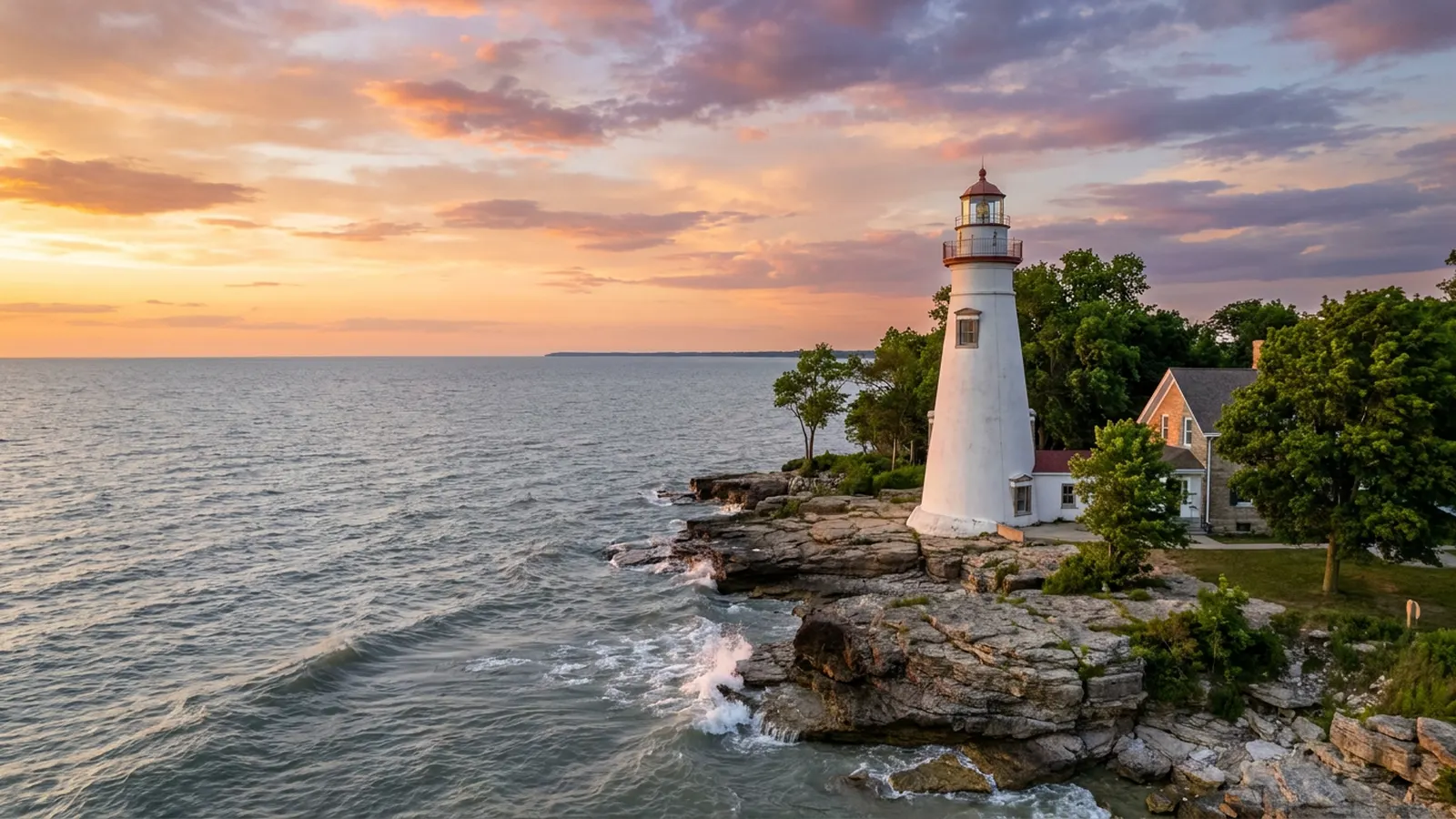
Today Lake Erie is the fourth-largest of the Great Lakes by area and the eleventh-largest lake in the world, but the shallowest and smallest by volume, and its water is replaced faster than in any other Great Lake, roughly every 2.6 years. Its shoreline runs for about 1,286 kilometres, plus more than 100 kilometres around two dozen or more islands, with Cleveland, Toledo, Erie and Buffalo on the US side and Leamington and Port Colborne in Ontario. It is fed mainly by the Detroit River and drains through the Niagara River and over Niagara Falls into Lake Ontario. Ships bypass the falls through the Welland Canal, 43 kilometres long with eight locks, part of the St. Lawrence Seaway system linking the lakes to the Atlantic. That is the only route a sea creature could follow, and it ends in fresh water.
What lives in Lake Erie instead of dolphins?
Lake Erie holds about half of all the fish in the Great Lakes, thanks to its relatively warm water and abundant plankton, and it supports one of the world’s largest freshwater commercial fisheries. Until the end of the 1950s more than half of the commercial catch was blue walleye, a form later declared extinct after overfishing and pollution. Ordinary walleye recovered strongly as the lake was cleaned up: counts of fish caught rose from 112,000 in 1975 to 4.1 million in 1985. Lake sturgeon, the largest fish in the lake, can reportedly reach 3 metres and 140 kilograms; they are now rare, and a confirmed catch in 2009 was released alive.
The freshwater drum is the only North American member of the drum family that lives its whole life in fresh water. Adults usually measure 30 to 76 centimetres and weigh 0.9 to 4.5 kilograms, though some exceed 16 kilograms, and individuals have lived to 72 years. Other notable residents include the Lake Erie water snake, a subspecies of the northern water snake that recovered to more than 12,000 animals by 2010, and the burrowing mayflies whose mass emergences show up on weather radar; a swarm detected near Presque Isle in 1999 was taken as a sign of cleaner water. The lake also hosts invasive species, from zebra and quagga mussels to round gobies, among an estimated 180 non-native species in the Great Lakes.
How did Lake Erie recover from pollution?
By the 1960s Lake Erie was a symbol of industrial pollution. In 1969 the oily Cuyahoga River in Cleveland caught fire, and Time magazine reported that Detroit, Cleveland and 120 other municipalities were sending about 1.5 billion US gallons of inadequately treated waste into the lake each day. The response included Cleveland’s sewer upgrades, the U.S. Clean Water Act of 1972 and the 1972 Great Lakes Water Quality Agreement, which cut phosphorus inputs. Zebra mussels, each filtering about a litre of water a day, later cleared the water column further. Nutrient runoff still drives late-summer cyanobacterial blooms and low-oxygen dead zones in the western basin; NOAA rated the 2011 and 2015 blooms the worst on record, at 10 and 10.5 on its severity index.
Why do so many swim teams call themselves dolphins?
Because dolphins are fast, graceful swimmers, and because of the dolphin kick.
Swim clubs from Ohio to Australia take dolphin names for the obvious reason: dolphins are the image of effortless speed in water. The connection is also technical. The undulating “dolphin kick”, with both legs together moving up and down from the hips, mimics the way a dolphin drives its tail flukes. It powers the butterfly stroke and the underwater phase after starts and turns in freestyle, backstroke and butterfly, which is so fast that swimming rules limit it to 15 m off each wall.
How fast is the real thing? A bottlenose dolphin cruises at around 5 to 11 km/h and can burst to about 29 to 35 km/h for short periods, several times faster than any human swimmer. See how do dolphins swim? for the biomechanics.
Do people swim across Lake Erie?
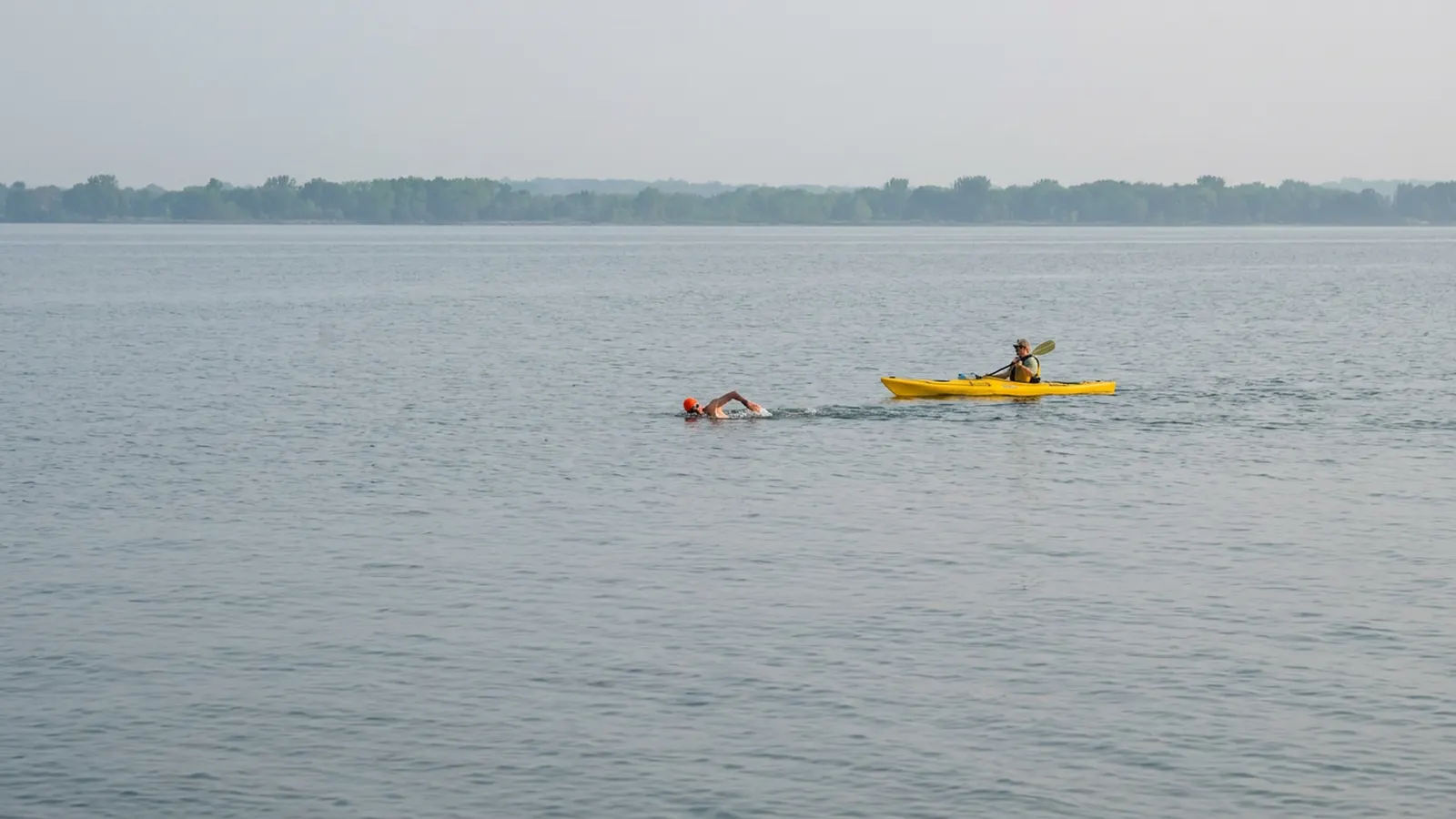
Real open-water swimmers have taken on the lake itself. A 15-year-old amputee swam a 12-mile (19-kilometre) stretch across it in 2001, and in 2008 14-year-old Jade Scognamillo swam from Sturgeon Point in New York to Crystal Beach in Ontario, 11.9 miles (19.2 kilometres), in 5 hours, 40 minutes and 35 seconds, becoming the youngest person to make that crossing; swimmers under 14 are not allowed to attempt it. Winter brings the opposite extreme, with an annual Polar Bear Swim at Port Dover, Ontario. The lake can be dangerous: currents and sudden storms have caused drownings, and its shallowness makes it react quickly to wind. In 1885 strong winds pushed water away from the western end so hard that levels at Toledo dropped by as much as two feet and ships could not load or leave port.
Anyone training in open water around Lake Erie should also watch for summer algal blooms. The western basin, where most blooms start, is shallow and warm, and NOAA scientists forecast bloom size each year. In August 2019 one bloom stretched roughly 50 kilometres, and satellite images showed it covering up to about 1,300 square kilometres. Not every bloom produces toxins, but it is safest to stay out of scummy, discoloured water and to check local advisories during bloom season.
Why is the dolphin a good model for swimmers?
Dolphins have streamlined bodies, flippers modified from forelimbs and a boneless dorsal fin for stability, with propulsion coming from the tail flukes driven by the back muscles. In cold water, bottlenose dolphins carry more fat and blood, and 18 to 20 percent of their body weight is typically blubber, which smooths their outline as well as insulating them. Their normal cruising speed of 5 to 11 km/h can be sustained for long periods, while their fastest bursts last only briefly, a pattern any distance swimmer will recognise. Human swimmers cannot copy the anatomy, but they can copy the principle: a long, smooth body line, power generated from the core and a kick that moves the whole body in a wave.
What can swimmers learn from real dolphins?
Streamlining, a whole-body kick, and efficient breathing.
- Streamline: dolphins hold a rigid, tapered body and tuck everything in. Swimmers’ tight streamline off the wall copies that.
- Kick from the core: a dolphin’s power comes from huge muscles along the spine, not the tail alone. A good dolphin kick starts at the chest and hips.
- Breathe efficiently: dolphins breathe in a quick explosive exhale-and-inhale at the surface, then dive again. See how long dolphins hold their breath.
- Use the surface wisely: dolphins leap partly because moving through air costs less energy than pushing through water at speed. See why do dolphins jump?
Where did the dolphin kick come from?
The butterfly stroke grew out of breaststroke. In late 1933 Henry Myers swam an early butterfly in competition at the Brooklyn Central YMCA, and in 1934 the University of Iowa coach David Armbruster refined a way of bringing the arms forward over the water. Using a dolphin “fishtail” kick with those arms, Jack Sieg swam 100 yards in 1:00.2, but the kick broke the breaststroke rules of the world governing body. Swimmers at the 1936 Olympics used butterfly arms with a breaststroke kick instead. The butterfly was accepted as a separate stroke with its own rules in 1952, and the 1956 Olympics were the first to hold separate butterfly races. The breaststroke kick in butterfly was not formally outlawed until 2001.
Today the dolphin kick is used far beyond butterfly. After starts and turns, swimmers glide and kick underwater, where drag is lower than at the surface, and the rules allow up to 15 metres underwater before the head must break the surface. That limit exists precisely because underwater dolphin kicking proved so effective.
How are real freshwater dolphins different?
River dolphins are not a single family but an informal grouping of several lineages that adapted separately to rivers. Today they include the Amazon river dolphin, or boto, the largest at up to about 2.4 metres and 100 kilograms, and the South Asian river dolphin, about 1.5 metres long, with two subspecies in the Ganges and Indus systems. The baiji of China’s Yangtze is listed as critically endangered and probably extinct. Scientists have debated whether Bolivian botos are a separate species; the Society for Marine Mammalogy briefly accepted the split in 2012 and withdrew it in 2014. All cetaceans descend from land mammals related to the extinct, chevrotain-like Indohyus, from which their line split about 48 million years ago.
Marine dolphins, by contrast, are poorly suited to fresh water. In Australia, two mortality events gave scientists a case definition for what they call freshwater skin disease. Dolphins in Victoria’s Gippsland Lakes and in Western Australia’s Swan–Canning river system were caught when heavy rain dropped salinity from more than 30 parts per thousand to less than 5 for weeks to months. The animals developed pale patches that progressed to ulcerated lesions covering up to 70 percent of the body, colonised by fungi, bacteria and algae. A dolphin wandering into the Great Lakes, where salinity is close to zero, would face the same problem with no way back to the sea.
What are the Lake Erie Silver Dolphins?
A year-round competitive swim club in northeast Ohio, founded in 1965 and owned by Hawken School.
When were the Lake Erie Silver Dolphins founded?
In 1965.
Who runs the Lake Erie Silver Dolphins?
Hawken School owns and operates the club.
Are there dolphins in Lake Erie?
No. Lake Erie is a freshwater lake with no dolphins.
Can dolphins live in fresh water?
Only a few river dolphin species in South America and South Asia; marine dolphins cannot live long in fresh water.
What big animals live in Lake Erie?
Large fish such as lake sturgeon, muskellunge, walleye and freshwater drum.
Why are swim teams named dolphins?
Dolphins symbolize speed in water, and the dolphin kick is a core swimming technique.
- Hawken School: Lake Erie Silver Dolphins (LESD) program page.
- USA Swimming team directory and meet results (team code LESD).
- NOAA Great Lakes Environmental Research Laboratory: Lake Erie bathymetry and facts.
- World Aquatics swimming rules: 15 m underwater limit.
- Wikipedia: Lake Erie (formation, fishery, pollution, blooms, crossings); Hawken School; Welland Canal; Freshwater drum; River dolphin; Common bottlenose dolphin; Butterfly stroke.
- Duignan, P. J., Stephens, N. S. & Robb, K. (2020). Fresh water skin disease in dolphins: a case definition based on pathology and environmental factors in Australia. Scientific Reports.
Blane Perun has been exploring Earth’s oceans and marine life for over 25 years. Founder of TheSea.Org in 1999, underwater photographer, coral aquaculture pioneer, and explorer of 80+ countries.
