Do Otters Have Pockets? — The Sea Otter’s Armpit Pouch
Sea otters do. Under each foreleg a sea otter has a loose fold of skin that works like a pocket, running from the armpit across the chest. On a dive the otter stuffs prey into it so it can keep foraging with both paws, then carries the load to the surface and eats it while floating on its back. Many otters also keep a favourite rock in the pouch to crack shells. River otters and other otter species do not have this pouch; it is a sea otter specialty.
If you have ever watched a sea otter surface after a dive, you may have noticed it pulling food out from somewhere under its arm, one item after another, like a magician producing scarves. That “somewhere” is one of the sea otter’s most practical adaptations: a pocket of loose skin it can fill on the seafloor and empty at the surface. It is a simple trick, but it changes how efficiently an otter can feed, and for an animal that has to eat a quarter or more of its body weight every day, efficiency is everything.
Where is the sea otter’s pocket?
The pocket is a loose flap of skin under each foreleg. The skin there is baggy and stretchy, and it extends across the chest, forming a pouch on each side.
There is no special organ, no extra muscle and no marsupial-style opening. It is simply skin with enough slack to fold over and hold things against the body. That slack is part of a wider sea otter trait: the skin over the whole body is unusually loose. Loose skin lets an otter twist and reach almost every part of its fur when grooming, and under the arms it doubles as storage.
Biologists usually describe it as an armpit pouch or axillary pouch. When it is empty, you barely notice it; the fur hides the fold. When it is full, you can sometimes see a bulge on one side of the chest as the otter breaks the surface.
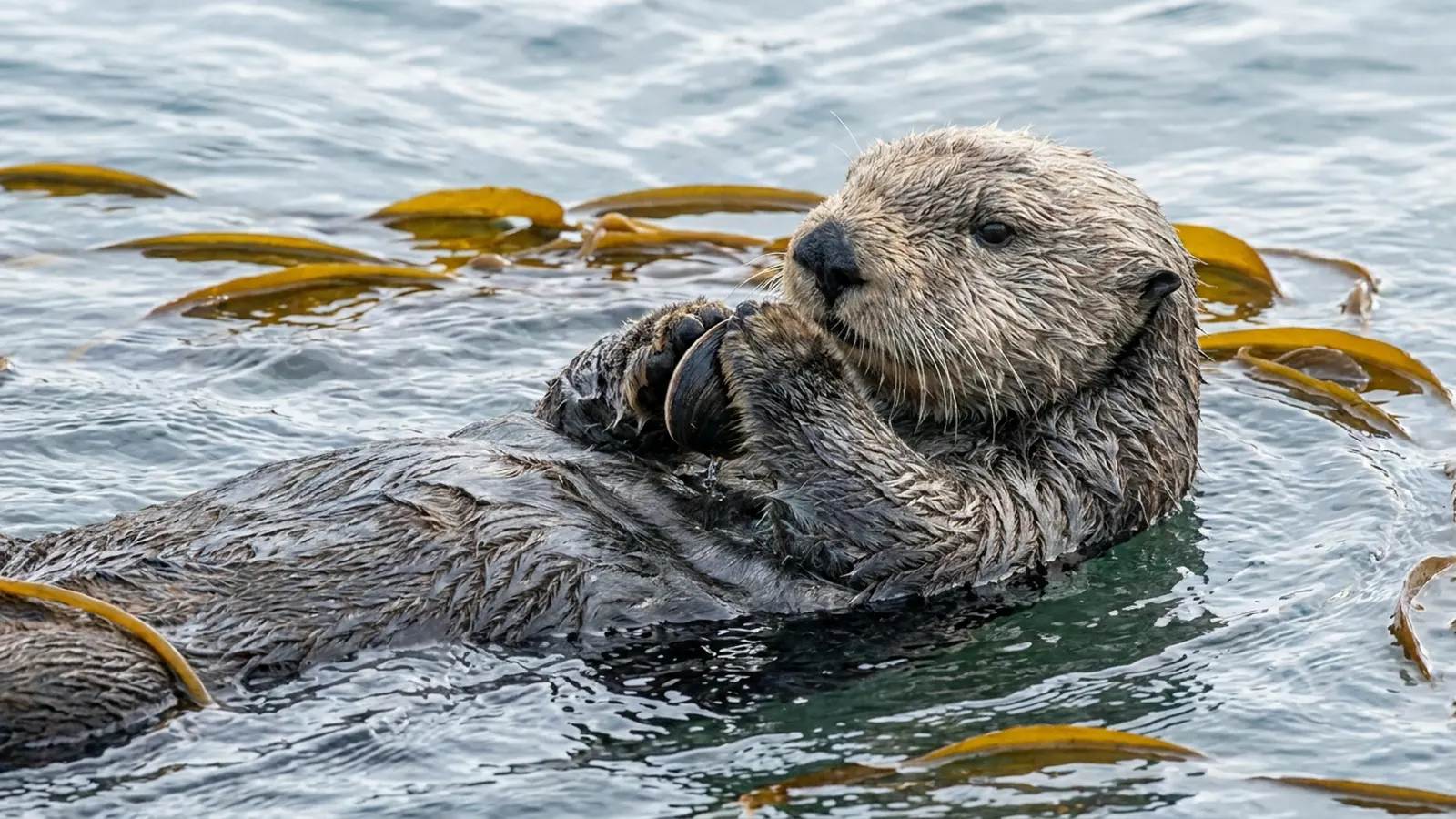
What do sea otters keep in their pockets?
Mostly food: clams, mussels, sea urchins, crabs, snails and other bottom-living invertebrates. Many otters also carry a rock.
A sea otter forages on the seabed, feeling for prey with its sensitive forepaws and whiskers. It needs both paws free to turn over rocks, dig in sand and pry prey loose. Without a pocket, it would have to surface every time it caught something, wasting the oxygen and body heat it had spent getting down there. With a pocket, it can tuck a clam under one arm, keep searching, grab a crab, tuck that away too, and only come up when the pouch is full or its breath runs out.
The rock is the famous part. Sea otters are among the few mammals outside the primates that routinely use tools, and the classic tool is a flat stone used as an anvil on the chest or held as a hammer. Some otters keep the same rock for many dives, storing it in the pouch between uses, so they do not have to find a new one every time. Our page on what sea otters eat covers the menu in more detail, and do sea otters eat sea urchins explains how they handle spiny prey.
Why the pocket matters so much
A sea otter has almost no blubber and stays warm by burning food at two to three times the rate of a similar-sized land mammal. Every dive costs heat and energy. The pouch lets an otter bring up several prey items per dive instead of one, so it can eat more for each trip to the bottom. Studies of foraging otters often record prey being carried up in the pouch and eaten in sequence at the surface, with the otter rolling to wash bits off its fur between items.
The pocket also supports the otter’s table manners, which are really about survival. A sea otter eats lying on its back, using its chest as a table. It can take one item from the pouch, crack it on a rock, eat it, rinse off and take out the next, all without diving again. Keeping the fur clean matters because food scraps and oils can mat the fur and let cold water reach the skin. You can read more about that in sea otter adaptations.
I have always admired practical solutions like this. When I set up my coral farm, the biggest gains rarely came from fancy equipment; they came from simple changes that saved time on every task, like where I placed the frag racks and how I routed the plumbing so I was not reaching across tanks. The sea otter’s pocket is that kind of solution. It is not glamorous, but it saves time and energy on every single dive.
| Otter | Armpit pouch? | How it carries food |
|---|---|---|
| Sea otter | Yes, one under each foreleg | Stores several items per dive, eats at the surface on its back |
| North American river otter | No | Carries prey in its mouth; often eats on shore or a log |
| Eurasian otter | No | Carries prey in its mouth; small prey eaten in the water |
| Giant otter | No | Holds fish in its forepaws and eats at the surface |
| Asian small-clawed otter | No | Uses nimble paws to catch and hold crabs and molluscs |
Do other otters have pockets?
No. The armpit pouch is found only in the sea otter. River otters, giant otters and the other otter species carry prey in their mouths or paws.
That fits how they feed. Most other otters catch fish, which are eaten quickly, often on land or a log. They do not need to stockpile prey on a single dive. The sea otter’s diet is different: lots of small, hard-shelled animals scattered over the seabed, each needing to be found by touch. A pocket makes the most sense for an animal that collects many small items in each trip.
It also fits the sea otter’s life at sea. A river otter can carry a fish to the bank. A sea otter rarely comes ashore and has nowhere to put its catch except on itself. If you are comparing the two, our guide to sea otters vs river otters covers the other differences.
Do baby otters ride in the pocket?
No. This is a common misunderstanding, possibly because the word “pouch” makes people think of kangaroos. Sea otters are not marsupials. A newborn pup is far too big for the armpit fold and instead rides on its mother’s chest while she floats on her back, nursing and being groomed. When the mother dives to feed, she may leave the pup floating at the surface, sometimes wrapped in a strand of kelp so it does not drift away. The pup’s thick natal fur holds so much air that it bobs like a cork and cannot sink.
Is it true otters keep a favourite rock?
Many do, at least for a while. Sea otters have been seen carrying the same stone over a series of dives and storing it in the pouch between uses. Whether an otter keeps one rock for days or picks a new one each feeding session varies between individuals and places. Tool use itself is not universal: in California, studies of radio-tagged otters found that some individuals, particularly females, use tools far more than others, and that tool users can tackle harder prey while wearing their teeth down less. The pouch is what makes carrying a tool practical in the first place.
How much can the pocket hold?
There is no fixed capacity; it depends on the size of the otter and the size of the prey. Observers have described sea otters surfacing with several clams or mussels at once, or a mix of a crab, a couple of snails and a rock. With larger prey such as a big red urchin or an abalone, an otter may bring up only one or two items. Mothers with older pups sometimes surface with extra food and share it, which is part of how pups learn what to eat. The pouch simply stretches to fit what the otter can carry and still swim comfortably.
What the pocket cannot do is keep prey forever. An otter usually empties it within a few minutes of surfacing, eating one item at a time. Because sea otters spend so much of the day foraging, often in several long feeding bouts spread across day and night, the pouch gets filled and emptied many times every twenty-four hours.
How to see the pocket in action
If I were heading out to watch sea otters, I would bring good binoculars and look for an otter in its feeding rhythm: a dive, a minute or so underwater, then a surface with the forepaws held to the chest. Watch the first few seconds after it comes up. You will often see it reach under one arm and pull out an item, eat it, then reach in again. Monterey Bay, Moss Landing and Morro Bay in California, and Kachemak Bay and Prince William Sound in Alaska, are good places to try; see where sea otters live. Keep your distance. In the United States it is illegal to disturb sea otters, and if an otter stops feeding or swims away because of you, you are too close.
Do otters have pockets?
Sea otters do. They have a loose pouch of skin under each foreleg that they use to carry food and a rock. Other otters do not.
What do sea otters keep in their pockets?
Mainly prey such as clams, mussels, urchins and crabs gathered on a dive, plus a favourite rock used to crack shells.
Do otters have a pouch like a kangaroo?
No. Sea otters are not marsupials. The armpit pouch is just loose skin for storage; pups ride on the mother’s chest.
How many pockets does a sea otter have?
Two, one under each foreleg, extending across the chest.
Do river otters have pockets?
No. River otters carry prey in their mouths and usually eat fish quickly, often on land.
Do otters keep a favourite rock?
Some sea otters carry the same rock across many dives and store it in their pouch, though habits vary between individuals.
- Kenyon, K.W. (1969). The Sea Otter in the Eastern Pacific Ocean. North American Fauna 68, US Fish and Wildlife Service.
- Riedman, M.L. & Estes, J.A. (1990). The Sea Otter (Enhydra lutris): Behavior, Ecology, and Natural History. US Fish and Wildlife Service Biological Report 90(14).
- Law, C.J. et al. (2024). Tool use increases mechanical foraging success and tooth health in southern sea otters. Science 384.
- Monterey Bay Aquarium: sea otter natural history.
Blane Perun has been exploring Earth’s oceans and marine life for over 25 years. Founder of TheSea.Org in 1999, underwater photographer, coral aquaculture pioneer, and explorer of 80+ countries.
About Blane Perun → More on sea otters →