Did Charles Vane Have Any Notable Last Words or Actions Before His Execution
No specific last words attributed to Charles Vane are recorded in any historical source. Captain Charles Johnson’s A General History of the Pyrates, the primary account of his life and death, does not record a final speech, dramatic gesture, or notable statement at the gallows. What the historical record does show is that Vane’s conduct throughout his trial and in his final period of imprisonment was consistent with his career — no recantation, no plea for clemency, no public repentance. The absence of recorded last words is itself historically significant: it suggests he did not provide the authorities with the kind of confessional performance they typically encouraged from condemned pirates.
The final days and hours of a condemned pirate in the early 18th century followed a specific institutional script. Admiralty authorities, colonial officials, and clergy all had roles to play, and the execution itself was a managed public event with defined conventions. Understanding what Vane’s last actions and words were — or were not — requires understanding this script and what it meant when a condemned man did not follow it.
The institutional script for pirate executions
Public executions of pirates in the early 18th century were not simply punishments. They were carefully managed performances designed to serve specific social and political functions, and they had a well-established format that the authorities expected condemned men to follow.
The standard sequence began with the trial, which established legal guilt and provided a public record. After sentencing, the condemned pirate was typically visited by clergy who attempted to secure a confession, a statement of repentance, and a public acknowledgment that the execution was just. On the day of execution, the condemned man was expected to deliver a speech from the gallows — or at least to submit to one being delivered on his behalf — that acknowledged his crimes, warned others against the pirate life, and expressed acceptance of his fate as God’s justice. These speeches were often published as pamphlets and distributed widely. They served as propaganda for the anti-piracy campaign as much as they served any spiritual purpose.
This format was not merely convention. It was actively encouraged and sometimes coerced. Colonial authorities understood that a condemned pirate who publicly repented and validated the justice of his execution was more useful to them than a silent or defiant one. The pamphlet literature of pirate confessions and dying speeches was a significant genre in early 18th-century print culture, and the Admiralty apparatus that prosecuted pirates was well aware of its propagandistic value.
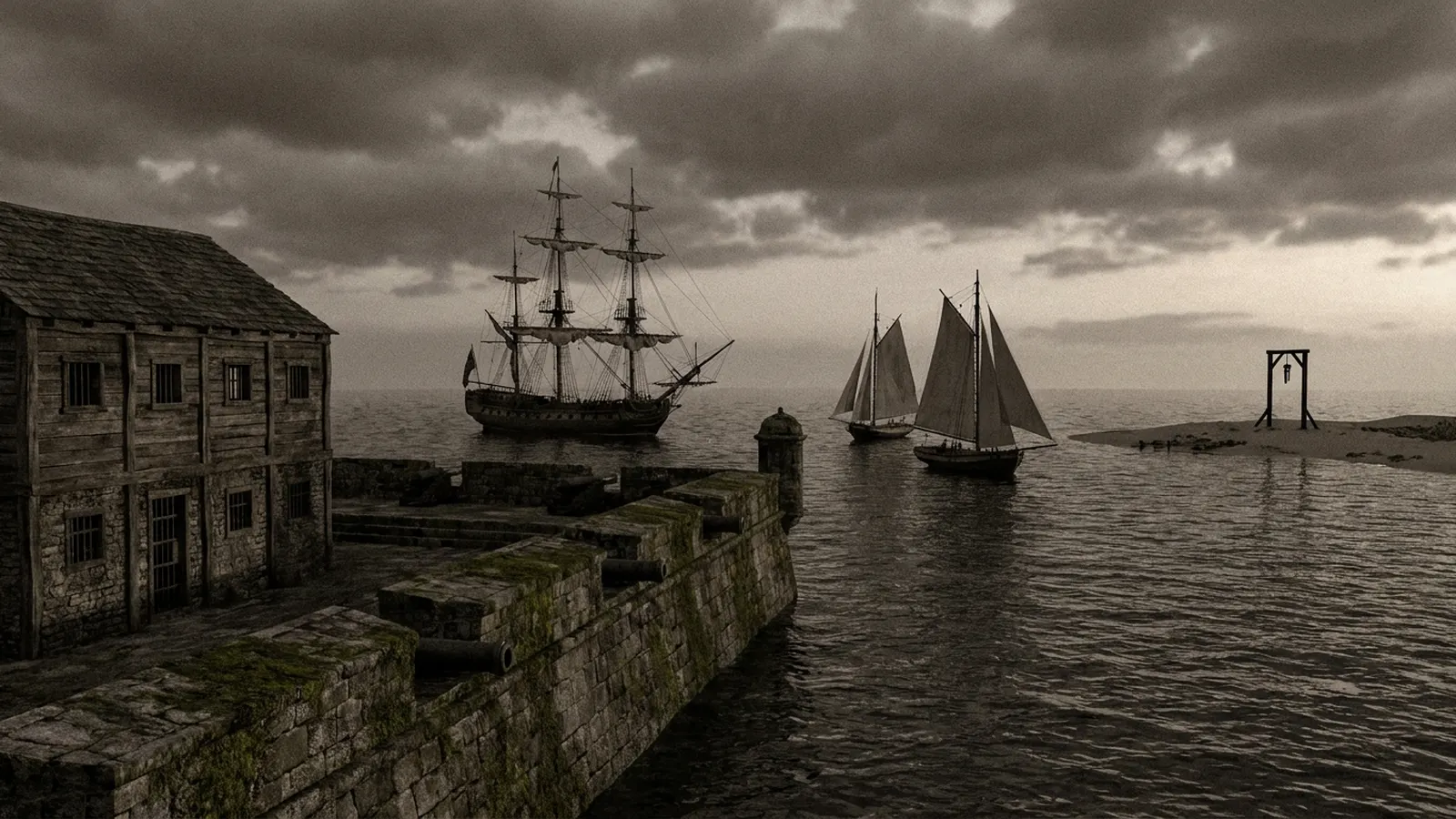
What the historical record actually shows about Vane’s final months
The primary source for Vane’s life and death is Captain Charles Johnson’s A General History of the Pyrates, published in 1724 — three years after his execution. Johnson’s account covers the trial and execution but does not record any last words, gallows speech, or notable final actions.
This absence is meaningful. Johnson’s General History is not a text that avoids dramatic detail when it is available. His accounts of other pirates include gallows speeches, final gestures, and dying declarations where they were recorded. The absence of any such material in his account of Vane suggests one of two things: either Vane did not make a significant statement at the gallows, or if he did, it was not of the kind that served the purposes of those who controlled the publication of such accounts — meaning it was not a confession or repentance.
Colonial records from Jamaica for the period of Vane’s imprisonment and trial have been examined by historians, and none contain documented accounts of last words. Court documents record the charges, the verdict, and the sentence. Prison records, where they survive, do not include accounts of final conversations. The silence of the historical record on this point is consistent across all available sources.
What Vane’s conduct at trial tells us
While his actual last words are not recorded, Vane’s conduct during his trial provides the most detailed available insight into his state of mind and behaviour in the final months of his life.
Admiralty trials of the period were not designed to give defendants substantial opportunity to speak. The charges were specific, the evidence was documentary and testimonial, and the outcome in a case like Vane’s — where the facts of his piracy were not seriously in dispute — was effectively predetermined by the evidence. However, defendants were given the opportunity to respond to charges and, in some cases, to make statements.
No documented statement by Vane during his trial has survived in the historical record in the form of a direct quotation. What the trial record does show is that he was tried on specific counts of piracy covering acts committed against named vessels and their crews, that the evidence presented was substantial, and that he was found guilty on all counts. The absence of any recorded defence or statement at trial is consistent with the absence of last words at execution — it suggests a man who either could not or chose not to engage with the legal process on its own terms.
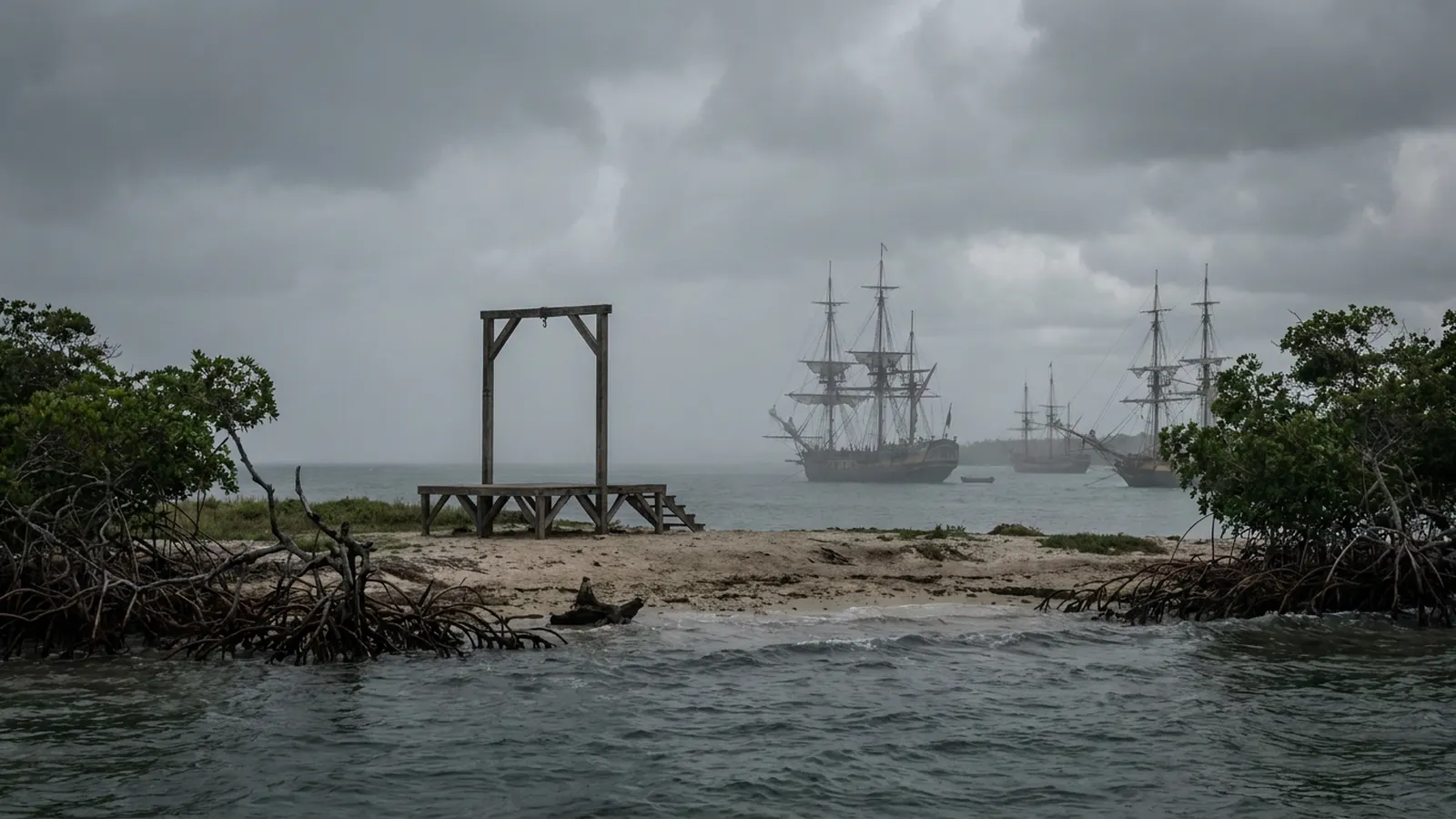
Comparisons with other Golden Age pirates at their executions
Comparing Vane’s execution with those of his contemporaries helps contextualise what the absence of recorded last words actually means within the conventions of the period.
Stede Bonnet, executed in Charleston in December 1718, reportedly wept and begged for his life, behaviour that was recorded and published. His death is remembered partly because of this contrast with his piratical career — the Gentleman Pirate undone by fear at the end. Blackbeard died in combat in November 1718, shot multiple times and fighting until the end, and his death generated its own dramatic narrative through the combat record. Bartholomew Roberts, the most successful pirate of the Golden Age by ships taken, was killed in battle in February 1722, also leaving no last words by definition. Calico Jack Rackham, who had deposed Vane, was executed in Jamaica in November 1720 and reportedly made no significant statement at the gallows.
Within this group, silence or absence of recorded last words is actually more common than dramatic final speeches. What is notable about Vane is not that he was silent but that he was silent in the context of an institution actively trying to make him speak. The clergy visited condemned pirates in their cells. The authorities wanted confessions. The pamphlet publishers wanted dying speeches. The absence of any product from these efforts in Vane’s case is the closest the historical record comes to suggesting that he remained, to the end, unwilling to provide what was being asked of him.
The gibbeting and its meaning
What happened after Vane’s execution is as historically significant as the execution itself. His body was placed in a gibbet — an iron cage — and hung at the harbour entrance at Port Royal, where it remained visible to every vessel entering or leaving Jamaica.
Gibbeting was a specific legal and political act. It was not a routine disposal of a condemned body but a deliberate display designed to communicate a specific message to a specific audience. Port Royal’s harbour entrance was the most trafficked maritime location in Jamaica. Every sailor, merchant captain, naval officer, and passenger arriving or departing would pass beneath or within sight of a gibbeted body. The message was unambiguous: this is what happens to pirates who refuse to accept the authority of the Crown.
In Vane’s case, the gibbeting carries particular irony. He had refused the pardon in 1718 specifically to avoid submitting to that authority. He had evaded it for more than a year after Nassau fell, survived being deposed, and survived a hurricane. The gibbet at Port Royal harbour was the authorities’ final answer to all of that refusal — a physical demonstration that the state’s reach was ultimately longer than any individual’s defiance. Whether Vane would have found any satisfaction in the knowledge that three hundred years later his name is remembered and those of the officials who ordered his gibbeting are not, we cannot say. The historical record, consistent to the end, is silent on the point.
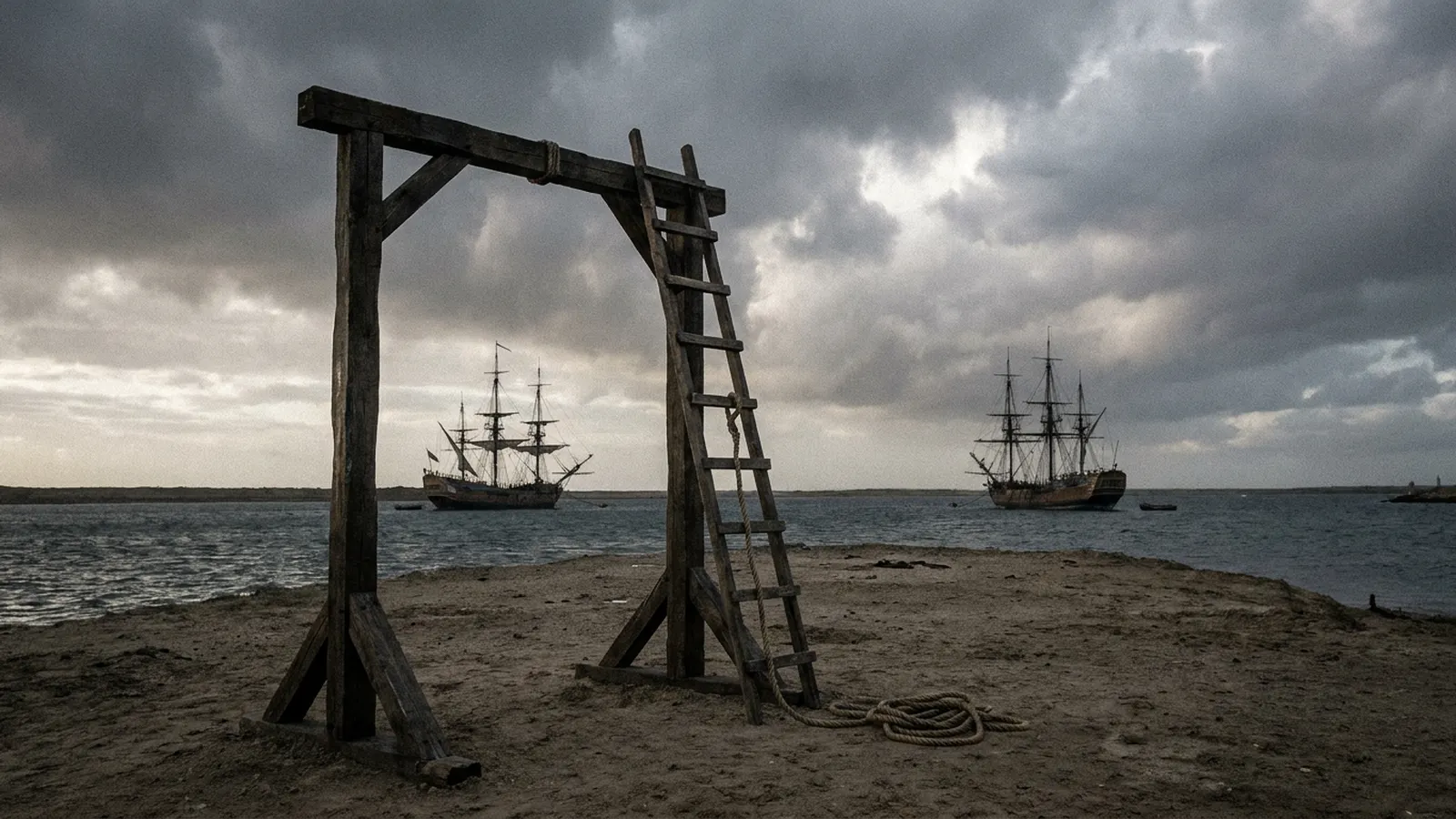
Did Charles Vane say anything notable before his execution?
No specific last words attributed to Vane are recorded in any historical source. Johnson’s General History, the primary account, covers his trial and execution without recording a final speech or statement. The absence is consistent with his documented character throughout his career.
Why are no last words recorded for Charles Vane?
Authorities actively sought confessions and gallows speeches from condemned pirates because they served propaganda purposes. The absence of any such material in Vane’s case suggests he either remained silent or said something the authorities chose not to record or publish. Either reading is consistent with his refusal to comply with institutional expectations throughout his life.
What happened to Vane’s body after his execution?
Vane’s body was gibbeted — placed in an iron cage and displayed at Port Royal harbour entrance. This was a deliberate act of public deterrence designed to communicate the consequences of piracy to every sailor entering or leaving Jamaica.
How did Vane behave at his trial?
No direct quotation from Vane at his trial is recorded in the historical sources. The trial was conducted under Admiralty court procedures without a jury, the charges covered specific acts of piracy against named vessels, and he was found guilty on all counts. The absence of recorded statements at trial mirrors the absence of recorded last words at execution.
How does Vane’s execution compare to other Golden Age pirates?
Stede Bonnet reportedly wept and begged for clemency. Blackbeard and Roberts died in combat. Calico Jack Rackham made no significant statement at his execution. Silence or absence of dramatic last words was more common than not among Golden Age pirates, but Vane’s silence is notable because the institutional effort to produce a confession was most intense in cases like his where the defendant had been most publicly defiant.
Blane Perun has been exploring Earth’s oceans and marine life for over 25 years. Founder of TheSea.Org in 1999, underwater photographer, coral aquaculture pioneer, and explorer of 80+ countries.
About Blane Perun →