Davy Jones Locker: The Real Nautical Term and What It Means
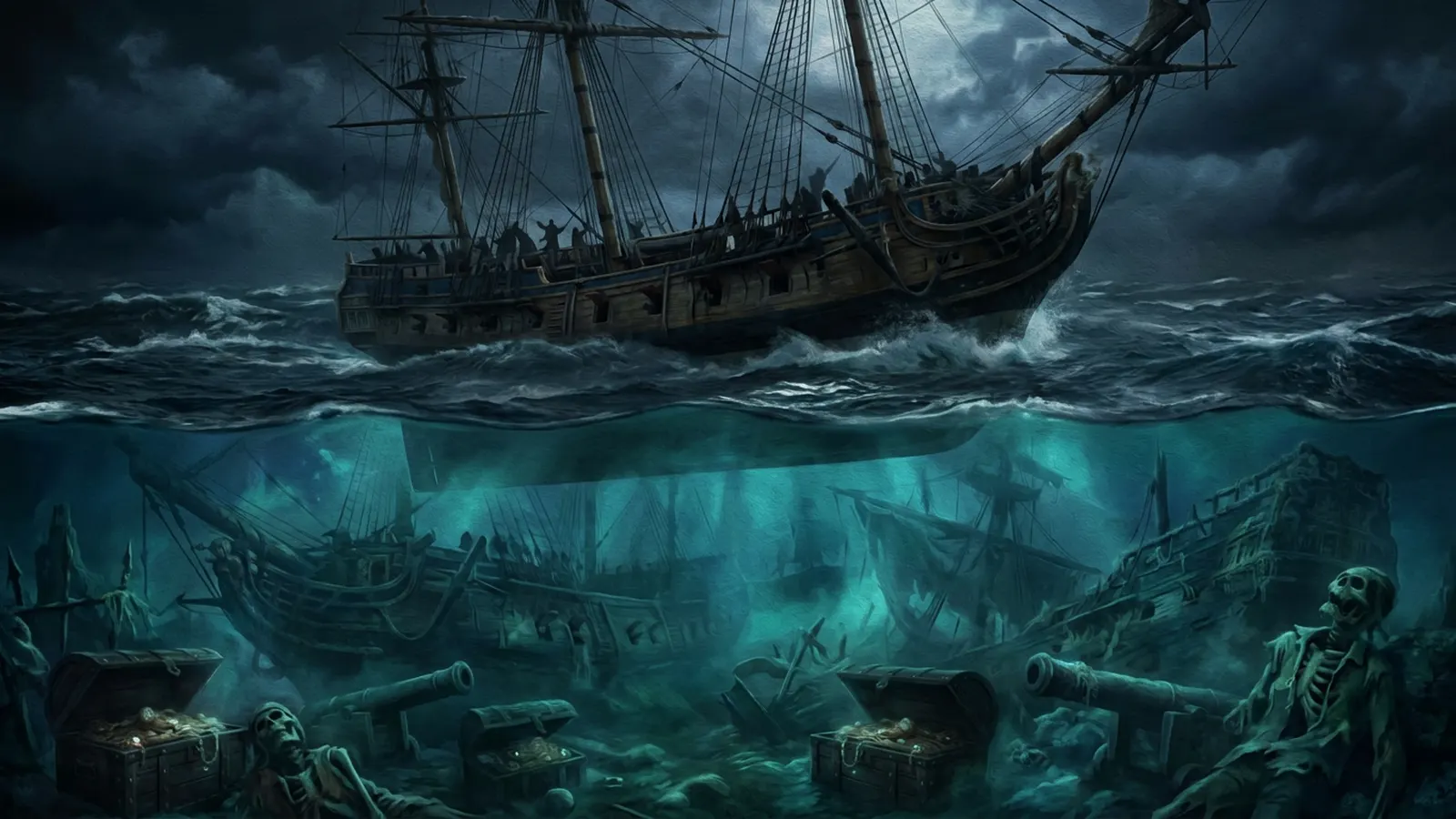
Davy Jones’ Locker is a genuine nautical term in use from at least 1726, referring to the bottom of the sea as the final resting place of drowned sailors and sunken ships. It is not a historical person, a specific location, or a documented mythology with clear origins — it is a collective expression of seafaring superstition that accumulated meaning over time. The earliest printed reference appears in Daniel Defoe’s 1726 narrative, and the term was in active use among sailors throughout the 18th and 19th centuries as a way of speaking about death at sea.
Davy Jones’ Locker sits at the intersection of documented nautical language and maritime superstition. Sailors of the 18th century used it straightforwardly — to go to Davy Jones’ Locker was to die at sea, and the phrase carried the same matter-of-fact weight as any other professional risk acknowledged in the vocabulary of a dangerous trade. The mythology surrounding Davy Jones himself is considerably more elaborate and considerably less well-documented than the term that bears his name.
The earliest documented uses
The phrase Davy Jones’ Locker appears in print from 1726 in Daniel Defoe’s Four Years Voyages of Capt. George Roberts, making it one of the earliest dateable references. By the mid-18th century it was in common enough use that Tobias Smollett could use it without explanation in The Adventures of Peregrine Pickle (1751), suggesting the term was already well established in English-speaking maritime culture.
The consistency of the term’s meaning across these early sources is notable: it always refers to the sea bottom as the destination of those who die at sea, and Davy Jones himself is always described in terms that align with a sea devil or malevolent spirit of the depths. The locker is the chest or stronghold where the dead are kept — a storage metaphor for the seabed as an accumulation of the drowned and lost.
What the early sources do not provide is a clear origin for either the name Davy Jones or the specific imagery of the locker. The term arrived in the documented record already fully formed, which suggests it had been circulating in oral maritime culture for some time before it appeared in print.
The competing theories about Davy Jones himself
Multiple theories exist about who or what Davy Jones originally referred to. None is definitively supported by primary historical evidence, but several are coherent enough to deserve consideration.
The most frequently cited is a possible connection to the biblical Jonah — a sailor swallowed by a great fish and associated with misfortune at sea. “Davy” has been suggested as a corruption of “Duffy” or a Welsh form of “David,” possibly linking to the patron saint of Wales who had associations with the sea. The combination of a biblical figure of maritime misfortune with a saint’s name in a superstitious nautical culture is at least plausible.
A more colourful theory proposes a real 16th-century tavern owner named Davy Jones who operated near a dockside and was known to drug or confine sailors in a storage locker before press-ganging them onto ships. The image of a locker associated with Jones and containing captive sailors provides a direct, if unverified, origin for the specific phrase. No documentary evidence for this individual has been located. A third interpretation links the name to a general piratical or devilish figure — “Jones” as a generic sailor’s surname, “Davy” as a diminutive with folkloric devil associations — produced by the accretion of seafaring superstition rather than any single identifiable source.
How sailors actually used the term
Understanding how working sailors and pirates used the term in the 18th and 19th centuries reveals something important about its function: it was practical language as much as superstitious language, serving specific communicative purposes in a world where death at sea was a constant occupational reality.
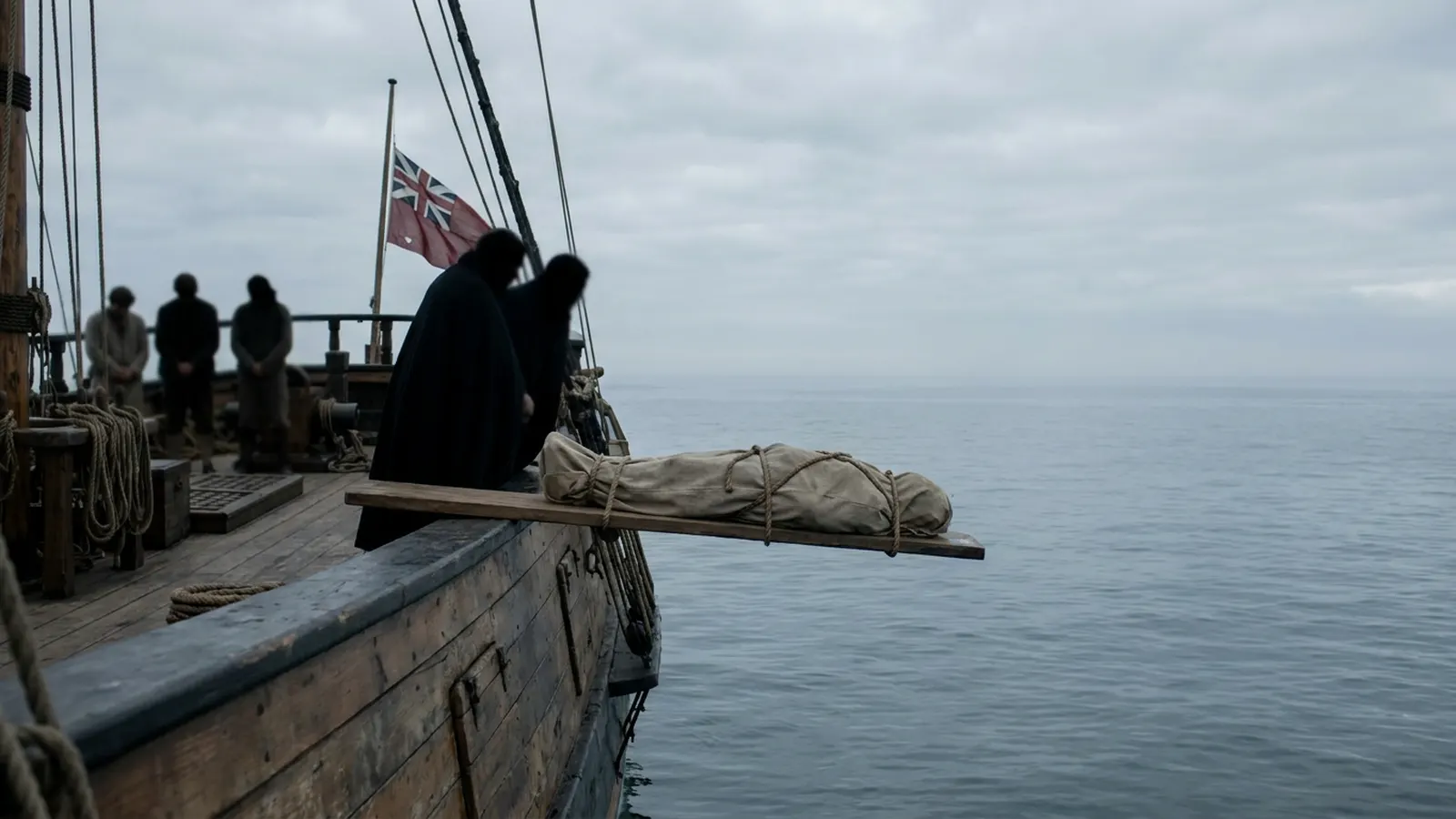
To say a man had gone to Davy Jones’ Locker was a way of acknowledging death at sea without the potentially ill-omened directness of saying he had drowned or been killed. Maritime superstition discouraged explicit discussion of death aboard ships, particularly before or during voyages, on the grounds that naming a thing could bring it about. Davy Jones’ Locker provided an oblique way to refer to the same reality without the direct invocation.
Spin-off expressions accumulated around the central term. To be in Davy Jones’ grip meant to be close to death. To awaken Davy Jones was to stir up a storm. See you to Davy Jones was a serious threat. These extensions show a term that had become generative — capable of producing new expressions — which is characteristic of genuinely embedded cultural idioms rather than borrowed or artificially introduced phrases.
The connection to maritime superstition more broadly
Davy Jones’ Locker is best understood not in isolation but as part of the broader ecosystem of maritime superstition that governed life aboard 18th-century vessels. Sailors of this period maintained an elaborate set of beliefs, prohibitions, and rituals designed to navigate a working life that was genuinely, statistically dangerous.
Specific numbers, days, animals, words, and actions were considered unlucky aboard ships. Whistling was thought to summon storms. Certain animals, particularly cats and albatrosses, were considered either good or bad omens depending on the context. Beginning a voyage on a Friday was considered unlucky in many traditions. These superstitions were not peripheral to maritime culture but central to it — they provided a framework of meaning and agency in an environment where the actual causes of catastrophe were often opaque and the consequences of error were fatal.
Davy Jones’ Locker fits this framework as a personification of the sea’s capacity to kill. By giving that capacity a name, sailors gave it a defined identity that could be related to, spoken of obliquely, and in some traditions propitiated. The term also served a social function: it created shared language about shared risk, reinforcing the professional community of those who worked the sea.

Is Davy Jones’ Locker a real nautical term?
Yes. It appears in documented sources from 1726 and was in common use among English-speaking sailors throughout the 18th and 19th centuries. It refers to the bottom of the sea as the final destination of those who die at sea, and functioned as standard nautical idiom for death by drowning or loss at sea.
Who was Davy Jones?
The origins of the name are disputed and no definitive historical identification has been made. Proposed origins include a connection to the biblical Jonah, a 16th-century tavern owner who press-ganged sailors, and a generic accumulation of seafaring superstition around a devilish sea figure. None is supported by primary documentary evidence.
When did the term first appear in writing?
The first documented appearance is in Daniel Defoe’s 1726 narrative Four Years Voyages of Capt. George Roberts. By 1751 Tobias Smollett used the term without explanation in Peregrine Pickle, suggesting it was already well established in maritime culture by that date.
How did pirates and sailors actually use the term?
As an oblique way to acknowledge death at sea without the ill-omened directness of naming it explicitly. Maritime superstition discouraged direct discussion of death during voyages. Spin-off expressions included “in Davy Jones’ grip” (near death), “awaken Davy Jones” (stir up a storm), and “see you to Davy Jones” (a threat to kill).
How has popular culture changed the meaning of Davy Jones?
Fictional treatments — most prominently the Pirates of the Caribbean series — transformed Davy Jones from an abstract concept into a specific character. This has made the figure more visually vivid but less historically accurate. The actual nautical term was considerably more mundane: a collective idiom for death at sea rather than a specific supernatural entity.
Blane Perun has been exploring Earth’s oceans and marine life for over 25 years. Founder of TheSea.Org in 1999, underwater photographer, coral aquaculture pioneer, and explorer of 80+ countries.
About Blane Perun →