Can Sharks Swim Backwards — No — Fixed Pectoral Fins and Ram Ventilation Make It Impossible
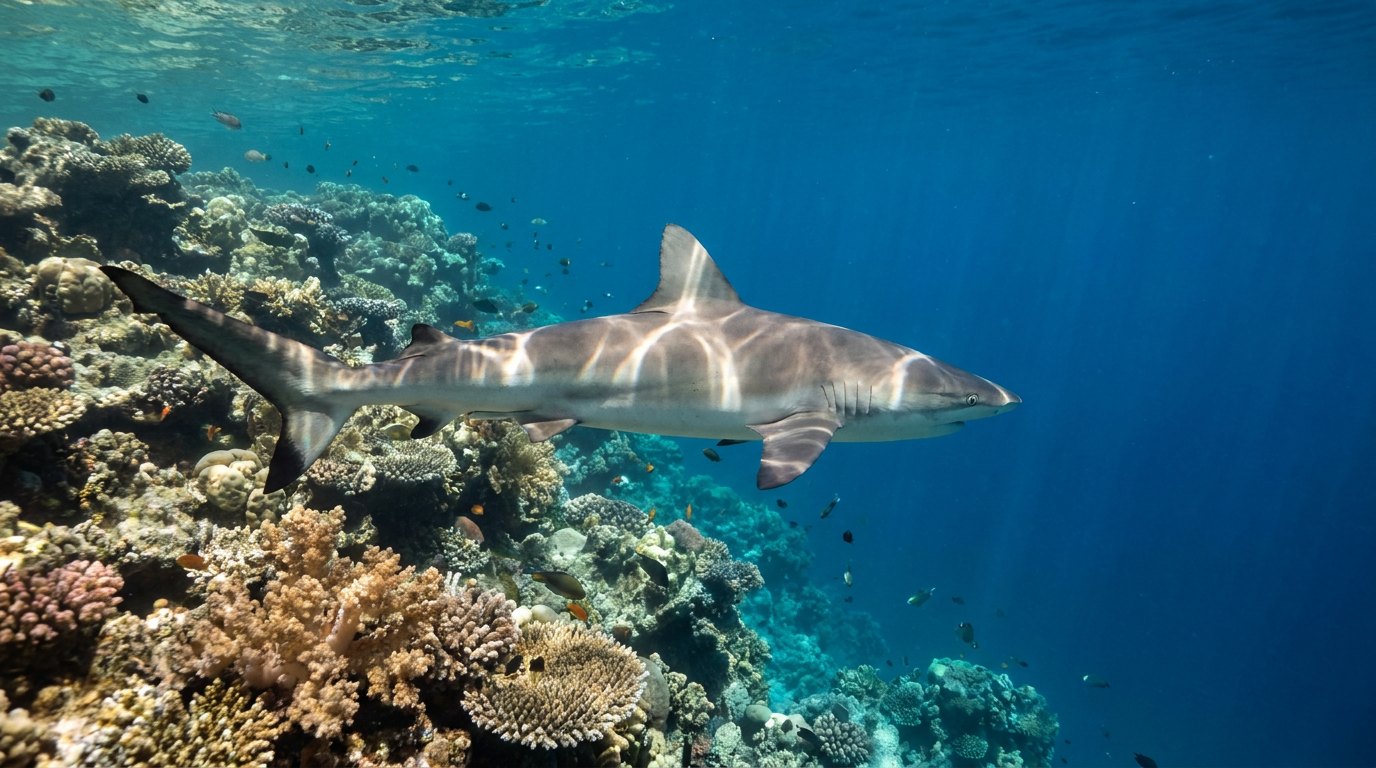
No, sharks cannot swim backwards. Their pectoral fins are anatomically fixed in a position that produces only forward thrust — they can’t be reversed or used to push the shark backward like the fins of bony fish can. Additionally, many shark species rely on ram ventilation, meaning they must keep moving forward to push water across their gills for breathing. Reverse swimming would interrupt this. Some sharks can move backward in very limited ways — brief backwards drifts using fin angle adjustments — but powered, sustained backward swimming is not possible for any species.
This is one of the more interesting “trivia” questions about sharks because the answer reveals two underlying biological facts: shark fin anatomy is fundamentally different from bony fish fin anatomy, and many sharks have a respiratory system that essentially requires forward motion. Understanding why sharks can’t swim backward is understanding why their bodies are shaped the way they are and why they behave the way they do.
Why most fish can swim backwards but sharks can’t
Most bony fish can swim backwards using fin manipulation. Sharks cannot, due to fundamental differences in fin anatomy.
Bony fish, in contrast, have flexible articulated pectoral fins that can rotate to push water in any direction. Many bony fish use this for fine-positioning manoeuvres — backing up to investigate something, hovering in place, or repositioning relative to currents. Sharks lack this capability.
Ram ventilation — why some sharks must swim constantly
Ram ventilation is one of the most distinctive shark physiological features and explains both the inability to swim backwards and the need to keep moving.
The mechanism: water enters the open mouth as the shark swims, flows past the gills (where oxygen is extracted), and exits through the 5–7 gill slits on each side. The forward motion is the breathing motion. If the shark stops moving, water stops flowing, and the shark stops breathing. Many shark species cannot survive being stationary for long.
Not all sharks rely on ram ventilation. Buccal pumping is the alternative — the shark actively pumps water into the mouth using cheek muscles, then forces it out over the gills. Bottom-dwelling species (nurse sharks, some catsharks, wobbegongs) use buccal pumping and can stay still for extended periods. But the most active shark species — great whites, makos, tigers, bulls — rely heavily on ram ventilation. Stopping is not viable for them.
What sharks CAN do besides forward swimming
| Movement | Possible? | How |
|---|---|---|
| Forward swimming (slow) | Yes | Tail beat, primary mode |
| Forward swimming (burst) | Yes | Whole-body acceleration |
| Turning | Yes | Body bend + asymmetric tail beat + pectoral fin tilt |
| Stopping (mid-water) | Buccal-pumping species only | Stop swimming, pump cheek muscles |
| Hovering | Limited; some species | Slow swim or buccal pump |
| Rolling/turning upside down | Yes (most species) | Body rotation |
| Powered backward swimming | No | Anatomically impossible |
| Brief backward drift | Slight | Fin angle adjustment, momentum |
The brief backward drift category is the closest sharks come to reverse motion. By adjusting pectoral fin angle to deflect water flow, a shark can briefly move backward by a small distance — but this is essentially passive drifting rather than powered swimming. Sustained backward swimming is impossible.
Implications for shark behaviour
The inability to swim backwards has real consequences for how sharks navigate their environment and interact with prey.
Reef cave avoidance. Most sharks avoid swimming into structurally complex spaces (coral cave systems, kelp forests with tight passages) because they have to swim forward through whatever they enter, with no option to back out. Some species are notable for being willing to enter caves — the whitetip reef shark and Caribbean reef shark hunt in cave systems — but they navigate carefully and can become trapped if conditions change.
Hooked or netted shark behaviour. A shark caught on a fishing line cannot swim backward to free itself; it can only continue forward and struggle. This is part of why caught sharks often die from exhaustion or stress — their natural escape behaviour is forward, away from the threat, which doesn’t help when forward is into more line or net.
Crowded encounter behaviour. When two sharks meet head-to-head in a confined space, neither can simply back away. They must swim past each other. This is sometimes interpreted as aggression in popular accounts but is often just the only available option.
The very few exceptions
A few small bottom-dwelling shark species can manage limited reverse motion in specialised contexts.
The epaulette shark (a small carpet shark from Australia and Papua New Guinea) is famous for its ability to “walk” on its pectoral fins on the seafloor and through reef structures, including reverse-direction movement. It uses fin musculature in ways most sharks cannot. The motion is slow and limited but represents the closest thing to reverse swimming in any shark.
Some bamboo sharks and small catsharks have similar limited reverse capability. These are all small, bottom-dwelling species that don’t depend on ram ventilation. Among the major active shark species — great whites, tigers, bulls, hammerheads — the no-reverse rule holds without exception.
Because so many sharks must keep water moving over their gills, a related question comes up often: do sharks sleep?
Can sharks swim backwards?
No. Their pectoral fins are anatomically fixed in a forward-thrust position and cannot reverse. Many sharks also rely on ram ventilation (forward motion to push water across gills) for breathing, which would be disrupted by reverse swimming.
Why can’t sharks swim backwards?
Two reasons. First, their pectoral fins are rigid and forward-oriented — the joints don’t allow the fin rotation needed for reverse thrust. Second, many active shark species depend on forward swimming for breathing (ram ventilation), which would stop if the shark moved backward.
Do sharks have to keep swimming forward to breathe?
Many do. Ram-ventilating species — including great whites, makos, blue sharks, and most pelagic sharks — must swim forward to push water over their gills. Some bottom-dwelling species (nurse sharks, wobbegongs, some catsharks) can pump water across the gills using cheek muscles (buccal pumping) and don’t need to keep moving.
Can a shark stop and stay still?
Some species, yes. Bottom-dwelling species using buccal pumping can stay stationary for hours. Active pelagic species generally cannot — great whites, makos, and similar species need to keep moving forward to breathe and would suffocate within minutes if held stationary.
Are there any sharks that can move backward?
A few small bottom-dwelling species have limited reverse capability. The epaulette shark, native to Australia and Papua New Guinea, is the most famous example — it can use its pectoral fins to “walk” forward and backward on the seafloor. The motion is slow and limited but represents the closest any shark comes to reverse swimming.
- Wilga, C. D., & Lauder, G. V. (2002). Shark pectoral fin function during swimming.
- Compagno, L. J. V. (2001). FAO Species Catalogue: Sharks of the World.
- Hughes, G. M. (1960). Foundational work on ram and buccal ventilation in sharks.
- Klimley, A. P. (2013). The Biology of Sharks and Rays.
Blane Perun has been exploring Earth’s oceans and marine life for over 25 years. Founder of TheSea.Org in 1999, underwater photographer, coral aquaculture pioneer, and explorer of 80+ countries.
About Blane Perun → Back to Sharks →