Are There Great White Sharks in Florida — Yes, Seasonally, Mostly Offshore
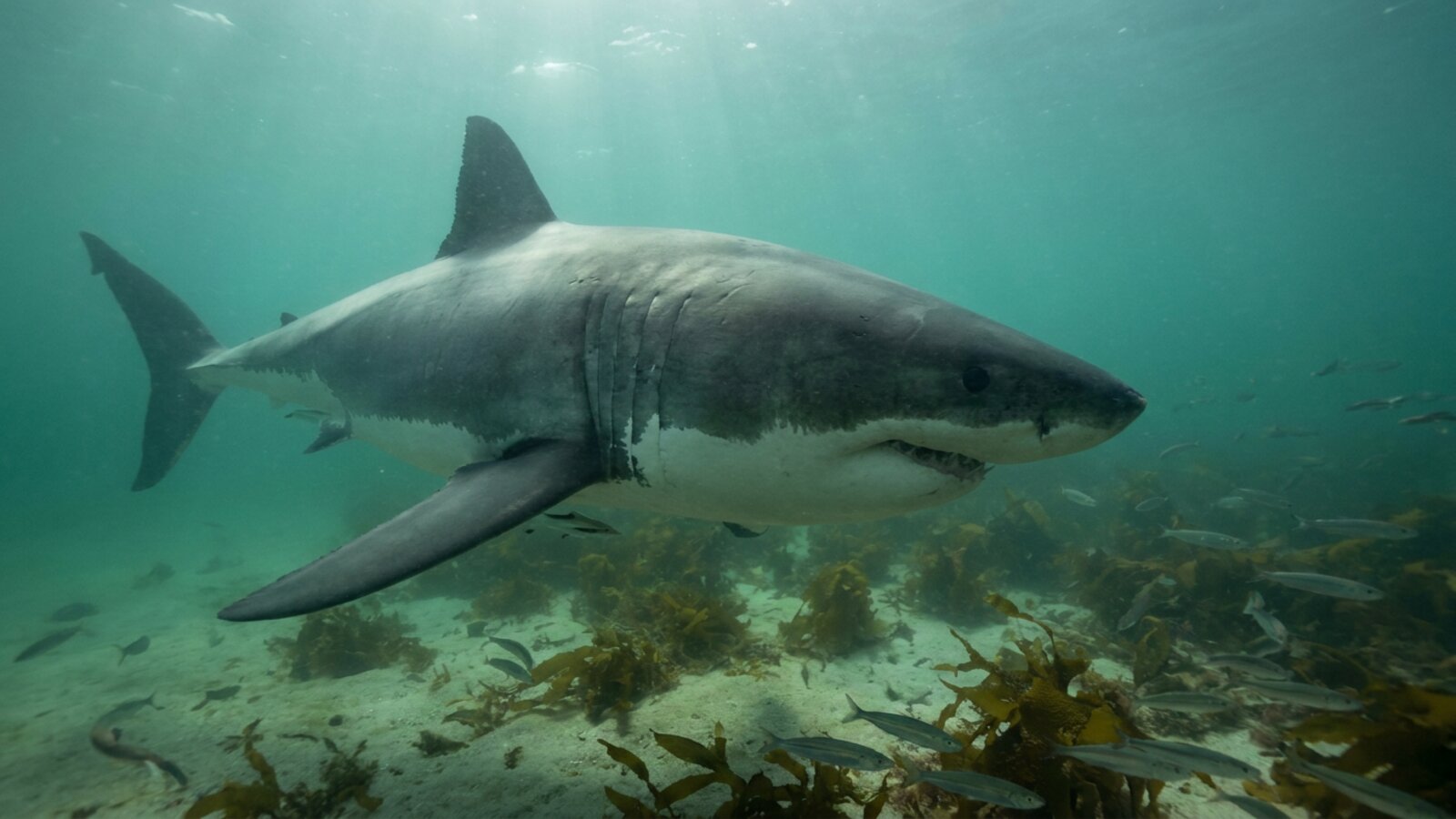
Yes — but only seasonally and offshore. Great white sharks visit Florida waters as part of their Atlantic migration cycle, primarily between December and April, when cooler water temperatures bring them south. They concentrate in deeper offshore waters and along the continental shelf edge rather than at popular beaches; nearshore sightings are uncommon. Florida is not a great white population centre — the species’ resident waters are the Mid-Atlantic, Cape Cod, and points north — but many individuals migrate through Florida waters annually. The Florida great white encounter risk is real but very low compared to bull shark and tiger shark risks in the same waters.
Florida’s reputation for shark activity centres on bull sharks (Tampa Bay, the Gulf coast), tiger sharks (Florida Keys, eastern coast), and blacktip sharks (very high abundance, low danger). Great whites are the species most people associate with shark danger generally, so the question of whether they’re in Florida gets asked frequently. The accurate answer is “yes, seasonally, mostly offshore” — not the “great whites everywhere” some pop accounts suggest, but not the “no great whites in Florida” sometimes claimed either.
The Atlantic migration that brings them south
Great whites tagged on the U.S. East Coast follow predictable seasonal migration patterns. The southern leg passes through Florida waters during winter months.
The pattern is best documented by OCEARCH and similar tagging programmes. Great whites tagged off Cape Cod (during summer feeding season) and tagged off Long Island (during nursery use) follow southern movements in autumn, reaching Florida and the Gulf of Mexico by December–January. They remain in southern Atlantic and Gulf waters until March or April, then move north again as water temperatures rise.
This is the same migration pattern that brought a famous tagged shark named Mary Lee into Atlantic Coast headlines from 2012 to 2017. Mary Lee was photographed and tracked extensively, with her movement through Florida waters during winter months becoming widely-shared social media content. Multiple other tagged individuals have shown similar patterns; the Florida winter visit is a routine part of Atlantic great white life.
Where in Florida the sharks actually go
| Zone | Typical depth | Season | Sightings |
|---|---|---|---|
| Atlantic continental shelf edge | 50–200 m | Dec–Apr | Most consistent presence |
| Gulf Stream margins | Variable, deep | Dec–Apr | Migratory corridor |
| Northern Gulf of Mexico | 50–200 m | Jan–Mar | Periodic |
| Florida Keys | 30–100 m | Dec–Mar | Occasional sightings |
| Atlantic nearshore | 0–30 m | Dec–Apr | Uncommon |
| Florida Bay/Everglades | 0–10 m | n/a | Effectively zero |
The pattern is consistent: great whites in Florida stay deep and offshore. The continental shelf edge along the Atlantic coast (50–200 m depth) is the most consistent zone of presence, followed by the Gulf Stream margins. Nearshore sightings happen but are uncommon; the very shallow waters where most ocean recreation occurs almost never have great white presence.
This is geographically distinct from the great white pattern in California, South Africa, or Cape Cod, where the species comes very close to shore (within metres) at seal colonies. Florida lacks comparable seal colonies, so there is no nearshore concentration mechanism. Great whites pass through but don’t aggregate.
Why Florida isn’t a great white residence
Florida has the wrong combination of features for great whites to settle. Three factors disqualify the region as a population centre.
Florida great white attacks
Florida has documented great white attacks but they are very rare relative to other shark species’ attack records in the state.
Florida is the global leader in shark attacks against humans, but the dominant species are blacktip, spinner, bull, and lemon sharks — smaller species that frequent shallow coastal water. Great whites are responsible for a vanishingly small fraction of Florida’s overall attack record. The species’ offshore distribution and seasonal absence from warm coastal waters explain the low contribution despite the species being present.
Has anything changed recently?
Tagging data from the 2010s and 2020s suggests the basic Florida great white pattern is stable, with potentially slight increases in winter sighting frequency.
OCEARCH and other research programmes have tagged increasing numbers of Atlantic great whites over the past decade. The improved data shows winter Florida visits as a routine part of the migration cycle, but does not show population increase or geographic expansion within Florida specifically. The species’ presence is consistent with historical patterns; the perception of “more sharks” is largely a function of better data and more public visibility through tracker apps.
Some researchers have suggested that population recovery on the U.S. East Coast (driven by the Marine Mammal Protection Act protecting seal populations) could eventually produce more frequent Florida sightings as more individuals migrate through. The evidence for this so far is suggestive but not definitive.
For the species that actually account for bites in the state, see our guide to shark attacks in Florida.
Are there great white sharks in Florida?
Yes — seasonally, between December and April. Great whites migrate through Florida waters as part of their Atlantic seasonal cycle, concentrating in deep offshore waters along the continental shelf edge rather than at popular beaches. Florida is not a great white population centre but the species is reliably present in winter.
When do great whites come to Florida?
Most consistent presence is from December through April, with peak sightings in January-February. By April-May, water temperatures rise and the sharks move north to their preferred Mid-Atlantic and New England waters for spring and summer feeding.
Have great whites attacked anyone in Florida?
Documented attacks attributed to great whites in Florida are very rare — fewer than 5 across the entire historical record, with approximately one confirmed fatality. The dominant Florida shark attack species are bull, blacktip, spinner, and lemon sharks — not great whites.
Where in Florida are great whites most likely?
Deep offshore waters along the Atlantic continental shelf edge (50–200 m depth) and the Gulf Stream margins. Nearshore sightings are uncommon; the very shallow waters where most beach recreation happens almost never have great white presence.
Should Florida swimmers worry about great whites?
No, in any practical sense. The Florida great white encounter risk at typical beach and shallow-water depths is negligible. Bull, tiger, and lemon sharks are the species responsible for almost all Florida shark attacks, and concern should focus on those species’ habitat and behaviour. Great white risk is essentially zero in normal Florida ocean recreation.
- OCEARCH research programme. Atlantic great white tagging data and seasonal migration documentation.
- Florida Museum International Shark Attack File. Florida-specific attack records by species.
- Skomal, G. B., et al. (2017). U.S. East Coast great white population recovery.
- Curtis, T. H., et al. (2014). Seasonal habitat associations of bull and other coastal sharks in the U.S. South Atlantic Bight.
Blane Perun has been exploring Earth’s oceans and marine life for over 25 years. Founder of TheSea.Org in 1999, underwater photographer, coral aquaculture pioneer, and explorer of 80+ countries.
About Blane Perun → Back to Great White Shark →